Active Listening: Key Concepts & What You Need to Know
Master the foundational communication skill that builds trust, unlocks honest conversation, and makes others feel genuinely heard.
by The Loxie Learning Team
Most people think they're good listeners—until they realize they've spent entire conversations mentally rehearsing their next point instead of actually hearing what's being said. Active listening is the discipline of truly understanding what others communicate beyond just their words, and it's the foundational skill that separates effective leaders from everyone else.
This guide breaks down the essential techniques of active listening. You'll learn how to maintain full presence despite distractions, methods for reflecting back what you've heard to ensure understanding, and skills for detecting the emotions beneath surface statements. These aren't just nice-to-have social skills—they're the foundation of trust that unlocks honest conversation and other people's best thinking.
 Start practicing Active Listening ▸
How do you create full presence in conversations?
Full presence requires closing laptops, silencing phones, and turning away from screens—these physical actions signal respect while creating the mental space needed for complete focus. When you eliminate digital distractions visibly, you remove both the temptation to multitask and the other person's fear that they're competing for your attention.
The act of closing your laptop mid-sentence when someone approaches demonstrates "you matter more than this task." This simple gesture builds trust that enables honest conversation. Both parties can engage fully rather than performing partial attention while screens glow in the periphery.
The eye contact sweet spot
Sustained eye contact at 60-70% during conversations communicates attention while allowing natural breaks that prevent intimidation. Looking away briefly when thinking or processing gives both parties emotional breathing room. Constant staring feels aggressive; no eye contact feels dismissive; the 60-70% range hits the engagement sweet spot.
Eye contact operates on a goldilocks principle. The 60-70% range maintains connection during speaking and listening while permitting natural breaks that occur when accessing memories or processing complex thoughts. This balance makes conversations feel engaged rather than interrogational.
Body language that invites sharing
Engaged body language—leaning slightly forward, maintaining open posture with uncrossed arms, and showing responsive facial expressions—encourages continued sharing by signaling active processing rather than passive reception. According to Mehrabian's research, body language accounts for 55% of communication impact. Leaning forward shows interest, open posture invites continued sharing, and responsive expressions provide real-time feedback that helps speakers gauge whether their message lands.
Knowing these techniques intellectually is one thing—but will you remember to apply them in your next difficult conversation? Loxie uses spaced repetition to help you internalize active listening behaviors so they become automatic when you need them most.
Practice these techniques in Loxie ▸
What is paraphrasing and why does it matter?
Paraphrasing using phrases like "So what I'm hearing is..." or "It sounds like..." confirms understanding while demonstrating active mental processing. Restating someone's key points in your own words forces you to truly comprehend rather than just wait for your turn to speak. This cognitive effort naturally eliminates the common listening barrier of mentally rehearsing your response.
Effective paraphrasing captures essence, not just words. Saying "You're concerned about meeting quality" rather than mechanically repeating "I don't like how our meetings go" shows you understand the underlying meaning beyond surface statements. This deeper reflection validates the speaker's experience more authentically than word-for-word repetition.
Summarizing complex narratives
Summarizing multiple points—"Let me make sure I've got this: first X happened, then Y, which led to Z"—demonstrates your ability to track complex narratives and identify causal connections. This shows the speaker you can hold their complete story rather than just fragments.
Summarizing requires higher-order listening than simple paraphrasing. You must maintain multiple threads simultaneously, recognize relationships between events, and synthesize coherent understanding. This capability signals to speakers that you can handle complexity, encouraging them to share fuller context rather than oversimplified versions.
How do you reflect emotions effectively?
Reflecting emotions—saying "You sound frustrated by the lack of progress" or "I can hear excitement in your voice"—validates feelings without judgment, creating psychological safety for deeper disclosure. Naming emotions accurately shows you're attuned to the whole person, not just their words.
Emotional reflection serves as a mirror that helps speakers recognize and process their own feelings. When emotions are acknowledged without evaluation or advice, people feel seen and understood at a deeper level. This validation often unlocks the real issues beneath surface problems that would otherwise remain hidden.
When reflecting emotions, tentative language works better than definitive statements. Saying "It seems like you might be feeling..." rather than "You are obviously angry" allows speakers to correct or refine your perception. This maintains their autonomy over their emotional experience while still making them feel heard.
Reading about emotional reflection won't make you better at it.
Like any skill, active listening improves through practice—but most people never practice deliberately. Loxie gives you daily repetitions on these techniques so they're available when conversations get difficult.
Try Loxie free for 7 days ▸What do vocal and non-verbal cues reveal?
Vocal changes reveal emotional states that words hide. Sudden quiet tones often indicate vulnerability, rapid speech signals anxiety or excitement, and unusual hesitations suggest internal conflict about what to share. These paralinguistic cues provide more reliable emotional data than verbal content because voice modulation happens unconsciously and is harder to control than word choice.
Pitch elevation often accompanies stress or deception, while lower pitch suggests confidence or resignation. Tracking these tonal shifts helps identify when someone is uncomfortable with their own message versus when they fully believe what they're saying. When someone's voice rises while claiming "everything's fine," the pitch contradicts the words.
Detecting incongruence
Incongruence between words and non-verbals signals deeper meaning. Saying "I'm fine" while avoiding eye contact, crossing arms, or turning away indicates distress requiring gentle exploration. You might say: "You say you're fine, but you seem upset. Want to talk about it?"
When verbal and non-verbal messages conflict, the non-verbal is usually more accurate because body language emerges from emotional centers faster than our rational mind can craft words. Addressing incongruence directly but gently opens doors to real issues that surface-level conversation would miss.
Pattern breaks signal significance
When normally verbose people become brief or typically direct people use vague language, they're likely uncomfortable with the topic. These pattern breaks in communication style signal need for enhanced sensitivity and perhaps explicit permission to avoid the subject. Recognizing deviations from someone's baseline behavior helps you adjust your approach in real time.
Start retaining what you learn ▸
How should you ask questions that deepen understanding?
Open-ended questions using "what" and "how"—such as "What led you to that conclusion?" or "How did that impact your team?"—invite expansion without steering toward predetermined answers. Meanwhile, "why" questions often trigger defensiveness by implying judgment, echoing childhood scolding patterns like "Why did you do that?"
The strategic exception: "why" works when exploring positive outcomes. "Why do you think that approach succeeded?" feels collaborative because exploring success invites pride and ownership. Reserve "why" for positive exploration and use "what" or "how" for challenges and problems.
Curiosity-driven questions
Phrases like "Help me understand your thinking" or "What factors are you considering?" position you as learner rather than judge. This reduces defensive responses and encourages people to articulate reasoning they may not have fully examined themselves. When you adopt a learning stance, you activate the speaker's teaching mode rather than their defense mode.
The power of follow-up prompts
Simple prompts like "Tell me more about that" or "What else?" signal that first answers rarely contain complete truth. These follow-up questions encourage deeper disclosure by demonstrating patience for the full story rather than rushing to respond. Initial responses often present sanitized, socially acceptable versions of truth—the simple prompt "what else?" repeated gently can uncover layers of meaning that would otherwise remain hidden.
What are the common barriers to active listening?
Mental rehearsal of responses while others speak—crafting rebuttals, preparing your clever point—blocks true listening by splitting attention between their message and your future performance. The brain cannot fully process incoming information while simultaneously constructing outgoing messages. When you catch yourself rehearsing, you're prioritizing being heard over understanding.
The "reset breath" technique helps: taking one deep breath when you notice mental rehearsal creates a physical interrupt that brings attention back to the speaker. This somatic approach leverages the body-mind connection to maintain presence when thoughts drift toward performance.
Assumption-making and premature problem-solving
Assumption-making fills gaps with our experiences rather than their reality. Catching yourself thinking "I know where this is going" signals need to reset with beginner's mind—approaching familiar-sounding situations as if hearing them for the first time. Pattern recognition helps us navigate efficiently but sabotages deep listening.
Premature problem-solving mode shifts focus from understanding to fixing. When you notice solution-generating, pause and ask yourself "Do I fully understand the situation yet?" Leaders are trained to solve problems quickly, but this strength becomes a listening weakness. The "solution parking lot" technique—mentally noting solutions without voicing them immediately—preserves your insights while maintaining focus on understanding.
Managing emotional triggers
Emotional triggers that activate defensive responses—criticism of your area, topics touching your insecurities—require recognizing physical warning signs like tensing muscles, rising heat, or faster heartbeat. These physical sensations signal emotional activation before reaching conscious awareness. Catching these early warning signs provides a choice point where you can breathe, relax, and maintain receptivity despite discomfort.
Learn Active Listening for good ▸
When should you provide emotional support versus information gathering?
Emotional support listening prioritizes validation over solutions. Responding with "That sounds incredibly frustrating" instead of immediately problem-solving creates space for processing feelings. Emotions need acknowledgment before logic can engage—jumping to solutions invalidates their emotional experience and often increases resistance.
The validation-first rule suggests offering at least two empathetic reflections before any advice or solutions. Neuroscience shows that emotional activation inhibits prefrontal cortex function where logical thinking occurs. Two empathetic reflections typically provide enough validation for emotions to settle, allowing cognitive resources to shift toward solutions.
Explicitly clarifying needs
Explicitly asking "Do you want my input or just need someone to listen?" prevents mismatched responses. Offering solutions when someone needs emotional support damages trust, while withholding helpful input when requested wastes opportunities. This simple question demonstrates respect for their autonomy while positioning you to provide the most helpful response.
Information gathering versus emotional support represents a critical listening decision. Mismatched listening approaches represent one of the most common communication failures—partners complain "you always try to fix everything" while employees think "my boss just sympathizes but never helps." Recognizing which mode serves the moment transforms listening effectiveness.
Transitioning between modes
Switching between listening modes mid-conversation requires explicit signaling: "I hear how frustrated you are. Would it help to brainstorm some solutions, or do you need more time to process?" Explicit transition questions respect the speaker's emotional process while offering practical help when they're ready, preventing premature problem-solving that falls on deaf ears.
How do you create psychological safety for vulnerable disclosure?
Withholding immediate judgment after disclosures—pausing before responding, maintaining neutral facial expression—creates safety for continued vulnerability. Even micro-expressions of surprise or disapproval can shut down sharing instantly. The "poker face pause"—maintaining completely neutral expression for 2-3 seconds after surprising disclosures—gives you time to process while preventing involuntary reactions that might shame the speaker.
Explicitly confirming confidentiality—"This stays between us" or "I won't share this without your permission"—builds trust that enables deeper disclosure. When confidentiality is assumed but not stated, speakers self-censor based on worst-case scenarios about information spread. Explicit privacy assurance removes this barrier.
Strategic self-disclosure and gratitude
Normalizing struggles through measured self-disclosure—"I've faced something similar when..." without hijacking the conversation—reduces shame and isolation. The key is brevity: share just enough to normalize their experience, then return focus quickly to their situation with "Tell me more about yours."
Responding to vulnerability with gratitude—"Thank you for trusting me with this" or "I appreciate you sharing something so personal"—reinforces that openness is valued rather than exploited. Expressing gratitude for someone's trust validates their decision to open up and signals that you recognize the courage required, making future vulnerability more likely.
The real challenge with learning active listening
You've just read through numerous techniques—eye contact percentages, paraphrasing phrases, question types, emotional reflection approaches. But here's the uncomfortable truth: within a week, you'll have forgotten most of these distinctions. Within a month, you'll be back to your default listening patterns.
This isn't a criticism—it's how human memory works. The forgetting curve shows we lose 70% of new information within 24 hours without reinforcement. Reading about the difference between "what" and "why" questions once won't change how you ask questions in your next difficult conversation.
How Loxie helps you actually remember what you learn
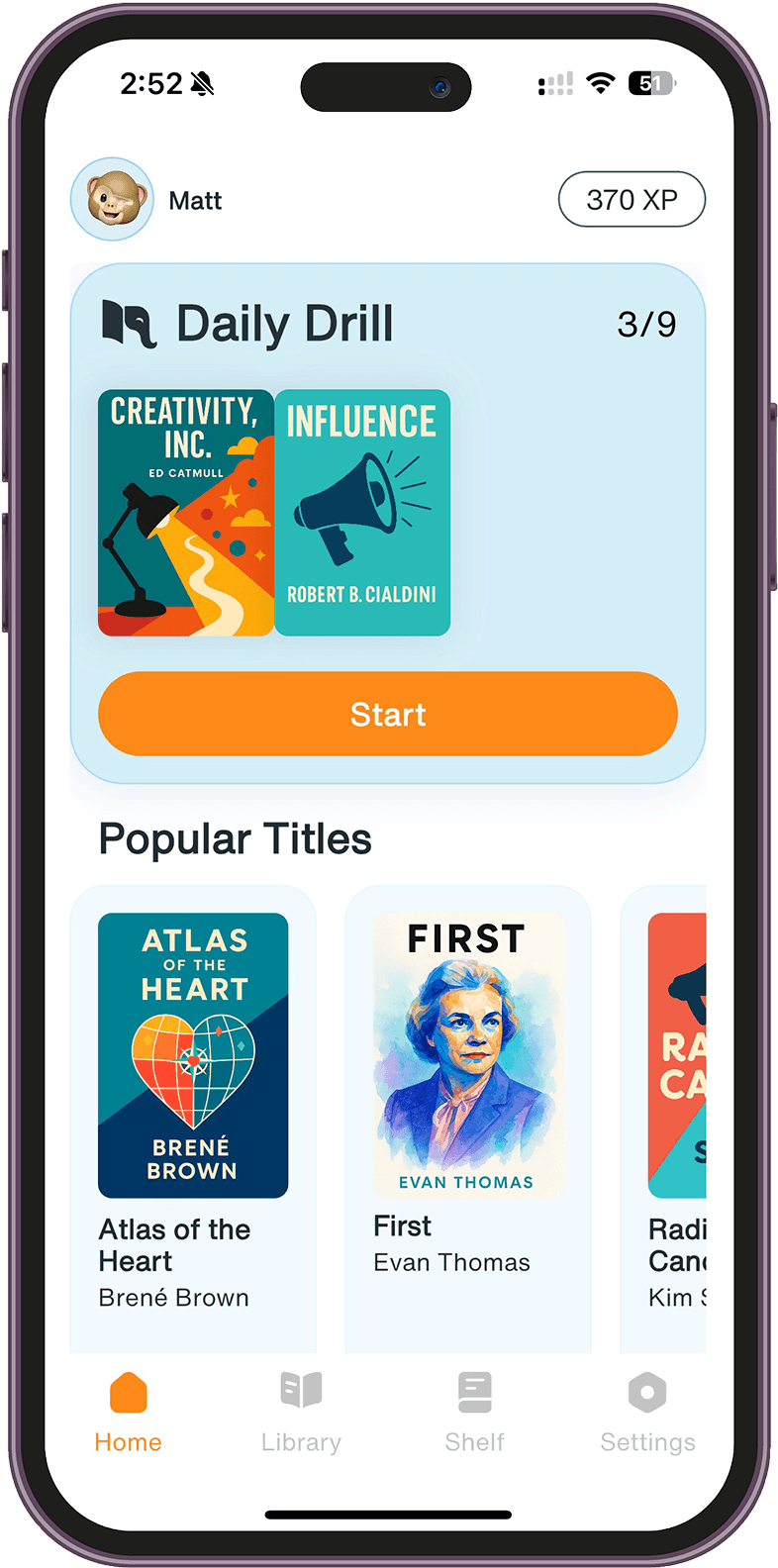
Loxie uses spaced repetition and active recall to help you internalize active listening techniques so they're available when conversations get challenging. Instead of reading once and forgetting, you practice for 2 minutes a day with questions that resurface specific techniques right before you'd naturally forget them.
Active listening is in Loxie's full topic library, free to browse and read — the retention drills that make it stick are part of Pro, with a 7-day free trial—so you can start reinforcing the difference between emotional support and information gathering, the 60-70% eye contact rule, and when to use "what" versus "why" questions immediately.
Frequently Asked Questions
What is active listening?
Active listening is the discipline of truly hearing and understanding what others communicate beyond just their words. It involves maintaining full presence, reflecting back what you've heard through paraphrasing and summarizing, detecting emotions beneath surface statements, and asking questions that deepen understanding rather than defend positions.
What is the ideal amount of eye contact during conversations?
Sustained eye contact at 60-70% during conversations communicates attention while allowing natural breaks that prevent intimidation. Constant staring feels aggressive while no eye contact feels dismissive. The 60-70% range maintains connection during speaking and listening while permitting natural breaks for processing.
Why should you avoid "why" questions when listening?
"Why" questions often trigger defensiveness because they imply judgment, echoing childhood scolding patterns. Using "what" and "how" questions instead—like "What led you to that conclusion?"—invites expansion without steering toward predetermined answers. Reserve "why" for exploring positive outcomes where it feels collaborative.
How do you know when someone needs emotional support versus problem-solving?
When unsure, explicitly ask: "Do you want my input or just need someone to listen?" If you can't ask, default to emotional support first—offer at least two empathetic reflections before any advice. Emotions need acknowledgment before logic can engage, so validation-first ensures you don't waste solutions on unreceptive ears.
What are the main barriers to effective listening?
The main barriers are mental rehearsal (crafting your response while they speak), assumption-making (filling gaps with your experiences), premature problem-solving (fixing before understanding), and emotional triggers (defensive reactions to uncomfortable topics). Recognizing these patterns as they occur allows you to consciously return focus to the speaker.
How can Loxie help me learn active listening?
Loxie uses spaced repetition and active recall to help you retain active listening techniques long-term. Instead of reading once and forgetting most of it, you practice for 2 minutes a day with questions that resurface specific techniques right before you'd naturally forget them. Active listening is in Loxie's full topic library, free to browse and read — the retention drills that make it stick are part of Pro, with a 7-day free trial.
Stop forgetting what you learn.
Start learning for good with your 7-day FREE trial.