Asynchronous Communication: Key Concepts & What You Need to Know
Master the art of collaborating effectively across time zones without the constant interruption of meetings and instant messages.
by The Loxie Learning Team
Every distributed team faces the same hidden productivity killer: communication that requires everyone to be available at the same time. Meetings pile up, instant messages fragment focus, and work stalls whenever someone is offline. Asynchronous communication solves this by teaching you to collaborate effectively across time zones, schedules, and work styles—without the constant interruption that destroys deep work.
This guide breaks down the essential concepts of async communication. You'll learn how to structure messages that convey complete context without back-and-forth clarification, write documentation people actually read, create handoffs that keep projects moving when you're unavailable, and make decisions without requiring everyone in the same virtual room. These aren't just nice-to-have skills—they're the foundation of modern distributed work.
 Start practicing async communication ▸
What is the SCR framework and why does it structure async messages so effectively?
The situation-complication-resolution (SCR) framework structures async messages by establishing shared context first, then explaining what changed or needs attention, and finally proposing specific actions needed. This mirrors how our brains naturally process stories, reducing the mental effort required to understand complex updates and preventing the three-day email ping-pong that plagues distributed teams.
SCR works because it follows narrative structure that humans evolved to process efficiently. When you start with situation (what everyone already knows), readers orient themselves without confusion. The complication identifies what's new or problematic, focusing attention on what actually matters. The resolution provides clear next steps, preventing the frustrating "so what?" response that stalls progress.
Here's SCR in practice: "Last week we decided to use vendor A (situation), but customer feedback shows integration problems are causing support tickets to spike 40% (complication), so I recommend switching to vendor B by end of month with the migration plan attached (resolution)." Each element builds on the previous one, creating a logical flow that recipients can follow without asking clarifying questions.
What five context elements prevent async messages from triggering endless clarification requests?
Complete async messages include five context elements: background (what led to this point), links to relevant documents, decision criteria (what constitutes success), constraints (budget, time, and resource limits), and stakeholder perspectives already gathered. Each missing element triggers a clarification request that adds 24-48 hours in distributed teams—meaning incomplete messages can turn a simple decision into a week-long thread.
When you omit background, recipients ask "How did we get here?" Missing links force them to hunt for information instead of taking action. Unclear criteria lead to "What would success look like?" Unknown constraints produce solutions that won't work within real limitations. Excluded stakeholder input means starting over when objections inevitably surface.
Including all five elements upfront transforms multi-day threads into single-response decisions. The extra 10 minutes you spend adding context saves hours of back-and-forth—a trade-off that compounds dramatically when you're collaborating across time zones where each exchange might span a full day.
Practice these frameworks in Loxie ▸
How does anticipating follow-up questions transform messages into decision packages?
Anticipating follow-up questions means proactively including sections like "Why not approach X?" (explaining alternatives considered), "What if Y happens?" (addressing edge cases), and "How does this affect Z?" (clarifying implications). This transforms messages from conversation starters into complete decision packages that recipients can act on immediately.
Anticipation requires perspective-taking: stepping into the recipient's shoes and identifying what they'll wonder about. Common patterns include alternative approaches (why did you choose this way rather than the obvious other option?), failure modes (what could go wrong and how will you handle it?), and downstream impacts (who else is affected by this decision?).
By proactively addressing these questions in your initial message, you demonstrate thorough thinking while eliminating the back-and-forth that turns simple decisions into week-long threads. The message becomes self-sufficient—recipients have everything they need to evaluate and respond without scheduling a call or sending clarifying questions.
Why do specific action requests outperform vague ones in async communication?
Specific action requests like "Please approve budget allocation by Friday 3pm PT" or "Choose option A or B using the criteria in section 2" eliminate ambiguity that causes decision paralysis. Vague requests like "thoughts?" leave recipients guessing whether you want approval, detailed feedback, or just acknowledgment—and that uncertainty often results in no response at all.
When you write "thoughts?" recipients wonder: Do you want detailed feedback or quick confirmation? Are you seeking approval or just opinions? Is this urgent or can it wait? The mental overhead of interpreting these expectations often leads people to defer response until they have time to figure out what you actually need—which may be never.
Specific requests remove this ambiguity by stating exactly what you need (approval, choice between options, feedback on specific sections), the criteria to use for evaluation, and when you need it. This precision enables recipients to provide exactly what's needed without the mental overhead of interpreting unclear expectations.
Reading about async communication won't make you better at it
These frameworks only work if you remember them in the moment. Loxie uses spaced repetition to help you internalize SCR structure, context elements, and action request patterns so they become automatic when you're writing that important message.
Build lasting async skills ▸How does progressive disclosure make documentation actually get read?
Progressive disclosure presents information in three layers: an executive summary (what and why in 2-3 sentences), key sections with scannable headers (the essential details), and appendices for deep dives. This lets readers self-select their depth rather than forcing everyone through everything—critical when different stakeholders need different levels of detail.
Different readers need different depths. Executives need high-level understanding to make decisions quickly. Implementers need specific details to execute correctly. Subject matter experts may want technical depth to evaluate approaches. Progressive disclosure serves all three without overwhelming anyone.
The executive gets their two-minute brief and moves on. The implementer finds their relevant section quickly without wading through background they already know. The expert can dive into appendices for the granular analysis they want. This self-service model respects readers' time while ensuring information is available for those who need it. Studies show 73% of readers abandon documents that don't establish relevance within the first paragraph—progressive disclosure prevents this by leading with value.
What formatting techniques make async documentation scannable?
Scannable formatting uses descriptive headers ("Budget Impact of Option A" not "Section 3"), bulleted lists for parallel items, numbered steps for sequences, and bold text for key terms. These visual cues let readers locate information in seconds rather than minutes—critical when team members across time zones need quick answers to keep working.
Visual hierarchy acts as a navigation system for busy readers. Descriptive headers tell readers what each section contains before they read it, enabling them to skip irrelevant sections confidently. Bullets signal "these items are related but independent—scan for the one you need." Numbers indicate "follow this sequence exactly." Bold text highlights critical terms, decisions, or warnings.
Without these cues, readers must parse every sentence to find what they need. In async work where quick information retrieval enables maintaining momentum, scannable formatting transforms documentation from a burden people avoid into a resource people actually use.
Why should documentation be written for the least-informed reader?
Writing documentation for the least-informed reader means defining every acronym on first use, explaining project history briefly, and avoiding insider references. This upfront investment enables new team members to self-onboard without pulling experienced members into explanatory meetings—a hidden cost that drains productivity across the organization.
Insider documentation creates dependency chains that compound over time. When documents assume prior knowledge, new members must interrupt experienced colleagues for context, pulling them from deep work. Those colleagues then explain the same background repeatedly to different people over months. By writing for the least-informed reader, you create self-service onboarding that scales.
New members can understand independently. Experienced members stay focused on their work. The documentation becomes a reusable training resource rather than a cryptic artifact that only makes sense to people who were there when it was written. Including a glossary of project-specific terms and a "Background for New Readers" section democratizes information access across the distributed team.
What five elements make handoffs enable immediate productive work?
Comprehensive handoffs document five elements: current state (where things stand now), next steps (prioritized task list), blockers (what's preventing progress), decisions needed (with context for each), and relevant background. Including all five enables recipients to start working immediately rather than spending their first day investigating what's actually happening.
Each missing handoff element costs hours of discovery time. Without current state, recipients must reconstruct progress from scattered artifacts and chat logs. Missing next steps force them to guess priorities or wait for clarification. Unnamed blockers lead to redundant problem-solving attempts on issues you already investigated. Unclear decision needs stall progress until someone can explain what's actually being decided. Absent background means repeating approaches you already explored and rejected.
Including all five elements transforms handoffs from investigation triggers into launchpads for immediate productive work. Recipients open the handoff document and start contributing value within minutes, not days.
Recording the "why" behind decisions
Recording the "why" behind decisions in handoffs ("We chose vendor A over B because of integration capabilities despite higher cost") prevents recipients from revisiting settled debates or reversing decisions due to missing context about trade-offs already evaluated.
Decision archaeology wastes enormous time. Without understanding why decisions were made, recipients question them, potentially spending days exploring options you already rejected for good reasons. Documenting the "why"—including alternatives considered, evaluation criteria, and trade-offs accepted—creates decision permanence. Recipients understand the reasoning, accept the trade-offs, and move forward rather than relitigating past choices based on incomplete information.
Explicit escalation paths and decision boundaries
Explicit escalation paths specify who to contact for what ("Technical issues → Sarah, Budget questions → Michael, Customer concerns → Lisa") and what decisions recipients can make independently (up to $5K spending, minor scope adjustments). This prevents work paralysis when the handoff creator becomes unavailable.
Ambiguous authority creates handoff bottlenecks. Without clear escalation paths, recipients either make decisions they shouldn't (creating problems) or wait for clarification they don't need (stalling progress). Explicit escalation paths and decision boundaries empower appropriate autonomy while protecting against overreach.
Start retaining what you learn ▸
What does "working in public" mean and why does it matter?
Working in public means conducting discussions in shared channels rather than private messages, creating searchable artifacts that become organizational knowledge. When someone asks "Why did we choose this approach?" the answer exists in discoverable form rather than locked in someone's private inbox or lost when that employee leaves.
Private conversations create knowledge silos that compound over time. Every private decision explanation, technical discussion, or problem-solving thread represents knowledge that dies with employee departure or email deletion. Public channels transform these conversations into searchable organizational memory.
New team members can self-serve historical context by searching past discussions. Similar problems get solved once rather than repeatedly by different people in private threads. Decisions have transparent rationales that survive personnel changes. Research shows public-by-default cultures reduce question repetition by 67% because answers become searchable—instead of five people asking the same question in private messages over months, one public question creates a referenceable answer for everyone.
Narrating work creates ambient awareness
Narrating work through brief status updates ("Starting user interviews," "Blocked on API access," "Shipping feature X") creates ambient awareness that helps teammates understand progress and identify collaboration opportunities without requiring status meetings or direct check-ins.
Work narration replaces the visibility that physical proximity provides in offices. In distributed teams, work becomes invisible by default—no one sees you at your desk, in meetings, or working late. Brief narration makes work visible again, helping managers understand progress without micromanaging, teammates spot opportunities to help, and collaborators coordinate naturally.
When should you use async versus synchronous communication?
Asynchronous communication excels for conveying information, gathering feedback on specific artifacts, making decisions with clear criteria, and enabling deep thinking. These scenarios benefit from the time to craft thoughtful responses rather than real-time reaction. Async's strength lies in deliberation—complex information is structured carefully, feedback is considered thoroughly, and decisions are evaluated independently without groupthink pressure.
Synchronous communication becomes necessary for complex problem-solving with interdependent variables, emotionally sensitive conversations requiring tone and facial cues, and relationship building through spontaneous interaction. These scenarios need the rapid feedback loops and nuanced communication that only real-time provides.
The async-first principle reverses the default from "schedule a meeting" to "write it down first." This forces clear thinking (writing requires more precision than speaking) while preserving synchronous time for scenarios where real-time interaction adds unique value rather than just satisfying habit. Async-first organizations see 47% fewer meetings and 31% more deep work hours because the friction of scheduling forces people to consider whether synchronous discussion truly adds value.
How do RACI frameworks enable async decision-making?
RACI frameworks clarify decision roles—Responsible (who does the work), Accountable (who owns the outcome), Consulted (who provides input), and Informed (who needs updates). This clarity prevents async decisions from stalling while waiting for unnecessary approvals or missing critical stakeholder input.
Decision paralysis in async environments often stems from unclear roles. Without RACI clarity, people wait for everyone's input (stalling progress) or bypass key stakeholders (creating rework). RACI explicitly defines who must provide input versus who just needs notification. The Consulted group knows their input is required and by when. The Informed group knows they'll be updated but aren't blockers. Publishing RACI matrices in shared spaces before starting decisions prevents the late-stage surprise of "Why wasn't I consulted?"
Structuring async decision proposals
Async decision proposals require five sections: problem statement (what we're solving), options considered (alternatives evaluated), recommendation with rationale, risks and mitigation plans, and implementation timeline. This structure enables reviewers to evaluate decisions independently without verbal presentation.
Structuring options as a comparison table with consistent evaluation criteria (cost, time, risk, resources) enables quick scanning and fair comparison—preventing the bias toward whichever option has the most eloquent written description. Reviewers can quickly compare costs, timelines, and risks without parsing paragraphs of prose.
Response time agreements create predictability
Explicit response time agreements by channel—4 hours for urgent flags, 24 hours for regular messages, 48 hours for FYIs—create predictability that enables both deep work blocks and timely collaboration without forcing constant message monitoring.
Undefined response expectations create anxiety and inefficiency. Without agreements, people either check constantly (destroying focus) or respond randomly (frustrating collaborators). Response time agreements must account for time zones by using business hours rather than clock time—"respond within one business day" means 24 working hours for the recipient, not 24 clock hours that might span a weekend.
Escalation protocols define break-glass scenarios for interrupting async norms—production outages warrant phone calls, customer emergencies trigger SMS, true urgencies use specific keywords. Without clear escalation paths, either everything becomes urgent (destroying async culture) or nothing does (missing critical issues).
The real challenge with learning async communication
You've just read through frameworks for structuring messages, principles for documentation, elements for handoffs, and guidelines for decision-making. But here's the uncomfortable truth: within a week, you'll have forgotten most of it. Within a month, you'll struggle to recall the difference between the five context elements and the five handoff elements—let alone apply them consistently when you're drafting a real message under pressure.
This isn't a criticism of your memory—it's how human cognition works. The forgetting curve shows we lose 70% of new information within 24 hours without reinforcement. You can understand async communication perfectly right now and still fail to apply it tomorrow because the knowledge simply won't be accessible when you need it.
How Loxie helps you actually remember async communication principles
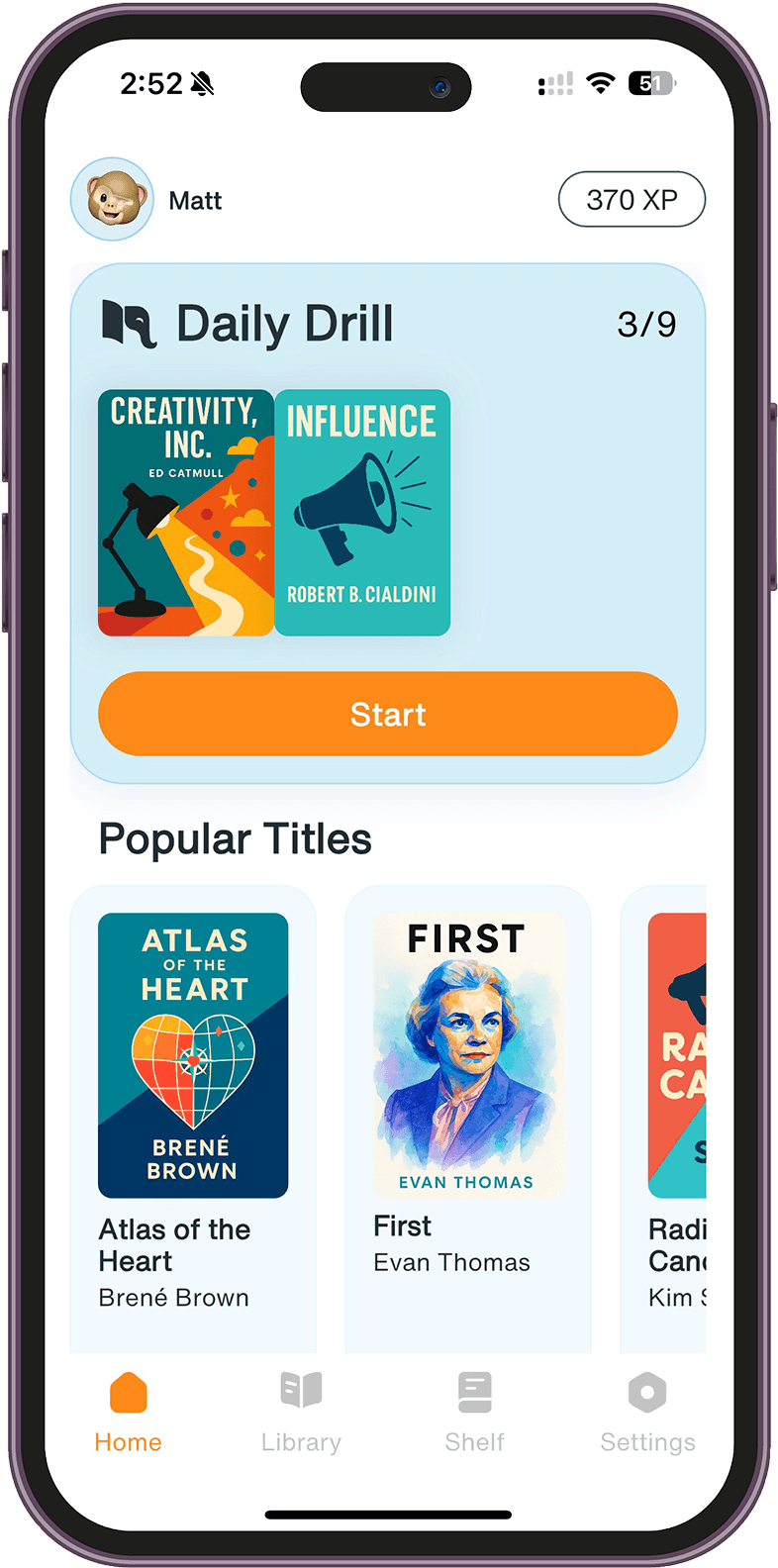
Loxie uses spaced repetition and active recall to help you internalize async communication concepts so they're available when you're actually writing that important message or creating that handoff document. Instead of reading once and forgetting, you practice for 2 minutes a day with questions that resurface the SCR framework, the five context elements, and documentation principles right before you'd naturally forget them.
Loxie includes async communication in its full topic library, so you can start reinforcing these concepts immediately. When you need to write a complete async message next week, you won't have to search for this article again—the frameworks will be part of how you think.
Frequently Asked Questions
What is asynchronous communication?
Asynchronous communication is collaboration that doesn't require everyone to be available at the same time. Instead of meetings and instant messages demanding immediate response, async relies on written messages, documentation, and structured handoffs that recipients can engage with when their schedule allows—enabling effective work across time zones and protecting deep work time.
What is the SCR framework for async messages?
SCR stands for Situation-Complication-Resolution. You start with shared context (what everyone knows), then explain what changed or needs attention (the complication), and finally propose specific actions needed (resolution). This structure mirrors natural storytelling, reducing cognitive load and preventing the multi-day clarification threads that plague async communication.
What are the five context elements every async message needs?
Complete async messages include: background (what led here), links to relevant documents, decision criteria (what constitutes success), constraints (budget, time, resource limits), and stakeholder perspectives already gathered. Each missing element triggers a clarification request that adds 24-48 hours in distributed teams.
When should you use synchronous instead of async communication?
Synchronous communication works better for complex problem-solving with interdependent variables, emotionally sensitive conversations requiring tone and facial cues, creative brainstorming where ideas build rapidly on each other, and relationship building through spontaneous interaction. These scenarios need rapid feedback loops async can't provide.
What does "working in public" mean?
Working in public means conducting discussions in shared channels rather than private messages, creating searchable artifacts that become organizational knowledge. When questions arise later, answers exist in discoverable form rather than locked in private inboxes. This reduces question repetition by 67% and enables self-service onboarding for new team members.
How can Loxie help me learn asynchronous communication?
Loxie uses spaced repetition and active recall to help you retain async communication frameworks long-term. Instead of reading once and forgetting the SCR structure or five context elements, you practice for 2 minutes a day with questions that resurface concepts right before you'd naturally forget them. Loxie includes async communication in its full topic library.
Stop forgetting what you learn.
Start learning for good with your 7-day FREE trial.