Boundaries: Key Insights & Takeaways from Cloud and Townsend
Learn how biblical boundaries protect your time, energy, and relationships—and why setting limits is actually the most loving thing you can do.
by The Loxie Learning Team
Few books have helped more Christians understand that saying no can be an act of love than Boundaries by Henry Cloud and John Townsend. Blending biblical wisdom with practical psychology, the authors show how healthy limits actually strengthen relationships, reduce resentment, and honor the way God designed us to live.
This guide unpacks the book's essential insights. You'll discover what boundaries actually are and why they matter, how to handle the inevitable pushback when you start setting limits, and why taking responsibility for yourself—while caring for others—reflects God's own character. Whether you struggle to say no or find yourself resenting the people you serve, these principles offer a path to freedom.
What are boundaries and why do they matter?
Boundaries are personal property lines that define where you end and others begin. Just as a fence marks where your yard stops and your neighbor's starts, personal boundaries clarify who owns what in relationships—your feelings, attitudes, behaviors, choices, values, and limits all belong to you and require your stewardship.
Without clear boundaries, life becomes chaotic and exhausting. Saying yes to everything means living according to other people's priorities rather than your own. Your emotional and physical resources drain away because you've taken responsibility for things that were never yours to carry. The person who can't say no eventually has nothing left to give—and resentment poisons the relationships they were trying to protect.
Cloud and Townsend emphasize that boundaries aren't walls designed to keep people out. They're gates that allow healthy connection while protecting what's precious. A person with good boundaries can give freely because they're giving from choice, not compulsion. They can love others without losing themselves in the process.
How do biblical principles support setting personal limits?
Scripture consistently supports personal boundaries through principles like the law of sowing and reaping, personal responsibility, and the command to love others as yourself—which presupposes that caring for yourself is legitimate and necessary.
God Himself models healthy boundaries. He respects human freedom to choose, even when those choices grieve Him. He maintains His standards without compromising to make people comfortable. He loves unconditionally while refusing to enable destructive behavior. When we set boundaries, we're actually reflecting God's character in our relationships.
The idea that Christians should have no limits—always saying yes, never protecting their own needs—finds no support in Scripture. Jesus withdrew from crowds to pray. Paul confronted Peter publicly when his behavior was harmful. The early church established clear expectations for members. Biblical love includes truth-telling and appropriate limits.
 Practice biblical boundaries with Loxie ▸
What is the Law of Sowing and Reaping?
The Law of Sowing and Reaping states that people must experience the natural consequences of their actions. When you shield someone from those consequences—bailing them out financially, covering for their irresponsibility, absorbing the impact of their poor choices—you enable destructive patterns to continue unchecked.
This principle comes directly from Galatians 6:7: "Do not be deceived: God cannot be mocked. A man reaps what he sows." Cloud and Townsend apply this to boundary-setting by showing that rescuing people from consequences isn't loving—it's enabling. The person who never feels the weight of their choices has no motivation to change.
Allowing consequences isn't cruelty; it's respect for the other person's agency and God's design for growth. A parent who always fixes their adult child's problems robs that child of maturity. A spouse who covers for their partner's addiction keeps the cycle spinning. Sometimes the most loving thing you can do is step back and let reality teach its lessons.
What is the Law of Responsibility?
The Law of Responsibility clarifies a crucial distinction: you are responsible to others but for yourself. This means you can genuinely care about someone else's struggles without taking ownership of their problems, emotions, or life choices.
Many Christians collapse this distinction, believing that love requires carrying other people's burdens in ways God never intended. The result is exhaustion, resentment, and relationships built on guilt rather than genuine connection. When you take responsibility for someone else's feelings, you make yourself their emotional hostage—and you prevent them from growing.
Being responsible to someone looks like empathy, encouragement, and appropriate help. Being responsible for yourself means owning your feelings, managing your reactions, and making your own choices. When both people in a relationship understand this distinction, connection becomes healthier and more sustainable.
What are the four boundary problem types?
Cloud and Townsend identify four common boundary problems that create predictable relational dysfunction: Compliants, Avoidants, Controllers, and Nonresponsives. Understanding which pattern you tend toward is the first step toward healthier relationships.
Compliants
Compliants struggle to say no. They absorb other people's demands, feel guilty about having needs, and often end up resentful because they've agreed to things they never wanted. Their boundaries are too permeable—they let everything in regardless of the cost to themselves.
Avoidants
Avoidants can't ask for help or acknowledge their own needs. They appear self-sufficient but are actually isolated. Rather than setting boundaries with words, they withdraw emotionally or physically. Their walls are too high—they keep legitimate connection out along with the harmful intrusions.
Controllers
Controllers don't respect other people's no. They push past limits, manipulate to get their way, and see others' boundaries as obstacles rather than legitimate expressions of autonomy. They may use aggression, guilt, or persistent pressure to override resistance.
Nonresponsives
Nonresponsives don't hear or respond to others' needs. They're so focused on their own world that they fail to notice when those around them are struggling. They aren't necessarily malicious—just oblivious to the impact of their self-absorption.
Most people lean toward one or two of these patterns, often learned in childhood. Recognizing your tendency helps you know what growth looks like for you specifically. The compliant needs to practice saying no; the avoidant needs to risk asking for help.
Knowing your boundary type intellectually is different from changing your patterns
Loxie helps you internalize these insights through spaced repetition so you recognize your tendencies in real-time situations, not just when reading about them.
Start building new patterns ▸Why is setting boundaries actually the most loving thing you can do?
Many Christians believe that setting boundaries is selfish, but Cloud and Townsend argue the opposite: boundaries are actually the most loving thing you can do for your relationships. Without limits, resentment builds, genuine giving becomes impossible, and relationships deteriorate into guilt-driven obligations.
When you say yes to everything, you eventually have nothing left to give. The exhausted, resentful giver isn't blessing anyone—they're going through the motions while harboring bitterness. But when you protect your capacity through appropriate limits, you can give freely from abundance rather than depletion.
Boundaries also create relationships based on freedom rather than manipulation. When both people know they can say no, every yes becomes meaningful. You're together because you choose to be, not because guilt or obligation trapped you there. This is the kind of love that reflects God's design—freely given, genuinely received.
How do you handle pushback when setting boundaries?
Boundary pushback follows predictable patterns: guilt messages, anger, withdrawal, escalation, and false crises. People who have benefited from your lack of boundaries won't celebrate when you start saying no. Expecting this resistance and preparing specific responses makes the transition manageable.
Guilt messages sound like "I can't believe you're doing this to me" or "After everything I've done for you." The goal is to make you feel responsible for their emotional reaction. Anger escalates the pressure through intimidation. Withdrawal punishes you with silence or distance. False crises manufacture urgency to override your new limits.
The key is recognizing these responses as resistance to change, not evidence that your boundary is wrong. Stay calm, restate your limit simply, and don't engage in extended justification. You don't need to defend your boundary—you only need to maintain it. Over time, people adjust to the new reality, and relationships often improve once everyone knows where they stand.
Learn to maintain your limits ▸
How do boundaries work in marriage?
Contrary to the myth that boundaries create distance between spouses, Cloud and Townsend show that individual boundaries actually strengthen marriage relationships. When each person maintains their sense of self, the result is mutual respect rather than enmeshment or resentment.
Marriage without boundaries leads to one of two problems: either one spouse dominates and the other disappears, or both partners lose themselves trying to merge completely. Neither pattern produces the intimacy couples desire. True oneness requires two distinct people choosing connection, not two halves desperately clinging together.
Healthy marital boundaries include taking responsibility for your own emotions rather than blaming your spouse, maintaining friendships and interests outside the marriage, and being able to disagree without it threatening the relationship. Spouses who respect each other's limits can love each other better than those who see their partner as an extension of themselves.
How do you set boundaries with family members?
Family boundaries require balancing deep honor and respect for parents and siblings with the freedom to say no to harmful patterns, unreasonable demands, or violations of your adult autonomy. This tension is real, but it's not impossible to navigate.
Honoring your parents doesn't mean obeying them as if you were still a child. Adult children can deeply respect their parents while making independent decisions about career, spouse, parenting style, and how they spend their time. Setting a boundary with a parent isn't dishonoring them—it's establishing the adult-to-adult relationship that healthy families develop.
Family systems often resist change because everyone has adapted to the current dysfunction. When you start setting limits, expect pressure from multiple directions. Extended family members may weigh in; guilt may come from unexpected sources. Stay focused on what's healthy and true, remembering that you're not just protecting yourself but modeling something better for the next generation.
What about boundaries in friendships?
Friendship boundaries address two common patterns: compliance (saying yes when you mean no) and avoidance (withdrawing instead of confronting). Both patterns erode connection over time. Healthy friendships require direct, honest communication about limits and expectations.
Compliant friends end up resentful because they agree to things they don't want to do. They cancel at the last minute, make excuses, or simply feel drained by friendships that should energize them. The solution isn't fewer friends—it's honest communication about what you can actually offer.
Avoidant friends withdraw when conflict arises rather than addressing problems directly. They disappear rather than say "that hurt me" or "I need something different." The friendship slowly fades without anyone understanding why. Learning to voice your needs and concerns keeps friendships alive and growing.
How do workplace boundaries prevent burnout?
Workplace boundaries prevent burnout by establishing clear limits on work hours, creating space to say no to unreasonable demands, and protecting personal time for rest and relationships. Without intentional limits, work expands to consume every available moment.
The challenge is that many workplaces reward boundaryless behavior. The person who answers emails at midnight, takes on every project, and never pushes back often gets praised—at least initially. But this pattern isn't sustainable, and it usually ends in either burnout or bitter disengagement.
Setting workplace boundaries means being clear about capacity, negotiating realistic deadlines, and protecting non-work time without guilt. It may require difficult conversations with supervisors or colleagues. But workers who maintain healthy limits are actually more productive, creative, and sustainable than those who give everything until they collapse.
What are internal boundaries and why do they matter?
Internal boundaries require self-control over your own thoughts, emotions, and behaviors. This means taking ownership of your choices rather than blaming circumstances, other people, or your feelings for how you act.
External boundaries protect you from others; internal boundaries protect you from yourself. You might have excellent limits with demanding people but no discipline over your own impulses. You control what enters your life from outside but not what emerges from within.
Internal boundaries look like managing your emotional reactions, controlling what you say when angry, disciplining your thought life, and following through on commitments you've made to yourself. This kind of self-leadership is essential for Christian maturity—and it's often harder than setting limits with other people.
How do digital boundaries protect relationships and peace?
Digital technology requires intentional boundaries because constant connectivity erodes both real relationships and personal peace. Without deliberate limits, devices fill every quiet moment and fragment your attention until deep connection becomes impossible.
Practical digital boundaries include scheduled offline time, strict notification limits, and designated device-free zones in your home. Some families ban phones from the dinner table; others establish evening cut-off times when screens go dark. The specific rules matter less than the principle: technology serves you, not the other way around.
The spiritual implications are significant. Quiet, solitude, and undistracted presence are essential for prayer, reflection, and genuine rest. A mind constantly buzzing with notifications has little space for the still, small voice. Digital boundaries aren't just about productivity—they're about protecting your soul.
How do early childhood experiences shape adult boundaries?
Early childhood experiences of having limits respected or violated fundamentally shape whether adults can say no, tolerate others' anger, and maintain their sense of self in relationships. Our families of origin teach us what to expect from boundaries—for better or worse.
Children whose parents respected their developing autonomy—allowing age-appropriate choices, honoring reasonable refusals, teaching through natural consequences—tend to become adults who can set and maintain healthy limits. They learned that boundaries are normal and respected.
Children whose boundaries were consistently overridden—through control, manipulation, or punishment for saying no—often become adults who either can't refuse anything or build walls to keep everyone out. Understanding your origin story helps explain your current patterns and reveals the growth you still need.
How do you teach children about boundaries?
Teaching children boundaries respects their developmental needs by allowing age-appropriate choices and consequences while maintaining necessary parental limits for safety and character development. Good parenting involves both firm limits and appropriate freedom.
Children need to experience natural consequences within safe parameters. The toddler who refuses lunch experiences hunger before dinner. The teenager who procrastinates faces the stress of last-minute work. These experiences teach the connection between choices and outcomes that builds responsibility.
At the same time, children need parents who model healthy boundaries—who say no without guilt, who maintain their own relationships and interests, who respect the child's developing autonomy without abandoning appropriate authority. Children learn boundaries primarily by watching the adults in their lives.
Retain these parenting principles ▸
How do you know if your boundaries are working?
Successful boundary implementation shows through measurable indicators: decreased resentment, increased energy, improved relationships, clearer yes/no decisions, and reduced guilt about self-care. These changes don't happen overnight, but they do happen.
The first sign is often relief. When you finally say no to something that was draining you, there's a lightness that signals health. Over time, resentment fades because you're no longer agreeing to things that violated your limits. Energy returns because you've stopped hemorrhaging resources into other people's responsibilities.
Paradoxically, relationships often improve even when the other person initially resisted your boundaries. Clarity creates respect. When people know where you stand, they can trust your yes because they've seen you say no. The guilt that used to accompany self-care diminishes as you realize that protecting your capacity is stewardship, not selfishness.
The real challenge with Boundaries
Understanding these principles intellectually is very different from applying them when your mother calls with guilt-laden disappointment, your boss assigns another unreasonable project, or your friend's crisis threatens to consume your weekend. The gap between knowing and doing is where most people get stuck.
Research on memory shows that we forget approximately 70% of new information within 24 hours without reinforcement. You might finish this book deeply convinced of its truths, yet find yourself slipping back into old patterns within weeks because the concepts aren't readily accessible when you need them most.
Spiritual and psychological growth requires more than a single exposure to good ideas. The patterns you developed over decades won't dissolve from reading one book. You need repeated engagement with these principles until they become instinctive—until saying no feels as natural as saying yes used to.
How Loxie helps you actually remember what you learn
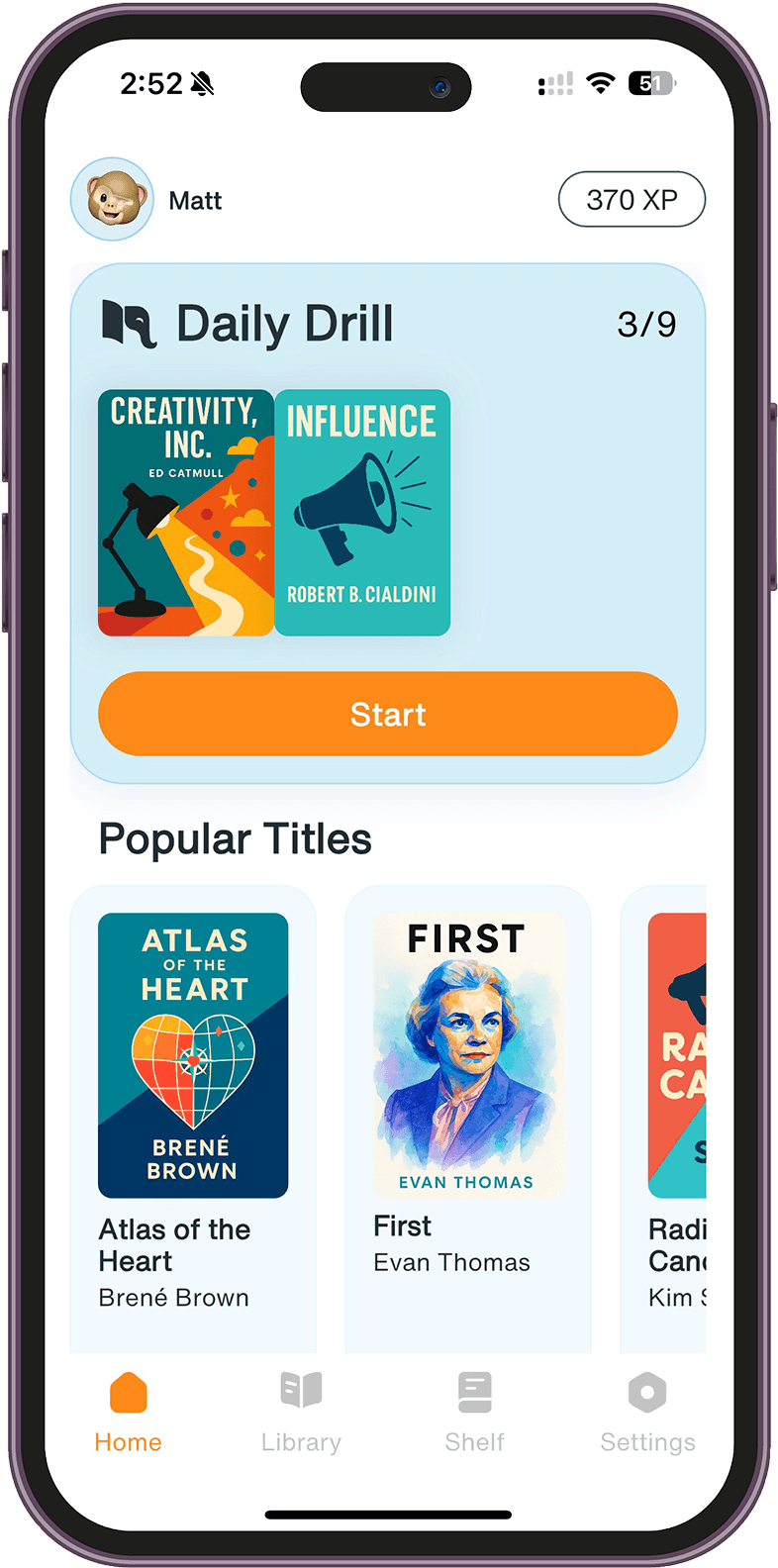
Loxie uses spaced repetition and active recall to help you internalize the boundary principles that could transform your relationships. Instead of reading once and forgetting, you practice for just two minutes a day with questions that resurface key concepts right before you'd naturally forget them.
The science behind this approach is robust: testing yourself on material produces dramatically better retention than passive review. When Loxie asks you about the four boundary types or the Law of Sowing and Reaping, you're not just remembering information—you're strengthening neural pathways that make these concepts available when you actually need them.
Loxie includes Boundaries in its complete topic library, so you can start reinforcing these insights immediately. Two minutes a day builds the kind of instinctive knowledge that changes behavior—so when pushback comes, you're ready.
Frequently Asked Questions
What is the main message of Boundaries?
Boundaries teaches that setting healthy personal limits protects your time, energy, and relationships while reflecting God's design for how people should relate to one another. Clear boundaries lead to greater freedom, reduced guilt, and relationships built on mutual respect rather than manipulation or obligation.
Is setting boundaries selfish or unbiblical?
No—Cloud and Townsend argue that boundaries are actually the most loving thing you can do. Without limits, resentment builds and genuine giving becomes impossible. Scripture supports personal responsibility through principles like sowing and reaping, and God Himself models healthy boundaries by respecting human freedom while maintaining His standards.
What are the four boundary problem types?
Compliants can't say no and absorb others' demands. Avoidants can't ask for help and withdraw instead of confronting. Controllers don't respect others' boundaries. Nonresponsives don't notice or respond to others' needs. Most people lean toward one or two patterns, often learned in childhood.
How do you handle someone who reacts badly to your boundaries?
Expect pushback in predictable forms: guilt messages, anger, withdrawal, escalation, or false crises. Stay calm, restate your limit simply, and don't engage in extended justification. Recognize these responses as resistance to change, not evidence that your boundary is wrong. Consistency over time helps people adjust.
What's the difference between being responsible TO someone and FOR someone?
You are responsible to others (caring, encouraging, offering appropriate help) but for yourself (owning your feelings, choices, and reactions). Taking responsibility for someone else's emotions makes you their hostage and prevents their growth. This distinction creates sustainable, healthy relationships.
How can Loxie help me internalize the truths from Boundaries?
Loxie uses spaced repetition and active recall to help you retain these boundary principles for real-life application. Instead of reading once and forgetting, you practice for 2 minutes a day with questions that resurface concepts when you need them. Loxie includes Boundaries in its full topic library.
We're an Amazon Associate. If you buy a book through our links, we earn a small commission at no extra cost to you.
Stop forgetting what you learn.
Start learning for good with your 7-day FREE trial.