Building a StoryBrand: Key Insights & Takeaways
Master Donald Miller's seven-part framework for creating marketing messages that actually connect with customers and drive sales.
by The Loxie Learning Team
Why do some brands cut through the noise while others get ignored? Donald Miller's Building a StoryBrand argues that the difference comes down to one thing: clarity. Most businesses lose customers not because their products are inferior, but because their marketing messages confuse people. And when you confuse, you lose.
Miller's solution is a seven-part storytelling framework that positions your customer as the hero and your brand as their guide. This approach taps into how humans have processed information for thousands of years—through narrative. This guide breaks down the complete StoryBrand framework so you can create messaging that connects, converts, and sticks.
 Start practicing StoryBrand free for 7 days ▸
What is the core principle behind the StoryBrand framework?
The StoryBrand framework transforms marketing by making the customer the hero of the story and positioning your brand as their trusted guide. This reverses the typical business mistake of casting themselves as the hero—talking endlessly about their history, achievements, and features instead of focusing on what the customer actually cares about: their own success.
This shift works because customers are already the heroes of their own stories. They wake up each morning facing challenges, seeking solutions, and trying to win. When your brand inserts itself as another hero competing for attention, it creates psychological friction. But when you position yourself as the guide—like Yoda to Luke Skywalker—you align with how customers naturally see the world.
The reason story structure works so powerfully is neurological. The human brain has evolved over millennia to process information through narrative patterns. When you organize your message as a story with a character, problem, guide, plan, and resolution, you're speaking the brain's native language. Information structured this way bypasses rational resistance and creates intuitive understanding.
Why does confusing messaging fail so dramatically?
If you confuse, you lose—this principle explains why most marketing fails before it even gets considered. The human brain is designed to conserve calories, and processing confusing information burns mental energy. When your message requires too much cognitive effort, the brain's automatic response is to tune out and look elsewhere.
This biological reality means that clever, complex, or insider-jargon-heavy messaging actively works against you. Every time a potential customer encounters your brand and feels confused about what you offer or how it helps them, they experience a micro-moment of cognitive strain. Their brain interprets this strain as a signal to disengage and find clearer options.
The solution is ruthless clarity. Miller argues that your message should pass what he calls the "grunt test"—within five seconds, even a distracted caveman should understand what you offer, how it makes life better, and what to do next. This primitive standard ensures your message penetrates even when visitors are multitasking, skeptical, or simply overwhelmed by the thousands of other messages competing for their attention.
Practice these concepts in Loxie ▸
What are the seven parts of the StoryBrand framework?
The StoryBrand framework consists of seven elements that mirror the structure of every compelling story: a Character who has a Problem and meets a Guide who gives them a Plan and calls them to Action that helps them avoid Failure and ends in Success. This sequence—often abbreviated as SB7—matches how humans have shared important information for thousands of years.
Each element serves a specific psychological function. The Character establishes who the story is about (your customer). The Problem creates tension that demands resolution. The Guide (your brand) provides the credibility and empathy needed to trust the solution. The Plan removes confusion about next steps. The Call to Action challenges the hero to engage. Failure raises the stakes by showing what's at risk. And Success paints a picture of the transformed life waiting on the other side.
This formula works because it creates what psychologists call an "open story loop" in the customer's mind. Once you've established a character with a problem, the brain won't rest until that loop gets closed with a resolution. This mental tension—the Zeigarnik effect—drives engagement and makes customers actively seek your solution rather than passively considering it.
How do you define what the customer wants?
A character who wants something encounters a problem before they can get it—this simple story formula should drive every piece of marketing copy you create. The key is identifying a single, specific desire and repeating it consistently rather than listing multiple wants that dilute focus.
When you present customers with multiple desires, you trigger analysis paralysis. The brain processes one clear desire as urgent and actionable, but multiple options cause postponement. Miller recommends choosing desires related to survival: conserving financial resources, saving time, building social networks, or gaining status. These categories tap into evolutionary programming that bypasses rational analysis.
The mistake most businesses make is assuming customers care about features or company achievements. They don't. Customers care about their own survival and success. Every word in your marketing should pass a simple filter: does this help customers understand how we help them win? If not, cut it. Understanding and retaining this customer-centric approach through consistent practice with tools like Loxie helps ensure you apply it instinctively rather than reverting to self-focused messaging under pressure.
What are the three levels of customer problems?
Every customer problem has three levels: external (the tangible problem), internal (how it makes them feel), and philosophical (why it's wrong). Most companies only address the external level, missing the deeper motivations that actually drive purchasing decisions.
The external problem is what customers would describe if you asked them directly—their lawn is overgrown, their software is outdated, their back hurts. But the internal problem is the frustration, inadequacy, or anxiety that external problem creates. A small business owner with a broken website doesn't just have a technical problem; they feel embarrassed and unprofessional every time they hand someone a business card.
The philosophical problem addresses why the situation is fundamentally unjust. Using "ought" and "should" language—businesses should be able to afford great design, people deserve to feel confident—transforms customers from buyers into believers. They see their purchase as voting for how the world should work. This three-level approach explains why premium brands command higher prices: they resolve emotional and philosophical problems, not just practical ones.
Understanding problems at all three levels changes everything.
But knowing this intellectually isn't the same as applying it instinctively. Loxie helps you internalize these frameworks through spaced repetition so they're available when you're actually writing copy or planning campaigns.
Try Loxie free for 7 days ▸How should brands position themselves as guides?
Customers aren't looking for another hero—they're looking for a guide. Effective brands demonstrate two essential qualities: empathy and authority. Like Yoda mentoring Luke Skywalker, they understand the hero's struggle and have the competence to lead them to victory.
The sequence matters critically: express empathy before authority. Showing you understand their problem creates trust, while immediately displaying credentials without empathy feels arrogant and disconnected. Customers must first believe you care about their success before they'll care about your expertise. Simple statements like "We know how frustrating it is when..." open the door for your credentials to matter.
Authority doesn't require boasting. Testimonials, statistics, awards, and logos of recognizable clients all demonstrate competence without self-aggrandizement. The goal is to answer the unspoken question in every customer's mind: "Can this brand actually help me win?" When you've established both empathy (they understand me) and authority (they can help me), customers grant you the trusted guide position that makes selling feel like helping.
Why do customers need a clear plan?
Create a process plan showing exactly how customers can do business with you—typically three to four simple steps that eliminate the confusion causing procrastination. When the path forward feels overwhelming or unclear, customers postpone decisions indefinitely, even when they want what you're offering.
Process plans work by breaking down a potentially complex journey into bite-sized, manageable steps. "Schedule a call, get a custom proposal, launch your campaign" transforms an intimidating commitment into a clear sequence anyone can follow. Each step should feel achievable, creating momentum that carries customers toward conversion.
Miller also recommends "agreement plans"—guarantees, promises, or commitments that address unspoken customer fears. These might include satisfaction guarantees, no-hidden-fees pledges, or specific outcome promises. By proactively naming and eliminating concerns like "What if this doesn't work?" or "What if I overpay?", you remove psychological barriers that prevent action even when desire is strong.
How should you call customers to action?
Direct calls to action like "Buy Now" or "Schedule a Call" should appear clearly and repeatedly throughout your marketing. Customers expect to be challenged and actually lose respect for brands that don't ask for the sale. Being passive about your call to action signals either lack of confidence in your solution or disrespect for the customer's time.
Research shows calls to action need to appear at least twice on every webpage—your button should be visible in the header navigation and above the fold on every page. The color should contrast with your brand palette to stand out visually. Don't make customers hunt for how to engage with you; the path forward should be obvious at every scroll depth.
Alongside direct CTAs, include transitional calls to action for customers not ready to commit. Free guides, samples, or webinars function like dates before marriage—they allow customers to experience your value without financial risk. These lower-commitment offers build trust and often convert skeptics into advocates. But never let transitional CTAs replace your primary ask; they complement it, not substitute for it.
Why is showing potential failure important?
People move toward pleasure but move faster away from pain—showing what customers will lose without your solution creates more urgency than just showing benefits. This loss aversion principle means cautiously presenting potential negative consequences triggers stronger action than positive outcomes alone.
Miller compares failure references to salt in a recipe: a small amount enhances everything while too much ruins the entire dish. You're not trying to terrorize customers; you're raising the stakes just enough to make the story matter. Without anything to lose, there's no narrative tension driving the hero forward.
The key is helping customers visualize the cost of inaction in concrete terms. What opportunities will they miss? What frustrations will continue? What will their life look like if nothing changes? These questions—asked thoughtfully, not manipulatively—activate the brain's threat-detection systems that prioritize avoiding losses over gaining rewards. The tension between potential failure and promised success is what makes stories (and marketing) compelling.
How do you paint a picture of success?
People don't buy products—they buy transformations into better versions of themselves. Never assume customers understand how your product will change their life; explicitly describe the successful ending to their story in vivid, specific detail.
Success in the StoryBrand framework means closing the story loop by showing concrete outcomes: specific status gains, time savings, reduced anxiety, or increased confidence. These tangible metrics provide the resolution the brain craves after you've opened a narrative loop with problems and tension. Vague promises like "better results" don't satisfy; "spend two hours less on paperwork every week" does.
The deepest level of customer value is identity transformation. Smart brands participate in their customer's evolution by expressing how they'll change: from confused to enlightened, from weak to strong, from alone to part of a community. This before-and-after framing taps into the fundamental human drive for growth, making your brand essential to their personal story rather than just useful for solving problems.
Start retaining what you learn ▸
What makes an effective website homepage?
The five essential elements above the fold on your website are: a headline stating what you offer, a subheadline explaining value, a clear call to action, an image showing success, and nothing else to distract. This minimal approach works because visitors spend only seconds deciding whether to stay.
Cluttered homepages force the brain to work too hard, triggering the automatic response to leave and find clearer options. Every additional element—rotating sliders, multiple navigation options, walls of text—competes for attention and dilutes your primary message. The goal isn't to say everything; it's to say the one thing that earns the right to say more.
For important but secondary information, Miller recommends including a "junk drawer" section lower on the page. This satisfies analytical buyers who want detailed information without cluttering the primary message that converts emotional buyers. The structure respects different decision-making styles while maintaining the clean, clear pathway most visitors need to take action.
The real challenge with Building a StoryBrand
Here's the problem with marketing frameworks: they feel powerful when you read them but fade quickly when you need them. How many business books have you read that felt transformative in the moment, but three months later you can barely recall the main concepts? The StoryBrand framework is no exception—its seven elements, three problem levels, and specific techniques require consistent reinforcement to actually apply.
The forgetting curve is brutal. Within 24 hours, you forget approximately 70% of new information. Within a week, that number climbs higher. This means the insights from Building a StoryBrand—the exact frameworks you need when writing copy or planning campaigns—won't be available when you need them unless you actively work to retain them.
How Loxie helps you actually remember what you learn
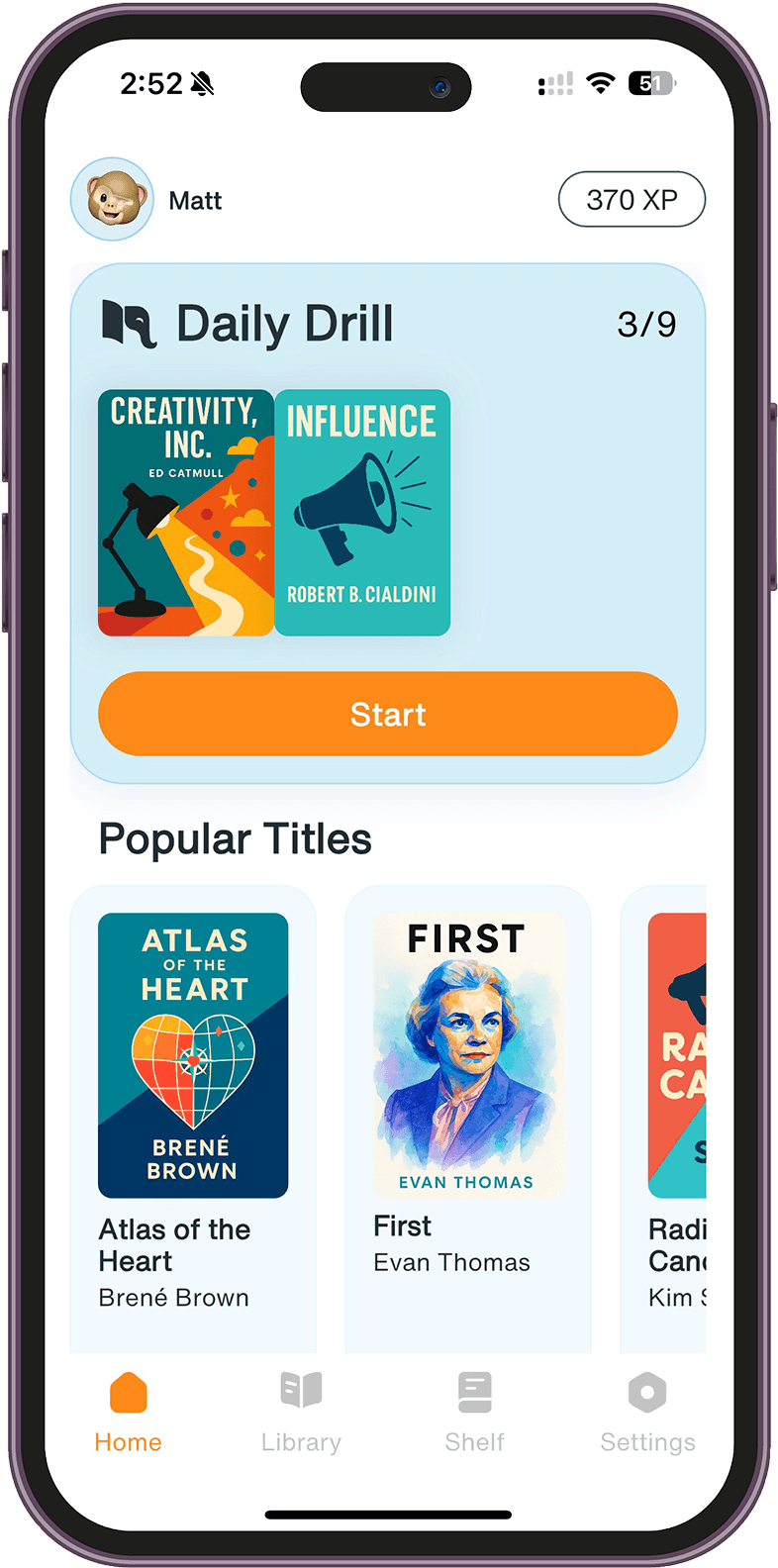
Loxie uses spaced repetition and active recall to help you internalize the StoryBrand framework so it's available instinctively, not just intellectually. Instead of reading the book once and hoping the concepts stick, you practice for just 2 minutes a day with questions that resurface ideas right before you'd naturally forget them.
Loxie includes Building a StoryBrand in its complete topic library. You can start reinforcing the seven-part framework, the three problem levels, and all the implementation tactics today—ensuring that the next time you sit down to write marketing copy, these principles are at your fingertips rather than buried in a book you read months ago.
Frequently Asked Questions
What is the main idea of Building a StoryBrand?
The core idea is that businesses should position customers as the hero of the story and their brand as the guide. Most marketing fails because companies talk about themselves instead of addressing what customers actually care about: their own survival and success. Using a seven-part storytelling framework creates messages that cut through noise and drive action.
What are the 7 parts of the StoryBrand framework?
The seven elements are: Character (your customer), Problem (what blocks them), Guide (your brand showing empathy and authority), Plan (clear steps forward), Call to Action (direct challenge to engage), Failure (what's at stake), and Success (the transformation they'll experience). This sequence mirrors timeless story structure.
What does "if you confuse, you lose" mean?
This principle states that the human brain conserves energy by tuning out confusing messages. When your marketing requires too much mental effort to understand, customers disengage automatically. Clear, simple messaging dramatically outperforms clever or complex marketing because it respects how the brain actually processes information.
What are the three levels of customer problems?
Every problem has an external level (the tangible issue), internal level (how it makes them feel), and philosophical level (why it's fundamentally wrong). Most businesses only address external problems, missing the emotional and moral dimensions that actually drive purchasing decisions and brand loyalty.
Why should brands be guides instead of heroes?
Customers are already the heroes of their own stories—they don't need another hero competing for that role. By positioning yourself as a guide who understands their struggle (empathy) and can help them win (authority), you align with how customers naturally see the world and earn their trust.
How can Loxie help me remember what I learned from Building a StoryBrand?
Loxie uses spaced repetition and active recall to help you retain the StoryBrand framework. Instead of reading the book once and forgetting most of it, you practice for 2 minutes a day with questions that resurface concepts right before you'd naturally forget them. Loxie includes Building a StoryBrand in its full topic library.
We're an Amazon Associate. If you buy a book through our links, we earn a small commission at no extra cost to you.
Stop forgetting what you learn.
Start learning for good with your 7-day FREE trial.