Building Authentic Sales Confidence: Key Concepts & What You Need to Know
Develop genuine belief in your value that resonates more powerfully than any memorized script—because buyers buy your conviction, not your pitch.
by The Loxie Learning Team
Here's an uncomfortable truth about sales: prospects don't buy what you're selling—they buy your belief in what you're selling. The most polished pitch delivered with uncertainty loses to a rough presentation backed by genuine conviction. Yet most sales training focuses on scripts, techniques, and closing tactics while ignoring the foundation that makes all of it work: authentic confidence built on real value and proven results.
This guide breaks down the essential concepts for building sales confidence that attracts rather than repels. You'll learn how to systematically collect and internalize success stories that fuel conviction, develop product knowledge deep enough to handle any challenge, master the physical and vocal signals that communicate certainty, build resilience that transforms rejection into refinement, and cultivate the service mindset that makes selling feel like helping.
 Start practicing sales confidence techniques ▸
How do you systematically collect success stories that build conviction?
Systematic success story collection requires documenting three essential elements for every customer win: quantified business results (revenue gained, time saved, costs reduced), the emotional journey from frustration to relief, and actual stakeholder quotes. This creates a repository of proof that transforms abstract value claims into concrete evidence you can genuinely believe in.
Without systematic collection, success stories remain vague memories that fade over time. Documenting specific metrics makes wins tangible—"reduced processing time by 73%" beats "saved time" because precision creates credibility you can feel. Emotional journey details help you connect with similar prospect struggles, while real quotes provide authentic language that resonates far more than marketing copy.
The most powerful success stories capture transformation moments—the specific day when a customer realized your solution changed their business. "The morning our month-end close took 2 days instead of 10, our CFO called it career-defining" creates a vivid picture that abstract ROI never achieves. When you can describe the exact moment a customer's world changed, your confidence becomes contagious because you're not selling a possibility—you're sharing a proven transformation.
Mining customer wins should also include unexpected benefits that exceeded initial expectations. "We bought it for inventory management but it transformed our customer service" proves your solution delivers value beyond the obvious. These surprise victories give you confidence to explore unconventional use cases and trust that value emerges in ways neither you nor the prospect fully predict.
How do you internalize success stories to transform them into conviction?
Success story internalization transforms documentation into embodied conviction by reviewing 2-3 relevant wins before each call, visualizing similar outcomes for your specific prospect, and emotionally connecting to the impact you'll create. This process replaces nervous selling energy with genuine excitement about helping.
Reading success stories before calls is like an athlete watching highlight reels before a game—it programs your mind for success. When you visualize your prospect achieving similar results and feel the satisfaction of their future win, selling anxiety transforms into helping enthusiasm. This pre-call ritual turns abstract confidence into embodied belief that prospects unconsciously sense and respond to.
Mental rehearsal effectiveness increases when you visualize specific sensory details—hearing the prospect's voice tone shift from skepticism to interest, seeing their body language open up, feeling your own calm breathing. The brain treats vivid mental practice as real experience, building the same neural pathways as actual successful calls. Generic visualization provides minimal benefit, but sensory-rich practice creates embodied confidence that shows up automatically in real conversations.
Practice these confidence techniques in Loxie ▸
Why does deep product knowledge create unshakeable confidence?
Deep product knowledge means understanding not just what features do, but why they were built that way, what problems they solve, and what trade-offs were made. This depth enables you to answer any technical challenge with confidence because you understand the reasoning behind every design decision rather than reciting memorized specifications.
Surface knowledge crumbles under scrutiny, but understanding the "why" behind your product creates confidence that withstands pressure. When you know why certain features exist and others don't, you can explain limitations as intentional strategic choices rather than weaknesses. This transforms you from someone reading a script to an expert who truly understands the solution's philosophy and can defend it authentically.
Product expertise confidence comes from hands-on usage, shadowing implementation teams, and studying support tickets to understand real-world application challenges. Firsthand experience provides stories and insights that no product training can replace. Theoretical knowledge sounds hollow compared to battle-tested experience—when you've personally navigated the implementation process and witnessed common user struggles, your confidence has authentic foundation that prospects immediately sense.
How does transformation storytelling replace feature lists?
Transformation storytelling replaces feature descriptions with before-and-after scenarios that paint vivid pictures: "Right now your team spends Fridays in spreadsheet hell; imagine logging off at 3pm because automated reporting handled everything." This contrast makes abstract capabilities emotionally tangible in ways that feature lists never achieve.
Before-and-after storytelling works because it helps prospects feel the transformation rather than intellectually understand it. The contrast between current pain and future relief creates emotional pull that motivates action. When you paint these pictures with conviction—because you've seen real customers experience these transformations—prospects start seeing themselves in the future state, which accelerates buying decisions.
How do you confidently handle product limitations?
Confident handling of product limitations means acknowledging constraints upfront—"We don't do X because we optimized for Y"—explaining the strategic trade-off, then pivoting to strengths. This transparency builds trust because prospects respect honesty over deflection, and it demonstrates expertise deep enough to know where boundaries lie.
Attempting to hide limitations destroys confidence on both sides. When you openly discuss what your product doesn't do and why, you demonstrate wisdom and integrity. Prospects trust sellers who acknowledge boundaries because it signals you understand the product well enough to know its limits and prioritize their success over your commission. This honesty paradoxically strengthens your position when discussing what you do well.
Knowing these techniques isn't the same as using them automatically.
Loxie helps you internalize sales confidence concepts through spaced repetition—so the right mindset and language emerge naturally when you need them most.
Try Loxie free for 7 days ▸What mental preparation creates confidence before high-stakes calls?
Visualization for sales calls involves mentally rehearsing three scenarios: the ideal conversation flow where everything clicks, handling the toughest likely objection smoothly, and recovering gracefully from unexpected challenges. This programs your mind for confidence across all situations, not just perfect ones—so nothing feels like an ambush.
Most sellers only visualize success, leaving them unprepared when reality diverges. By mentally rehearsing objection handling and recovery scenarios, you build confidence for the full range of possibilities. When that tough question arrives, you've already successfully handled it in your mind, allowing you to respond with calm authority rather than panic.
High-stakes conversation preparation requires identifying three potential landmines—budget constraints, competing priorities, internal politics—and preparing specific responses for each. Confidence comes from anticipating challenges rather than hoping they won't arise. This includes understanding industry challenges, recent company changes, and stakeholder dynamics that might influence the conversation.
Mental preparation rituals should include reviewing your three best customer wins, setting a specific intention for the call ("I will uncover their real decision criteria"), and writing one thing you're genuinely curious about. Reviewing wins reminds you of capability when doubt creeps in. Setting intentions gives clear direction rather than vague pressure to "do well." Writing curiosity questions shifts focus from self-centered anxiety to other-focused interest.
How do pre-call rituals trigger confident state on command?
Pre-call confidence rituals combine physical power poses (standing tall with hands on hips for 2 minutes increases testosterone and decreases cortisol), breathing exercises (4-7-8 pattern calms nerves), and environmental setup (standing desk, energizing music). This creates a repeatable sequence that reliably triggers confident state regardless of how you felt moments before.
Confidence isn't just mental—it's embodied. Power poses literally change your hormone levels, making you feel more powerful. Controlled breathing activates your parasympathetic nervous system, reducing anxiety. Standing while talking projects more energy than sitting. When combined into a consistent pre-call ritual, these physical triggers reliably produce a confident state that prospects sense immediately.
Learn these rituals for good ▸
What body language and vocal patterns communicate confidence?
Confident body language on video calls requires positioning your camera at eye level, sitting back from the screen to show your torso and hands, and maintaining eye contact with the camera lens rather than the screen. These non-verbal signals communicate authority even through digital barriers where many confidence cues are eliminated.
Video calls remove most physical confidence cues, making the remaining ones more critical. Eye-level camera prevents looking down (submissive) or up (pleading). Showing torso and hands builds trust through visible gestures. Looking at the camera creates eye contact for viewers, even though it feels unnatural. Deliberate hand gestures within the box between your shoulders and waist emphasize points without distraction—move with purpose rather than fidgeting, and hold stillness between gestures.
How does your voice signal certainty or doubt?
Vocal confidence comes from speaking 20% slower than feels natural, dropping pitch at statement ends rather than rising (which sounds uncertain), and using strategic pauses before key points. These tone variations command attention and convey certainty without aggression because they mirror how naturally confident people speak when they have nothing to prove.
Fast talking signals nervousness while upward inflection makes statements sound like questions. Slowing down gives weight to your words and time for processing. Dropping pitch at sentence ends makes you sound decisive. Strategic pauses create anticipation and emphasis—these techniques work because they reflect how people naturally speak when they're certain of what they're saying.
What word choices signal confidence versus uncertainty?
Confident word choice eliminates hedging language—"I think," "maybe," "hopefully"—and replaces it with declarative statements: "The data shows," "Clients consistently report," "You will see." These linguistic patterns signal certainty while still allowing room for questions, and the difference registers before prospects consciously process your message.
When you say "I think this might help," prospects hear uncertainty. But "This will reduce your processing time" conveys confidence. The key is backing declarations with evidence rather than empty assertions—confidence grounded in proof rather than bluster. This isn't about overpromising; it's about stating what you genuinely know to be true with the conviction it deserves.
How do you build resilience that transforms rejection into refinement?
Rejection resilience requires maintaining a rejection journal that tracks patterns—timing, objection type, prospect profile—not to dwell on losses but to identify improvement areas. This transforms emotional hits into analytical data that builds competence and confidence simultaneously, making each "no" market intelligence rather than confidence poison.
Random rejection feels personal and overwhelming. But when tracked systematically, patterns emerge: certain objections repeat, specific prospect types consistently decline, particular approaches fail. This data transforms rejection from personal failure into process refinement opportunity. Perspective reframing analyzes why prospects said no—poor timing, wrong stakeholder, genuine bad fit—using losses to refine targeting rather than questioning your worth as a seller.
Setting rejection goals—"I will get 20 nos this week"—paradoxically builds confidence by normalizing rejection as progress metric rather than failure. When you're trying to get rejected, each "no" becomes an achievement that moves you closer to inevitable yeses. This mental judo makes you bolder in prospecting, more willing to reach higher, and less devastated by declines.
How do you recover confidence after rejection?
Confidence recovery after rejection requires returning to your success story repository, reading testimonials from satisfied customers, and preparing extra thoroughly for the next 2-3 calls. This rebuilds from a foundation of proven value rather than pushing through with shaken belief—ensuring you're bringing your best rather than limping through.
When confidence drops after rejection streaks, activity increase often backfires. Making more calls while demoralized leads to weak conversations that generate more rejection, deepening the spiral rather than breaking it. Breaking the cycle requires addressing confidence first, then returning to activity from a stronger mental position.
Small wins rebuild momentum—scheduling a call with a friendly existing customer, helping a colleague with product questions, or closing a small upsell. These achievable victories restore positive associations with selling. A happy customer conversation reminds you why you do this work, while helping colleagues reinforces your expertise. Micro-successes gradually rebuild the confidence foundation needed for bigger challenges.
Build lasting sales resilience ▸
What's the difference between confidence that attracts and arrogance that repels?
Attractive confidence combines strong belief in your solution with genuine curiosity about the prospect's situation—leading with insights while asking thoughtful questions, asserting expertise while remaining open to learning. This creates conversations that feel collaborative rather than combative because prospects feel understood rather than sold to.
Pure assertion without curiosity becomes arrogance that triggers resistance. Pure questioning without conviction seems weak. The combination—"Based on similar companies, I've seen X work well, but tell me about your specific situation"—demonstrates expertise while respecting the prospect's unique context. This balance makes prospects want to engage rather than defend.
Humble confidence acknowledges knowledge limits ("That's outside my expertise, let me connect you with our technical team"), admits when competitors might fit better, and celebrates customer wins over personal victories. This authenticity paradoxically increases influence because it demonstrates genuine concern for customer success over your commission.
What arrogance signals should you avoid?
Arrogance signals include interrupting prospects mid-sentence, dismissing concerns without exploration ("That's not really an issue"), name-dropping excessively, and prescribing solutions before understanding problems. These behaviors make prospects feel unheard and trigger defensive resistance because they stem from insecurity masquerading as confidence.
Interrupting shows you value your words over theirs. Dismissing concerns signals you're not listening. Excessive name-dropping seeks external validation. Premature prescription reveals you're following a script rather than solving their problem. True confidence listens fully, explores thoroughly, and prescribes carefully—the opposite of these arrogance markers.
How does service mindset transform selling anxiety into helping enthusiasm?
Service mindset reframes every sales conversation from "How can I get them to buy?" to "How can I help them improve their situation?" Shifting focus from your quota to their outcomes reduces pressure and replaces selling anxiety with genuine enthusiasm about making their business better—an energy that prospects sense and respond to positively.
When you're focused on getting someone to buy, every objection feels like personal rejection and every conversation carries commission pressure. But when focused on helping, objections become clarification requests and conversations become problem-solving sessions. People resist being sold to but welcome being helped—this shift is felt by prospects and changes the entire dynamic.
The service mindset manifests in language shifts: "Let me show you our product" becomes "Let's explore if this could help." "What's your budget?" becomes "What would success look like?" "When can we close?" becomes "What's your ideal timeline?" These subtle changes transform adversarial dynamics into collaborative exploration because seller-centric language creates opposition while service language creates partnership.
Pre-call intention setting focused on discovery ("I will understand their real challenge") rather than closing ("I will get them to buy") reduces pressure and improves outcomes. When you're genuinely curious rather than agenda-driven, prospects open up and conversations flow naturally. Ironically, this service orientation leads to more closed deals than aggressive closing tactics.
How do you recover when confidence crashes mid-conversation?
Confidence recovery protocols combine immediate pattern interrupts (standing up, taking five deep breaths, stepping outside), cognitive reframing (challenging the thought "I'm terrible at this" with evidence of past success), and physical anchors (touching a success trophy, reading a saved thank-you note). These tools restore positive state within minutes when used immediately.
Confidence crashes create physical and mental loops that deepen without intervention. Pattern interrupts break the physical state—movement changes neurochemistry. Cognitive reframing challenges catastrophic thinking with facts, preventing single failures from becoming identity beliefs. Physical anchors provide tangible reminders of capability. Used immediately when confidence drops, these tools prevent minor shakes from becoming major crises.
Common confidence triggers include competitive losses to specific rivals, technical questions you can't answer, prospect skepticism about ROI, and comparison to successful peers. Recognizing your personal trigger patterns allows proactive preparation: competitive differentiation practice, technical knowledge building, ROI proof points, and reframing peer success as learning opportunity rather than threat.
Bounce-back routines after setbacks follow a specific sequence: acknowledge the hit without dwelling, do one small thing well immediately (send a follow-up email, update CRM), then prepare extra thoroughly for the next interaction. The moments after confidence hits determine trajectory—quick acknowledgment followed by immediate positive action turns setbacks into comebacks.
The real challenge with building authentic sales confidence
Understanding these confidence techniques intellectually is one thing. Having them available automatically when you're nervous before a big call, stinging from rejection, or facing a skeptical prospect is another entirely. Research shows we forget up to 70% of new information within 24 hours—which means most of what you just read will fade before you have the chance to practice it.
How much of this will you remember when you're preparing for your next high-stakes conversation? Will you recall the specific pre-call ritual components? The vocal patterns that signal certainty? The language shifts that transform selling into helping? Sales confidence isn't built from reading—it's built from repeated practice until these techniques become automatic responses.
How Loxie helps you actually remember what you learn
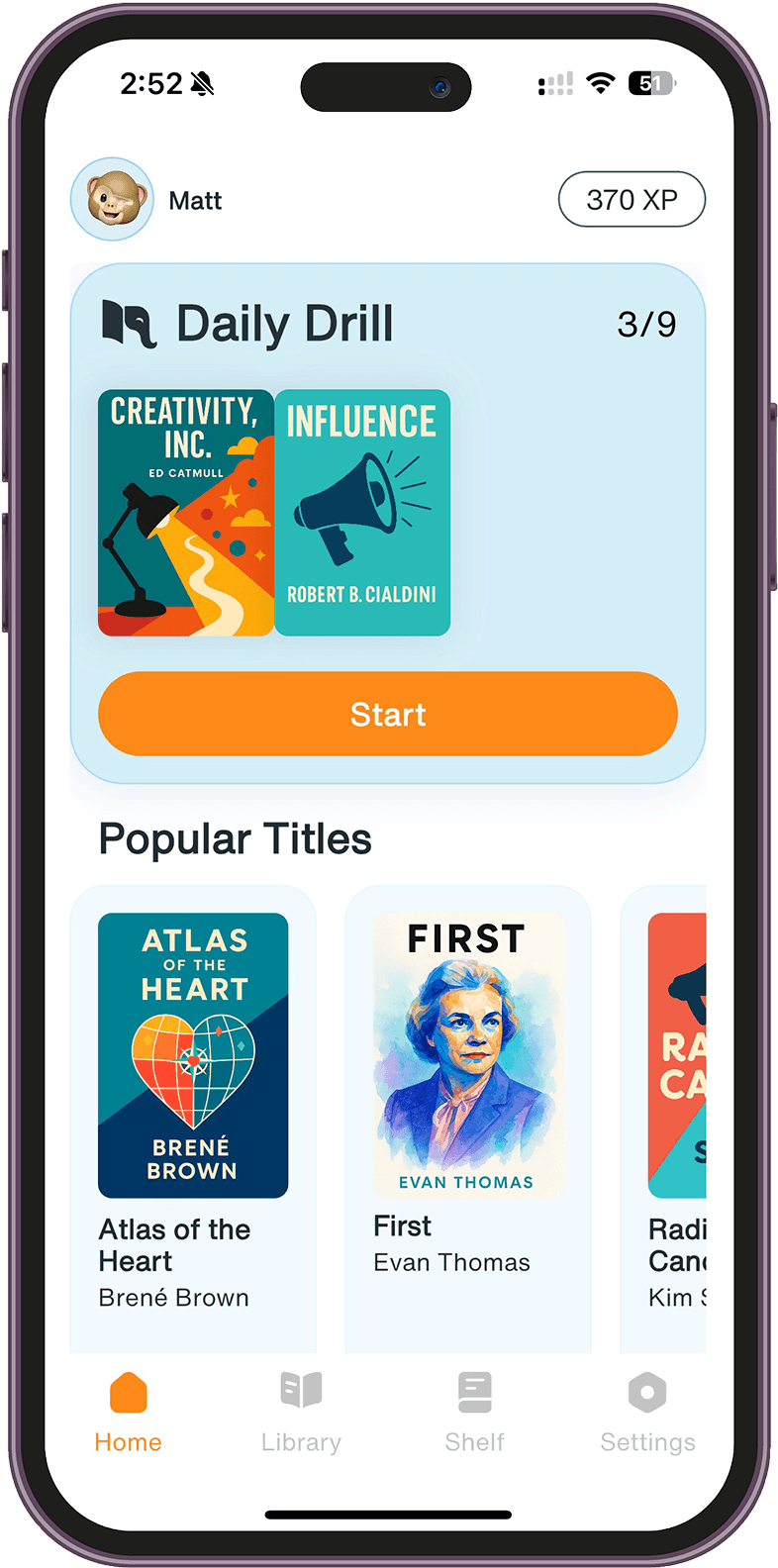
Loxie uses spaced repetition and active recall to help you internalize sales confidence concepts so they're available when you need them. Instead of reading once and forgetting most of it, you practice for 2 minutes a day with questions that resurface ideas right before you'd naturally forget them—the pre-call rituals, the vocal techniques, the mindset shifts.
Loxie includes access to sales confidence concepts and the full topic library, so you can start reinforcing these techniques immediately. Because confidence in sales isn't about knowing the right things to do—it's about having them available automatically when the pressure is on.
Frequently Asked Questions
What is authentic sales confidence?
Authentic sales confidence is genuine belief in your value proposition built on proven results and deep product knowledge—not forced enthusiasm or memorized scripts. It emerges from systematically collecting success stories, internalizing customer transformations, and understanding your product deeply enough to handle any challenge. This authentic conviction resonates with prospects far more powerfully than polished techniques.
Why do buyers respond to confidence more than perfect pitches?
Buyers unconsciously sense your belief level through body language, vocal tone, and word choice. When you genuinely believe your solution helps, that certainty transfers to prospects. Confidence signals competence and trustworthiness, while uncertainty—regardless of how polished your script—creates doubt about whether you believe in what you're selling.
How do you maintain confidence through rejection?
Maintain confidence through rejection by tracking patterns in a rejection journal to transform emotional hits into analytical data. Reframe rejection as market feedback rather than personal failure, set rejection goals to normalize "no" as progress, and rebuild through small wins and success story review rather than pushing through with shaken belief.
What's the difference between confidence and arrogance in sales?
Confidence combines strong belief with genuine curiosity—leading with insights while remaining open to learning. Arrogance interrupts, dismisses concerns, and prescribes solutions before understanding problems. Confident sellers acknowledge limitations and celebrate customer wins; arrogant sellers hide weaknesses and focus on personal victories.
How can Loxie help me build authentic sales confidence?
Loxie uses spaced repetition and active recall to help you internalize sales confidence techniques so they're available automatically when you need them. Instead of reading about pre-call rituals, vocal patterns, and mindset shifts once and forgetting, you practice for 2 minutes a day until these concepts become second nature. Loxie includes full access to this topic.
Stop forgetting what you learn.
Start learning for good with your 7-day FREE trial.