Coach Builder: Key Insights & Takeaways from Donald Miller
Master Donald Miller's proven framework for transforming your expertise into a profitable, scalable coaching business.
by The Loxie Learning Team
You have expertise that could genuinely help people. But how do you turn that knowledge into a coaching business that actually pays the bills? Donald Miller's Coach Builder provides the complete roadmap—from validating your niche to scaling beyond one-on-one sessions to building a coaching company that runs without you.
This guide breaks down Miller's framework for building a profitable coaching practice. Whether you're considering launching your first coaching program or looking to scale an existing practice, you'll discover the specific strategies that separate struggling coaches from thriving ones. The insights here go beyond motivation into the mechanics of what actually works.
 Start practicing Coach Builder free for 7 days ▸
Why is coaching such a massive business opportunity right now?
The coaching industry has exploded because we've shifted to a knowledge economy where professionals are drowning in information but starving for guidance. Expertise alone no longer carries value—what people desperately need is someone who can cut through the noise, provide clarity, and create structured pathways to specific results. This makes coaching one of the most scalable business models for anyone with specialized knowledge.
Miller emphasizes that this isn't just a trend but a fundamental economic shift. The internet gave everyone access to unlimited information, which paradoxically made trusted guides more valuable, not less. When someone can Google any topic and find thousands of conflicting opinions, they'll pay premium prices for a coach who can tell them exactly what to do and hold them accountable for doing it.
What is the coaching sweet spot and how do you find yours?
The coaching sweet spot exists at the intersection of three circles: what you're genuinely passionate about, what you're competent in, and what the market will actually pay for. Missing any single element creates either an expensive hobby, a job you'll burn out from, or a business that never finds customers.
This framework prevents the common trap of building a coaching practice around only passion or expertise without validating market demand. Many would-be coaches love a topic but never ask whether anyone would pay to learn it. Others have marketable skills but no enthusiasm for teaching them. The sweet spot requires all three elements working together.
To validate your sweet spot, Miller recommends a simple test: offer five free coaching sessions to people in your target market. If at least three out of five want to continue working with you on a paid basis, you've found a viable niche. If not, refine your approach before investing in websites, courses, or marketing infrastructure. This low-risk validation prevents the expensive mistake of building elaborate programs that nobody wants.
How should you position yourself as a coach to attract clients?
Position yourself as a guide, not a hero, in your client's story. Drawing from his StoryBrand framework, Miller explains that successful coaches make the client the protagonist while serving as the wise mentor who provides the plan and belief they need to succeed. Clients don't want another expert telling them what to do—they want a trusted guide who helps them become the hero of their own transformation.
This positioning shift transforms how clients perceive your value. When you position yourself as the hero with all the answers, you inadvertently diminish the client's role and agency. But when you position yourself as the guide who has walked this path before, clients feel empowered rather than dependent. They see themselves achieving the transformation, with your help.
Creating your coaching one-liner
Miller introduces the concept of a one-liner that passes the dinner party test: when someone asks what you do, you should be able to explain your coaching in one sentence that makes them say "tell me more" rather than "that's nice." A compelling one-liner becomes your most powerful marketing tool because it turns every conversation into a potential client opportunity.
The structure follows a problem-solution format: "I help [specific person] who struggles with [specific problem] achieve [specific result]." This clarity also enables satisfied clients to easily refer others because they can articulate exactly what you do. Vague descriptions like "I'm a life coach" or "I help people grow" fail the test because they don't create curiosity or enable referrals.
What kind of problems should your coaching solve?
Your coaching niche should solve an expensive problem—target issues that cost your clients significant money, time, relationships, or opportunities. These expensive problems create urgency and justify premium pricing. Coaches who focus on "nice to have" improvements struggle to attract clients, while those addressing genuinely costly problems find clients eager to invest in solutions.
Consider the difference between helping someone "feel more confident" versus helping them "land their next promotion." The first is abstract and hard to value. The second has concrete financial implications—perhaps tens of thousands of dollars in additional annual salary. Clients will invest far more to solve problems with clear, measurable costs.
Miller also emphasizes defining your transformation with a "from-to" statement that makes outcomes concrete and measurable. "From confused entrepreneur to confident CEO" beats vague promises of "leadership development." This clarity forces you to articulate exactly what changes in your client's life, making it easier to market your services and design programs that deliver specific results.
Practice these concepts in Loxie ▸
How do you structure a coaching program that gets results?
Structure coaching programs around a repeatable framework with five to seven sequential modules that build on each other. This creates consistent results while allowing customization within each module for individual client needs. A modular framework ensures every client receives the same high-quality experience while giving you flexibility to adapt examples and exercises.
Every coaching session should follow the Review-Teach-Apply-Assign rhythm: review homework from last time, teach a new concept, apply it together in the session, then assign next action steps. This structure ensures clients don't just receive information but actually implement it, with each session building on real progress rather than theoretical discussion.
Building in early wins
Miller stresses the importance of building quick wins into the first two weeks of your program. Early victories create psychological momentum that carries clients through harder challenges later in the coaching journey. Starting with achievable goals builds client confidence and trust in the process, creating the emotional fuel needed for more difficult transformations.
Your coaching toolkit should include templates, assessments, and worksheets that clients complete between sessions. These tools multiply your impact while reducing repetitive explanation time. Well-designed tools allow clients to do the heavy lifting of self-discovery on their own time, making your coaching sessions more strategic and less tactical.
Learning Miller's frameworks is step one. Remembering them when you need them is another challenge entirely.
Loxie uses spaced repetition to help you internalize coaching frameworks so they're available when you're building your practice—not just when you're reading about it.
Try Loxie free for 7 days ▸How should you price your coaching services?
Price based on transformation value, not time. A coaching program that helps someone land a $20,000 raise can command $5,000, while charging hourly might yield only $1,000 for the same result. Value-based pricing aligns your compensation with client outcomes, creating a win-win where you're incentivized to deliver maximum results rather than maximize hours.
Miller recommends the 10x rule for pricing: your coaching should deliver at least ten times its cost in value to the client. When clients can clearly see how a $3,000 program will generate $30,000 in value—through increased revenue, saved time, or avoided mistakes—price becomes irrelevant. The only question becomes how quickly they can start.
The three-tier pricing model
Package your coaching into three tiers: DIY (course only), DWY (done with you coaching), and DFY (done for you service). This allows clients to self-select based on budget and desired support level. The tiered approach maximizes revenue by capturing the full spectrum of your market—budget-conscious self-starters, clients wanting guidance, and those willing to pay premium prices for full implementation support.
A coaching audit serves as an excellent entry point: a paid 90-minute session where you diagnose their situation and prescribe next steps. This naturally leads to your full program for those ready to implement. The audit fee qualifies serious buyers and positions you as a professional rather than someone giving free advice hoping for conversion.
How do you find your first coaching clients?
Your first ten clients come from your existing network through a simple outreach: "I'm launching a coaching program to help [specific person] achieve [specific result]. Do you know anyone who might benefit?" This approach leverages existing trust while avoiding the awkwardness of direct pitching. People love to be helpful connectors, and your network already knows your expertise and character.
Case studies become your primary marketing tool after those initial clients. Detailed stories of client transformations are far more powerful than credentials, certifications, or claims about your methodology. Prospects don't care about your process—they care about results. Case studies let potential clients see themselves in past clients' journeys, building trust through identification rather than persuasion.
Creating referral systems
Create referral events where past clients can invite friends to a workshop or webinar. This leverages social proof while giving clients a non-salesy way to share your value with their network. Referral events remove the awkwardness of direct asks while creating a community atmosphere where prospects see others investing in growth.
Start retaining what you learn ▸
How do you scale a coaching business beyond one-on-one sessions?
Group coaching at one-third the price of individual coaching generates three times the revenue. Twelve clients at $500 per month earns more than four clients at $1,500 per month while requiring similar time investment. The math transforms your business model: lower price points attract more clients, group dynamics enhance learning through peer insights, and community creates accountability that improves results.
Turn your coaching framework into a self-paced course that serves as both a revenue stream and a pre-qualifier. Clients who complete your course arrive at coaching with foundational knowledge that enables deeper work. Courses create passive income while solving the problem of unprepared clients who need extensive background before meaningful coaching can begin.
Office hours and implementation workshops
Create office hours where multiple clients can drop in for quick coaching via group video call. This provides additional value without additional one-on-one time while building community among clients. Clients often learn more from hearing others' challenges than from direct coaching, as peer situations illuminate blind spots in their own thinking.
Implementation workshops bridge the gap between information and transformation. Most course buyers never implement what they learn; workshops solve this problem while creating a natural upsell path that increases customer lifetime value without requiring one-on-one time.
When and how should you hire other coaches?
Hire coaches only after you have twenty or more clients and a proven framework. Trying to scale before this point dilutes quality and damages reputation since you haven't standardized what makes your coaching work. Premature scaling is a top killer of coaching businesses—waiting until you have sufficient demand and a documented process ensures new coaches can deliver consistent results.
Document your coaching methodology in a playbook that captures your unique process, key questions, common scenarios, and intervention strategies. This intellectual property becomes a valuable business asset. A documented methodology not only ensures consistent quality but creates something sellable, enables you to train other coaches, and positions you as a thought leader with a proprietary system.
Structure associate coach compensation at 30-40% of the revenue they generate. This aligns incentives while maintaining healthy margins for business growth and your continued involvement in quality control. The model ensures coaches are motivated to deliver results and retain clients while leaving sufficient margin for training, support, and infrastructure.
What coaching techniques actually drive transformation?
Master the powerful pause: after asking a breakthrough question, count to seven silently before speaking again. The most transformative insights emerge in uncomfortable silence. This technique forces clients to go beyond surface-level responses and access deeper truths, creating the "aha moments" that justify premium fees and generate lasting change.
Replace advice-giving with curiosity-leading by asking questions like "What would success look like?" and "What's stopping you?" Clients who discover their own solutions are far more likely to implement them. This approach respects client autonomy while leveraging the psychological principle that people commit more strongly to ideas they generate themselves.
Use the story-lesson-action framework: help clients reframe their limiting stories, extract the lesson, then commit to specific action. This creates both insight and implementation, moving clients from being stuck in their narrative to becoming authors of a new story with practical steps forward.
Learn Coach Builder for good ▸
How do you manage your time and energy as a coach?
Batch similar activities—dedicate specific days to coaching calls, content creation, and administrative tasks rather than mixing throughout the week. This multiplies your productivity by three to four times through deep focus. Context switching between coaching, marketing, and admin work destroys productivity; batching creates flow states where you can serve more clients with higher quality.
Build momentum through minimum viable progress: commit to just fifteen minutes daily on your coaching business rather than waiting for perfect conditions. Small daily actions compound into unstoppable momentum, while waiting for the "right time" to go all-in usually means never starting. Most successful coaches built their practices in the margins before going full-time.
Design your client journey with five critical touchpoints: onboarding excitement, early wins, midpoint check-in, breakthrough moment, and graduation celebration. Strategic touchpoints prevent client dropout by maintaining engagement throughout the program, while creating memorable experiences that generate testimonials and referrals.
How do you handle imposter syndrome as a coach?
Miller reframes imposter syndrome as a positive signal rather than evidence of inadequacy. Feeling like an imposter means you're stretching beyond your comfort zone where real growth and value creation happen. The coaches who never feel imposter syndrome are often those who've stopped growing.
Embracing this discomfort as a sign of expansion rather than inadequacy transforms it from barrier to fuel. Your clients don't need you to be perfect—they need you to be a few steps ahead of where they are and committed to guiding them forward. That's what a guide does, and it's fundamentally different from claiming to be an infallible expert.
The real challenge with Coach Builder
Here's the uncomfortable truth about business books like Coach Builder: understanding these frameworks intellectually and actually implementing them are vastly different challenges. The forgetting curve is brutal—within a week, you'll lose the majority of what you've learned. Within a month, the specific pricing strategies, the session structure, and the scaling thresholds start to blur together.
How many business books have you read that felt like they contained exactly what you needed, only to find yourself three months later unable to recall the key frameworks? Miller's concepts are actionable, but only if you can retrieve them when you're actually building your practice—not just while reading about it.
How Loxie helps you actually remember what you learn
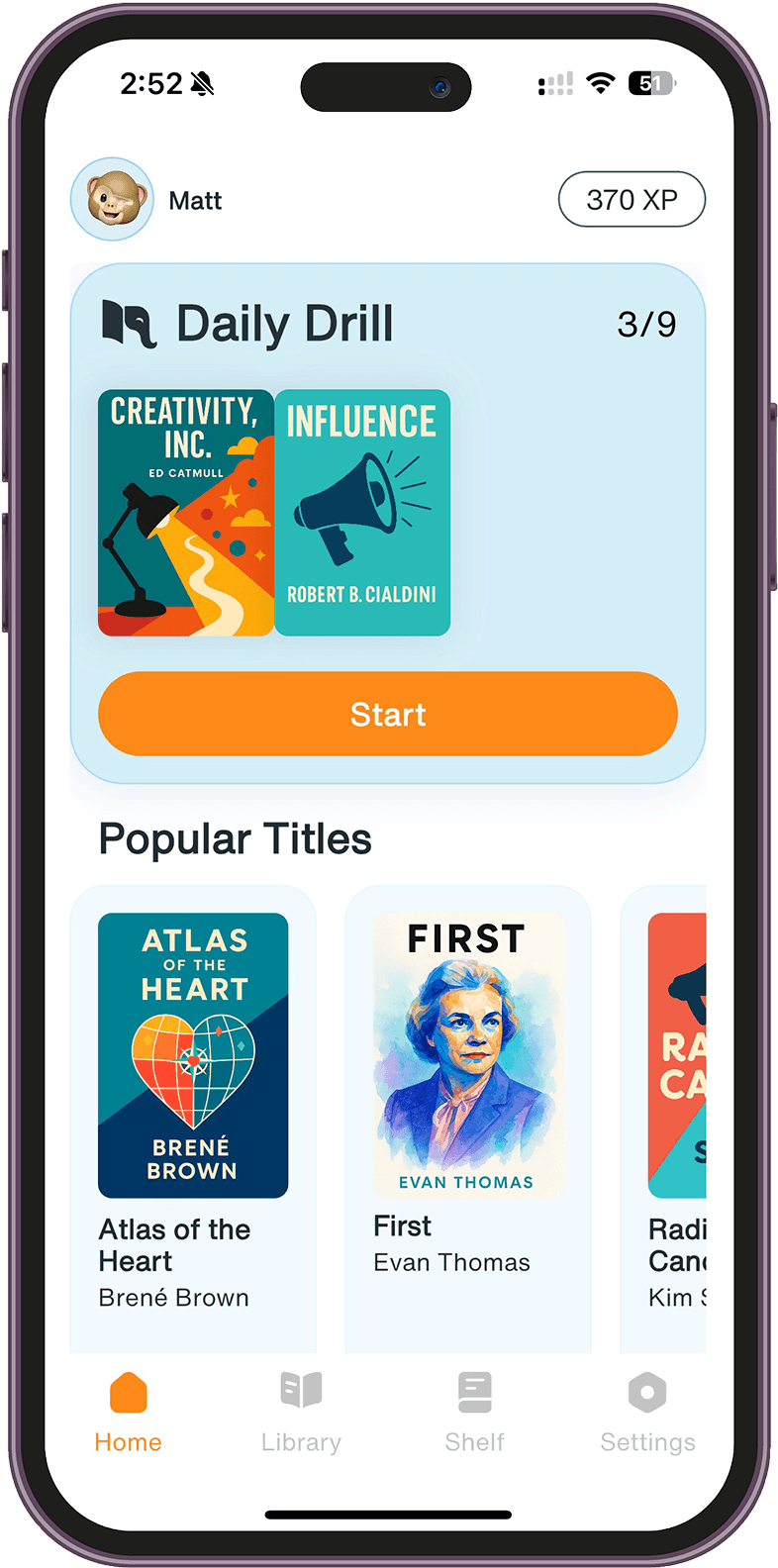
Loxie uses spaced repetition and active recall to help you retain knowledge from books like Coach Builder. Instead of reading once and hoping the information sticks, you practice for just two minutes a day with questions that resurface ideas right before you'd naturally forget them.
The science is clear: actively recalling information strengthens memory far more than passive re-reading. Loxie spaces out your practice based on how well you're retaining each concept, focusing your time on the ideas that need reinforcement while letting well-learned material rest. Coach Builder is available in Loxie's free topic library, so you can start reinforcing Miller's frameworks immediately.
Frequently Asked Questions
What is the main idea of Coach Builder?
Coach Builder provides a complete framework for transforming expertise into a profitable coaching business. Miller argues that success comes from finding the intersection of passion, competence, and market demand, then positioning yourself as a guide who solves expensive problems through a structured, repeatable methodology.
What are the key takeaways from Coach Builder?
The essential takeaways include: find your coaching sweet spot where passion, competence, and market demand intersect; position yourself as a guide rather than a hero; solve expensive problems that create urgency; price based on transformation value rather than time; and scale through group coaching and courses before hiring other coaches.
What is the coaching sweet spot according to Donald Miller?
The coaching sweet spot is the intersection of three circles: what you're passionate about, what you're competent in, and what the market will pay for. Missing any single element creates either a hobby, a job you'll hate, or a business that can't find customers.
How should you price coaching services according to Coach Builder?
Price based on transformation value, not time. Use the 10x rule: your coaching should deliver at least ten times its cost in value to clients. A program helping someone earn a $20,000 raise can command $5,000, whereas hourly billing for the same transformation might yield only $1,000.
When should you hire other coaches according to Coach Builder?
Only hire coaches after you have twenty or more clients and a documented, proven framework. Premature scaling dilutes quality and damages reputation because you haven't yet standardized what makes your coaching work effectively and consistently.
How can Loxie help me remember what I learned from Coach Builder?
Loxie uses spaced repetition and active recall to help you retain key concepts from Coach Builder. Instead of reading once and forgetting most of it, you practice for 2 minutes a day with questions that resurface ideas right before you'd naturally forget them. Loxie includes Coach Builder in its full topic library.
We're an Amazon Associate. If you buy a book through our links, we earn a small commission at no extra cost to you.
Stop forgetting what you learn.
Start learning for good with your 7-day FREE trial.