Coaching for Leaders: Key Concepts & What You Need to Know
Learn how to shift from problem-solver to capability-builder using coaching conversations that develop your team's skills and independence.
by The Loxie Learning Team
Every time you solve a problem for your team, you create two outcomes: the problem gets fixed, and your team learns they need you to fix problems. Coaching for Leaders teaches the opposite approach—developing others' capabilities so they solve problems at the source and become increasingly self-sufficient. This is the multiplier effect of leadership: building capability rather than dependency.
This guide breaks down how to shift from problem-solver to capability-builder. You'll master the GROW model for structuring developmental conversations, learn to ask questions that unlock insight rather than providing answers, and understand when coaching serves development versus when directing or delegating makes more sense. The goal isn't becoming a better solver—it's becoming unnecessary.
 Start practicing coaching skills ▸
What is the GROW model and how does it structure coaching conversations?
The GROW model structures coaching through four stages—Goal, Reality, Options, and Way forward—shifting ownership from coach to coachee by exploring through questions rather than providing solutions. Coachees commit more fully to plans they create themselves than to advice they're given, which is why GROW works: it follows natural problem-solving flow while keeping ownership where it belongs.
Each stage has a distinct purpose that builds on the previous one. Goal defines what success looks like and uncovers personal motivation. Reality establishes current facts without judgment. Options breaks mental constraints to reveal possibilities. Way forward converts insights into specific commitments. Skipping stages or rushing through them weakens the entire coaching impact because the sequence matters—without clear goals, reality exploration lacks direction; without understanding current reality, options may be unrealistic; without exploring multiple options, commitment tends to be weak.
The framework prevents common coaching mistakes like jumping to solutions before understanding the real problem. By asking questions at each stage rather than advising, you activate the coachee's thinking and build their capability to solve similar problems independently in the future.
How to explore Reality without triggering defensiveness
Reality exploration assesses current state through questions like "What have you tried?" and "What's working or not working?"—letting coachees analyze their own situation prevents the defensiveness that occurs when you diagnose their problems for them. People resist external diagnosis but accept their own analysis. When they identify what's not working, they own the problem. When you tell them what's wrong, they defend or justify.
This ownership difference determines whether they'll genuinely work on solutions or comply superficially. Asking "What data or evidence do you have?" and "What assumptions might you be making?" separates facts from interpretations, helping coachees see their situation more objectively and identify previously hidden options.
Why "What else?" is the most powerful Options question
Options generation uses "What else?" repeatedly—at least 3-4 times—along with constraint-breaking questions like "If you had unlimited resources?" or "If you knew you couldn't fail?" Pushing past first ideas uncovers creative solutions people dismiss prematurely. First ideas are usually safe and conventional. The third or fourth "What else?" forces people beyond their comfort zone where innovation lives.
Removing imaginary constraints through hypothetical questions reveals options they've unconsciously ruled out without testing. Asking "What would be the boldest approach?" followed by "What's the safest path?" creates a spectrum—coachees often find their best solution between extremes rather than in their initial middle-ground thinking.
Practice the GROW model in Loxie ▸
What makes a coaching question powerful versus leading?
Open questions starting with "What" or "How" generate exploration, while "Why" often triggers defensiveness. "What makes this challenging?" uncovers obstacles without judgment, while "Why is this hard for you?" implies personal inadequacy. "What" and "How" questions focus on situations and processes, keeping discussions objective. "Why" questions, especially about struggles or failures, feel like interrogation and activate defensive responses.
True coaching questions don't contain your solution but activate the coachee's thinking. Questions like "How might you approach this?" build problem-solving capability, while "Have you tried X?" subtly provides advice disguised as a question. Leading questions undermine coaching by maintaining your control over solutions—they're manipulative rather than developmental. Genuine coaching questions have multiple valid answers, and you're genuinely curious about what the coachee will discover rather than steering them toward your predetermined answer.
How silence transforms surface responses into deeper insights
Silence after asking questions—counting to five internally before speaking—creates processing time that transforms surface responses into deeper insights. Most people need 3-5 seconds to move past automatic answers to genuine reflection. First responses are often rehearsed or superficial. The discomfort of silence prompts deeper thinking.
When you fill silence quickly, you train people to wait for your next question rather than fully explore the current one. That five-second pause often yields breakthrough insights. The discipline of waiting feels uncomfortable at first, but it signals that you expect substantive answers and creates space for the coachee to think rather than react.
How perspective-shifting questions unlock hidden wisdom
Perspective-shifting questions like "What would your mentor advise?" or "How would your most successful peer handle this?" access wisdom the coachee already possesses. Stepping outside their own viewpoint breaks mental loops and rigid thinking patterns. We often know the answer but can't access it from our current mental position.
Adopting someone else's perspective bypasses emotional blocks and limiting beliefs. The coachee already knows how successful people would handle their situation—they just need permission to think that way. Future-self perspective questions like "Looking back a year from now, what would you wish you'd done?" bypass present fears and constraints, revealing paths that current anxiety obscures.
Knowing these questions isn't the same as using them instinctively
The difference between understanding coaching techniques and applying them under pressure is retention. Loxie uses spaced repetition to help you internalize these questioning patterns so they're available in real conversations, not just when you're reading about them.
Build coaching instincts with Loxie ▸When should you coach versus direct or delegate?
Coaching works when three conditions exist: the person has foundational knowledge to build on, time allows for exploration, and the learning will prevent future problems. Without all three, coaching frustrates rather than develops. Choosing coaching versus directing requires reading three factors: capability (can they figure this out?), urgency (is there time to explore?), and development value (will this learning pay dividends?). This situational judgment IS the leadership skill, not the techniques themselves.
Knowing coaching techniques isn't enough—knowing when to use them is mastery. This requires real-time assessment of multiple variables and choosing the approach that best serves both immediate needs and long-term development. Poor judgment here frustrates teams regardless of technical coaching skill.
Why capability assessment determines coaching viability
Capability assessment determines if someone has enough knowledge to explore productively. Asking a brand-new employee "What options do you see?" about unfamiliar processes generates anxiety, not insight—requiring teaching before coaching becomes possible. Coaching assumes a knowledge foundation to build upon. Without basic understanding, questions hit dead ends and create frustration.
The sequence matters: first teach concepts, then coach application. Trying to coach without foundation makes both parties feel incompetent. When coaching reveals knowledge gaps too large for exploration, pause with "Let me share some context first"—providing minimal necessary information then returning to questions prevents coaching from stalling while maintaining developmental focus.
When directing is the right choice
Directive approach fits safety issues, compliance requirements, and crisis situations. When someone's about to violate safety protocol, you don't ask "What might happen if you skip lockout procedures?" but say "Stop. Lock out that equipment before proceeding." Some situations have non-negotiable right answers. Safety, legal compliance, and ethical violations require immediate, clear direction.
Coaching during crisis wastes precious time and increases stress. When the building's on fire, don't ask "What are your options for evacuation?" but give clear directions: "Everyone out the north exit now." Crisis requires speed and clarity, not exploration. Save coaching for post-crisis reviews when time pressure lifts and learning can happen without consequence.
When delegation beats coaching
Pure delegation without coaching suits experienced team members on familiar tasks. Adding unnecessary coaching to routine work feels patronizing—like asking a senior developer "What options might you consider?" for standard code deployment they've done hundreds of times. Coaching experienced people on familiar tasks signals lack of trust and wastes time. They've already internalized the learning.
Delegation should be clean: outcome, deadline, and authority level. Save coaching for when they're stretching into new territory. Development value assessment asks "Will this person face similar situations repeatedly?" and "Is this a growth edge for them?" Coaching someone through their first difficult customer conversation has high value; coaching routine tasks they've mastered wastes everyone's time.
Practice situational judgment in Loxie ▸
How do you resist the advice-giving impulse during coaching?
The advice-giving impulse shows in physical cues—leaning forward, starting sentences with "You should" or "Why don't you," and feeling impatient with exploration. Recognizing these signals lets you catch yourself before taking over the conversation. Physical awareness prevents verbal hijacking. Your body often signals the urge to solve before your mouth acts on it.
Advice-giving stems from three sources: expertise (knowing the answer), efficiency pressure (solving is faster than coaching), and discomfort watching struggle. Understanding your personal triggers helps you resist them when coaching would better serve development. Each trigger requires different management—expertise triggers need humility reminders that your solution might not fit their context; efficiency pressure needs long-term thinking about capability building; discomfort with struggle needs reframing struggle as necessary for growth.
Physical and mental strategies for maintaining coaching stance
Managing the advice impulse requires explicit self-talk like "They need to own this solution" or "My answer robs them of learning"—combined with physical anchors like sitting back, taking notes, or holding a pen to occupy hands that want to gesture solutions. Internal dialogue redirects mental energy from solving to supporting. Physical anchors prevent unconscious signaling that you have the answer.
Writing while coaching serves double duty—capturing the coachee's thinking shows you're valuing their ideas while giving your hands something to do besides gesturing toward your own solutions. Leaning back, taking notes, or sipping water creates a pause between impulse and action, maintaining the coaching stance despite internal pressure.
When the urge to solve becomes overwhelming, acknowledge it transparently. Saying "I have thoughts but want to hear your ideas first" maintains coaching while being honest about your internal struggle, which actually strengthens trust rather than weakening it. This honesty often relaxes coachees who sense your urgency.
How can you embed coaching into everyday leadership interactions?
One-on-ones transform into coaching by starting with "What's your biggest challenge this week?" then exploring with "What have you considered?" This shifts from status updates to capability building while still tracking progress through the problems discussed. The "70-30 rule" allocates 70% to the team member's agenda and challenges, 30% to your updates and feedback—ensuring developmental conversation while maintaining necessary information flow.
Project discussions shift to coaching by responding to problems with "What options are you considering?" instead of immediate solutions. This one question change builds decision-making capability while still ensuring good outcomes through exploring their thinking. Over time, they internalize this process and bring options rather than just problems, reducing your cognitive load.
Creating micro-coaching moments in hallway conversations
Brief hallway coaching happens by responding to "Got a minute?" with "What's your take on it?" This creates micro-learning moments without formal sessions, building problem-solving habits through consistent questioning rather than occasional structured coaching. These micro-moments accumulate into significant development.
The consistency of always asking for their thinking first, even in brief interactions, establishes coaching as the cultural norm. People learn to think through problems before seeking input, knowing the question is coming. After-action reviews incorporate coaching through questions like "What would you do differently?" and "What patterns do you notice?"—consolidating learning from experience rather than just critiquing performance.
How should you adapt coaching to different team members?
New team members need structured coaching with parameters. Saying "Consider options within our $10K budget" or "Think about solutions that don't require new hires" prevents overwhelming exploration while still building problem-solving capability within realistic constraints. Unlimited options paralyze newcomers who don't yet understand organizational realities. Parameters provide safety rails that make exploration productive.
Progressive parameter widening grows capability systematically—starting with "options requiring no approvals," then "options under $5K," then "options within your department," gradually expanding decision-making scope as competence and confidence develop together. This progression prevents both overwhelm and stagnation while making development visible to both parties.
Building confidence in uncertain team members
Low-confidence team members need affirmation within coaching—reflecting back their good ideas ("Your point about timing is crucial") and asking "What's worked for you before?" builds on existing strengths rather than highlighting gaps. Confidence precedes capability expansion. By acknowledging what they already do well, you create psychological safety for risk-taking.
Success story questions build confidence while coaching. Asking "Tell me about a time you handled something similar well" reminds low-confidence individuals of their capability, creating a positive foundation for tackling current challenges. Scaling questions like "On 1-10, how confident are you?" followed by "What would make it one point higher?" identify specific, actionable improvements—moving from 6 to 7 feels achievable while jumping to 10 feels overwhelming.
Challenging high-performers without undermining them
High-confidence team members benefit from challenge questions like "What assumptions are you making?" and "What could go wrong?"—deepening analysis without undermining self-assurance, pushing excellent performers toward exceptional thinking. Confident people can handle intellectual challenge without taking it personally. These questions add rigor to their thinking, revealing blind spots that confidence might hide.
Working with coaching-resistant team members
Coaching-resistant team members need gradual introduction through "advice-then-ask" bridging—sharing your thinking first ("Here's how I'd approach it...") then asking "What's your reaction?" slowly increases questioning ratio as comfort with the process grows. Sudden shift to pure coaching threatens people accustomed to receiving direction.
When coachees demand "Just tell me what to do," validate frustration while maintaining stance: "I understand you want a quick answer, and working through this yourself means you'll handle similar situations independently next time." Time investment framing helps resistant coachees—"Spending 20 minutes exploring this now saves hours of back-and-forth later when you own the solution" shows coaching as efficiency, not inefficiency.
When coachees claim "I have no ideas," provide structured options: "Some approaches include A, B, or C. Which resonates with you?" or "Would you lean toward a collaborative or independent solution?" This maintains choice while preventing complete blocks. Total blanks happen from overwhelm or fear of wrong answers—providing options gives them something to react to without you choosing for them.
How do you know if your coaching is actually working?
Coaching effectiveness shows in behavioral shifts. Team members presenting "I'm thinking X because Y" instead of "What should I do?" indicates transferred ownership. Bringing solutions not just problems, and explaining their reasoning unprompted shows internalized problem-solving capability. When people explain their thinking without being asked, they've internalized the analytical process.
Meeting preparation changes reveal coaching impact—team members arriving with analyzed options rather than raw problems, having thought through implications, and anticipating your questions shows they've learned to coach themselves using your questioning patterns. They develop solutions independently using the thinking process you've modeled.
Tracking the progression of decision autonomy
Decision autonomy progresses through four stages: needing approval for every step, proposing options for your selection, informing you after decisions, handling situations completely independently. This progression maps coaching effectiveness over time. Each stage represents increased capability and confidence—tracking this helps calibrate your coaching approach and recognize when to reduce support.
Question quality evolution indicates coaching success. Shifting from "What should I do?" to "I'm considering X because Y, does this align with our priorities?" shows developing judgment and strategic thinking rather than tactical dependency. Advanced questions demonstrate sophisticated thinking—they're not seeking basic direction but validation of reasoning or alignment checks.
The ultimate sign: coaching multiplication
Coaching multiplication appears when team members coach each other using similar questioning techniques. Hearing "What options are you considering?" between peers shows cultural adoption beyond individual skill transfer, creating a self-developing team. This peer coaching indicates deep internalization—they're not just receiving coaching well but applying the methodology to help others. This multiplication effect transforms team culture, reducing your coaching load as the team becomes collectively self-developing.
The real challenge with learning coaching for leaders
Understanding the GROW model, powerful questions, and situational judgment intellectually is the easy part. The hard part is having these frameworks available in the moment—when someone asks "What should I do?" and your instinct is to answer rather than ask "What options are you considering?" Reading about coaching doesn't build the reflexes you need when you're tired, pressed for time, and your expertise is screaming to provide the answer.
Research on skill acquisition shows that most knowledge fades within days of learning it. How much of the GROW framework will you remember when you're in your next one-on-one? Will you catch yourself leaning forward with advice, or will the physical awareness cues have evaporated? The gap between knowing coaching principles and applying them under pressure is retention—and retention requires practice, not just reading.
How Loxie helps you actually remember coaching techniques
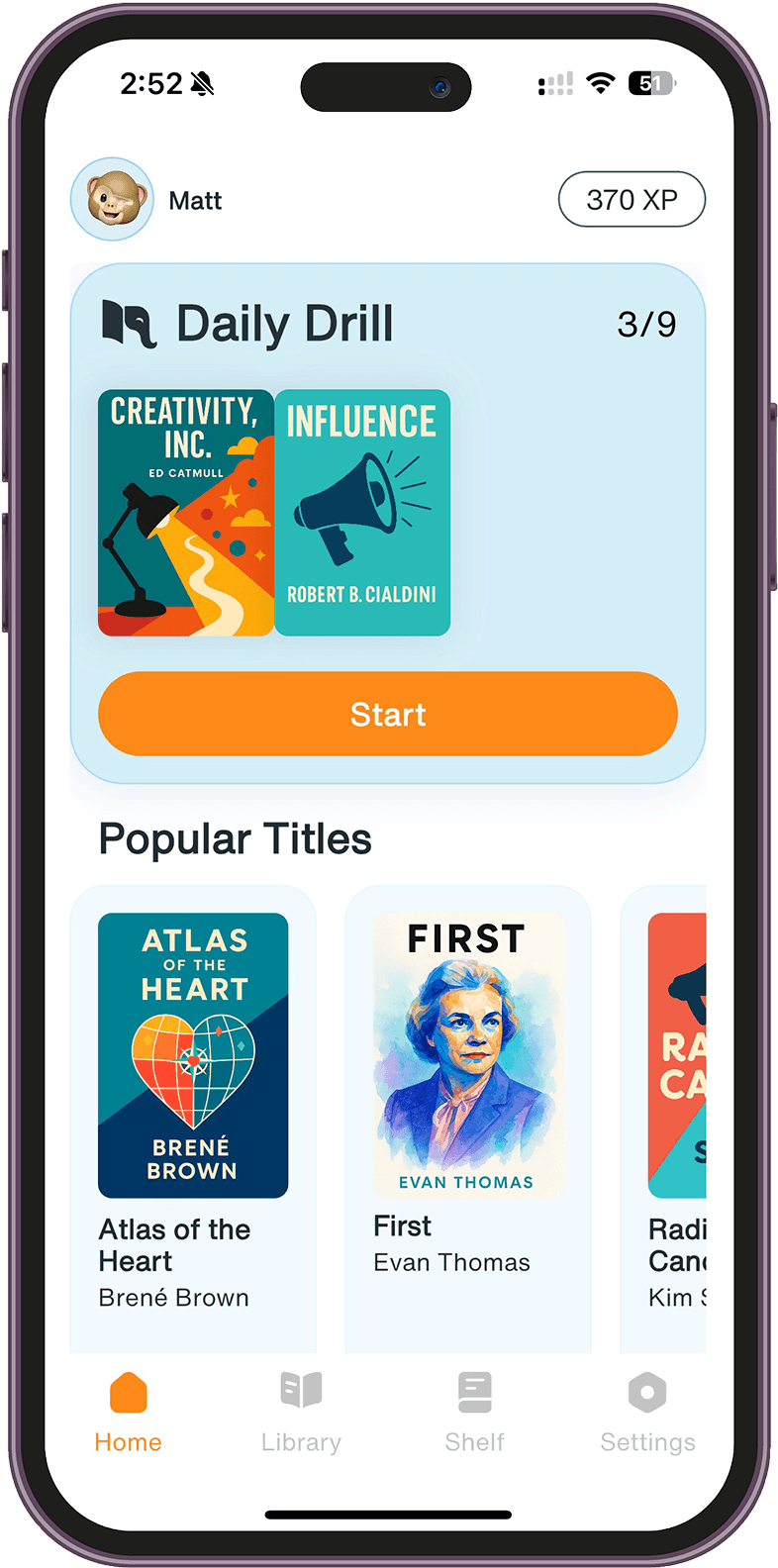
Loxie uses spaced repetition and active recall to move coaching concepts from short-term understanding to long-term capability. Instead of reading about the GROW model once and hoping it sticks, you practice for 2 minutes a day with questions that resurface frameworks, questioning techniques, and situational judgment right before you'd naturally forget them.
Active recall—retrieving information rather than passively reviewing it—strengthens neural pathways far more effectively than re-reading. When Loxie asks "What are the four stages of the GROW model?" or "What question type generates exploration better than 'Why'?" you're building the reflexes that make coaching instinctive rather than effortful. Loxie includes Coaching for Leaders in its full topic library, so you can start reinforcing these concepts immediately.
Frequently Asked Questions
What is the GROW model in coaching?
The GROW model structures coaching conversations through four stages: Goal (defining what success looks like), Reality (assessing the current situation), Options (exploring possible approaches), and Way forward (committing to specific actions). The framework shifts ownership from coach to coachee by using questions rather than advice at each stage.
What makes a good coaching question?
Good coaching questions start with "What" or "How" to generate exploration, rather than "Why" which often triggers defensiveness. True coaching questions don't contain your solution but activate the coachee's thinking. Questions like "What options are you considering?" build capability, while "Have you tried X?" is advice disguised as a question.
When should a leader coach versus give direct instructions?
Coach when three conditions exist: the person has foundational knowledge to build on, time allows for exploration, and the learning will prevent future problems. Direct when situations involve safety, compliance, crisis, or when someone lacks the basic knowledge to explore productively. Delegate when experienced people handle familiar tasks.
How do you resist giving advice during coaching?
Watch for physical cues like leaning forward or starting sentences with "You should." Use explicit self-talk like "They need to own this solution" and physical anchors like sitting back or taking notes. If the urge becomes overwhelming, acknowledge it: "I have thoughts but want to hear your ideas first."
How do you know if coaching is working?
Look for behavioral shifts: team members presenting "I'm thinking X because Y" instead of "What should I do?" bringing solutions not just problems, and explaining reasoning unprompted. The ultimate sign is coaching multiplication—hearing team members use similar questioning techniques with each other.
How can Loxie help me learn coaching for leaders?
Loxie uses spaced repetition and active recall to help you retain coaching frameworks, questioning techniques, and situational judgment long-term. Instead of reading once and forgetting, you practice for 2 minutes a day with questions that resurface concepts right before you'd naturally forget them. Loxie includes the full Coaching for Leaders topic.
Stop forgetting what you learn.
Start learning for good with your 7-day FREE trial.