Creating Compelling Value Propositions: Key Concepts & What You Need to Know
Learn how to articulate ROI in your customer's language and transform feature discussions into business outcome conversations that close deals.
by The Loxie Learning Team
The difference between winning and losing deals often comes down to one thing: whether you can articulate value in your customer's specific language. Generic benefits like "increased efficiency" and "improved productivity" mean nothing when your prospect is trying to justify a six-figure investment to their CFO. Compelling value propositions connect your solution to their specific version of success—the metrics they're measured on, the problems that keep them up at night, and the outcomes that advance their career.
This guide breaks down the essential concepts of creating value propositions that actually close deals. You'll learn how to discover what customers truly value, layer benefits from functional through emotional to strategic, quantify impact using their own metrics, and shift conversations from feature comparisons to business outcome discussions. Because customers don't buy products or services—they buy the outcomes those solutions enable.
 Start practicing value proposition skills ▸
What are value drivers and how do you discover them?
Value drivers are the specific outcomes that determine whether a customer perceives your solution as valuable—and discovering them requires asking three essential question types that move beyond surface needs to reveal what actually drives decisions. These questions tap into different motivation layers: organizational priorities, individual accountability, and emotional urgency.
The three essential discovery questions
The first question type—"What metrics does your board review?"—reveals organizational KPIs that shape strategic priorities. These are the numbers that determine whether executives keep their jobs and whether departments get budget increases. When you understand what the organization measures at the highest level, you can connect your solution to metrics that matter beyond individual departments.
The second question type—"What determines your performance review rating?"—uncovers personal success criteria. This reveals what your individual contact is accountable for delivering. A CFO might care about organizational efficiency, but they're personally measured on cash flow management and audit outcomes. Connecting to personal metrics creates champions who push deals through internal resistance.
The third question type—"What business issue wakes you up at 3 AM?"—exposes underlying fears and pressures that create urgency. This question surfaces the emotional drivers that turn "we should do something" into "we need to act now." Often these anxieties are the real catalyst for change initiatives that might otherwise stall in evaluation committees.
Organizational versus personal value drivers
Compelling value propositions explicitly connect organizational benefits to personal wins—making the business case personally meaningful. Organizational value drivers focus on corporate metrics: revenue growth, margin improvement, market share, and operational efficiency. These justify the budget and satisfy procurement requirements.
Personal value drivers center on individual outcomes: promotion potential, peer recognition, reduced weekend work, and avoiding blame for failures. While organizational value gets the purchase approved, personal value creates champions who push deals through internal resistance. A CFO might approve spending for "operational efficiency," but they champion initiatives that also position them as transformation leaders to the board.
Understanding both layers is essential because B2B purchases involve human beings making decisions, not corporations. When you connect organizational ROI to personal career advancement, you transform passive approvers into active advocates. Loxie helps sales professionals internalize these discovery techniques so they become second nature during customer conversations.
Practice discovery questions in Loxie ▸
What is the value pyramid and how do you build one?
The value pyramid is a framework for layering benefits from functional foundation through emotional connection to strategic vision—creating comprehensive propositions that resonate with operators, managers, and executives simultaneously. Each layer builds on the previous, and different stakeholders care about different layers.
Functional value: the foundation
Functional value focuses on measurable operational improvements: "reduce processing time from 6 hours to 2 hours" or "increase accuracy from 92% to 99.5%." These quantifiable benefits justify initial investment and satisfy procurement requirements because they can be mathematically proven.
However, functional improvements alone rarely create urgency. Time savings don't inspire action until translated into what that time enables—serving more customers, launching new products, or reducing overtime costs. Functional value is necessary but not sufficient for compelling propositions.
Emotional value: the connection
Emotional value connects solutions to personal pain relief and satisfaction—transforming "reduce manual data entry by 70%" into "eliminate the mind-numbing work your team hates, freeing them for strategic analysis they find rewarding." This layer acknowledges the human experience behind business metrics.
That 70% reduction in manual work means someone stops staying late to complete tedious tasks, missing family dinners. It means talented employees stop threatening to quit from boredom. Humans make decisions emotionally then justify them rationally, even in B2B contexts. These emotional realities drive urgency more than efficiency percentages ever will.
Strategic transformation value: the vision
Strategic transformation value elevates solutions from cost-savers to growth-enablers—positioning capabilities as foundations for new business models ("enable subscription offerings"), market expansion ("enter regulated markets requiring this compliance level"), or competitive differentiation ("offer same-day delivery when competitors need three days").
When solutions enable strategies that were previously impossible, they become investments in the company's future rather than expenses. This shifts budget discussions from procurement to strategy, moving decisions from cost-center budgets to strategic initiative funding, which faces less scrutiny and connects to CEO-level priorities.
Knowing the value pyramid is easy. Using it in real conversations is hard.
Loxie uses spaced repetition to help you internalize these frameworks so they're available when you're actually building value propositions for customers.
Start retaining what you learn ▸How do you translate features into customer-specific value?
Translating features into value requires converting generic percentages into the customer's specific business language—because specific, relevant outcomes resonate more than abstract improvements. Instead of "30% faster processing," calculate "reduce your monthly close from 10 days to 7 days, giving your CFO 3 extra days for strategic analysis before board meetings."
The feature-to-benefit bridge technique
Feature-to-benefit bridges use "which means" connections to link capabilities to outcomes: "Automated workflow routing, which means approval requests reach the right person instantly, which means customer orders ship same-day instead of next-week, which means higher satisfaction scores and fewer complaints to your service team."
Each "which means" moves one step closer to what the customer actually cares about. Features tell what you built; benefits explain why they should care. The bridge makes that connection explicit and memorable. This technique forces translation from product-centric to customer-centric language.
Industry contextualization
Industry contextualization transforms generic benefits into sector-specific value—"data accuracy" becomes "patient safety and reduced malpractice exposure" in healthcare, "regulatory compliance and avoided fines" in banking, or "brand protection and recall prevention" in manufacturing.
Generic benefits feel like one-size-fits-all pitches. When you articulate value in terms of Joint Commission audits for healthcare or GDPR compliance for European operations, prospects perceive you as an industry expert rather than a vendor. This demonstrates deep understanding of sector-specific challenges and regulations.
Practice translation techniques ▸
How do you tailor value narratives for different stakeholders?
Different stakeholders evaluate value through different lenses, and compelling propositions adapt accordingly. Technical buyers must confirm "it will work in our environment" before they care about what it accomplishes. Economic buyers think in business outcomes, not product features. Executive sponsors champion investments that advance their strategic agenda.
Technical buyer narratives
Technical buyer value narratives prioritize feasibility over ROI—leading with API documentation, security certifications, integration complexity, and performance benchmarks before discussing business benefits. Technical stakeholders have veto power and face personal risk if implementations fail.
They've seen too many solutions with great ROI projections crash during deployment. By addressing their concerns first—architecture, security, integration—you earn credibility to discuss business value from a foundation of technical confidence.
Economic buyer narratives
Economic buyer narratives connect investment to strategic metrics they own—framing solutions in terms of revenue growth, market share expansion, customer acquisition cost, or shareholder value rather than operational efficiency. These stakeholders control budgets and answer to boards or investors.
They don't care about features; they care about hitting quarterly targets and strategic objectives. When you speak their language of growth, profitability, and competitive advantage rather than speeds and feeds, you align with their actual responsibilities.
Executive sponsor narratives
Executive sponsor narratives link solutions to board-level initiatives and transformation goals—positioning capabilities as enablers of digital transformation, customer experience initiatives, or operational excellence programs. Executives champion investments that advance their strategic agenda rather than isolated point solutions.
These leaders think in terms of strategic initiatives with names, budgets, and board visibility. When you position your solution as critical to their "Customer First" or "Digital Excellence" program rather than just another IT purchase, you tap into funded initiatives with executive commitment already secured.
How do you quantify ROI and build credible business cases?
Credible business cases require more than optimistic projections—they need conservative assumptions, sensitivity analysis, and transparent acknowledgment of implementation costs. Prospects trust business cases that acknowledge real-world challenges rather than assuming perfection.
Conservative assumption modeling
Conservative assumption modeling builds credibility by showing positive ROI even in worst-case scenarios—calculating returns assuming only 50% user adoption, 60% of projected time savings, and implementation taking twice as long. When you voluntarily show ROI under pessimistic assumptions, you demonstrate confidence in your solution and honesty about implementation realities.
This transparency builds trust and actually makes the upside potential more believable when you've already proven downside protection. It preempts the skepticism that kills deals by addressing concerns before they're raised.
Sensitivity analysis
Sensitivity analysis demonstrates ROI resilience across multiple scenarios—showing returns remain positive if benefits are only 40% of projection, adoption takes twice as long, or implementation costs double. This addresses the "what if things go wrong?" anxiety that delays decisions.
By showing multiple scenarios where ROI remains positive, you reduce perceived risk. This transparency about various outcomes builds confidence that the investment is sound even if execution isn't perfect.
Preemptive objection handling
Preemptive objection handling addresses ROI concerns before they're raised—acknowledging "Yes, implementation requires 200 hours of IT time and 3 months of parallel running, but even accounting for these costs plus 20% contingency, you achieve positive ROI by month 8."
When you voluntarily raise concerns prospects are thinking but haven't voiced, you build trust. Addressing hidden costs upfront prevents surprise objections later and shows confidence that value exceeds total investment even with full transparency.
How do you use storytelling to make value tangible?
Value storytelling transforms abstract benefits into concrete scenarios prospects can visualize and emotionally connect with. Before-and-after narratives, customer success stories, and vivid future-state descriptions make transformation feel real and achievable.
Before-and-after storytelling
Before-and-after storytelling paints contrasting pictures of current pain versus future success: "Today, your team manually reconciles 500 invoices daily, catching errors after customer complaints; tomorrow, AI flags discrepancies before they ship, your team investigates only exceptions, and customers receive perfect orders every time."
Abstract promises of "transformation" feel vague, but specific scenarios of how work will change create mental movies prospects can see themselves in. The contrast between current frustration and future success creates emotional pull toward change.
Customer success story structure
Customer success story structure follows situation-challenge-solution-results format with specific metrics: "Manufacturing Corp faced 15% error rates in order fulfillment (situation), causing $2M in returns annually (challenge), implemented our solution in 90 days (solution), reduced errors to 0.5% saving $1.8M yearly (results)."
Specific metrics make stories credible—vague claims like "significant improvement" feel like marketing fluff, but "15% to 0.5% error reduction" is believable and measurable. Peer examples reduce perceived risk by showing others succeeded on a similar journey.
How do you differentiate through outcomes instead of features?
Outcome differentiation shifts competitive discussions from feature checklists to unique business results—winning by changing the conversation from capabilities to outcomes only you deliver. This creates differentiation competitors can't match without fundamental architecture changes.
Shifting from features to outcomes
While competitors debate processing speeds, you demonstrate exclusive ability to enable same-day fulfillment or real-time compliance. When you focus on business results your unique approach enables—not what your product does but what customers achieve—you create differentiation competitors can't match.
This shifts evaluation criteria in your favor. Instead of being compared on a feature checklist where differences seem minor, you're evaluated on business outcomes that matter to the customer's specific situation.
Unique value elements
Unique value elements leverage proprietary assets competitors cannot replicate—exclusive data sets, patented algorithms, specialized expertise, or established ecosystems. This creates differentiation through "only we can" rather than "we do it better" positioning.
While competitors can eventually match features or pricing, they cannot replicate 10 years of accumulated data, patented methods, or established partner networks. This creates sustainable competitive advantage that justifies premium pricing and sole-source decisions.
The real challenge with creating compelling value propositions
Understanding these frameworks intellectually is the easy part. The hard part is having them available when you're actually in a customer conversation, under pressure, trying to translate their needs into compelling value in real time. Research shows we forget 70% of new information within 24 hours without active reinforcement.
How much of what you just read will you remember next week when you're preparing for that critical customer presentation? How many of these techniques will come to mind when you're sitting across from a skeptical CFO who needs to justify your solution to their board?
How Loxie helps you actually remember value proposition techniques
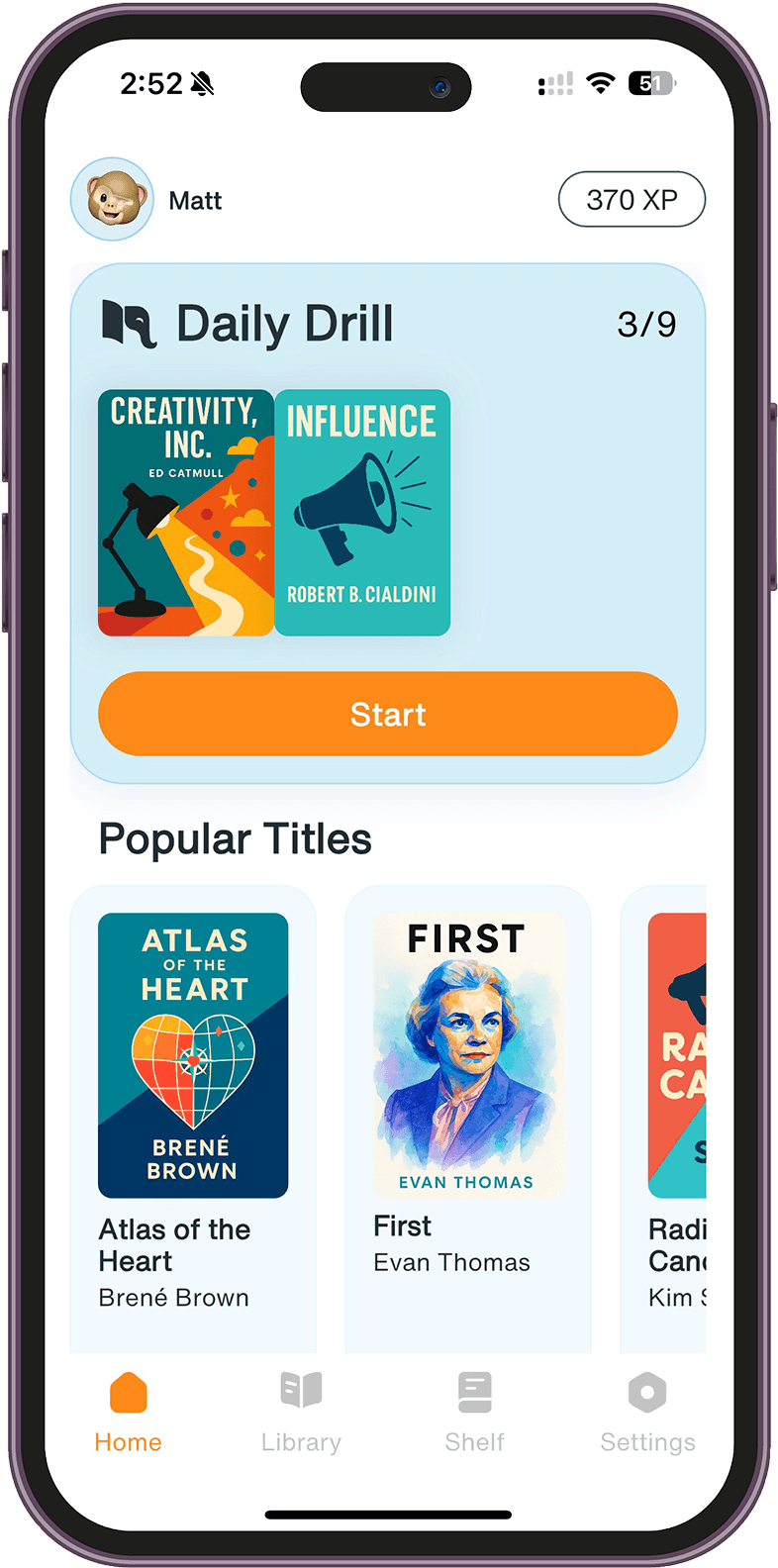
Loxie uses spaced repetition and active recall—the two most scientifically proven methods for long-term retention—to help you internalize these concepts so they're available when you need them. Instead of reading once and forgetting most of it, you practice for 2 minutes a day with questions that resurface frameworks, techniques, and distinctions right before you'd naturally forget them.
The value discovery questions, the three layers of the value pyramid, the feature-to-benefit bridge technique, the stakeholder-specific narratives—these become second nature through consistent practice, not just concepts you read about once. Loxie includes this topic in its full library, so you can start reinforcing these skills immediately.
Frequently Asked Questions
What is a value proposition?
A value proposition articulates why a customer should buy your solution by connecting your capabilities to their specific version of success. Compelling value propositions go beyond generic benefits to paint vivid pictures of the customer's transformed future state using their own metrics, language, and priorities.
What are the three layers of the value pyramid?
The value pyramid consists of functional value (measurable operational improvements), emotional value (personal pain relief and satisfaction), and strategic transformation value (enabling new business models or competitive differentiation). Each layer builds on the previous, creating propositions that resonate with operators, managers, and executives simultaneously.
What are value drivers?
Value drivers are the specific outcomes that determine whether a customer perceives your solution as valuable. They include organizational metrics (revenue growth, market share), personal success criteria (what determines performance reviews), and emotional drivers (what keeps stakeholders up at night). Discovery questions reveal these drivers.
How do you translate features into customer-specific value?
Use the feature-to-benefit bridge technique with "which means" connections. Link each feature to progressively more meaningful outcomes until you reach what the customer actually cares about. Then translate generic percentages into their specific business language using their metrics and terminology.
Why is conservative assumption modeling important for ROI?
Conservative assumption modeling builds credibility by showing positive ROI even in worst-case scenarios. Calculating returns assuming only 50% user adoption or 60% of projected benefits demonstrates confidence in your solution and preempts skepticism that kills deals.
How can Loxie help me create better value propositions?
Loxie uses spaced repetition and active recall to help you retain value proposition frameworks, discovery techniques, and translation methods long-term. Instead of forgetting these concepts after reading, you practice for 2 minutes a day with questions that resurface ideas right before you'd naturally forget them, making them available during actual customer conversations.
Stop forgetting what you learn.
Start learning for good with your 7-day FREE trial.