Discover Your True North: Key Insights & Takeaways
Master Bill George's framework for authentic leadership built on self-awareness, values, and purpose.
by The Loxie Learning Team
What separates the leaders who inspire lasting change from those who simply occupy positions of power? Bill George spent years interviewing 125 top leaders to answer this question, and his findings challenge conventional wisdom about leadership development. The answer isn't charisma, intelligence, or even experience—it's authenticity rooted in deep self-knowledge.
Discover Your True North provides a comprehensive framework for developing leadership grounded in your life story, core values, and genuine passions. This guide breaks down George's complete approach to authentic leadership, offering practical tools for anyone who wants to lead with integrity and make a meaningful impact—whether you're running a company, managing a team, or simply trying to live with greater purpose.
 Start practicing True North free for 7 days ▸
What is your True North and why does it matter for leadership?
Your True North is an internal compass formed by your life story, core values, and intrinsic motivations that guides your decisions and actions as a leader. Unlike external measures of success—titles, compensation, recognition—your True North remains constant, providing direction when you face difficult choices or pressure to compromise your principles.
George argues that authentic leadership emerges from deep self-awareness. Leaders who understand their own stories, including the crucible experiences that shaped them, can navigate challenges without losing themselves to external expectations or ego-driven decisions. This self-knowledge becomes the foundation for every other leadership capability.
The concept matters because leadership without a True North becomes reactive and inconsistent. When you don't know what you truly stand for, you're vulnerable to chasing whatever metrics or expectations others define for you. Your True North provides the stability to make difficult decisions, maintain integrity under pressure, and inspire others through genuine conviction rather than performative authority.
How do difficult experiences and failures become sources of leadership wisdom?
Authentic leaders transform their most difficult experiences into sources of wisdom by processing them deeply, extracting lessons, and using those insights to help others navigate similar challenges. George calls these defining moments "crucibles"—intense, often painful experiences that fundamentally reshape how leaders see themselves and the world.
The key isn't avoiding failure or hardship but rather how you engage with those experiences afterward. Leaders who simply push past setbacks without reflection miss the growth opportunity. Those who dwell in victimhood or blame never extract the lessons. The transformative path involves honest examination of what happened, what you learned about yourself, and how that knowledge can serve others.
Setbacks accelerate authentic leadership development by stripping away false confidence and forcing leaders to rebuild from their core values. A leader who has never faced significant adversity often operates from untested assumptions about themselves. The crucible experience creates a foundation that withstands future pressures and connects deeply with others facing their own challenges. This vulnerability becomes a source of strength, not weakness.
Processing crucibles effectively
Effective crucible processing requires both reflection and action. Journaling helps externalize the experience and identify patterns. Conversations with trusted advisors provide outside perspectives you can't see yourself. But ultimately, the wisdom emerges when you apply those lessons—when you use what you learned to make better decisions, support others facing similar challenges, or build organizations that prevent the same failures.
Practice these concepts in Loxie ▸
How does self-awareness enable better decision-making?
Deep self-knowledge enables authentic decision-making by clarifying which choices align with your values and long-term purpose versus those driven by ego, fear, or external expectations. When you understand your own motivations—including the unhealthy ones—you can recognize when you're making decisions for the wrong reasons.
Self-awareness develops through disciplined reflection practices like journaling and meditation combined with actively seeking honest feedback from trusted advisors, mentors, and team members who will tell you uncomfortable truths. Neither practice alone is sufficient. Reflection without external input can become self-deception. Feedback without self-reflection leaves you reactive to others' opinions rather than grounded in your own understanding.
The practical benefit is decision-making clarity. Leaders with strong self-awareness can quickly distinguish between choices that serve their authentic purpose and those that serve ego, convenience, or fear. This clarity speeds up decision-making in complex situations because you're not wrestling with hidden motivations or unconscious biases—you've already identified them through ongoing self-examination.
What is a personal board of directors and why do leaders need one?
A personal board of directors is a group of trusted advisors who provide different perspectives and hold you accountable, accelerating leadership development through structured support. Unlike casual friendships or professional networks, this board serves a specific function: helping you grow as a leader and stay true to your values.
Effective leaders cultivate three types of advisors within this board: mentors who share experience and open doors, coaches who develop specific skills, and truth-tellers who provide honest feedback without agenda. Each type serves a distinct purpose. Mentors offer wisdom from their own journeys. Coaches help you build capabilities. Truth-tellers keep you grounded when success might otherwise inflate your ego or blind spots might derail your effectiveness.
The board matters because leadership is inherently isolating. The higher you rise, the less honest feedback you naturally receive. People tell you what they think you want to hear. A personal board of directors counteracts this dynamic by creating relationships where candor is expected and protected. These advisors can challenge your assumptions, point out your blind spots, and support you through difficult decisions in ways that subordinates and peers often cannot.
Building your leadership foundation takes practice
Understanding these concepts intellectually is just the beginning. Loxie helps you internalize the principles of authentic leadership through spaced repetition, so they're available when you face real decisions—not just when you're reading about leadership.
Try Loxie free for 7 days ▸How do values-based leaders make their principles visible?
Values-based leadership becomes powerful when leaders publicly state their principles before decisions, explain how choices reflect those values afterward, and admit when they fall short. This process transforms abstract values into visible action that others can observe, evaluate, and trust.
The visibility matters because values that remain internal are essentially meaningless to your team and stakeholders. Anyone can claim to value integrity or innovation. What distinguishes authentic leaders is the willingness to make those values testable—to declare what you stand for and then let others hold you accountable to that standard.
This approach also requires admitting when you fall short. Leaders who never acknowledge mistakes or value compromises lose credibility over time because everyone can see the gap between stated values and actual behavior. Authentic leaders close this gap not by being perfect but by being honest about their imperfections and demonstrating commitment to improvement.
Why does authentic leadership matter more in complex business environments?
Authentic leadership becomes more critical in complex business environments because stakeholders increasingly demand transparency, genuine connection, and leaders who can navigate ambiguity while maintaining consistent values. Traditional command-and-control leadership fails when situations are too complex for any single person to have all the answers.
In ambiguous environments, teams need to trust their leaders' judgment and values because they can't evaluate every decision on its merits—there's too much uncertainty. This trust only develops when leaders demonstrate consistent authenticity over time. Stakeholders learn to rely on the leader's True North as a predictor of future behavior, even in unprecedented situations.
The transparency demands of modern business also expose inauthenticity faster than ever. Social media, employee review sites, and instant communication mean that gaps between a leader's stated values and actual behavior become visible quickly. Leaders who try to present different faces to different audiences eventually get caught. Authenticity isn't just morally preferable—it's strategically necessary.
How do you discover your life's purpose as a leader?
Discovering your life's purpose transforms leadership effectiveness by aligning daily decisions with a mission larger than yourself, creating the sustained motivation and clarity needed to inspire others. George's framework identifies purpose at the intersection of three elements: what motivates you internally, what you naturally excel at, and what you're genuinely passionate about.
This "sweet spot" where purpose meets performance creates sustainable energy for leadership. Leading from purpose means you're not dependent on external rewards or recognition to stay motivated. The work itself provides meaning. This intrinsic motivation sustains leaders through the inevitable setbacks, criticism, and exhaustion that accompany significant leadership responsibilities.
Personal mission discovery also enhances leadership authenticity by connecting your unique life experiences and values to your professional role. A leader whose purpose emerges from their own story—their crucible experiences, their core values, their genuine passions—leads with conviction that others can feel. This authenticity is what makes leadership truly influential rather than merely positional.
What does it mean to integrate all life domains as a leader?
Sustainable leadership requires integrating work, family, community, and personal interests into a coherent whole rather than compartmentalizing them. Authenticity demands consistency across all life domains because you cannot be one person at work and another person at home without eventually fragmenting your sense of self.
The integration challenge is practical, not just philosophical. Leaders who neglect family for work eventually face relationship crises that undermine their effectiveness. Those who ignore health and personal renewal burn out. Those who disconnect from community lose perspective on the impact of their decisions. George argues that true leadership effectiveness requires managing all these domains as parts of one integrated life.
This doesn't mean perfect balance at all times—different seasons of life and leadership require different allocations of time and energy. But it does mean maintaining awareness of all domains and making conscious choices about tradeoffs rather than allowing one domain to completely crowd out the others. The goal is an integrated life where your leadership role strengthens rather than diminishes your other roles and relationships.
How do authentic leaders empower others?
Authentic leaders empower others by creating psychological safety, providing growth opportunities, and removing barriers, enabling people to contribute their best work and develop their own leadership capabilities. Empowerment isn't about delegation or giving people authority—it's about creating conditions where people can genuinely thrive.
Psychological safety is foundational. People cannot take risks, speak honestly, or grow if they fear punishment for mistakes or candor. Authentic leaders create safety by being vulnerable themselves, responding constructively to failures, and demonstrating that their stated values about learning and growth are actually practiced.
Beyond safety, empowerment requires active investment in others' development. This means providing challenging assignments, offering coaching and feedback, and creating succession pipelines. Leadership impact multiplies exponentially when you develop other leaders by sharing power, providing mentorship, and creating paths for others to grow—rather than hoarding influence or viewing others' success as a threat to your own.
Start retaining what you learn ▸
What does leadership maturity look like?
Leadership maturity involves shifting from pursuing personal achievement and recognition to serving others and creating value for all stakeholders. George describes this as the transition from success to significance—moving from "What can I achieve?" to "What contribution can I make?"
Mature leadership evolves from pursuing personal achievement to creating sustainable value for employees, customers, shareholders, and communities by prioritizing collective success over individual recognition. This shift doesn't mean abandoning ambition—it means redirecting ambition toward broader impact rather than personal accumulation.
The transition typically happens over time, often catalyzed by crucible experiences that reveal the emptiness of pure achievement or the deeper satisfaction of serving others. Leaders who never make this transition often achieve external success but report feeling unfulfilled. Those who embrace significance find that their leadership becomes more effective precisely because it's less about them.
How do you lead with integrity when facing pressure to compromise?
Leading with integrity requires integrating your personal values with your professional purpose by making decisions that honor both your ethical standards and organizational goals, even when facing pressure to compromise. This integration is the essence of authentic leadership—you cannot separate who you are from how you lead.
Core values function as decision-making guideposts by providing clear criteria for evaluating options, especially when facing ethical dilemmas or competing priorities that test your integrity. When you've clearly articulated your values before facing difficult situations, you have a framework for navigating them. When you haven't, you're vulnerable to rationalizing compromises in the moment.
The pressure to compromise often comes disguised as practicality or business necessity. George's framework suggests that leaders who maintain integrity during these tests actually build stronger organizations over time because they create cultures of trust and attract people who share their values. Short-term compromises may seem expedient but typically create larger problems later.
How do authentic leaders adapt while staying consistent?
Continuous leadership improvement requires adapting communication styles, decision-making approaches, and team dynamics to different contexts while consistently demonstrating your core values and principles. Authenticity doesn't mean rigidity—it means consistency in values while flexibility in approach.
Different situations require different leadership behaviors. A crisis demands different communication than a strategic planning session. A new team needs different leadership than an established one. Authentic leaders develop range—the ability to adjust their style to what the situation requires—while maintaining their essential character and values.
The key distinction is between what changes and what stays constant. Your communication style might adapt. Your decision-making process might vary by context. Your energy level might fluctuate. But your core values, your integrity, and your fundamental character remain consistent. People learn to trust this consistency even as they experience different versions of your leadership in different contexts.
The real challenge with Discover Your True North
The ideas in Discover Your True North can genuinely transform how you lead. But here's the uncomfortable truth: understanding these concepts intellectually is dramatically different from having them available when you need them. Research on memory shows we forget roughly 70% of new information within 24 hours and up to 90% within a week.
Think about it honestly. How many leadership books have you read that felt profound in the moment but left almost no lasting impact on how you actually lead? The forgetting curve affects everyone. You might remember that you should build a personal board of directors, but can you recall the three types of advisors and why each matters? You know values-based leadership is important, but can you articulate the specific practices that make values visible?
The concepts in this book are only valuable if they're accessible when you face real leadership challenges—not just when you're reading about leadership. That requires a different approach than reading alone.
How Loxie helps you actually remember what you learn
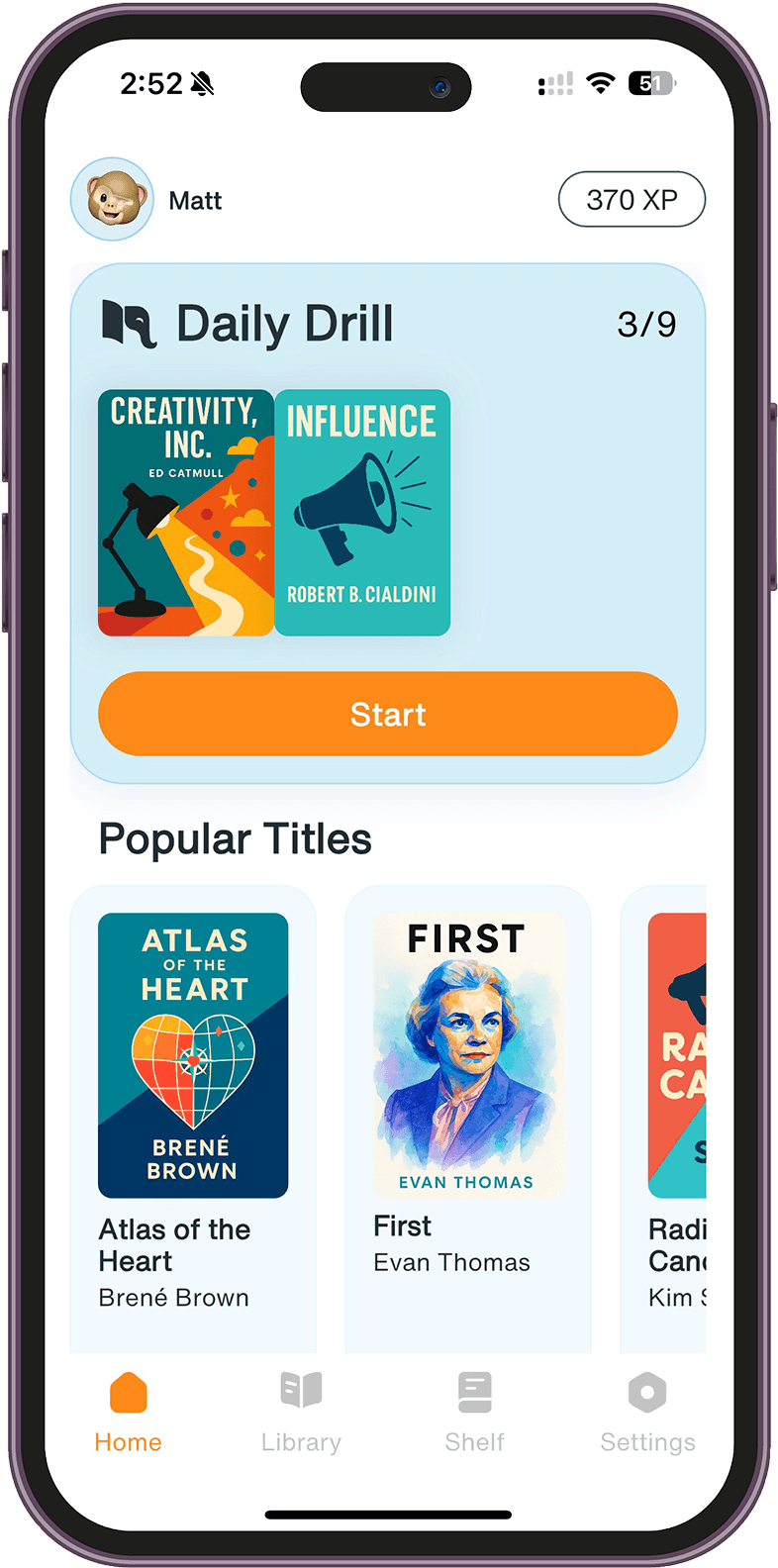
Loxie uses spaced repetition and active recall—the two most research-backed methods for long-term retention—to help you internalize the concepts from Discover Your True North. Instead of reading once and hoping it sticks, you practice for just 2 minutes a day with questions that resurface ideas right before you'd naturally forget them.
This approach transforms passive reading into active learning. When Loxie asks you about the three types of advisors in a personal board of directors, your brain has to retrieve that information—and that retrieval strengthens the memory far more than re-reading ever could. Over time, these concepts become part of how you think, available when you face real leadership decisions.
Loxie includes Discover Your True North in its complete topic library, so you can start reinforcing these authentic leadership principles immediately. Two minutes a day is enough to beat the forgetting curve and actually retain what you learn.
Frequently Asked Questions
What is the main idea of Discover Your True North?
The central idea is that authentic leadership emerges from deep self-awareness gained through understanding your life story, core values, and intrinsic motivations. These elements form your True North—an internal compass that guides decisions and actions, enabling you to lead with integrity and make meaningful impact.
What are the key takeaways from Discover Your True North?
The key takeaways include: authentic leaders transform difficult experiences into wisdom; self-awareness enables better decision-making; building a personal board of directors accelerates growth; values must be made visible through action; and leadership maturity means shifting from personal achievement to serving others.
What is a personal board of directors in leadership?
A personal board of directors is a group of trusted advisors who provide different perspectives and hold you accountable. It includes three types: mentors who share experience, coaches who develop specific skills, and truth-tellers who provide honest feedback without agenda.
How do you discover your True North as a leader?
You discover your True North by examining your life story—especially crucible experiences that shaped you—clarifying your core values, and identifying your intrinsic motivations. This requires disciplined reflection practices like journaling combined with honest feedback from trusted advisors.
What does Bill George mean by the transition from success to significance?
The transition from success to significance describes leadership maturity: moving from pursuing personal achievement and recognition to serving others and creating value for all stakeholders. This shift redirects ambition toward broader impact rather than personal accumulation.
How can Loxie help me remember what I learned from Discover Your True North?
Loxie uses spaced repetition and active recall to help you retain the key concepts from Discover Your True North. Instead of reading the book once and forgetting most of it, you practice for 2 minutes a day with questions that resurface ideas right before you'd naturally forget them. Loxie includes this book in its full topic library.
We're an Amazon Associate. If you buy a book through our links, we earn a small commission at no extra cost to you.
Stop forgetting what you learn.
Start learning for good with your 7-day FREE trial.