Enterprise Deal Navigation: Key Concepts & What You Need to Know
Master the political savvy and process expertise needed to close complex, multi-stakeholder deals that span procurement, legal, security, and executive approval layers.
by The Loxie Learning Team
Enterprise deals aren't just bigger versions of small deals—they're fundamentally different. Multiple stakeholders with competing agendas, procurement teams trained to commoditize your solution, legal reviews that stretch for months, and security requirements that can derail everything. The sellers who consistently close these complex deals aren't just better at selling—they understand how to navigate organizational politics, manage parallel work streams, and build coalitions that survive when champions leave or priorities shift.
This guide breaks down the essential concepts of enterprise deal navigation. You'll learn how to map decision-making units to identify who really controls outcomes, build multi-threaded relationships that protect deals from single-point failure, design proof-of-concept processes that actually lead to production deployments, and defend value against procurement tactics designed to commoditize your solution. According to CSO Insights (2023), 40% of enterprise deals experience champion turnover—understanding these concepts isn't optional for anyone selling to large organizations.
 Start practicing Enterprise Deal Navigation ▸
How do you map the decision-making unit in enterprise deals?
Decision-making unit mapping combines organizational charts with LinkedIn research and discovery conversations to identify four key stakeholder types: economic buyers who control budgets, technical evaluators who assess capabilities, user buyers who prioritize experience, and coaches who provide internal intelligence about political dynamics and hidden agendas. This multi-source approach is essential because org charts show formal authority but miss the informal influence networks that often determine outcomes.
Effective mapping requires treating each information source as complementary. LinkedIn reveals career histories and relationships that explain stakeholder motivations—a technical evaluator who previously worked at your competitor may have strong opinions about your approach. Discovery conversations uncover who actually influences decisions versus who claims to. Coaches are especially valuable for revealing unwritten rules about how decisions really get made, such as which executive's opinion carries the most weight regardless of title.
Distinguishing formal authority from informal influence
Influence mapping distinguishes formal authority (budget control, veto power, org chart position) from informal influence (trusted advisor status, technical expertise that others defer to, political connections to senior leadership). This distinction reveals how decisions actually get made versus the official process that may be largely ceremonial. The CTO may have formal authority over technology decisions, but if the engineering team trusts the principal architect's judgment, that informal influence drives technical evaluations. Similarly, an executive's trusted advisor may have more impact than department heads with higher titles.
Mapping both dimensions prevents misallocating time to impressive titles with limited actual influence. Many sellers waste months cultivating relationships with senior executives who ultimately defer to their teams, while ignoring the influential individual contributors who actually shape recommendations. Loxie helps you internalize these stakeholder categories and mapping techniques so you can quickly identify who matters in any deal structure.
What behaviors identify true champions versus friendly stakeholders?
True champions demonstrate three observable behaviors that validate their commitment: they share internal documents (budgets, org charts, evaluation criteria), make warm introductions to other stakeholders without being asked, and spend political capital by publicly advocating for your solution in meetings where you're not present. These behaviors separate genuine champions from stakeholders who are merely supportive but won't actively drive deals forward.
Document sharing reveals trust and investment in your success—stakeholders don't share budget details or internal evaluation criteria unless they're genuinely committed to helping you win. Proactive introductions show they're actively building internal coalition rather than waiting for you to ask. Public advocacy when you're absent proves they're willing to risk their reputation for your solution, which is the ultimate test of championship. Many sellers mistake friendly stakeholders for champions, but friendliness without these observable behaviors often indicates passive support that won't survive organizational resistance.
Validating champion capability and motivation
Champion qualification requires validating both capability and motivation. On the capability side, they need political capital—respect from peers, a track record of successful initiatives, and access to executives who make final decisions. On the motivation side, they need personal pain—their performance metrics are affected by the problem you solve, their career advancement is tied to initiative success, or they experience daily frustration with the current state.
True champions have both the ability and incentive to drive change. Political capital without motivation leads to passive support—they could help but won't prioritize it. Motivation without political capital results in enthusiasm that can't influence decisions—they want to help but lack organizational credibility. Both elements must be present for someone to effectively champion your solution internally, and Loxie's spaced repetition approach helps you remember these qualification criteria when you need them most during stakeholder conversations.
Practice champion qualification in Loxie ▸
How do you identify blockers before they derail your deal?
Blockers reveal themselves through three resistance patterns: they request excessive proof that goes beyond reasonable evaluation needs, raise new objections late in the process after previous concerns were addressed, and consistently avoid or reschedule meetings while claiming to support the initiative. These patterns indicate someone working against your deal without openly opposing it, which makes them more dangerous than stakeholders who voice direct opposition.
Excessive proof requests aim to exhaust evaluation resources—asking for yet another reference call, another security review, another technical demonstration. Late objections reset the sales cycle repeatedly just as you approach decision points. Meeting avoidance prevents progress while maintaining plausible deniability about their role in delays. Recognizing these patterns early allows you to develop counter-strategies or build coalition to neutralize blocker influence before they've accumulated enough obstacles to kill the deal.
Understanding what motivates blockers
Blocker motivations typically stem from three sources: they benefit from the status quo (vendor relationships, job security tied to current systems), they fear domain disruption (loss of control, team reduction, skill obsolescence), or they have competing priorities that your initiative threatens to displace for resources or attention. Understanding blocker motivation enables targeted response strategies rather than generic objection handling.
Status quo beneficiaries need assurance about their future role—showing how they remain relevant in the new environment. Those fearing disruption require involvement in solution design to maintain influence and demonstrate their expertise still matters. Competing priority conflicts might be resolved by repositioning your solution as complementary to their initiatives or accelerating your timeline to avoid resource conflicts. The key is diagnosing the actual motivation driving resistance rather than addressing surface-level objections that mask deeper concerns.
Why is multi-threading essential for enterprise deal protection?
Multi-threading requires building relationships with 3-5 stakeholders across different departments and hierarchical levels, protecting deals from single-point failure when champions leave, get reorganized, lose political capital, or change priorities. According to CSO Insights (2023), this happens in 40% of enterprise deals, making single-threaded relationships a significant risk factor for deal failure.
Single-threaded deals die when your one champion exits or loses influence. Multi-threading creates redundancy through relationships in IT, finance, operations, and executive levels. When one relationship weakens, others maintain deal momentum and can step into champion roles. This isn't just risk mitigation—multiple perspectives across the organization strengthen your business case and build broader support for the change initiative, making approval more likely even when individual stakeholders have reservations.
Mapping threads across power bases
Effective multi-threading maps relationships across four power bases: economic power (budget holders), technical power (architecture decision makers), political power (executive influencers), and user power (adoption drivers). Enterprise decisions require consensus across all four dimensions because each power base can advance or kill deals independently.
Budget holders control funding but need technical validation before approving purchases. Technical teams can declare solutions non-compliant regardless of business value. Executives can override objections or mandate alternatives. Users can sabotage adoption post-purchase through passive resistance. Threading across all four creates a coalition that addresses every potential veto point, ensuring no single stakeholder type can unilaterally kill your deal.
Reading about stakeholder mapping isn't the same as doing it instinctively
Enterprise deal navigation involves dozens of interrelated concepts—champion behaviors, blocker patterns, power bases, threading strategies. Loxie uses spaced repetition to help you internalize these frameworks so they're available when you're actually navigating complex deals.
Start retaining these concepts ▸How should you customize value narratives for different stakeholders?
Stakeholder-specific value narratives customize messaging by role because the same solution creates different value for different stakeholders. Executives hear ROI and competitive advantage, middle managers hear efficiency gains and team productivity, individual contributors hear skill development and daily frustration elimination. Generic value propositions fail in enterprise sales because each stakeholder evaluates through their own lens.
CFOs calculate financial return and want to see payback periods and NPV. IT architects assess technical debt reduction and integration complexity. End users want easier workflows and less friction in their daily tasks. Sales managers seek quota attainment improvement and pipeline visibility. Tailored narratives demonstrate understanding of each stakeholder's world, building trust and relevance that generic pitches never achieve. Executive-level narratives in particular should focus on strategic business outcomes—market share growth, competitive differentiation, digital transformation progress—rather than operational improvements or feature specifications.
What makes proof-of-concept processes succeed or fail?
POC success criteria must be defined and documented before launch with specific metrics, evaluation methodology, and decision process. This prevents scope creep where procurement keeps adding requirements or technical teams explore edge cases indefinitely without committing to decisions. Undefined POCs become science experiments that never end, consuming resources without generating commitments.
Written success criteria create mutual accountability—if you meet agreed metrics, the customer commits to the next step. This document should specify what's being measured, how it's measured, who decides, and what happens after success. Without this explicit agreement, POCs drift for months as stakeholders request "just one more test" to delay difficult decisions. The documentation also protects against criteria shifting after you've invested significant resources in the evaluation.
Scoping POCs for maximum impact with minimum risk
POC scoping balances demonstrating differentiated value with manageable complexity. This means selecting one or two use cases that showcase unique capabilities while avoiding full implementation requirements that turn POCs into unpaid consulting engagements. Effective POCs prove your solution solves critical problems without rebuilding the customer's entire environment.
Choose use cases that highlight competitive advantages and align with urgent business needs. Avoid POC scope that requires extensive customization or months of work—this exhausts resources and delays deals without guarantee of closure. The goal is demonstrating enough capability to justify purchase decisions, not delivering full production functionality free for 7 days. Smart sellers push back on scope expansion that extends timelines without increasing close probability.
How do you compress enterprise deal cycles from months to weeks?
Parallel work stream orchestration runs procurement negotiations, security reviews, legal redlines, and technical evaluations simultaneously rather than sequentially. This approach compresses enterprise deal cycles from 6-9 months to 3-4 months by identifying dependencies and managing the critical path. Sequential processing kills deal velocity—waiting for security approval before starting legal review, then procurement, adds months to every deal.
Parallel processing starts all work streams simultaneously while managing dependencies where outputs from one feed another. This requires mapping which deliverables block others and ensuring critical path items get priority resources. The time saved often means the difference between closing in the current quarter versus next, which has significant implications for both revenue recognition and commission timing.
Creating accountability through mutual action plans
Mutual action plans create visible accountability by documenting specific deliverables, named owners, and committed dates for each evaluation track. This transforms vague "we're reviewing internally" into concrete milestones like "Sarah completes security questionnaire by March 15." Invisible progress kills deals, but mutual action plans make every step visible with clear ownership and deadlines.
When stakeholders commit to specific dates publicly, social pressure increases follow-through through the consistency principle. These plans also reveal when deals are stalling—missed deadlines signal problems before deals go completely dark, enabling intervention while momentum can still be recovered. Without explicit milestones and dates, sellers often discover deals are dead only after weeks of silence.
Creating urgency without appearing desperate
Deal velocity maintenance requires creating "compelling events" that force decisions. These include end-of-quarter pricing, implementation resource availability, competitive movements, or business deadlines. Enterprise deals without urgency drift indefinitely as risk-averse stakeholders delay commitment rather than face the consequences of potentially wrong decisions.
Enterprises avoid risk by delaying decisions—the path of least resistance is always "let's keep evaluating." Creating legitimate urgency breaks this pattern. Price increases, limited implementation slots, or competitor announcements create decision catalysts. Business-driven deadlines like product launches, regulatory compliance dates, or peak season preparation provide natural urgency that doesn't feel like artificial sales pressure.
How do you defend value against procurement tactics?
Procurement playbook recognition identifies predictable tactics that procurement teams use to reduce pricing: fake competitive RFPs to leverage pricing, volume discount demands without volume commits, payment term extensions, and last-minute scope additions. Recognizing these patterns allows sellers to prepare counter-strategies before negotiations begin rather than reacting under pressure.
Procurement follows predictable patterns that you can anticipate. The "we're also evaluating competitor X" claim often means they want leverage, not actual alternatives—especially if it appears late in the evaluation. Volume discount requests without firm commitment language aim to reduce unit pricing without creating purchase obligation. Payment term extension requests are often negotiating tactics that can be traded for other concessions. Understanding these patterns prevents panic discounting while still giving procurement the wins they need to justify their involvement.
Building an unassailable value defense
Value differentiation defense requires three elements: unique capabilities that competitors cannot match, quantified business impact with customer-specific ROI models, and switching costs that make alternatives expensive. These must be supported by champion testimony that procurement cannot easily dismiss as vendor marketing claims.
Generic value claims fail against procurement pressure because they invite price comparison. Specific differentiation—patented technology, exclusive data sources, unique expertise—that competitors cannot replicate justifies premium pricing. Customer-specific ROI calculations showing 3-5x return make price secondary to value created. Switching costs including retraining, integration work, and data migration create barriers to change. Champion testimony validates these claims internally with credibility that external references cannot match.
Planning strategic concessions in advance
Strategic concession planning separates negotiable elements (payment terms, support levels, training inclusions) from protected core value (base pricing integrity, strategic contract terms, implementation scope). This enables trades that let procurement claim wins without destroying deal economics or setting dangerous precedents for future negotiations.
Procurement needs victories to justify their involvement in the deal process. Planning concessions in advance prevents reactive discounting under pressure when you haven't thought through the implications. Extending payment terms often costs less than reducing price directly. Including training or enhanced support adds perceived value without significant margin impact. Protecting core pricing while trading on peripheral terms satisfies procurement's need for concessions while preserving deal profitability.
How do you build and leverage executive relationships?
Executive access progresses through three stages: champion-facilitated warm introductions establish initial credibility, value delivery through executive briefings or industry insights earns ongoing dialogue rights, and peer executive introductions create CxO-level relationships that transcend vendor-customer dynamics. Cold executive outreach rarely succeeds, so this progressive approach builds relationships systematically.
Champions provide warm introductions that get meetings booked and establish context for why the executive should engage. Delivering unique value during these meetings—industry benchmarks, peer insights, strategic frameworks—earns permission for ongoing dialogue rather than one-time courtesy meetings. Facilitating introductions between your executives and theirs shifts the relationship from tactical vendor-customer to strategic partnership where both organizations benefit from the connection.
Speaking executive language
Strategic executive conversations focus on business transformation, competitive positioning, and board-level initiatives rather than product features. This demonstrates understanding that executives care about market share growth, digital transformation progress, and operational excellence—not technical specifications or feature comparisons that belong in conversations with their teams.
Executives think in business outcomes, not product capabilities. Discussing how solutions enable customer experience transformation or operational cost reduction resonates more than feature-by-feature comparisons with competitors. Connecting your solution to their strategic initiatives and board-level metrics shows you understand their world and deserve executive attention rather than delegation to subordinates.
How do you win technical evaluations strategically?
Technical win strategies design evaluations that highlight your competitive advantages rather than accepting generic evaluation criteria. This means selecting proof-of-concept scenarios where you excel, proposing architecture discussions that expose competitor limitations, and suggesting hands-on workshops that demonstrate superior user experience or performance in areas where you're strongest.
Generic technical evaluations commoditize solutions by treating all vendors as interchangeable. Smart sellers influence evaluation criteria toward their strengths without appearing to manipulate the process. If you have superior API architecture, propose integration scenarios. If your UX excels, insist on user workshops. If you scale better, request load testing. This isn't manipulation—it's ensuring the evaluation tests what actually matters for customer success rather than checkbox features that don't differentiate outcomes.
How do you align with enterprise buying journeys?
Enterprise buying journey alignment maps your sales process to their evaluation stages. Problem identification needs education and insight, vendor selection requires differentiation proof, business case development needs ROI models and risk mitigation, and implementation planning requires detailed roadmaps and resource plans. Misaligned selling creates friction that extends deal cycles and frustrates stakeholders.
Pushing POCs during problem identification wastes resources because stakeholders aren't ready to evaluate solutions. Discussing implementation before business case approval seems presumptuous and creates concerns about your understanding of their process. Successful alignment delivers what buyers need when they need it: insights during problem identification, competitive proof during selection, financial justification during business case development, and execution confidence during planning phases.
Navigating formal approval gates
Stage-gate navigation prepares targeted materials for each approval checkpoint: executive summaries for leadership reviews, technical documentation for architecture boards, financial models for investment committees. Each gate has specific requirements and concerns that must be addressed with appropriate materials and rehearsed presentations that anticipate objections before they're raised.
Enterprise approval processes have formal gates with specific requirements. Leadership wants strategic alignment and executive sponsorship visibility. Architecture boards need technical compliance with enterprise standards. Investment committees require financial justification with clear ROI and risk assessment. Preparing gate-specific materials and rehearsing presentations with champions ensures smooth passage through each approval stage. Anticipating objections and addressing them proactively in your materials prevents delays from surprise concerns that require follow-up meetings.
The real challenge with mastering enterprise deal navigation
Enterprise deal navigation involves dozens of interrelated concepts—stakeholder types, champion behaviors, blocker patterns, power bases, threading strategies, POC management, procurement tactics, executive engagement approaches, and buying journey alignment. Understanding these concepts intellectually is very different from having them available instinctively when you're in the middle of a complex deal with pressure from all directions.
Research on the forgetting curve shows that we lose approximately 70% of new information within 24 hours without reinforcement. How much of what you just read about decision-making unit mapping or champion qualification will you remember when you're actually trying to navigate a stalled enterprise deal next month? The concepts that seem clear now will fade precisely when you need them most.
How Loxie helps you actually remember enterprise deal strategies
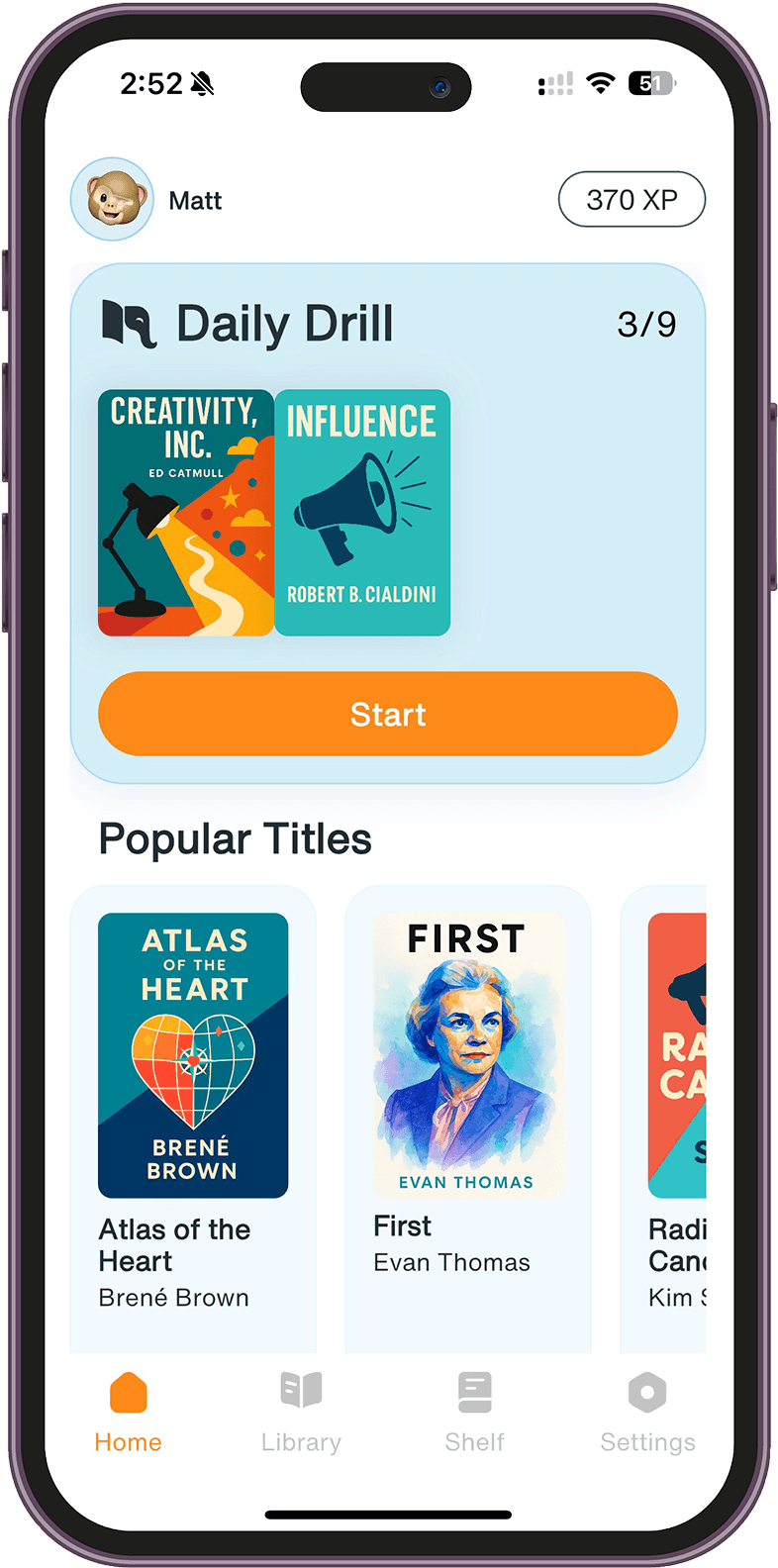
Loxie uses spaced repetition and active recall to help you internalize enterprise deal navigation concepts permanently. Instead of reading about stakeholder mapping once and forgetting most of it, you practice for 2 minutes a day with questions that resurface frameworks, distinctions, and strategies right before you'd naturally forget them. This transforms passive knowledge into instinctive pattern recognition.
Loxie includes Enterprise Deal Navigation in its full topic library. You can start reinforcing these concepts immediately—champion qualification criteria, blocker recognition patterns, procurement counter-tactics, executive engagement stages—building the mental frameworks that will surface automatically when you encounter these situations in real deals.
Frequently Asked Questions
What is enterprise deal navigation?
Enterprise deal navigation is the strategic discipline of managing complex, multi-stakeholder B2B sales that involve procurement, legal, security, and executive approval layers. It encompasses stakeholder mapping to identify decision makers, multi-threading to protect against single-point failure, POC management to demonstrate value, and negotiation tactics to defend pricing against procurement pressure.
What are the four stakeholder types in enterprise deals?
The four key stakeholder types are economic buyers who control budgets and make final purchase decisions, technical evaluators who assess solution capabilities and architecture fit, user buyers who prioritize experience and daily workflow impact, and coaches who provide internal intelligence about political dynamics and hidden agendas that public research cannot reveal.
How do you identify true champions versus friendly stakeholders?
True champions demonstrate three observable behaviors: they share internal documents like budgets and evaluation criteria, make warm introductions to other stakeholders without being asked, and spend political capital by publicly advocating for your solution in meetings where you're not present. Friendliness without these behaviors indicates passive support that won't drive deals forward.
Why is multi-threading important in enterprise sales?
Multi-threading protects deals from single-point failure by building relationships with 3-5 stakeholders across different departments and hierarchical levels. According to CSO Insights (2023), champion turnover occurs in 40% of enterprise deals. When one relationship weakens due to departure, reorganization, or political changes, other threads maintain deal momentum.
What is a mutual action plan in enterprise deals?
A mutual action plan documents specific deliverables, named owners, and committed dates for each evaluation track—transforming vague internal reviews into concrete milestones. This creates visible accountability, reveals when deals are stalling through missed deadlines, and enables intervention while momentum can still be recovered.
How can Loxie help me learn enterprise deal navigation?
Loxie uses spaced repetition and active recall to help you retain enterprise deal navigation concepts permanently. Instead of reading once and forgetting most of it, you practice for 2 minutes a day with questions that resurface stakeholder mapping frameworks, champion qualification criteria, and procurement counter-tactics right before you'd naturally forget them.
Stop forgetting what you learn.
Start learning for good with your 7-day FREE trial.