Family Conflict Resolution: Key Concepts & What You Need to Know
Transform destructive family fights into productive conversations that strengthen relationships across generations.
by The Loxie Learning Team
Every family fights. The difference between families that grow stronger through conflict and those that fracture isn't whether disagreements happen—it's how they're handled. Family conflict resolution isn't about achieving a conflict-free fantasy. It's about learning to fight fairly, repair relationship damage, and transform disagreement into deeper understanding rather than division.
This guide breaks down the essential concepts of family conflict resolution. You'll learn to identify the destructive roles that keep families stuck in dysfunction, master techniques for breaking repetitive conflict cycles, navigate the unique challenges of sibling dynamics and multi-generational tensions, and understand when professional help is needed versus when healthy distance is the answer.
 Start practicing conflict resolution skills ▸
What are the destructive roles that keep families stuck in conflict?
Three destructive roles perpetuate family dysfunction: the victim, the enabler, and the scapegoat. Understanding these patterns is the first step toward interrupting cycles that repeat across situations and generations.
The victim role
The victim role positions someone as perpetually wronged through phrases like "Why does this always happen to me?" This role manipulates others through guilt while avoiding responsibility for either contributing to conflicts or working toward solutions. It's a powerful manipulation tool because it triggers caregiving instincts in family members while absolving the "victim" of any need to change. When someone consistently positions themselves as helpless, they control family dynamics through guilt and obligation rather than direct communication, preventing honest problem-solving and maintaining their position of moral superiority without accountability.
The enabler role
The enabler maintains family dysfunction by preventing natural consequences—making excuses ("Dad's just stressed"), covering up problems, or solving crises others created. This blocks the discomfort that motivates change and teaches irresponsible family members they'll always be rescued. Enablers believe they're helping by keeping peace or protecting family members from consequences, but they actually prevent growth and accountability. By cushioning others from the results of their choices, enablers remove the motivation for change while exhausting themselves maintaining an unsustainable dynamic.
The scapegoat role
The scapegoat bears blame for systemic family problems—when parents fight about money but blame the "expensive" teenager, when marital issues get projected onto the "difficult" child. This allows the family to maintain denial about deeper dysfunction by having a designated problem. Scapegoating lets families maintain the illusion that removing or fixing one person would solve all problems, avoiding examination of systemic issues like poor communication, unresolved trauma, or relationship dysfunction. The scapegoat often internalizes this identity, believing they truly are the problem, which can affect self-worth throughout life.
Recognizing these roles in your family—and honestly examining which you might play—is essential for breaking destructive patterns. The challenge is that intellectual awareness doesn't automatically translate into different behavior in heated moments. Loxie helps you internalize these distinctions through spaced repetition, so you can recognize patterns when they emerge rather than realizing what happened after the damage is done.
Practice recognizing family roles ▸
How do you break repetitive conflict patterns?
Pattern disruption breaks conflict cycles by changing your predictable response. If you usually defend when criticized, try "Help me understand what you need from me" instead. This prevents the familiar action-reaction sequence that escalates every disagreement into the same fight. Family conflicts often follow scripts where each person's response triggers the next predictable reaction. By changing your lines in this script, you force the entire interaction onto new ground where habitual responses don't apply, creating opportunity for different outcomes rather than repeating history.
Effective pattern disruption requires first identifying your automatic response. Notice if you withdraw, attack, placate, or deflect. Then consciously choose the opposite: if you normally go silent, speak up; if you typically argue, ask questions. Breaking the dance requires changing your steps.
Strategic response changes that prevent escalation include using "I" statements ("I feel overwhelmed when I handle bedtime alone"), asking questions instead of making accusations ("What's your experience of this situation?"), and acknowledging partial truths before presenting your perspective. The power of questions during conflict lies in their ability to shift dynamics from telling to exploring—"What would need to change for this to work better?" invites collaboration while "You need to change" triggers resistance, even when addressing the same issue.
What makes conflict "fair" versus destructive?
Fair fighting means addressing specific behaviors rather than attacking character. "When you arrived late to dinner, I felt disrespected" instead of "You're selfish and inconsiderate." This keeps conflict focused on changeable actions rather than creating identity wounds that don't heal. Behavior-focused feedback allows change because behaviors can be modified, while character attacks create shame and defensiveness that prevent growth. When someone hears they ARE bad rather than DID something problematic, they either reject the feedback entirely or internalize toxic shame—neither leads to positive change.
Staying present-focused during conflict means addressing current issues without dragging in history. Avoiding "You always..." or "Remember when..." turns single disagreements into relationship trials reviewing years of accumulated resentments. When past grievances enter current conflicts, the issue becomes unsolvable because you can't change history. Present-focus keeps conflicts manageable and solution-oriented rather than becoming overwhelming reviews of every past hurt that leave both parties feeling hopeless about change.
Reframing conflict from "me versus you" to "us versus the problem" transforms family members from adversaries to collaborators. "How can we ensure Mom gets proper care?" instead of "You never help with Mom." This reduces defensiveness and activates joint problem-solving. When family members feel they're on the same team facing a shared challenge rather than fighting each other, creative solutions emerge that wouldn't surface in adversarial dynamics.
Fair fighting rules sound simple but are hard to follow in the moment
When emotions run high, we default to old patterns. Loxie uses active recall to help you internalize these techniques so they're available when you need them—not just when you're calm.
Build fair fighting habits ▸How do you repair relationships after conflict?
Taking responsibility for repair means acknowledging your contribution to escalation regardless of who started it. "I shouldn't have raised my voice" or "I could have listened better." This models accountability that invites reciprocal responsibility-taking rather than blame battles. This approach breaks the deadlock of mutual blame where each person waits for the other to apologize first. When one person models taking responsibility for their part, it creates psychological safety for the other to acknowledge their contribution without feeling they're accepting all blame.
Genuine apologies include acknowledging specific harm ("I hurt you when I yelled"), taking responsibility without excuses, expressing understanding of impact ("I see how that made you feel unsafe"), and requesting rather than demanding forgiveness. Effective apologies require vulnerability and specificity. Vague apologies ("Sorry for everything") or excuse-laden ones ("I'm sorry but you made me angry") don't repair because they don't demonstrate understanding of harm or commitment to change. Genuine accountability opens possibility for reconciliation.
The distinction between requesting and demanding forgiveness acknowledges that forgiveness is a gift, not an obligation. "I hope you can forgive me" versus "You have to forgive me." Demanding forgiveness re-injures by making the victim's healing about the perpetrator's comfort. True repair requires patience with the injured party's process, accepting that forgiveness might take time or never come, and focusing on behavior change regardless of whether forgiveness is granted.
Why do generational conflicts intensify around values?
Generational value conflicts around parenting, gender roles, and relationships reflect different historical contexts. Grandparents' "children should be seen not heard" comes from when obedience ensured survival, while modern emotional attunement reflects understanding of attachment science. Understanding the historical context behind generational values reduces personal offense and increases empathy. When you recognize that older generations' emphasis on obedience came from economic necessity and limited child development knowledge, their criticism of gentle parenting feels less like personal attack and more like outdated programming.
Bridging generational divides requires translating between worldviews—explaining that gentle parenting teaches emotional regulation not permissiveness, or helping younger generations understand that elders' formality expresses learned respect not coldness. You become an interpreter between different cultural languages. Translation reduces misunderstanding by explaining the "why" behind different approaches. When each generation understands the other's reasoning, even if they disagree with conclusions, respect becomes possible.
Communication style differences across generations create additional friction. Baby Boomers may hint at needs expecting others to offer help, while Millennials directly state requirements. Each views the other's style as either demanding or neglectful, neither recognizing they're using different communication codes shaped by their generational cultures.
Practice generational bridging techniques ▸
How do siblings navigate conflict around aging parent care?
Adult sibling care conflicts stem from unequal contributions—the local sibling handling daily care while distant siblings make decisions, or one providing time while another provides money. These require explicit recognition that different contributions all have value rather than competing over who sacrifices most. These conflicts often mask deeper issues about recognition and fairness. The daily caregiver feels unappreciated while the financial contributor feels their sacrifice is minimized. Acknowledging all contribution types as valuable prevents the "suffering Olympics" where siblings compete over who gives more.
Creating decision frameworks before parent care crises means establishing who decides what (medical, financial, living), how decisions get communicated, and what triggers family meetings. This prevents emergency decisions from becoming sibling power struggles when emotions run high. Advance planning when everyone's calm allows rational discussion about decision authority. When crisis hits, having predetermined frameworks prevents siblings from battling for control or avoiding responsibility, with clear protocols replacing chaotic emergency negotiations that damage relationships.
Old sibling dynamics resurface during parent care stress—the responsible eldest, the overlooked middle, the babied youngest. This requires conscious recognition that adult capabilities differ from childhood roles and intentional redistribution of responsibilities based on current strengths rather than historical patterns.
What are effective de-escalation techniques during heated conflicts?
Effective time-outs require agreed-upon signals ("I need a break"), specified duration ("Let's pause for 20 minutes"), and commitment to return. This prevents time-outs from becoming stonewalling or permanent avoidance while allowing nervous system regulation. The structure of effective time-outs distinguishes them from abandonment or manipulation. When both parties know the break is temporary with committed return, they can use the pause for self-regulation rather than fearing the relationship is ending, making resumption more productive.
Emotional validation during conflict—"I can see you're really frustrated about this decision"—reduces intensity by showing feelings matter without requiring agreement with positions. People need to feel heard before they can problem-solve. Validation works because it addresses the emotional need for recognition that underlies many conflicts. When people feel their emotions are seen and legitimate, they stop amplifying them to get attention and can engage their rational problem-solving capacity instead of fighting for emotional acknowledgment.
Finding common ground means identifying shared values beneath position differences—both wanting Mom's safety despite disagreeing on solutions, both wanting children to succeed despite different methods. This reframes adversaries as partners with different strategies for shared goals, shifting the emotional dynamic from opposition to collaboration.
How do you set boundaries with difficult family members?
Boundary-setting requires stating the boundary clearly ("I won't discuss my weight"), explaining consequences ("If comments continue, I'll leave"), and following through consistently. This teaches family members that boundaries are real limits, not suggestions or negotiations. Family boundaries often fail because they're stated as preferences rather than limits, or consequences aren't enforced. When you consistently follow through on stated consequences, family members learn your boundaries are real, reducing future violations and protecting your wellbeing.
The "broken record" technique maintains boundaries through calm repetition—"I understand you disagree, and I'm not discussing this further today." This prevents arguments from escalating while standing firm, because engaging with every challenge weakens your position. The technique works because it refuses to provide new fuel for argument. By calmly repeating your position without variation, justification, or emotional escalation, you demonstrate that the boundary is non-negotiable while avoiding the power struggle that comes from defending or explaining.
Practice boundary-setting techniques ▸
When is family therapy needed versus healthy distance?
Family therapy indicators include repeating destructive patterns despite individual efforts, communication breakdowns where members can't hear each other, major transitions requiring adjustment, or children showing behavioral symptoms of family stress. These signals suggest problems are systemic rather than individual. When multiple attempts at change fail, when communication is so damaged that family members literally can't understand each other's perspectives, or when children manifest family dysfunction through their behavior, professional intervention can break deadlocks internal efforts can't resolve.
Creating healthy distance involves reducing contact frequency without complete cutoff, limiting topics to safe areas, meeting in public spaces, and bringing supportive others. This protects yourself while maintaining minimal necessary connection for practical or emotional reasons. Healthy distance acknowledges that some family relationships are harmful but complete estrangement isn't possible or desired.
Complete estrangement becomes necessary when relationships involve ongoing abuse, addiction without recovery, repeated boundary violations, or consistent mental health damage despite attempts at repair. DNA doesn't obligate accepting harm. Society often pressures family reconciliation regardless of harm, but some relationships are irreparably toxic. When contact consistently damages your mental health, threatens your safety, or exposes children to harm, estrangement becomes self-protection, not cruelty.
What distinguishes healthy conflict from toxic patterns?
Healthy conflict includes focusing on specific issues not character attacks, both parties taking responsibility, seeking understanding over victory, and conflicts leading to positive changes. These signs indicate the relationship can transform disagreement into growth rather than accumulating damage. When disagreements lead to deeper understanding, behavior changes, or creative solutions rather than resentment and distance, conflict becomes a tool for strengthening rather than destroying relationships.
Toxic conflict patterns—contempt (eye-rolling, mockery), stonewalling (withdrawal), repetitive cycles without resolution, and escalating severity—predict relationship breakdown with 90% accuracy according to researcher John Gottman. These patterns erode foundational respect and connection. Contempt is particularly destructive because it conveys disgust and superiority, attacking the person's worth rather than addressing behavior. Unlike anger which can coexist with love, contempt signals you view the other as beneath you, making resolution impossible.
The "conflict aftermath" test evaluates whether fights bring family closer through increased understanding or create lasting distance through accumulated wounds. Healthy conflicts feel resolved even if imperfect, while toxic ones leave lingering resentment and decreased trust. This test helps distinguish productive from destructive conflict by examining emotional residue.
The real challenge with learning family conflict resolution
Understanding conflict resolution concepts intellectually is the easy part. The hard part is accessing these techniques when your nervous system is flooded with emotion, when your brother just said that thing he always says, when your mother is doing that manipulation she's perfected over decades. In those moments, intellectual understanding vanishes and old patterns take over.
Research on memory shows we forget approximately 70% of new information within 24 hours. The conflict resolution techniques in this guide—pattern disruption, fair fighting rules, boundary-setting strategies—will fade from memory unless you actively work to retain them. And when they're gone from accessible memory, you default to whatever responses are most deeply ingrained.
How Loxie helps you actually remember conflict resolution skills
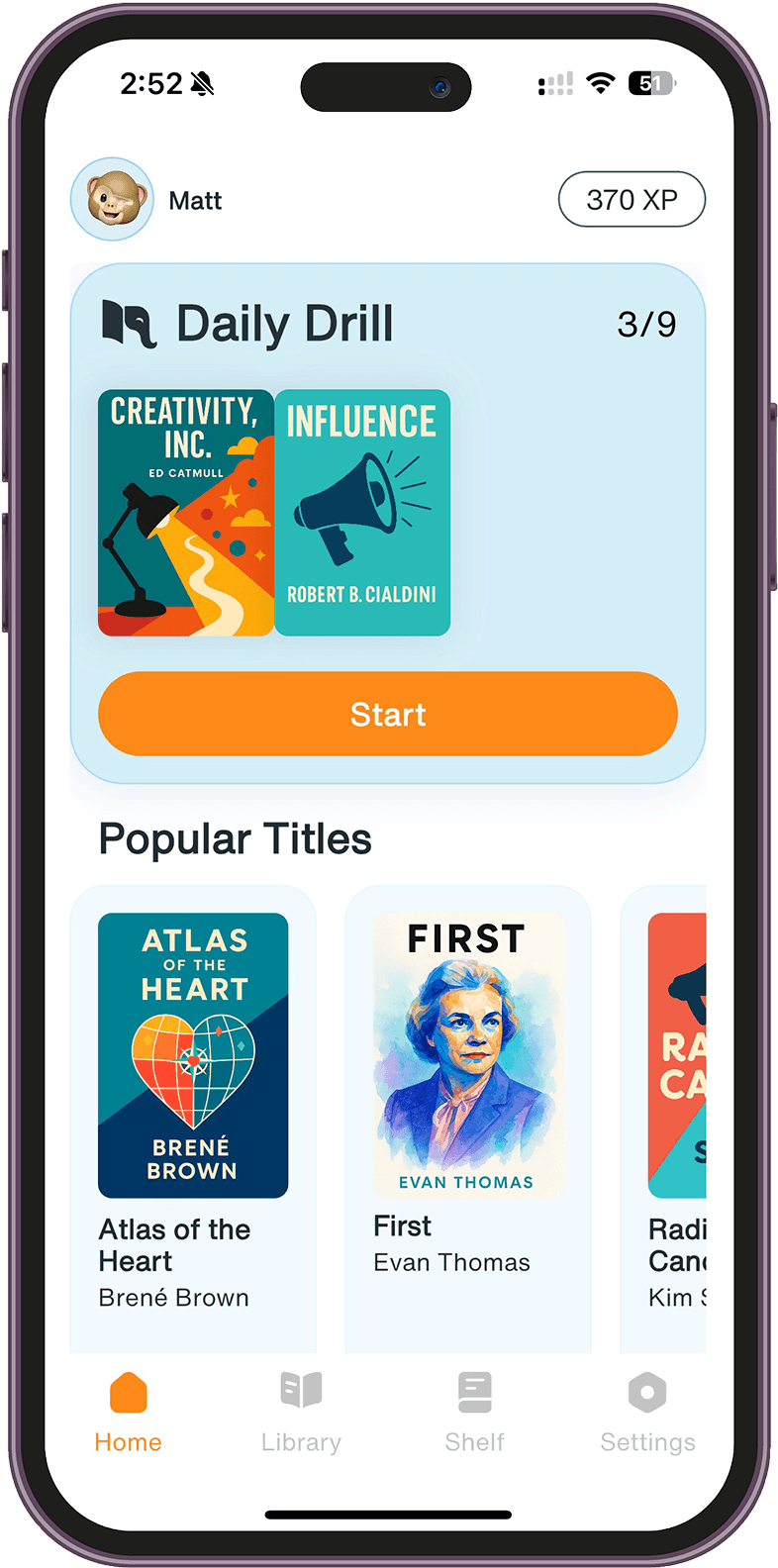
Loxie uses spaced repetition and active recall—the two most effective learning techniques known to cognitive science—to help you truly internalize conflict resolution concepts. Instead of reading once and hoping for the best, you practice for just 2 minutes a day with questions that resurface key distinctions right before you'd naturally forget them.
The difference matters. When you've actively practiced recognizing the victim role through repeated retrieval, you'll notice it emerging in real conversations. When you've reinforced fair fighting principles dozens of times, "You always..." will register as a warning sign before it leaves your mouth. Loxie transforms knowledge you've encountered into skills you can actually use when family dynamics get difficult.
Family conflict resolution is available in Loxie's free topic library, so you can start building these skills immediately.
Frequently Asked Questions
What is family conflict resolution?
Family conflict resolution is a set of frameworks and techniques for transforming destructive family fights into productive conversations. It involves identifying dysfunctional patterns like victim, enabler, and scapegoat roles, learning fair fighting rules that address behaviors rather than attack character, and developing skills for repair after disagreements occur.
What are the three destructive family roles that perpetuate conflict?
The three destructive roles are: the victim who manipulates through guilt while avoiding responsibility, the enabler who prevents natural consequences and blocks motivation for change, and the scapegoat who bears blame for systemic family problems while deeper dysfunction goes unexamined.
How do you break repetitive conflict patterns in families?
Pattern disruption involves changing your predictable response to break familiar action-reaction sequences. If you usually defend when criticized, try asking questions instead. If you normally go silent, speak up. By changing your lines in the family conflict script, you force interactions onto new ground where different outcomes become possible.
What makes conflict "fair" versus destructive?
Fair fighting addresses specific behaviors rather than attacking character, stays present-focused instead of dragging in history, and reframes disagreements as "us versus the problem" rather than "me versus you." Destructive conflict involves contempt, stonewalling, character attacks, and repetitive cycles without resolution.
When is family therapy needed versus healthy distance?
Family therapy is indicated when destructive patterns repeat despite individual efforts, communication breaks down completely, or children show behavioral symptoms of family stress. Healthy distance or complete estrangement becomes necessary when relationships involve ongoing abuse, repeated boundary violations, or consistent mental health damage despite repair attempts.
How can Loxie help me learn family conflict resolution?
Loxie uses spaced repetition and active recall to help you internalize conflict resolution techniques so they're available when emotions run high. Instead of reading once and forgetting, you practice for 2 minutes a day with questions that reinforce fair fighting rules, boundary-setting strategies, and pattern recognition right before you'd naturally forget them.
Stop forgetting what you learn.
Start learning for good with your 7-day FREE trial.