Healthcare Administration Basics: Key Concepts & What You Need to Know
Understand how healthcare organizations actually operate—from payment systems and regulations to the delicate balance between mission and margin.
by The Loxie Learning Team
Healthcare is one of the most complex industries on earth—a $4.3 trillion sector where the same procedure generates different revenue depending on who's paying, where federal regulations carry million-dollar penalties, and where organizations must simultaneously pursue clinical excellence, patient satisfaction, and financial survival. Understanding healthcare administration isn't optional for anyone working in or with healthcare systems.
This guide breaks down the essential concepts of healthcare administration. You'll learn how the maze of payers actually works, why documentation quality directly determines reimbursement, what regulations like HIPAA and EMTALA actually require, and how the shift from volume-based to value-based care is transforming business models across the industry. Whether you're a clinician wanting to understand the business side, an administrator building foundational knowledge, or a student preparing for healthcare leadership, these concepts form the operating system of modern healthcare.
 Start practicing Healthcare Administration ▸
How does Medicare work and why does it matter for healthcare organizations?
Medicare covers Americans 65 and older through four distinct parts, each with different funding mechanisms and coverage rules. Part A covers hospital stays and is funded by payroll taxes—workers pay in during their careers and receive benefits in retirement. Part B covers outpatient services like physician visits and requires monthly premiums from beneficiaries. Part C, known as Medicare Advantage, allows private insurers to offer Medicare benefits through managed care plans. Part D provides prescription drug coverage through private plans.
The critical issue for healthcare organizations is that CMS (Centers for Medicare & Medicaid Services) sets reimbursement rates that often cover only 85-90% of actual costs. This gap means hospitals cannot survive financially on Medicare patients alone—they must maintain a mix of payers that includes higher-paying commercial insurance to subsidize government program losses. A hospital with too many Medicare patients relative to commercial patients faces serious financial pressure despite serving patients who have insurance coverage.
What makes Medicaid so complex for multi-state healthcare operations?
Medicaid operates through federal-state partnerships where states administer programs with federal matching funds called FMAP (Federal Medical Assistance Percentage), ranging from 50-83% based on state per capita income. This structure creates what appears to be one program but actually functions as 50+ different programs with vastly different eligibility rules, covered services, and provider reimbursement rates.
The practical impact is that a procedure might reimburse at 70% of Medicare rates in one state but 95% in another. Organizations operating across state lines must navigate different enrollment processes, billing requirements, and managed care contracts for each state's Medicaid program. This complexity explains why national health systems maintain separate billing and compliance teams for different states despite theoretically participating in the same federal program.
Why do commercial insurers pay so much more than government payers?
Commercial insurance negotiates provider rates through contracts that typically pay 180-250% of Medicare rates according to RAND Corporation research from 2022. This markup isn't pure profit—it subsidizes losses from government payers and covers extensive administrative requirements that add costs averaging $80,000 per physician annually. Prior authorization requirements alone consume 14 hours of physician time weekly according to the AMA, with 94% of physicians reporting delays in necessary care.
This cross-subsidization model explains why hospitals aggressively negotiate commercial rates and why losing commercial market share threatens organizational survival even with growing patient volumes. The commercial rate premium funds the gap between what government programs pay and what care actually costs to deliver.
Practice these payer concepts in Loxie ▸
What is payer mix and why does it determine financial viability?
Payer mix refers to the distribution of patients across different payment sources—commercial insurance, Medicare, Medicaid, and self-pay. A typical sustainable mix requires 40-45% commercial insurance to offset losses from 35-40% Medicare, 10-15% Medicaid, and 5-10% self-pay. Shifts toward government payers threaten margins even when total patient volume increases.
This mathematical reality creates ethical tensions. Hospitals need commercial patients to subsidize mission services, but actively managing payer mix can mean limiting Medicaid access or locating facilities in commercially insured areas—decisions that may violate community benefit obligations. Healthcare administrators must constantly balance financial sustainability with access obligations, understanding that without financial health, no services can be provided at all.
How does self-pay create the chargemaster paradox?
Self-pay patients—those without insurance—face chargemaster prices that can be 4-10 times what insurers pay for the same service. Hospitals must balance legal requirements to bill full charges with mission obligations to provide financial assistance. Most hospitals offer sliding-scale discounts based on federal poverty level guidelines and payment plans to prevent medical bankruptcy.
The chargemaster paradox creates genuine ethical dilemmas: hospitals legally must have uniform pricing but know uninsured patients can't afford these rates. Financial assistance policies attempt to bridge this gap, but aggressive collection practices damage community trust while overly lenient policies increase bad debt that threatens organizational sustainability.
Why does clinical documentation directly determine reimbursement?
Clinical documentation directly determines reimbursement through DRG (Diagnosis Related Group) assignment. Documenting "acute respiratory failure" versus "shortness of breath" can mean an $8,000 difference in Medicare payment for the same patient stay. The difference isn't fraudulent—it's about capturing severity accurately. Physicians focus on treating patients, not maximizing documentation specificity.
Clinical Documentation Improvement (CDI) specialists bridge this gap by querying physicians to ensure documentation reflects actual care complexity. This isn't gaming the system but rather ensuring that the documentation accurately represents what happened clinically so the organization receives appropriate reimbursement for the resources consumed in caring for the patient.
Documentation, coding, payer mix, compliance—healthcare administration involves dozens of interconnected concepts.
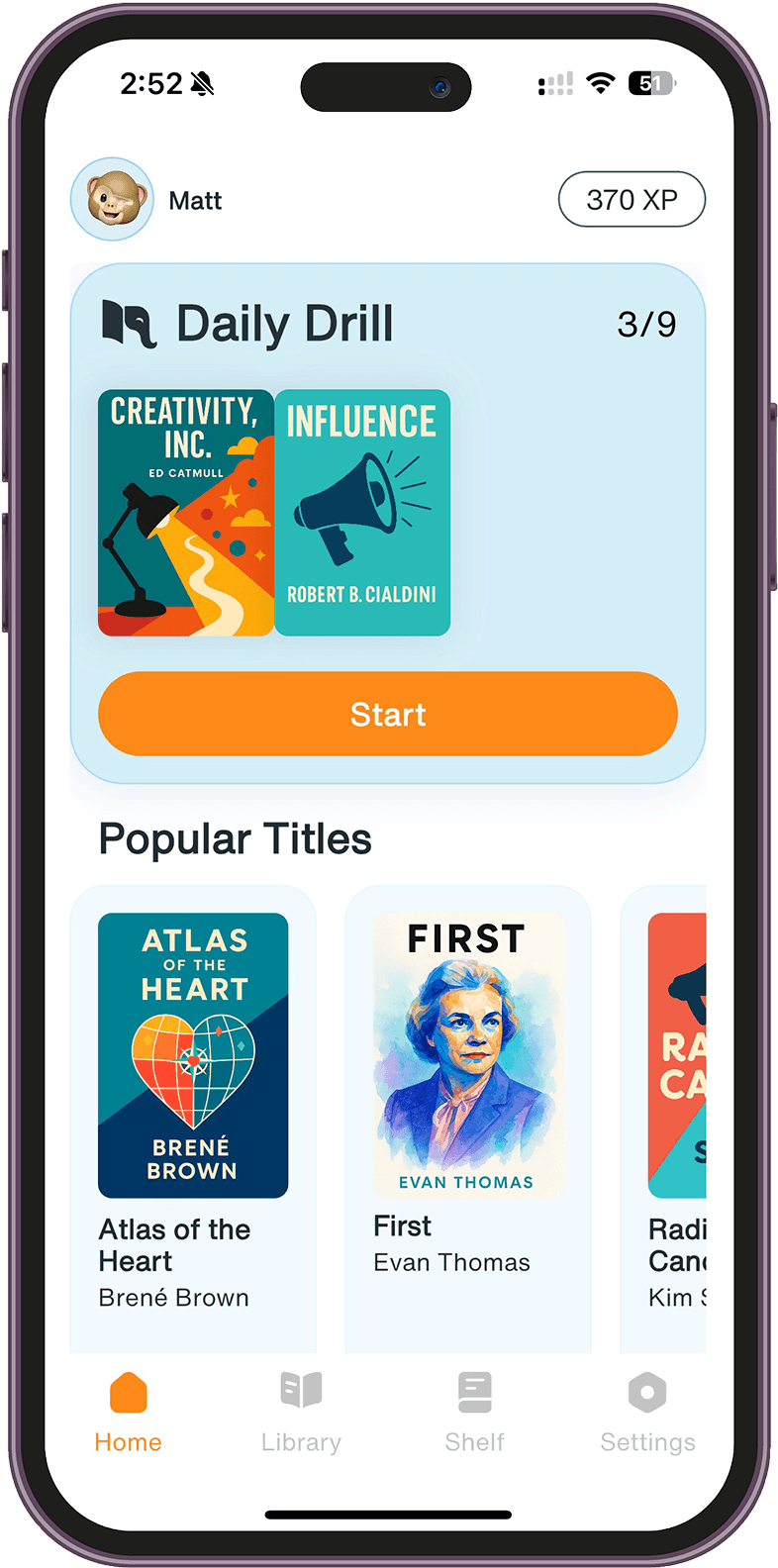
Loxie uses spaced repetition to help you retain these distinctions long-term, so you can apply them when making real decisions rather than relearning them each time.
Try Loxie free for 7 days ▸How does medical coding work and why is accuracy so difficult?
Medical coding accuracy requires matching ICD-10's 70,000+ diagnosis codes and CPT's 10,000+ procedure codes to clinical documentation. Undercoding leaves money unclaimed while overcoding triggers audits and penalties—creating constant tension between revenue optimization and compliance risk.
Coders face impossible precision demands: selecting among 120+ fracture codes for a broken arm while processing 20-30 charts daily. This complexity explains why coding errors cause 25% of claim denials and why certified coders command premium salaries despite being non-clinical staff. Studies show most organizations actually undercode from fear of compliance violations, leaving 1-3% of legitimate revenue uncaptured annually.
What is denial management and why does prevention beat appeals?
Denial management has evolved from appealing individual claims to preventing systematic problems. Initial denial rates averaging 10% of claims represent $262 billion in administrative waste annually according to the Kaiser Family Foundation. Tracking denial patterns by payer, service, and reason identifies root causes like missing authorizations or documentation gaps that, once fixed, prevent hundreds of future denials.
Reactive appeals win 60% of cases but cost $118 per appeal according to MGMA research. Proactive prevention through root cause analysis and process improvement eliminates denial sources entirely. One authorization workflow fix can prevent 50 denials monthly, saving more than winning individual appeals ever could. Reducing denials by just 1% typically generates $1-2 million for mid-size hospitals through faster payment and reduced rework costs.
What are HIPAA's three distinct compliance obligations?
HIPAA creates three distinct compliance obligations that organizations must address separately. The Privacy Rule controls who can access and use Protected Health Information (PHI). The Security Rule requires protecting electronic PHI through administrative, physical, and technical safeguards like encryption and access controls. The Breach Notification Rule establishes requirements for reporting unauthorized disclosures within 72 hours.
Violations generate fines from $100 to $2 million per incident plus significant reputational damage. Organizations often focus on privacy (who can see information) while neglecting security (encryption, access controls) or breach response procedures. Understanding HIPAA's three-part structure prevents compliance gaps that create liability across different dimensions of patient information protection.
Learn healthcare regulations for good ▸
What does EMTALA actually require and why is it an unfunded mandate?
EMTALA requires emergency departments to provide medical screening examinations and stabilizing treatment regardless of ability to pay. The medical screening examination requirement goes beyond triage—it requires determining whether an emergency medical condition exists using ancillary services like labs and imaging uniformly, regardless of insurance status. This prevents "wallet biopsies" that provide different care based on payment source.
This creates an unfunded mandate where hospitals absorb $40 billion annually in uncompensated emergency care while facing penalties up to $100,000 per violation for patient dumping. EMTALA effectively creates the primary safety net in American healthcare: hospitals can't refuse emergency treatment, but receive no guaranteed payment, forcing cost-shifting to insured patients and creating a hidden tax that drives up healthcare premiums for everyone.
What is the Stark Law and why is strict liability so dangerous?
The Stark Law prohibits physicians from referring Medicare patients to entities where they have financial relationships unless specific exceptions apply. Unlike most laws, Stark violations are strict liability—intent doesn't matter. A physician owning stock in a hospital, receiving call coverage payments, or having a medical directorship could trigger violations if arrangements don't fit within narrow exceptions requiring exact documentation.
Penalties include repayment of all claims processed under the prohibited arrangement, $15,000 per service, and potential exclusion from federal programs. The strict liability nature makes precise legal structuring essential because even well-intentioned arrangements can inadvertently violate technical requirements. Each exception has multiple requirements—written agreements, term lengths, compensation formulas—where missing one element voids the entire protection.
How does the Anti-Kickback Statute differ from Stark Law?
The Anti-Kickback Statute criminalizes knowingly paying for referrals with intent to induce referrals. Unlike Stark's strict liability, prosecutors must prove intent. However, the "one purpose" test means legitimate payments become illegal if any purpose—even a minor one—involves inducing referrals. This carries penalties up to $100,000 and 10 years imprisonment per violation.
The intent requirement seems protective but the one purpose test creates significant risk. A fair market value medical directorship becomes illegal if evidence suggests any part of the compensation was meant to influence referrals. This ambiguity makes safe harbors—specific arrangements explicitly permitted by regulation—essential for protecting legitimate business relationships from criminal prosecution.
Why is Joint Commission accreditation effectively mandatory?
Joint Commission accreditation provides "deemed status"—passing their survey satisfies CMS Conditions of Participation for Medicare reimbursement. Since Medicare and Medicaid represent approximately 60% of hospital revenue, accreditation is effectively mandatory despite being technically voluntary. Hospitals could theoretically choose state surveys instead, but Joint Commission's brand recognition and established processes make it the default path.
Joint Commission standards span 250+ elements across domains including patient rights, medication management, infection control, medical staff credentialing, leadership governance, and environment of care. Each requires policies, procedures, training documentation, and performance data. Losing accreditation means losing Medicare billing ability—threatening organizational survival. This creates Joint Commission's significant power over hospital operations.
What's wrong with fee-for-service payment and why is healthcare so expensive?
Fee-for-service payment rewards volume regardless of outcomes. Hospitals profit from complications requiring readmission, physicians earn more from ordering tests regardless of value, and fragmented care increases revenue. This creates financial incentives fundamentally misaligned with patient health—a perverse structure that helps explain America's $4.3 trillion healthcare spending.
When providers earn more from sick patients than healthy ones, prevention becomes financially irrational. The system rewards doing more rather than doing right, making overtreatment profitable while undertreatment for complex conditions that don't generate procedure revenue remains common. This incentive misalignment is healthcare's cost crisis in structural form.
How does value-based care work and why is transition so difficult?
Value-based care shifts financial risk to providers through models like shared savings (keeping part of cost reductions), bundled payments (fixed price for episodes like knee replacement), and capitation (per-member payments regardless of services used). These models reward prevention and efficiency rather than volume—but require population health capabilities most organizations haven't developed.
The fundamental challenge is that organizations must maintain dual operating models: preserving fee-for-service revenue streams that fund current operations while building value-based capabilities for future contracts. It's like rebuilding a plane while flying it. Moving too fast toward value crashes the volume-based revenues still paying the bills, but moving too slowly loses market position to competitors who successfully transitioned.
What are bundled payments and why do they change provider behavior?
Bundled payments provide a single fixed payment for entire care episodes—like $25,000 for a knee replacement covering surgery, rehabilitation, and 90-day complications. This forces providers to manage downstream costs they previously ignored. If complications occur or rehabilitation extends, the provider absorbs those costs rather than billing additional services.
This episode-based payment transforms provider mindset from maximizing services to optimizing outcomes. Hospitals must now care about post-discharge rehabilitation costs and readmission prevention because they bear financial responsibility for the entire episode, not just their portion. Success requires managing the full continuum of care rather than just the inpatient stay.
How does mission-margin balance work through cross-subsidization?
Mission-margin balance requires explicit cross-subsidization strategies. Profitable services like orthopedics and cardiology generate 20-30% margins that fund money-losing but mission-critical services like trauma centers, behavioral health, and obstetrics operating at -10-20% margins. Without surplus from profitable services, essential community services become unsustainable.
This financial reality creates apparent ethical complexity. Hospitals must actively develop profitable service lines not from greed but to generate margins supporting unprofitable community services. Critics who oppose profit-making in healthcare don't understand that margins from elective procedures keep emergency departments open and trauma centers staffed. Mission requires margin; margin enables mission.
Why does quality management require tracking clinical, experience, and financial metrics simultaneously?
Triple aim dashboard tracking requires measuring clinical quality (outcomes, safety, effectiveness), patient experience (satisfaction, access, engagement), and financial performance (margin, days cash, productivity) simultaneously. Single-dimension optimization appears successful on focused metrics while deteriorating overall organizational health in ways that only become visible later.
Multi-dimensional measurement prevents gaming. Focusing solely on financial metrics may show margin improvement while quality declines. Maximizing patient satisfaction may increase costs unsustainably. Clinical quality focus may ignore patient experience. Balanced scorecards force leaders to confront trade-offs and optimize holistically, accepting that improving one dimension sometimes means tolerating lower performance in another.
The real challenge with learning healthcare administration
Healthcare administration involves dozens of interconnected concepts—payer structures, regulatory requirements, revenue cycle mechanics, value-based care models, quality frameworks—each with specific distinctions that matter in practice. The difference between Stark Law and Anti-Kickback Statute, between common cause and special cause variation in quality, between Part A and Part B Medicare coverage—these aren't academic distinctions but practical knowledge that shapes daily decisions.
The problem is that reading about these concepts once doesn't create lasting knowledge. Research on the forgetting curve shows we lose 70% of new information within 24 hours without reinforcement. How much of what you just read about HIPAA's three rules or Medicare's four parts will you remember next week when you need it?
How Loxie helps you actually remember healthcare administration concepts
Loxie uses spaced repetition and active recall to help you retain the key concepts, distinctions, and frameworks of healthcare administration. Instead of reading once and forgetting most of it, you practice for 2 minutes a day with questions that resurface ideas right before you'd naturally forget them—the difference between Medicare and Medicaid, what EMTALA actually requires, why payer mix matters for financial viability.
Loxie includes healthcare administration in its topic library, so you can start reinforcing these concepts immediately. Each practice session strengthens your retention, building the foundational knowledge that enables confident decision-making in one of the world's most complex industries.
Frequently Asked Questions
What is healthcare administration?
Healthcare administration is the management of healthcare organizations including hospitals, clinics, and health systems. It encompasses understanding payment systems (Medicare, Medicaid, commercial insurance), regulatory compliance (HIPAA, EMTALA, Stark Law), revenue cycle management, quality improvement, and balancing clinical mission with financial sustainability.
What is payer mix and why does it matter?
Payer mix is the distribution of patients across payment sources—commercial insurance, Medicare, Medicaid, and self-pay. It matters because commercial insurance pays 180-250% of Medicare rates while government programs often reimburse below cost. A sustainable mix typically requires 40-45% commercial patients to subsidize losses from government payers.
What is the difference between Stark Law and the Anti-Kickback Statute?
Stark Law prohibits physician referrals to entities where they have financial relationships (strict liability—no intent required). The Anti-Kickback Statute criminalizes paying for referrals with intent to induce them (requires proving intent, but the "one purpose" test makes this easier). Stark is civil; Anti-Kickback is criminal with imprisonment penalties.
What is value-based care?
Value-based care shifts payment from volume (more procedures, more revenue) to value (better outcomes, lower costs). Models include shared savings, bundled payments, and capitation. It rewards prevention and efficiency rather than service quantity, requiring population health capabilities most organizations built for fee-for-service lack.
What does EMTALA require?
EMTALA requires emergency departments to provide medical screening examinations and stabilizing treatment regardless of ability to pay. This creates an unfunded mandate where hospitals absorb approximately $40 billion annually in uncompensated emergency care while facing penalties up to $100,000 per violation for turning patients away.
How can Loxie help me learn healthcare administration?
Loxie uses spaced repetition and active recall to help you retain healthcare administration concepts long-term. Instead of reading once and forgetting most of it, you practice for 2 minutes a day with questions that resurface ideas right before you'd naturally forget them. Loxie includes healthcare administration in its full topic library.
Stop forgetting what you learn.
Start learning for good with your 7-day FREE trial.