How to Get Along with Difficult People: Key Insights & Takeaways
Master Ryan Leak's practical framework for transforming frustrating relationships into opportunities for growth—without losing your peace.
by The Loxie Learning Team
We've all got them—the coworker who drains your energy, the family member who pushes every button, the friend who makes everything about themselves. But what if the solution to difficult people isn't about changing them at all? Ryan Leak's How to Get Along with Difficult People flips the script, showing that mastering your own responses, boundaries, and mindset transforms these frustrating relationships from sources of stress into unexpected opportunities for personal growth.
This guide breaks down Leak's complete framework for navigating challenging relationships. You'll learn why certain people trigger you so intensely, how to set boundaries that actually work, and communication techniques that disarm even the most defensive personalities. Whether you're dealing with a toxic boss, a boundary-crossing relative, or a friend who constantly disappoints, you'll walk away with actionable strategies you can use immediately.
 Start practicing these strategies free for 7 days ▸
What is the core principle of getting along with difficult people?
The central insight of Leak's approach is that getting along with difficult people isn't about changing them—it's about mastering your own responses, boundaries, and growth mindset. This fundamental shift moves the locus of control from external (hoping they'll change) to internal (developing your own skills), making difficult relationships manageable regardless of whether the other person ever evolves.
This principle transforms frustration into agency. When you stop waiting for difficult people to become easier, you discover that you have far more power over the relationship than you realized. Your emotional reactions, communication choices, and boundary enforcement are all within your control—and these factors often determine whether interactions spiral into conflict or resolve into understanding.
The psychological payoff extends beyond specific relationships. The emotional regulation, communication skills, and boundary-setting abilities you develop while dealing with difficult people become strengths you carry into every area of life. In this sense, challenging relationships function like resistance training—they build muscles that easy relationships simply don't require.
Why do personality clashes happen and how can you predict them?
Personality clashes aren't random collisions—they follow predictable patterns based on core differences in values, communication styles, and emotional needs. Once you understand these patterns, you can anticipate conflicts before they escalate and adjust your approach proactively rather than reactively scrambling after tensions have already risen.
Leak identifies four core communication styles that create predictable friction when they interact: direct communicators who value efficiency, analytical types who need data and logic, expressive personalities who lead with emotion, and amiable individuals who prioritize harmony. When a direct communicator steamrolls an amiable person, or when an analytical type frustrates an expressive personality with endless questions, the conflict often has nothing to do with the actual issue—it's a translation problem between different operating systems.
The practical application is powerful: knowing someone's communication style lets you translate your message into their language. The same request that falls flat with an analytical colleague might land perfectly if you add data. The feedback that offends an expressive friend might be welcomed if wrapped in affirmation first. This isn't manipulation—it's communication competence.
What if the difficult person isn't trying to be difficult?
A crucial insight is that difficult people often aren't being difficult on purpose. They're operating from their default personality type's strengths, which become weaknesses when overused or applied in the wrong context. What looks like aggression might be misapplied leadership. What feels like cold criticism might be misapplied analytical thinking. What seems like withdrawal might be misapplied thoughtfulness.
This reframe changes everything about how you approach conflict. Instead of asking "Why are they being so difficult?" you ask "What strength are they overusing, and how can I help them calibrate?" This shifts confrontation into collaboration and opens doors that defensiveness keeps firmly shut.
Practice communication styles in Loxie ▸
Why do certain people trigger you so intensely?
The people who trigger you most intensely often mirror qualities you dislike in yourself or represent unresolved issues from your past. This psychological insight transforms frustration into self-awareness, revealing that your strongest reactions to others frequently point to your own internal work rather than their external flaws.
Consider why one person's arrogance infuriates you while another person barely notices it. The intensity of your reaction often correlates with something personal—perhaps you struggle with similar tendencies you've tried to suppress, or their behavior echoes someone who hurt you years ago. Difficult people, whether they know it or not, often hold up uncomfortable mirrors.
Leak encourages a perspective-shifting question: "In what situations am I the difficult person?" Everyone is someone else's challenging relationship. This awareness creates empathy that transforms conflicts, acknowledging that difficulty is often mutual and contextual rather than a fixed trait of one person.
What is empathy's role in dealing with difficult people?
Empathy isn't agreeing with difficult people—it's understanding their story well enough to see why their behavior makes sense to them. This distinction between empathy and agreement allows you to validate someone's experience without endorsing their actions, creating psychological safety that makes change possible.
A powerful question to unlock empathy is: "What must be true about their world for this behavior to make sense?" This investigative approach uncovers the fears, past experiences, or unmet needs driving difficult behavior. The controlling boss might be operating from deep insecurity. The critical parent might be repeating patterns they experienced in childhood. Understanding these hidden drivers provides leverage points for influence that criticism and confrontation miss entirely.
Empathy also disarms defensiveness. When people feel understood—even if you disagree with them—their guard drops. They become more open to feedback, more willing to compromise, and more likely to consider your perspective. Empathy isn't weakness; it's strategic emotional intelligence that creates openings where force creates walls.
Understanding triggers and communication styles is powerful—but only if you remember them when emotions run high.
Loxie helps you internalize these frameworks through spaced repetition, so when you're face-to-face with your most difficult person, the right response comes naturally.
Build lasting relationship skills ▸How do you set boundaries that actually work?
Boundaries aren't walls to keep people out—they're gates with specific entry requirements that teach others how to treat you while maintaining connection for those who meet your standards. This reframes boundaries from rejection to education, showing others the conditions under which relationship is possible and giving them the choice about whether to meet those conditions.
The most effective boundaries are consequence-based, not emotion-based. The formula "If you continue X, I will do Y" creates clarity and accountability that angry ultimatums or pleading never achieve. "If you continue raising your voice, I will end this conversation" is far more effective than "Stop yelling at me!" because it removes emotional manipulation from the equation and makes consequences predictable and impersonal rather than punitive.
Boundary violations should be treated as data, not disasters. They reveal exactly where you need stronger limits and provide practice opportunities for enforcing consequences without guilt. Each violation is feedback that helps you refine your boundaries and build confidence through progressive enforcement. The goal isn't to set perfect boundaries once—it's to develop boundary-setting as an iterative skill.
Why do boundaries feel so hard to maintain?
Many people struggle with boundaries because they confuse boundary-setting with being unkind or controlling. But boundaries are actually an act of clarity and respect—both for yourself and for the other person. You're giving them honest information about what works for you, which is far more respectful than silently resenting them for crossing lines they didn't know existed.
Guilt often sabotages boundary enforcement, especially with family members who use history and emotional appeals as manipulation tools. The "broken record technique"—calmly repeating your boundary without justification, argument, or explanation—works especially well in these situations. By refusing to engage with guilt trips or deflection, you maintain focus on the current boundary rather than relitigating past grievances.
Master boundary-setting frameworks ▸
How do you start difficult conversations without triggering defensiveness?
One of Leak's most practical techniques is starting difficult conversations with "I've been making up a story about..." This phrase separates your interpretations from facts, inviting correction rather than triggering defensiveness. It acknowledges that your perception might be incomplete or incorrect, creating psychological safety for the other person to share their perspective without feeling attacked.
For example, instead of saying "You clearly don't respect my time," you might say "I've been making up a story that when you show up late, it means you don't value our time together. Is that accurate?" This opening gives the other person room to explain, correct, or acknowledge—options that accusatory statements close off entirely.
Another powerful technique is addressing behavior patterns rather than individual incidents. "I've noticed a pattern where..." prevents debates about specific events and focuses on the relationship dynamic that needs to change. This approach bypasses defensive nitpicking about details and memory disputes, directing attention to the recurring issue that actually damages the relationship.
What if emotions are running too hot for productive conversation?
The 24-hour rule—waiting one day before responding to triggering situations—prevents emotional hijacking and allows your prefrontal cortex to craft responses that align with your values rather than your feelings. This simple delay protocol leverages the brain's natural emotional cooling period, dramatically reducing the likelihood of saying things you'll regret or escalating conflicts unnecessarily.
When you must engage with high-intensity situations immediately, try matching the energy level without matching the emotion. If someone approaches you with high intensity, meet their energy with equal engagement but redirect it toward solutions rather than escalation. This validates their emotional investment without adopting their negativity, creating connection through energy matching while maintaining productive direction.
How do you recognize and escape toxic relationship patterns?
Toxic relationships follow a predictable cycle: idealization (you're the greatest), devaluation (everything you do is wrong), discard (abandonment or punishment), and hoovering (attempts to suck you back in). Recognizing this pattern helps you exit before the next rotation, understanding that the relationship's dysfunction follows a script that has nothing to do with your worth.
The decision to end a relationship should be based on patterns, not potential. When someone consistently shows you who they are despite multiple opportunities to change, believing them protects your wellbeing. This principle prevents the common trap of staying in harmful relationships based on who someone could be rather than who they repeatedly demonstrate themselves to be.
Leak emphasizes that your peace is not dependent on their change. Developing internal stability regardless of external chaos is the ultimate victory in dealing with difficult people. This shifts power from external circumstances to internal development, making your wellbeing independent of others' behavior while still engaging productively with challenging relationships when appropriate.
How do you handle difficult family members you can't avoid?
Family boundaries require different strategies because you can't fire your relatives. Instead of complete cutoff (which often isn't feasible), Leak recommends controlling the context by limiting interaction to structured settings where difficult behavior is naturally constrained. A contentious uncle might be manageable at a crowded holiday dinner but unbearable during a long car ride.
Creating "relationship containers"—specific times, topics, and durations for family interactions—preserves connection while protecting your peace from unlimited access and emotional dumping. You might decide that phone calls with a difficult parent happen on Sunday afternoons for 30 minutes, or that certain topics are simply off the table. These structures provide predictable connection points without sacrificing your entire emotional bandwidth.
The broken record technique proves especially valuable with family members who weaponize history and guilt. When a relative tries to relitigate past conflicts or manipulate through emotional appeals, calmly restating your boundary without explanation short-circuits the manipulation. "I'm not available to discuss that" repeated as many times as necessary eventually teaches even persistent family members that certain tactics won't work.
Practice family boundary strategies ▸
What's the best approach for managing a difficult boss or colleague?
Managing up with a difficult boss requires speaking their language—frame your needs in terms of their priorities, showing how your success directly contributes to their goals. This strategic alignment makes collaboration feel like their idea, reducing resistance and increasing support by connecting your requests to their self-interest.
For difficult colleagues, the "professional translator" approach works well: restating emotional attacks in neutral, work-focused language defuses conflict while maintaining focus on actual issues. When a colleague says "You obviously don't care about this project," you might respond "It sounds like you're concerned about the timeline. What specific deliverable are you worried about?" This strips emotion from the situation and forces discussion back to professional matters.
Documentation becomes essential with difficult workplace relationships. Recording dates, conversations, and behaviors isn't about revenge—it's about pattern identification and self-protection. This practice transforms subjective frustration into objective data, providing both clarity about the real scope of the problem and evidence if formal intervention becomes necessary.
How can difficult people actually help you grow?
Perhaps Leak's most transformative insight is that difficult people are your personal trainers for patience, boundaries, and emotional regulation. Without them, you'd never develop the resilience muscles that easy relationships don't require. This reframe transforms difficult people from obstacles into opportunities, recognizing that the skills developed in challenging relationships become strengths applied everywhere else.
Your blind spots in relationships become visible through the feedback of difficult people. They're often the only ones willing to tell you uncomfortable truths that friends and allies might avoid. While their delivery might be harsh, the content sometimes contains growth opportunities that comfortable relationships would never expose.
This doesn't mean you should seek out toxic relationships or tolerate abuse for the sake of "growth." But it does mean that the difficult people already in your life—the ones you can't easily avoid—can become unexpected teachers if you approach them with curiosity rather than pure frustration.
The real challenge with How to Get Along with Difficult People
Here's the uncomfortable truth about relationship advice: knowing what to do and actually doing it when emotions are running high are completely different things. The forgetting curve shows that within 24 hours, you'll lose 70% of new information. Within a week, most of what you've read here will fade. And then you'll find yourself face-to-face with your most difficult person, defaulting to the same reactive patterns that have never worked.
How many times have you read something that felt genuinely useful—a communication technique, a boundary-setting framework, a perspective shift—only to forget it completely in the heat of the moment? The insight that could have transformed a conflict sits unused in the dusty corners of your memory while you repeat the same frustrating cycle.
How Loxie helps you actually remember these strategies when you need them
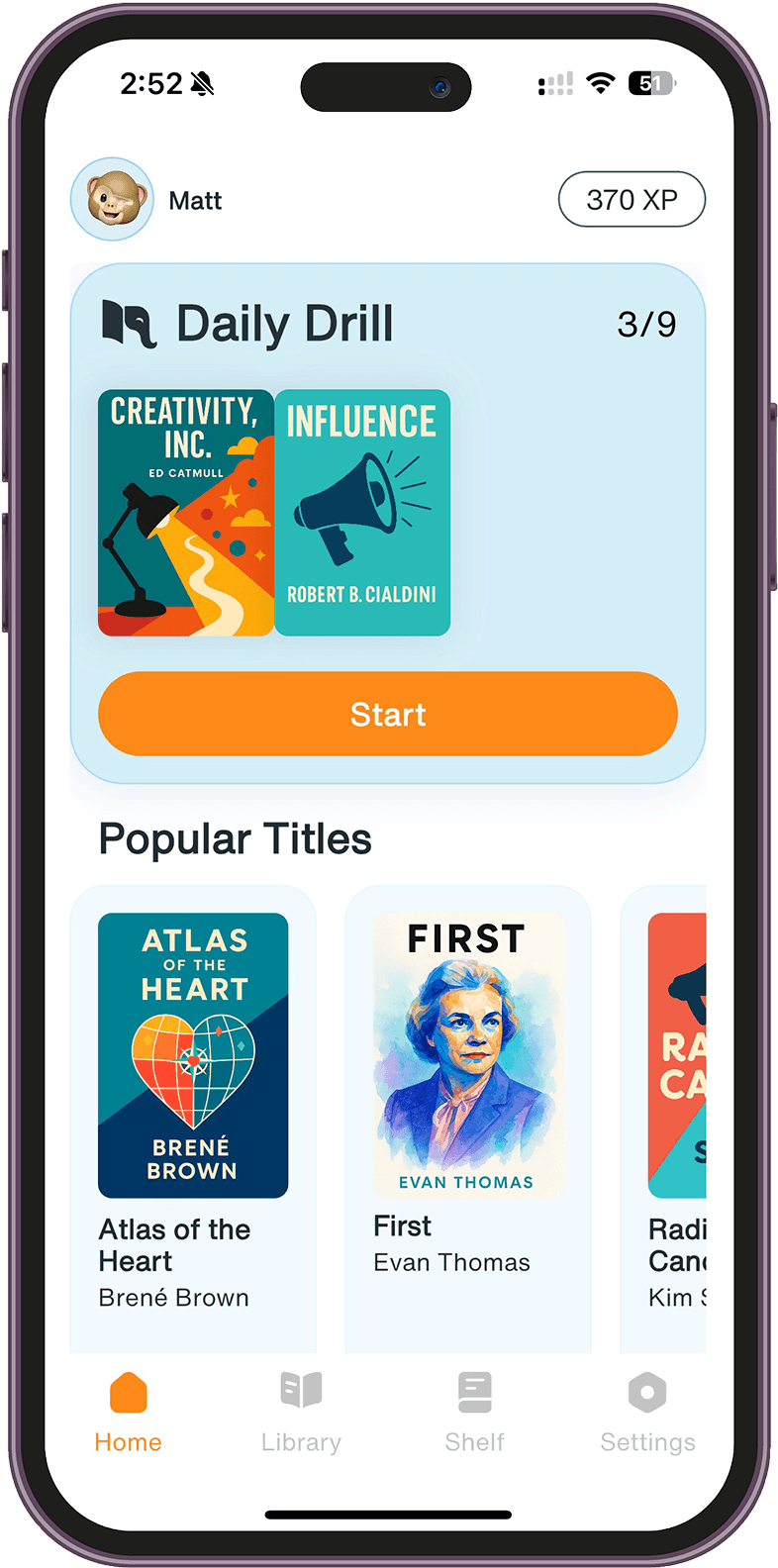
Loxie uses spaced repetition and active recall to transform knowledge about difficult people into instinctive responses available when emotions run high. Instead of reading these concepts once and watching them fade, you practice for just 2 minutes a day with questions designed to resurface ideas right before you'd naturally forget them.
The science is clear: active recall (being quizzed on information) creates dramatically stronger memory traces than passive reading. Spaced repetition (reviewing at optimal intervals) ensures these insights stay fresh and accessible. The result is that when you're facing a triggering conversation, the right response comes to mind naturally rather than occurring to you hours later.
The strategies in this book only work if you can access them in real-time. Loxie's free library includes these relationship frameworks, so you can start building the mental reflexes that transform how you navigate difficult people—not just in theory, but in the moments that actually matter.
Frequently Asked Questions
What is the main idea of How to Get Along with Difficult People?
The core idea is that getting along with difficult people isn't about changing them—it's about mastering your own responses, boundaries, and mindset. By developing emotional intelligence, communication skills, and clear boundaries, you can transform frustrating relationships into opportunities for personal growth while protecting your peace.
What are the key takeaways from How to Get Along with Difficult People?
Key takeaways include: boundaries should be consequence-based rather than emotion-based, empathy means understanding someone's perspective without agreeing with them, the people who trigger you most often mirror something in yourself, and your peace doesn't depend on whether difficult people change.
What are the four communication styles that cause personality clashes?
The four styles are: direct communicators who value efficiency, analytical types who need data and logic, expressive personalities who lead with emotion, and amiable individuals who prioritize harmony. Conflicts often arise not from the issue itself but from mismatched communication styles.
How do you set boundaries with family members you can't avoid?
Create "relationship containers" with specific times, topics, and durations for interaction. Limit contact to structured settings where difficult behavior is naturally constrained. Use the broken record technique—calmly repeating your boundary without justification—to short-circuit guilt-based manipulation.
What is the best way to start a difficult conversation?
Begin with "I've been making up a story about..." followed by your interpretation. This separates facts from assumptions, acknowledges you might be wrong, and invites the other person to share their perspective without feeling attacked. It creates psychological safety that accusations destroy.
How can Loxie help me remember what I learned from How to Get Along with Difficult People?
Loxie uses spaced repetition and active recall to help you retain these relationship strategies. Instead of reading once and forgetting when emotions run high, you practice for 2 minutes daily with questions that resurface insights right before you'd naturally forget them. Loxie includes this book's frameworks in its full topic library.
We're an Amazon Associate. If you buy a book through our links, we earn a small commission at no extra cost to you.
Stop forgetting what you learn.
Start learning for good with your 7-day FREE trial.