Mental Models That Matter: Key Concepts & What You Need to Know
Master the thinking tools that help you see patterns others miss, avoid mistakes others repeat, and make better decisions in work and life.
by The Loxie Learning Team
Most people approach problems the same way every time—and get stuck in the same places every time. Mental models are thinking tools borrowed from multiple disciplines that help you understand how the world actually works, not how you assume it works. They're the cognitive Swiss Army knife that lets you see patterns others miss and avoid mistakes others repeatedly make.
This guide covers the essential mental models that matter most for everyday decisions. You'll learn inversion thinking that solves problems backward, second-order thinking that traces consequences beyond the obvious, margin of safety that protects against overconfidence, and the razors and principles that cut through complexity. These aren't academic abstractions—they're practical tools you can apply immediately to work, relationships, and life decisions.
 Start practicing mental models ▸
What is inversion thinking and how does it solve problems?
Inversion thinking solves problems backward by asking "what would guarantee failure?" then systematically avoiding those paths—revealing solutions that forward thinking misses because it's often clearer to identify what destroys success than what creates it. When planning a project, listing everything that could cause failure (poor communication, unclear goals, inadequate resources) and preventing each one often works better than trying to envision the perfect path forward.
This approach works because negative space is often clearer than positive space. We can easily list what kills relationships (contempt, neglect, dishonesty) even when we struggle to define what makes them thrive. By identifying and avoiding failure modes, you automatically move toward success without needing to know the exact path. Charlie Munger captured this with his principle: "Tell me where I'm going to die and I'll never go there."
When does inversion work best?
Inversion thinking works best for complex problems where success paths are unclear but failure modes are obvious. Relationships fail from neglect and contempt. Businesses fail from running out of cash. Health fails from consistent bad habits. When you can't see how to win but can clearly see how to lose, inverting the problem transforms an intractable challenge into a manageable checklist of things to avoid.
The power comes from asymmetry between success and failure—while there are many ways to succeed, failure modes are often limited and predictable. A business can succeed through various strategies, but almost always fails from running out of cash, making cash flow management more critical than finding the perfect business model. This makes "avoid stupid mistakes" a more actionable strategy than "be brilliant."
What is second-order thinking and why do obvious solutions backfire?
Second-order thinking considers consequences of consequences by asking "then what happens?"—recognizing that immediate effects often trigger opposite reactions that reverse or overwhelm the initial benefit. Cutting prices increases sales (first-order) but can trigger competitor price wars and damage brand perception (second-order), explaining why obvious solutions often backfire when you trace effects past the immediate outcome.
Most people stop at first-order effects because second-order consequences are delayed, indirect, and often counterintuitive. Antibiotics cure infection (first-order) but create resistant bacteria when overused (second-order). Social media connects people (first-order) but increases loneliness through comparison and shallow interaction (second-order). This systematic blindness to downstream effects explains why smart people make decisions that look obviously wrong in hindsight.
Second-order effects emerge because systems respond and adapt to changes. When you change one variable, other variables adjust in response, often in ways that counteract your intended outcome. Rent control helps current tenants but reduces new construction. Minimum wage increases help current workers but may reduce hiring. The key is always asking "how will the system respond to this change?" not just "what will this change do?"
Practice second-order thinking ▸
How do second-order reversals appear in personal life?
Personal decisions frequently demonstrate second-order reversals. Working extreme hours increases income (first-order) but damages health and relationships, eventually reducing earning capacity (second-order). Giving children everything they want makes them happy (first-order) but reduces resilience and gratitude (second-order). Recognizing these patterns helps you resist tempting first-order benefits that create larger second-order costs.
The discipline of second-order thinking requires fighting your brain's tendency to stop at immediate effects. When considering a decision, force yourself to ask "and then what?" at least three times to trace the cascade of consequences. If you quit your job to start a business, first-order is freedom and control, second-order might be financial stress affecting your relationships, third-order could be partner resentment undermining the very freedom you sought.
What is margin of safety and why do you need buffers?
Margin of safety builds buffers into systems because things go wrong more often and worse than expected—engineers design bridges for 10x expected load, wise investors buy stocks at significant discounts to estimated value, and experienced planners add 50% to time estimates. This principle recognizes that our predictions consistently underestimate both the frequency and severity of problems, making excess capacity look like waste until it becomes the thing that saves you.
We need margin of safety because of two cognitive failures: we underestimate uncertainty (thinking we know more than we do) and we underestimate extreme events (assuming the future will resemble the past). Every financial crisis catches experts by surprise because they modeled risk based on historical data that didn't include black swan events. Every project runs late because planners account for expected delays but not unexpected ones.
How does margin of safety apply to personal life?
Margin of safety in personal life means maintaining emergency funds before you need them, leaving early for important meetings, learning multiple skills before your primary skill becomes obsolete, and building relationships before you need favors. Life doesn't warn you before testing your reserves—your car breaks down the week after your warranty expires, you lose your job during a recession when everyone else is also looking, you need surgery when you just switched insurance.
The cost of margin of safety is visible and certain while its benefits are invisible and probabilistic. The extra money in emergency funds seems wasted until job loss, the redundant backup systems seem excessive until primary systems fail, the insurance premiums seem expensive until disaster strikes. This visibility asymmetry makes people consistently underinvest in resilience, optimizing for efficiency over survival until a crisis proves that surviving matters more than optimizing.
These models only help if you remember them when it matters
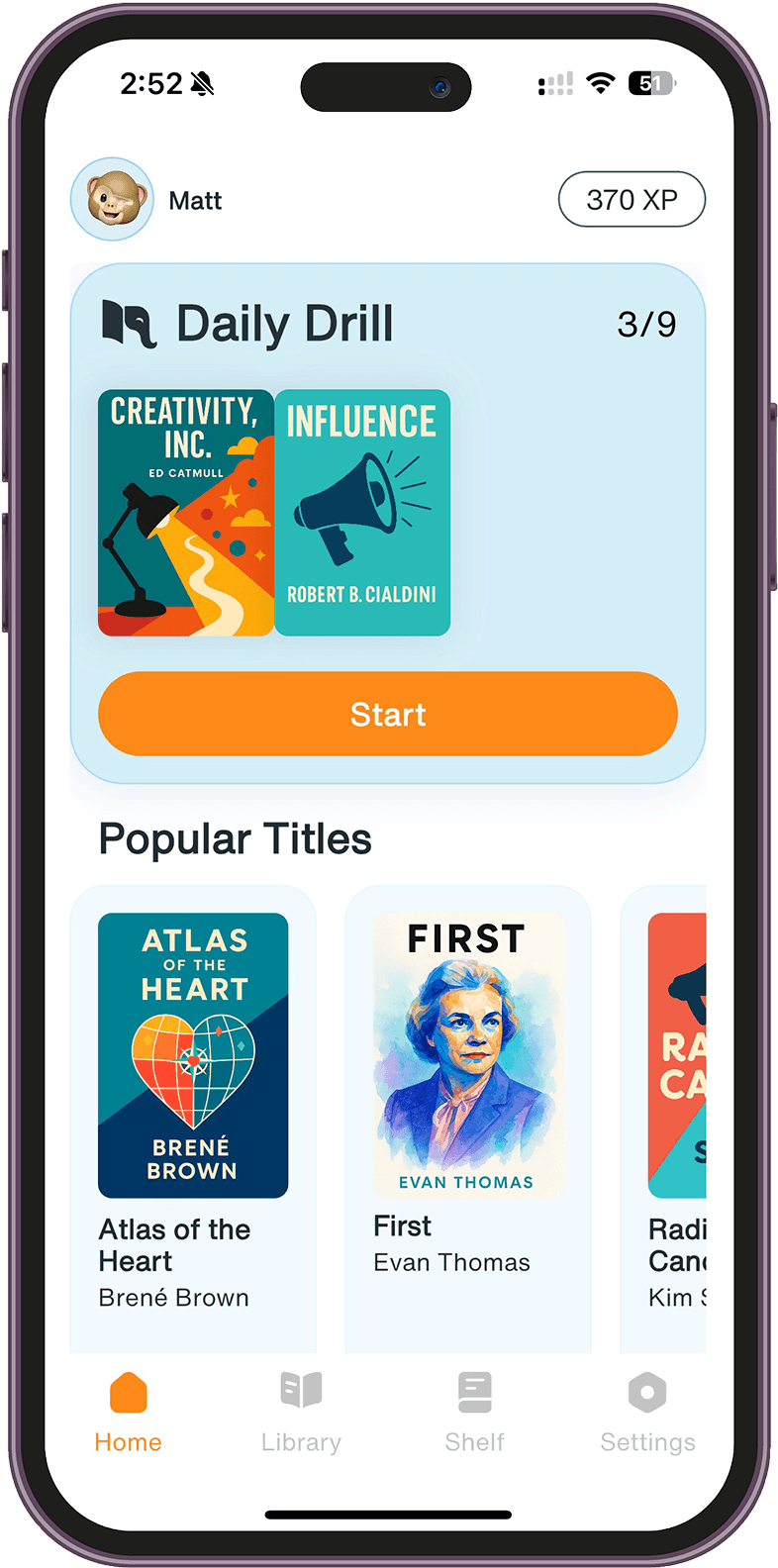
Understanding inversion, second-order thinking, and margin of safety intellectually is step one. Having them available when facing actual decisions is another challenge entirely. Loxie uses spaced repetition to move these models from "things you've read about" to "tools you actually use."
Build your mental model toolkit ▸What is Occam's Razor and when should you use it?
Occam's Razor states that simpler explanations are usually correct—when multiple hypotheses explain the data equally well, choose the one with fewest assumptions because each additional assumption multiplies the ways you could be wrong. If your keys are missing, "I misplaced them" requires one assumption while "someone broke in, stole them, then left everything else" requires multiple assumptions, making the simple explanation far more likely.
Occam's Razor works because reality tends toward simplicity at fundamental levels, and complex explanations usually involve unnecessary additions our pattern-seeking brains create. Each assumption in a hypothesis is a potential point of failure—if any assumption is wrong, the entire explanation collapses. This is why conspiracy theories are usually wrong despite feeling compelling—they require many people to coordinate perfectly, keep secrets forever, and have motivations that all align, while simple explanations require only common human behavior.
What is Hanlon's Razor and how does it change your perspective?
Hanlon's Razor counters our tendency to assume malice by stating "never attribute to malice what can be adequately explained by stupidity"—most harmful actions result from ignorance, incompetence, or carelessness rather than deliberate evil intent. When someone cuts you off in traffic, they're probably distracted or late, not targeting you personally. When IT systems fail, it's usually poor planning, not sabotage.
We default to assuming malice because our brains evolved to detect threats, and assuming hostile intent was safer than assuming incompetence in ancestral environments. But in modern life, incompetence is far more common than malice. Most people are too busy with their own problems to actively plot against you, and complex conspiracies require coordination that humans rarely achieve.
How do Occam's Razor and Hanlon's Razor work together?
These two razors work together but apply to different domains. Use Occam's Razor for explaining natural phenomena and system behavior (prefer simple mechanisms). Use Hanlon's Razor for interpreting human actions (assume incompetence over conspiracy). Knowing which razor to apply prevents both paranoid complexity and naive simplicity in your thinking.
When your project fails, Occam's Razor points to simple causes (missed requirements, poor communication) while Hanlon's Razor prevents blaming team members for sabotage rather than recognizing honest mistakes. A colleague who misses deadlines probably lacks organization skills, not respect for you—addressing the skill gap works better than assuming disrespect and creating conflict.
What is the Pareto Principle and how does it guide focus?
The Pareto Principle reveals that roughly 80% of effects come from 20% of causes—80% of revenue from 20% of customers, 80% of problems from 20% of bugs, 80% of happiness from 20% of activities—making focus on the vital few more valuable than spreading effort across the trivial many. Identifying and optimizing the high-impact 20% produces dramatically better results than trying to improve everything equally.
This principle works because of cumulative advantage and positive feedback loops. The best customers buy more and refer others, making them increasingly valuable. The worst code creates the most bugs and requires the most maintenance, consuming disproportionate resources. Small advantages compound—slightly better products get more sales, enabling more investment, making them even better. Understanding this prevents the equal allocation fallacy where you treat all inputs as equally important when reality is extremely unequal.
How do you apply Pareto thinking personally?
Personal application of the Pareto Principle means auditing your life to find the 20% of activities generating 80% of your results—which relationships bring the most joy, which work tasks create the most value, which habits drive the most improvement—then reallocating time from low-impact to high-impact activities. Most people discover they spend 80% of their time on things that barely matter while neglecting the few things that matter most.
The vital 20% changes over time and the neglected 80% sometimes contains tomorrow's vital few. The principle guides focus without becoming dogma—some maintenance of the 80% prevents system collapse. Companies that fire 80% of customers to focus on the profitable 20% discover they're hostage to those few customers. People who optimize for only high-impact activities burn out from intensity without recovery.
What is regression to the mean and why does extreme performance fade?
Regression to the mean explains why extreme performance rarely persists—exceptional results combine skill and luck, and while skill persists, luck doesn't, causing performance to drift back toward average over time. When a rookie athlete has an amazing first season, expect their second season to be worse not because they got worse, but because their first season included unusually good luck that won't repeat.
This happens because performance in any complex domain involves both stable factors (talent, training, systems) and random factors (lucky breaks, timing, temporary conditions). Extreme performance requires both stable and random factors to align favorably. The stable factors persist but random factors vary, so the next performance will likely have average luck rather than extreme luck. This is why mutual funds that beat the market one year usually don't beat it the next—their skill remains constant but their luck reverts to average.
Why do we miss regression to the mean?
We systematically ignore regression to the mean because our pattern-seeking brains create causal stories for random variation—attributing a manager's great year entirely to skill, assuming a medical treatment worked when patients would have improved anyway, punishing children for bad days that would naturally improve. This storytelling instinct makes us overreact to noise, seeing meaningful patterns in what's actually random fluctuation around a stable average.
Understanding regression to the mean prevents costly mistakes—not overpaying for last year's top performer who likely benefited from temporary luck, not abandoning good strategies after unusually bad results that likely included bad luck, not claiming credit when things naturally improve from terrible to average. Extreme outcomes predict moderate futures better than continued extremes, making patience after bad results and skepticism after great results the wise approach.
Practice statistical thinking ▸
How do mental models from different fields create a latticework?
Charlie Munger's latticework principle states that mental models become powerful when connected into an interconnected framework rather than isolated tools—models from different disciplines reinforce and complement each other, creating wisdom through synthesis. When you understand both incentives (economics) and selection pressure (biology), you see why organizations evolve toward what's rewarded regardless of stated missions, giving you deeper insight than either model alone provides.
The latticework creates emergent understanding that transcends individual models. Combining leverage (physics) with network effects (technology) explains why small advantages compound into dominance. Connecting regression to the mean (statistics) with adaptation (biology) explains why successful strategies stop working as competitors adapt. Each model illuminates blind spots in others while reinforcing valid insights.
What models come from economics, biology, and physics?
From economics: Opportunity cost represents the value of the best alternative you give up when making a choice—every yes is simultaneously a no to something else. Spending Saturday watching TV costs not just time but the exercise, reading, or relationship building you could have accomplished instead. Incentives drive behavior more powerfully than intentions—people respond predictably to rewards and punishments regardless of speeches, values, or wishes.
From biology: Evolution by natural selection operates in any system with variation, selection, and heredity—businesses evolve through market competition, ideas evolve through cultural transmission, technologies evolve through iterative improvement. What survives and spreads isn't necessarily "best" in any objective sense, but rather what's best adapted to the selection environment.
From physics: Leverage multiplies force through small inputs at the right point creating large outputs—using code to automate tasks, creating content that generates value repeatedly, building systems that run themselves. Momentum makes moving objects tend to keep moving—success breeds success, habits reinforce themselves, and reputation compounds—explaining why starting is the hardest part.
The real challenge with learning mental models
Mental models are powerful precisely because they apply across domains—inversion works for project planning, relationships, and investing; second-order thinking applies to policy decisions, career moves, and parenting. But this versatility creates a retention problem. Reading about these models once doesn't make them available when you're actually facing a decision.
Research on the forgetting curve shows that within 24 hours, you'll forget 70% of what you've read. Within a week, that number climbs to 90%. The mental models you just learned about will fade into vague familiarity—you'll remember that inversion exists without being able to apply it when planning your next project, you'll recall something about Pareto without identifying which 20% of your activities matter most.
How Loxie helps you actually internalize mental models
Loxie uses spaced repetition and active recall to move mental models from "things you've read about" to "tools you actually use." Instead of passively re-reading summaries, you practice applying models through questions that force retrieval—strengthening the neural pathways that make these models accessible when you need them.
The difference between single-model thinking and multi-model thinking determines decision quality. Loxie helps you build the full toolkit so you're not the person with only a hammer seeing every problem as a nail. Just 2 minutes a day of practice with mental model questions—and Loxie includes this topic in its full library.
Frequently Asked Questions
What are mental models?
Mental models are thinking tools borrowed from multiple disciplines—economics, biology, physics, psychology—that help you understand how the world works and make better decisions. They include frameworks like inversion thinking, second-order effects, margin of safety, and the Pareto Principle. Rather than approaching every problem from scratch, mental models provide proven patterns for analysis.
What is inversion thinking?
Inversion thinking solves problems backward by asking "what would guarantee failure?" then avoiding those paths. It works because failure modes are often clearer than success paths—we can easily list what kills relationships or businesses even when optimal strategies are unclear. By preventing predictable failures, you automatically move toward success.
What is the difference between first-order and second-order thinking?
First-order thinking considers only immediate effects of a decision. Second-order thinking traces consequences of consequences by asking "then what happens?" Many obvious solutions backfire because immediate benefits trigger responses that reverse or overwhelm them—like price cuts that start price wars or overtime that damages health and relationships.
What is the Pareto Principle?
The Pareto Principle states that roughly 80% of effects come from 20% of causes—80% of revenue from 20% of customers, 80% of results from 20% of activities. This means identifying and optimizing the vital few produces dramatically better results than spreading effort equally across everything. Focus on what matters most.
What is regression to the mean?
Regression to the mean explains why extreme performance rarely persists. Exceptional results combine skill (which persists) and luck (which doesn't), so performance naturally drifts back toward average over time. This is why last year's top performer often disappoints and why things usually improve after unusually bad periods.
How can Loxie help me learn mental models?
Loxie uses spaced repetition and active recall to help you internalize mental models so they're available when facing actual decisions. Instead of reading once and forgetting, you practice for 2 minutes a day with questions that resurface models right before you'd naturally forget them. Loxie includes mental models in its full topic library.
Stop forgetting what you learn.
Start learning for good with your 7-day FREE trial.