No Hard Feelings: Key Insights & Takeaways on Workplace Emotions
Learn how to transform workplace emotions from career liabilities into strategic assets for better creativity, collaboration, and success.
by The Loxie Learning Team
What if the key to professional success isn't suppressing your emotions, but strategically embracing them? No Hard Feelings by Liz Fosslien and Mollie West Duffy challenges the myth of the emotionless professional, presenting evidence that organizations attempting to eliminate feelings from work lose billions in turnover and disengagement. Companies that embrace emotional intelligence see 20% higher performance—because emotions drive decisions whether we acknowledge them or not.
This guide breaks down the complete framework for navigating workplace feelings. You'll learn practical techniques for processing emotions in the moment, building psychologically safe teams, and transforming anxiety, envy, and frustration into tools for professional growth. Whether you've read the book and want a refresher or you're discovering these ideas for the first time, you'll walk away with actionable strategies for bringing your whole self to work.
 Start practicing No Hard Feelings free for 7 days ▸
What does treating emotions as data actually mean?
Treating emotions as data means viewing workplace feelings as information sources rather than inconveniences to suppress. This paradigm shift transforms how you interpret your emotional responses: anxiety signals what needs attention, envy reveals what you truly value, and frustration indicates where systems need fixing. Instead of pushing these feelings aside, you mine them for actionable intelligence about your work environment and career direction.
Consider how this reframing works in practice. When you feel a pang of envy about a colleague's promotion, the traditional approach would be to feel ashamed and suppress it. The emotions-as-data approach asks: what does this envy tell me? Perhaps it reveals you want more visibility, different responsibilities, or recognition for your contributions. That emotional signal becomes a starting point for career planning rather than a source of shame.
This approach enables professionals to leverage their full cognitive and emotional capacity. Research shows that people who can interpret their emotions accurately make better decisions because they're working with complete information rather than ignoring half of what their brain is telling them. Loxie helps you internalize this reframe through spaced repetition, so interpreting emotions as data becomes automatic rather than requiring conscious effort during stressful moments.
How does the 90-second rule help you stay professional under pressure?
The 90-second rule is a neuroscience-based technique for processing intense emotions without losing professional composure. When you experience a strong feeling—anger at criticism, panic before a presentation, shame after a mistake—the chemical cascade in your body lasts approximately 90 seconds. If you can fully experience the feeling for that duration without reacting, the initial intensity naturally subsides, giving your rational brain time to re-engage.
The key insight is that after those 90 seconds, continuing to feel the emotion becomes a choice rather than an automatic response. This doesn't mean suppressing the feeling—quite the opposite. You acknowledge it fully, perhaps noting physical sensations like tightness in your chest or heat in your face. But you delay your response until the chemical storm passes.
Practical application looks like this: your boss delivers harsh feedback in a meeting. Instead of defending yourself immediately or shutting down, you take a breath and mentally count. You let yourself feel the sting fully. By the time 90 seconds pass, you can respond from a place of clarity rather than reactivity. This technique maintains relationships and credibility while still honoring your emotional experience.
Practice emotional regulation techniques ▸
What is emotional granularity and why does it improve decision-making?
Emotional granularity is the ability to make fine-grained distinctions between similar feelings. Instead of labeling everything as "stressed" or "upset," you distinguish between frustrated, disappointed, overwhelmed, anxious, irritated, or discouraged. Each of these feelings has different causes and requires different responses. Lumping them together means applying generic coping strategies that may miss the mark entirely.
Research demonstrates that people with high emotional granularity make better decisions and recover faster from setbacks. Here's why: if you can identify that you're feeling "disappointed" rather than just "bad," you can address the root cause—perhaps an expectation that wasn't met. If you're "anxious" rather than "stressed," the intervention might involve uncertainty reduction rather than workload management. Precision in diagnosis leads to precision in treatment.
Building this skill requires practice and an expanded emotional vocabulary. Start paying attention to the subtle differences in your workplace feelings. Is that pre-meeting sensation anxiety (fear of what might happen) or dread (certainty it will be unpleasant)? Is your response to that email irritation (they're wasting your time) or hurt (they dismissed your contribution)? Loxie reinforces emotional vocabulary through active recall, helping you build the granularity that enables smarter responses.
What is your emotional labor footprint and why does it predict burnout?
Your emotional labor footprint is the gap between your authentic feelings and the emotional display your job requires. Every role involves some performance—smiling when you're tired, projecting confidence when you're uncertain, expressing enthusiasm you don't fully feel. But when this gap becomes chronic and wide, burnout follows. This explains why customer service representatives often experience more exhaustion than people in physically demanding jobs: the constant emotional performance depletes internal resources.
Understanding your emotional labor footprint helps you identify when you're overextending emotionally. Track moments throughout your day when you're displaying emotions you don't feel. Notice how depleted you are after interactions requiring heavy emotional performance versus those allowing authenticity. Some emotional labor is inevitable, but unsustainable levels signal a need for change.
The solution isn't necessarily finding a job with zero emotional labor—that doesn't exist. Instead, seek balance. Look for roles, projects, or even moments within your current job that allow authentic emotional expression to restore equilibrium. A manager who must maintain composure in difficult client meetings might need space to vent frustrations with trusted colleagues afterward. Loxie can help you remember these self-awareness practices, so monitoring your emotional labor becomes habitual.
How do you track energy ROI to find sustainable strengths?
Tracking energy ROI means paying attention to which tasks energize you versus drain you, independent of how well you perform them. Traditional strength-finding focuses on what you're good at. Energy ROI adds a crucial dimension: sustainability. You might be excellent at detailed financial analysis, but if every spreadsheet leaves you depleted, that "strength" will lead to burnout over time.
True high-performance activities both showcase your abilities and replenish your emotional reserves. After completing them, you feel energized rather than exhausted, even if the work was challenging. These are the activities worth building a career around. The tasks that drain you—even ones you're skilled at—should be minimized, delegated, or restructured where possible.
Start an energy audit. For one week, note your energy level before and after different work activities. Look for patterns. Some findings will be obvious, but others will surprise you. You might discover that creative brainstorming energizes you even though you considered yourself "not creative," or that mentoring junior colleagues fills your tank while meetings with peers deplete it. This data guides career decisions more reliably than abstract self-assessment.
Understanding these concepts intellectually isn't enough
The real challenge is remembering to apply emotional intelligence techniques when you're actually stressed—not just when you're calmly reading about them. Loxie uses spaced repetition to help you internalize these frameworks so they're available when you need them most.
Build lasting emotional intelligence ▸What is the 10-10-10 rule for emotional decision-making?
The 10-10-10 rule is a temporal framework for making decisions that involve strong emotions. Before acting, ask yourself: How will I feel about this choice in 10 minutes? In 10 months? In 10 years? This simple exercise harnesses both your immediate emotional wisdom and your capacity for long-term rational thinking, creating balance that neither dismisses feelings nor becomes enslaved by them.
The 10-minute question honors your immediate emotional response. If sending that angry email will feel satisfying right now, that's real information—but it's incomplete. The 10-month question introduces medium-term consequences. Will you regret burning that bridge? Will this conflict have blown over? The 10-year question zooms out to what truly matters. Will this decision align with the person you want to become?
This framework prevents both impulsive reactions and analysis paralysis. When you're furious at a colleague, the 10-10-10 check might reveal that the immediate satisfaction of telling them off isn't worth the 10-month damage to your working relationship. Conversely, when you're afraid to advocate for yourself, the 10-year question might remind you that speaking up aligns with your long-term career goals despite short-term discomfort.
How does emotional contagion shape meetings and what can you do about it?
Emotional contagion is the phenomenon where feelings spread between people, often unconsciously. In meetings, this contagion operates with a troubling asymmetry: negativity spreads four times faster than positivity. One person's eye roll, sigh, or pessimistic comment can infect an entire room before anyone realizes what's happening. Understanding this dynamic empowers you to strategically influence group outcomes.
The first person to speak in a meeting has disproportionate emotional influence. Their tone sets a template that others unconsciously mirror. If the meeting opens with complaints or skepticism, that energy becomes the water everyone swims in. Starting instead with genuine appreciation, curiosity, or optimism seeds a productive emotional tone before negativity can take root.
Practical application: Before important meetings, consciously choose the emotional tone you want to establish. Prepare an opening statement that models that energy. If someone else speaks first with negativity, you can still redirect by offering an emotionally contrasting perspective early. You're not being fake—you're being strategic about which of your genuine emotional responses you choose to express and when.
Practice these techniques daily ▸
Why does leader vulnerability increase team psychological safety by 47%?
Psychological safety—the belief that you won't be punished for mistakes or speaking up—increases by 47% when leaders share their own failures first. This happens through "vulnerability loops" where openness breeds openness. When someone with power admits imperfection, it signals to everyone else that mistakes are acceptable, unlocking honest communication throughout the team.
The mechanism works because vulnerability from positions of power carries different weight than vulnerability from subordinates. When a junior employee admits uncertainty, it might be seen as incompetence. When a leader does the same, it demonstrates that even successful people struggle—and that struggling openly is safe here. This cascading effect transforms organizational culture because errors become learning opportunities rather than career threats.
Leaders practicing this approach don't overshare or appear incompetent. They strategically reveal appropriate struggles: "I was really nervous before that board presentation" or "I made a similar mistake early in my career." These disclosures humanize leadership while demonstrating that the path to success includes failure. Teams with vulnerable leaders iterate faster because they report problems early rather than hiding them until they become crises.
How does the SBI model make emotional feedback receivable?
The SBI model structures feedback around three elements: Situation, Behavior, and Impact. This framework removes judgment while still acknowledging the emotional reality of workplace interactions. Instead of attacking someone's character ("You're disrespectful"), you describe what happened and how it affected you: "When you interrupted me in the meeting [situation and behavior], I felt that my expertise wasn't valued [impact]."
This structure works because it's harder to argue with. The person can't dispute your feelings—those are yours. They can't claim the situation didn't happen if you describe it specifically. What they can do is understand exactly what behavior caused problems and consider changing it. Character-based feedback triggers defensiveness because it feels like an attack on who someone is. Behavior-based feedback feels like useful information about actions they can modify.
The emotional impact component is crucial and often omitted from traditional feedback frameworks. Saying "when you interrupted me" without "I felt dismissed" leaves out why it matters. Including the feeling validates your emotional experience while helping the other person understand the stakes. They may not have realized their interruption had any impact. Now they know, and they can choose differently.
What is emotional aikido and how does it defuse workplace conflict?
Emotional aikido is a technique that redirects workplace aggression by acknowledging the underlying feeling rather than responding to the attack. Just as the martial art aikido uses an opponent's momentum against them, emotional aikido transforms confrontational energy into collaborative problem-solving. When someone comes at you with anger, you don't meet it with defensiveness or counter-aggression—you address what's underneath.
Here's how it works in practice. A colleague storms into your office: "This project is a disaster and it's your fault!" The instinctive response is to defend yourself or attack back. Emotional aikido responds differently: "You seem really frustrated about this delay. Help me understand your biggest concern." This acknowledges their emotion without accepting blame, redirects toward problem-solving, and often reveals that the outburst was about something solvable.
The technique works because angry outbursts usually mask fear, frustration, or hurt. By addressing the emotion rather than the aggression, you give the person what they actually need—to feel heard. Often, once that happens, the aggression dissolves and you can have a productive conversation about the actual problem. Loxie can help you internalize this response pattern so it becomes available in heated moments when your own emotions might otherwise hijack your response.
Why do organizations with emotional flexibility policies retain 31% more employees?
Organizations that offer emotional flexibility—mental health days, private spaces for emotional processing, accommodation for varied working styles—retain 31% more employees than those demanding emotional uniformity. This retention advantage exists because employees can maintain authenticity rather than constantly performing emotional labor that depletes their reserves.
These structural accommodations recognize that emotional needs vary by person and circumstance. An introvert might need quiet space to recharge after collaborative work. Someone processing grief might need flexibility in their daily schedule. A burned-out high performer might need a sabbatical before they leave entirely. When organizations build in these supports, they prevent the invisible injuries that lead to disengagement and turnover.
The business case is clear: replacing an employee costs 50-200% of their annual salary. Accommodations that prevent departure—even expensive ones like sabbaticals or dedicated quiet rooms—pay for themselves in retained talent and institutional knowledge. More importantly, these policies signal that the organization values people as complete humans, not just production units. That signal attracts top talent who have choices about where they work.
Remember these frameworks when you need them ▸
How does emotional transparency build trust better than false confidence?
Leaders who practice emotional transparency—admitting anxiety, uncertainty, or concern rather than projecting false confidence—build three times more trust with their teams. This counterintuitive finding reflects a simple truth: employees detect inauthenticity. When leaders claim everything is fine during obvious turmoil, they destroy credibility. When they acknowledge shared concerns, they create connection.
Emotional transparency works because it signals strength, not weakness. Saying "I'm anxious about this merger too" demonstrates enough self-awareness to recognize your emotions and enough security to voice them. It also gives permission for team members to express their own concerns, which is essential for identifying real problems before they escalate. Teams can't collaborate on solutions when everyone's pretending problems don't exist.
The key distinction is between emotional transparency and emotional dumping. Leaders shouldn't burden teams with every anxious thought or use employees as therapists. Strategic transparency involves sharing relevant emotions that the team is likely experiencing too, in a way that normalizes those feelings and opens dialogue. "This timeline concerns me, and I imagine some of you feel the same. Let's talk about what would help" is transparency. A lengthy vent about everything going wrong is dumping.
Why are universal workplace emotions important to normalize?
Workplace emotions follow predictable patterns that nearly everyone experiences: Sunday Scaries before the workweek, meeting anxiety, promotion envy, imposter syndrome after a success. Normalizing these universal experiences reduces isolation and enables collective problem-solving. When you think you're the only one feeling envious of a colleague's recognition, you waste energy on shame. When you realize it's universal, you can address it constructively.
This normalization happens through conversation. When leaders and colleagues openly discuss common emotional experiences, they give everyone permission to acknowledge their own. Teams that talk about the Sunday Scaries can brainstorm approaches for Monday transitions. Groups that admit to meeting anxiety can redesign meeting formats. What was a private struggle becomes a shared challenge with collective solutions.
The productivity impact is significant. Shame and isolation consume cognitive resources that could go toward actual work. Employees hiding their emotional struggles perform worse than those who can acknowledge and address them. Organizations that normalize emotional experiences free up energy for performance improvement rather than performance-of-not-having-feelings.
The real challenge with No Hard Feelings
These frameworks for workplace emotions are powerful—but only if you remember them when emotions are actually running high. That's the fundamental problem with reading about emotional intelligence. In the calm moment of reading, everything makes sense. When your boss blindsides you with criticism or a colleague takes credit for your work, can you recall the 90-second rule? The SBI model? Emotional aikido?
Research on the forgetting curve shows we lose up to 70% of new information within 24 hours without reinforcement. All these techniques for processing anxiety, defusing conflict, and building psychological safety fade into vague recollections. You might remember that the book had something useful about feedback, but the specific framework escapes you when you need it most.
This isn't a failure of willpower—it's how memory works. Reading creates familiarity, not fluency. The difference between knowing about a concept and being able to apply it under pressure is the difference between recognizing a face and recalling a name. One feels easy; the other requires the neural pathways built through active practice.
How Loxie helps you actually remember what you learn
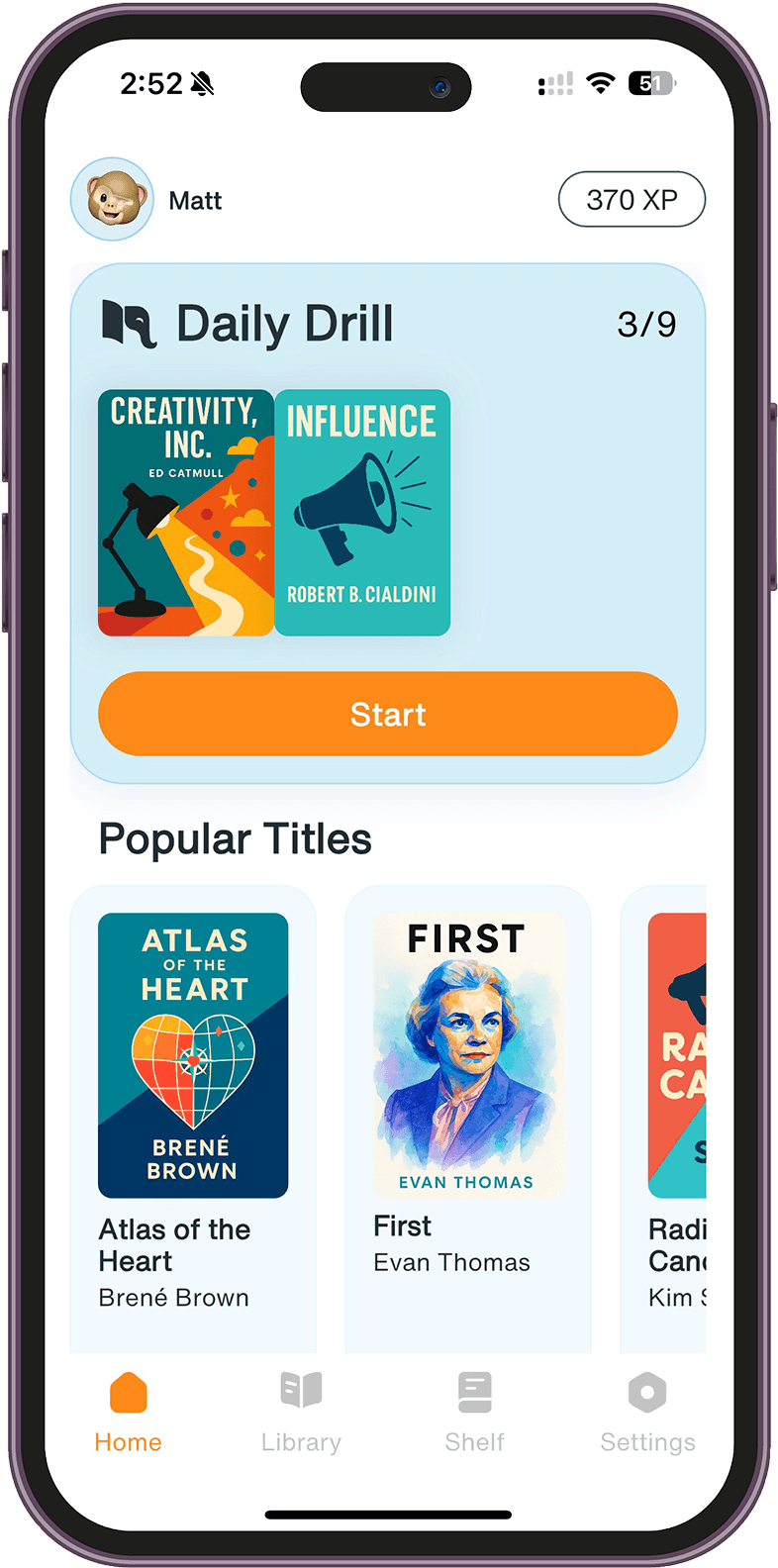
Loxie uses spaced repetition and active recall—the two most effective learning techniques ever studied—to help you internalize concepts from No Hard Feelings so they're available when emotions run high. Instead of passively re-reading, you practice retrieving the frameworks through questions that appear right before you'd naturally forget them.
Here's how it works: Loxie presents you with scenarios and questions about emotional intelligence concepts. "What's the first step in emotional aikido?" "Name the three components of SBI feedback." Each retrieval strengthens the neural pathway, moving these ideas from fragile short-term memory to durable long-term recall. Two minutes a day is all it takes.
Loxie includes No Hard Feelings in its complete topic library. You can start reinforcing these concepts today, building the automatic responses that let you apply emotional intelligence when your amygdala is firing and your prefrontal cortex is struggling. Don't just read about workplace emotions—actually remember how to handle them.
Frequently Asked Questions
What is the main idea of No Hard Feelings?
The central argument is that embracing emotions at work, rather than suppressing them, leads to better creativity, collaboration, and career success. Emotions are data, not distractions—anxiety signals what needs attention, envy reveals values, and frustration indicates broken systems. Organizations that embrace emotional intelligence see 20% higher performance.
What are the key takeaways from No Hard Feelings?
Key takeaways include the 90-second rule for processing emotions before responding, building emotional granularity to distinguish between similar feelings, tracking your energy ROI to find sustainable strengths, and using frameworks like SBI feedback and emotional aikido to navigate workplace relationships more effectively.
What is the 90-second rule for emotions?
The 90-second rule is based on neuroscience showing that the chemical cascade of an emotion lasts approximately 90 seconds. If you fully experience a feeling for that duration without reacting, the initial intensity naturally subsides, giving your rational brain time to re-engage before you respond.
How can I give feedback that acknowledges emotions?
Use the SBI model: describe the Situation, the specific Behavior, and its Impact on you. For example, "When you interrupted me in the meeting, I felt my expertise wasn't valued" is more receivable than "You're disrespectful" because it focuses on changeable behavior rather than character.
Why do leaders who show vulnerability build more trust?
Leaders who admit anxiety or uncertainty build 3x more trust because employees detect false confidence. Emotional transparency signals self-awareness and security, creates "vulnerability loops" where openness breeds openness, and gives teams permission to voice concerns before problems escalate.
How can Loxie help me remember what I learned from No Hard Feelings?
Loxie uses spaced repetition and active recall to help you retain the key concepts from No Hard Feelings. Instead of reading the book once and forgetting most of it, you practice for 2 minutes a day with questions that resurface ideas right before you'd naturally forget them. Loxie includes No Hard Feelings in its full topic library.
We're an Amazon Associate. If you buy a book through our links, we earn a small commission at no extra cost to you.
Stop forgetting what you learn.
Start learning for good with your 7-day FREE trial.