Parenting with Love and Logic: Key Insights & Takeaways
Master the complete framework for raising responsible, confident children who learn from natural consequences while maintaining your loving connection.
by The Loxie Learning Team
What if the key to raising responsible children isn't more rules, punishments, or lectures—but fewer? Foster Cline and Jim Fay's Parenting with Love and Logic presents a counterintuitive approach: let natural consequences do the teaching while you remain a source of empathy and support. The result? Children who develop real problem-solving skills and genuine self-esteem because they've earned it through struggle and success.
This guide breaks down the complete Love and Logic framework—from the simple "What a bummer" response that transforms discipline, to enforceable statements that end power struggles, to the gradual transfer of responsibility that prepares children for adulthood. Whether you're dealing with toddler tantrums or teenage defiance, these principles apply across ages and situations.
 Start practicing Love and Logic free for 7 days ▸
What is the core formula behind Love and Logic parenting?
The Love and Logic formula is simple: Empathy + Consequence = Learning. When children make poor choices, parents respond with genuine empathy first—a sincere "What a bummer" or "That's so sad"—before allowing the natural consequence to unfold. This sequence is critical because leading with empathy keeps the child's thinking brain engaged rather than triggering defensive anger directed at the parent.
The genius of this approach lies in who becomes the "bad guy." When parents lecture, punish, or rescue, they become the target of the child's frustration. When parents express empathy while reality delivers the consequence, the child's cognitive resources focus on the problem and its solution rather than on resenting mom or dad. The parent remains an ally, and life becomes the teacher.
This fundamentally shifts the parent-child dynamic. Instead of exhausting yourself with anger, nagging, and enforcement, you position yourself as a supportive consultant while natural consequences do the heavy lifting. A child who forgets their lunch experiences hunger—and remembers next time. A teenager who overspends their allowance learns budgeting when they can't afford something they want. These lessons stick precisely because the parent didn't impose them.
Why do helicopter and drill sergeant parenting both fail?
Modern parenting tends to swing between two extremes, and both create dependent adults unprepared for real life. Helicopter parents hover and rescue, preventing their children from experiencing the struggles that build competence. Drill sergeant parents bark orders and demand compliance, creating obedience without developing judgment.
Helicopter parenting produces adults who expect others to solve their problems. When life inevitably gets hard, they blame everyone else because they never learned that their choices create their outcomes. They call parents to resolve conflicts with roommates, expect employers to accommodate their every preference, and crumble when facing challenges they can't outsource to someone else.
Drill sergeant parenting creates a different problem: either rebels who reject all authority or compliant people-pleasers who can't think independently. Neither outcome prepares children for healthy adult autonomy. The rebel spends their life pushing back against anyone who resembles their controlling parent. The people-pleaser follows whatever authority is loudest, never developing their own moral compass.
Love and Logic offers a third path: parents who share control on small issues while maintaining boundaries on non-negotiables, building children who can think, evaluate, and decide for themselves.
Practice these parenting principles ▸
What is the goal of Love and Logic—obedient children or thinking children?
The goal isn't obedient children but thinking children who can evaluate situations, make decisions, and handle consequences. This is a crucial distinction. Obedience is about compliance in the moment; thinking is about judgment for a lifetime. Children who simply obey lack the decision-making capacity they'll need when parents aren't around to give orders.
This long-term perspective shifts the entire parenting focus. Instead of asking "How do I get my child to do what I want right now?" you ask "What skills does my child need to navigate adulthood?" The answer involves critical thinking, problem-solving, delayed gratification, and the ability to connect choices with outcomes—none of which develop through lectures or commands.
These skills develop through thousands of small choices starting in toddlerhood. When a two-year-old chooses between two acceptable snacks, they're beginning the journey. When a six-year-old decides how to spend their allowance and experiences the consequence, they're building judgment. When a teenager navigates a difficult friendship with parental guidance rather than parental intervention, they're developing social intelligence. Each decision strengthens the neural pathways needed for life's bigger choices.
How do children develop real responsibility?
Children learn responsibility not through lectures or overprotection but by owning their problems and experiencing the results of their choices. Every time a parent solves a problem the child could solve, the parent robs them of a learning opportunity. Every time a parent shields a child from a consequence they should experience, the parent prevents the development of judgment.
This principle recognizes that growth requires struggle. A child who has never experienced failure doesn't know they can survive it. A child who has never solved a problem doesn't believe they can handle challenges. Genuine confidence comes from genuine accomplishment, and that requires genuine difficulty.
The parent's role becomes clear: provide safety, offer empathy, and remain available as a consultant—but don't rescue. When a child forgets their homework, don't drive it to school. When a teenager spends their clothing budget on one expensive item, don't supplement it. Express sympathy, trust them to handle it, and watch them grow.
Understanding these principles isn't the same as remembering them when your child is testing boundaries.
Loxie uses spaced repetition to help you internalize Love and Logic techniques so they're available in the heat of the moment—not forgotten on a shelf with the book.
Try Loxie free for 7 days ▸Why should mistakes happen early in childhood?
Mistakes at age 6 cost $6, mistakes at 16 cost $6,000, and mistakes at 26 cost $60,000. This principle captures why Love and Logic encourages learning through consequences during childhood—the price tags are small. A six-year-old who loses their favorite toy because they left it outside learns about responsibility with minimal cost. A sixteen-year-old who learns the same lesson by wrecking their car pays a much higher price.
Mistakes are inevitable. The question isn't whether your child will make them, but when. Children who are protected from all consequences during childhood eventually encounter reality as adults—when mistakes involve careers, relationships, finances, and health. At that point, they lack the experience, resilience, and judgment to navigate failure.
Wise parents recognize childhood as the safest time to learn from poor decisions. They allow the forgotten lunch, the spent allowance, the natural social consequence of mean behavior. They express empathy without rescue, trusting that these small lessons inoculate their children against larger failures later.
What are enforceable statements and why do they end power struggles?
Enforceable statements describe what you will do, not what you'll make the child do. "I'll listen when your voice is calm" versus "Stop whining." "I provide dinner to kids who've finished their chores" versus "You have to do your chores before dinner." This shift puts control where you actually have it—over your own actions—rather than setting yourself up for unwinnable battles over controlling someone else.
The enforceability test is simple: Can you make it happen without physically forcing a child? If not, reframe the statement. You can't make a child eat, sleep, think, or stop whining. But you can control whether you listen, what services you provide, and what access you grant. Every unenforceable threat teaches children that parents are powerless. Every followed-through enforceable statement builds respect for boundaries.
This approach eliminates the exhausting cycle of commands, defiance, escalation, and either parental capitulation or rage. When you only state what you can actually guarantee, you always win. "Feel free to join us for dinner when your room is clean" requires no enforcement, no nagging, no conflict. The consequence is built into the statement.
How do controlled choices build cooperation?
Controlled choices satisfy children's need for autonomy while parents retain control over non-negotiables. "Would you like to wear your coat or carry it?" gives the child a decision to make while ensuring the coat comes along. The child feels empowered; the parent achieves the necessary outcome. Everyone wins.
The magic number is two. Offering two acceptable choices prevents overwhelm while providing genuine agency. "Would you like to do homework before or after dinner?" maintains the boundary that homework will happen while sharing control over timing. Too many options paralyze; too few feel like commands. Two choices strike the perfect balance.
For every choice you give away on small issues, you earn a withdrawal from the control bank for times when choice isn't an option. Children who regularly experience having choices are more likely to accept situations where parents must make unilateral decisions. This reciprocal respect builds compliance through relationship rather than force.
Learn these techniques for good ▸
How does the parent's role shift from problem-solver to consultant?
The parent's role shifts from problem-solver to consultant—asking "What do you think you'll do?" instead of giving orders or fixing situations. This approach teaches children to think through problems themselves while keeping parents available for guidance, building the internal voice children need for making decisions when parents aren't present.
When your child comes to you with a problem, resist the urge to immediately solve it. Instead, ask questions: "What have you tried?" "What do you think might work?" "What would happen if you did that?" These questions activate the child's problem-solving rather than creating dependence on parental solutions.
This consultant approach works for friendship conflicts ("What do you think you might try?"), homework struggles ("How could you figure that out?"), and even major life decisions ("What matters most to you here?"). The child develops confidence in their own judgment while learning that wise counsel is available when needed.
Where does real self-esteem actually come from?
Real self-esteem comes from struggling with problems and prevailing, not from empty praise or being shielded from failure. Children need to earn their confidence through actual accomplishment. A child who receives trophies for participation, praise for mediocrity, and protection from all struggle never develops the deep belief in their own capability that comes from overcoming genuine challenges.
This means allowing appropriate struggle. When parents solve every problem, children learn that they can't handle difficulty. When parents praise everything, children learn that praise is meaningless. When parents prevent all failure, children never learn that they can survive it—and even grow stronger from it.
The Love and Logic parent expresses confidence in the child's ability to handle challenges while remaining emotionally available. "This is a tough situation. I know you'll figure it out" communicates both care and belief. The child who then solves the problem owns that accomplishment entirely—and that ownership builds genuine, lasting self-esteem.
Why do natural consequences teach better than artificial ones?
Natural consequences teach better than logical ones because the connection is immediate, obvious, and requires no parental enforcement. A child who goes outside without a coat gets cold. A child who doesn't eat dinner feels hungry. No lecture needed. No parental anger required. Reality delivers the lesson directly, and the parent can remain an empathetic ally rather than becoming the punisher.
Logical consequences—those parents create to teach a lesson—are less effective because the connection feels arbitrary to children. Losing TV for not wearing a coat doesn't teach about coats; it teaches that parents take things away when they're angry. The child focuses on the unfairness of the punishment rather than the wisdom of wearing appropriate clothing.
Whenever possible, let natural consequences do the teaching. When natural consequences are too dangerous or too distant (touching a hot stove, not saving for retirement), then logical consequences should mirror what would naturally happen in the adult world. The closer the consequence matches reality, the more effective the lesson.
How do you end homework battles once and for all?
Homework battles end when parents say "I'll help any child who's working harder than I am." This elegant statement shifts responsibility while remaining available for genuine assistance versus enabling dependency. The parent is present, supportive, and willing to help—but only when the child is demonstrating effort and ownership.
This approach solves the common dynamic where children do minimal work while parents explain, cajole, and essentially do the homework themselves. By making parental help contingent on child effort, children learn that support is available for those who take ownership rather than those who want others to do their work.
The homework belongs to the child—not the parent. When parents take responsibility for ensuring homework gets done, children never develop their own systems, motivation, or work ethic. When parents remain available consultants who assist effort rather than replace it, children learn to manage their own academic responsibilities.
How should driving privileges connect to overall responsibility?
Teen driving privileges naturally connect to demonstrated responsibility: "Kids who can handle a car can handle keeping their room clean and grades up." This uses natural leverage rather than arbitrary rules. Driving is a privilege that requires maturity; maturity shows up in all areas of life, not just behind the wheel.
This approach links desired privileges to overall capability. A teenager who can't manage basic responsibilities like maintaining their space or completing schoolwork hasn't demonstrated the judgment needed for operating a vehicle. The connection isn't arbitrary punishment—it's a reasonable assessment of readiness.
Parents can frame this positively: "When you show me you can handle these responsibilities consistently, we'll know you're ready for the responsibility of driving." The teenager who wants driving privileges now has clear, achievable criteria—and the motivation to demonstrate maturity in all areas of life.
How do you build self-sufficient children?
Self-sufficient children aren't created through independence training but through graduated practice making real decisions with real consequences in age-appropriate situations. Rather than suddenly expecting independence at 18, children need years of practice with increasingly complex decisions.
This starts with toddlers choosing between two acceptable snacks or shirts. It progresses to school-age children managing their allowance and homework schedule. By the teen years, children should be practicing with larger decisions about time, money, relationships, and priorities—all while parents remain available as consultants.
The transfer of responsibility is gradual and intentional. Parents who suddenly expect their 18-year-old to manage adult life have failed to provide practice opportunities. Parents who systematically increase decision-making authority throughout childhood produce young adults who leave home with skills, not just diplomas.
The real challenge with Parenting with Love and Logic
You've just absorbed powerful principles for raising responsible children. The empathy-first approach, enforceable statements, controlled choices, natural consequences—these concepts make sense when you read them. But will you remember them when your toddler is melting down in the grocery store or your teenager is pushing every button?
Most parents read books like this, feel inspired, try a few techniques, and gradually drift back to their default patterns. Not because the ideas don't work, but because intellectual understanding doesn't automatically translate to behavior change. When you're stressed and triggered, you revert to however you were parented—or to the opposite extreme.
Research on the forgetting curve shows that we forget about 70% of new information within 24 hours without reinforcement. That calm, confident "What a bummer" response requires these concepts to be deeply internalized—available automatically in the moment, not buried in a book you read once.
How Loxie helps you actually remember these parenting principles
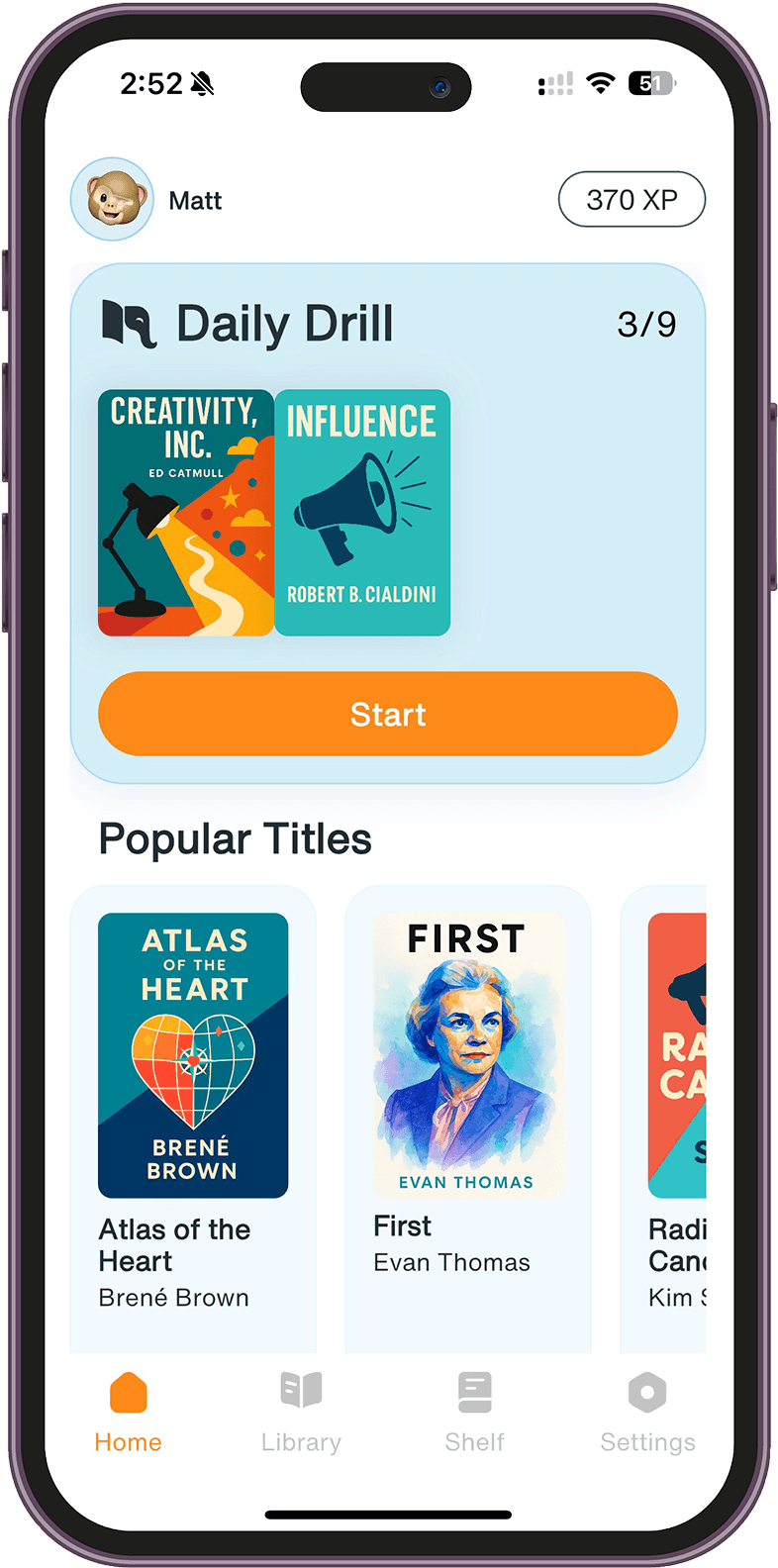
Loxie uses spaced repetition and active recall—the same learning science that makes these techniques work for children—to help you internalize Love and Logic principles. Instead of reading once and hoping for the best, you practice for 2 minutes a day with questions that resurface key concepts right before you'd naturally forget them.
The result is that these principles become automatic. When your child tests a boundary, you don't have to think about what the book said—the right response is already there. Enforceable statements, empathy-first responses, and consultant questions become your new default rather than aspirational ideals you can never quite remember in the moment.
Loxie includes the full Parenting with Love and Logic topic in its library. You can start reinforcing these concepts today, building the parenting reflexes that will serve you and your children for years to come.
Frequently Asked Questions
What is the main idea of Parenting with Love and Logic?
The core idea is that children learn responsibility best through experiencing natural consequences while parents provide empathy rather than rescue, lectures, or punishment. By saying "What a bummer" and letting reality teach, parents remain supportive allies while children develop problem-solving skills and judgment.
What are enforceable statements in Love and Logic?
Enforceable statements describe what you will do rather than what you'll make the child do. "I'll listen when your voice is calm" is enforceable; "Stop whining" is not. This approach puts control where you actually have it—over your own actions—eliminating power struggles and unwinnable battles.
What's the difference between helicopter and drill sergeant parenting?
Helicopter parents hover and rescue, preventing children from learning through struggle and creating adults who expect others to solve their problems. Drill sergeant parents demand compliance without teaching thinking, producing either rebels or people-pleasers. Love and Logic offers a third path: sharing control while maintaining boundaries.
Why should parents let children make mistakes?
Mistakes at age 6 cost $6; at 16, they cost $6,000; at 26, they cost $60,000. Childhood is the safest time to learn from poor decisions because the price tags are small. Children who experience consequences when stakes are low develop judgment before facing life's bigger decisions.
What is the Love and Logic formula?
Empathy + Consequence = Learning. Genuine empathy ("What a bummer") must come before the consequence to keep the child's thinking brain engaged. Leading with empathy prevents children from directing anger at parents and keeps cognitive resources focused on the problem and its solution.
How can Loxie help me remember what I learned from Parenting with Love and Logic?
Loxie uses spaced repetition and active recall to help you retain Love and Logic principles. Instead of reading the book once and reverting to old patterns under stress, you practice for 2 minutes a day with questions that resurface concepts right before you'd forget them—making these techniques automatic when you need them most.
We're an Amazon Associate. If you buy a book through our links, we earn a small commission at no extra cost to you.
Stop forgetting what you learn.
Start learning for good with your 7-day FREE trial.