Psychological Safety: Key Concepts & What You Need to Know
Learn the research-backed practices that create environments where teams take risks, speak up, and perform at their highest potential.
by The Loxie Learning Team
Most teams fail to reach their potential not because they lack talent or resources, but because people don't feel safe enough to take risks, admit mistakes, or challenge ideas. Psychological safety—the belief that you won't be punished or humiliated for speaking up—is the foundation that separates high-performing teams from mediocre ones. Google's Project Aristotle found it was the single most important factor in team effectiveness.
This guide breaks down the essential concepts of psychological safety. You'll learn the four stages teams must progress through, why leader vulnerability matters more than you think, how to respond to failures in ways that promote learning, and concrete techniques for creating meetings where every voice contributes. Understanding these concepts intellectually is the first step—but actually applying them when stress hits requires having these frameworks readily accessible in your memory.
 Start practicing Psychological Safety ▸
What are the four stages of psychological safety?
Psychological safety progresses through four distinct stages: inclusion safety (feeling you belong), learner safety (safe to ask questions), contributor safety (safe to participate), and challenger safety (safe to dissent). Each stage requires the foundation of previous stages to develop—teams cannot jump to challenger safety without first establishing that members belong, can learn without judgment, and can contribute without fear.
This progression reflects increasing interpersonal risk. Belonging is foundational—without it, people won't risk asking questions. Once they can ask questions safely, they'll risk offering ideas. Only when ideas are welcomed will they risk challenging the status quo. Understanding this hierarchy helps leaders diagnose exactly where their team needs support rather than applying generic interventions.
Observable behaviors that reveal each stage
Observable behaviors reveal each safety stage more reliably than surveys or assumptions. Inclusion safety shows through casual hallway conversations and inside jokes. Learner safety appears through questions during meetings. Contributor safety manifests as volunteering for projects. Challenger safety emerges through respectful pushback on leadership decisions.
These behavioral markers give leaders concrete evidence. If meetings are silent, you lack learner safety. If only senior people volunteer ideas, you have limited contributor safety. If no one challenges proposals, challenger safety is absent. Tracking these behaviors provides objective assessment that helps you focus interventions where they're actually needed. Loxie helps you internalize these diagnostic patterns so you can recognize them automatically when observing your team.
Practice these concepts in Loxie ▸
Why does leader vulnerability matter for psychological safety?
Leader vulnerability requires using specific phrases that signal imperfection is acceptable: "I don't know, what do you think?", "I was wrong about that", "I need help understanding this." These exact words matter because they explicitly model that not having all answers is normal, not weak. Vague statements like "we all make mistakes" are abstract and don't register—team members need to hear their leader admit specific failures.
The vulnerability-competence balance is critical. Excessive vulnerability without showing competence erodes team confidence ("our leader is lost"), while pure competence without vulnerability creates impossible standards that paralyze team members afraid to show imperfection. The key is alternating—share a mistake, then demonstrate expertise; admit uncertainty, then show decisiveness. This combination makes leaders both relatable and trustworthy.
The vulnerability loop in practice
Strategic vulnerability sharing follows the "vulnerability loop"—leader shares struggle first, creating permission for others to reciprocate. When a leader says "I'm struggling with prioritization this quarter," team members feel permitted to share their struggles. This creates upward flow of real information rather than filtered good news, enabling better decisions throughout the organization.
Knowing the vulnerability phrases isn't enough—you need to recall them in the moment.
Loxie uses spaced repetition to help you internalize leader vulnerability techniques so they're available when you need them, not just when you're reading about them.
Try Loxie free for 7 days ▸How should leaders respond to failures?
The learning-focused response framework for failures follows three steps: acknowledge courage ("Thank you for bringing this forward"), explore system factors ("What in our process allowed this?"), and identify prevention ("What could we change?"). This sequence transforms blame into learning by focusing on systems rather than individuals. Starting with gratitude rewards honesty rather than punishing it.
Your first 10 seconds after hearing about failure sets a permanent tone. Facial expressions, body language, and initial words either reinforce safety ("Let's understand this together") or destroy it ("How could this happen?"). Damage from a poor initial response is rarely fully repairable despite later attempts—once someone sees disappointment, anger, or disgust on your face, their brain shifts to self-protection mode. Leaders must pre-plan their failure response.
Distinguishing between failure types
Distinguishing failure types determines response intensity. Preventable failures from known process violations need accountability. Complex failures from unexpected system interactions need investigation. Intelligent failures from thoughtful experiments deserve celebration. Mismatching response to failure type either enables negligence or punishes innovation.
This taxonomy prevents one-size-fits-all responses that undermine psychological safety. Treating experimental failure like negligence discourages innovation. Treating negligence like experimentation enables sloppiness. Leaders must quickly categorize: Was this deviation from known good practice? Unexpected emergence? Or deliberate test? Each category demands different response while maintaining overall safety.
Learn failure response frameworks ▸
What techniques create meetings where everyone contributes?
Silent brainstorming—writing ideas individually for 5 minutes before any discussion—equalizes participation by preventing dominant voices from anchoring conversation and giving introverts processing time. Research shows this approach produces 40% more ideas than verbal brainstorming because it eliminates production blocking, where only one person can speak at a time and others forget ideas while waiting.
Round-robin structured sharing ensures everyone contributes by calling on each person systematically ("Let's hear one idea from everyone, starting with..."), allowing passes if needed. This prevents voluntary participation from becoming dominated by the same confident voices while protecting reluctant contributors from being overlooked. The structure removes self-selection bias—in open discussion, 3-4 people typically dominate while others stay silent.
The "yes, and" approach
The "yes, and" before "no, but" norm requires building on ideas before critiquing them. Instead of "That won't work because...," say "Yes, customer focus is critical, and we need to consider operational capacity." This improv-derived technique shifts from immediate rejection to exploration mode, preventing premature idea death and encouraging creative problem-solving. Ideas get refined rather than rejected.
How do you enable constructive disagreement?
Disagreement language protocols separate ideas from identity. Replace "Your idea won't work" with "I see challenges with this approach." Replace "That's naive" with "I have different experience that suggests..." This linguistic shift prevents personal attack interpretation while maintaining ability to challenge thinking. Our brains don't distinguish well between ego and ideas—"Your idea is stupid" registers as "You are stupid."
The obligation to dissent principle makes voicing concerns about decisions that could harm customers, employees, or company a responsibility rather than option. Framing dissent as duty ("It's your job to speak up if you see risk") rather than disloyalty transforms silence from safety into negligence. This gives people moral cover for challenging authority—they're not being difficult; they're fulfilling their professional obligation.
Leaders speaking last
Leaders speaking last in discussions, explicitly requesting disagreement ("What am I missing?" "Where could this fail?" "Who sees this differently?"), and publicly rewarding dissent that improves decisions demonstrates that challenging authority strengthens rather than threatens leadership. Speaking last prevents anchoring bias where team members align with the leader's view rather than sharing their own perspectives.
How do you identify low psychological safety?
Low psychological safety reveals through observable patterns: meeting silence, absence of questions, immediate agreement without discussion, sidebar conversations after meetings, and decreased experiment proposals. Tracking frequency changes in these behaviors provides objective safety measurement beyond subjective surveys. These behaviors are leading indicators—survey results lag because people may not consciously recognize safety erosion.
The "meeting after the meeting" phenomenon—where real discussions happen in hallways or private conversations after official meetings end—signals absent contributor or challenger safety. People don't feel safe expressing views publicly but still need to process decisions. When you notice clusters forming after meetings or sidebar Slack conversations, you're seeing evidence that psychological safety breaks down in group settings.
The error admission test
The error admission test involves leaders intentionally making minor, obvious mistakes and observing if team members correct them. When teams don't correct obvious errors like wrong dates or incorrect names, it signals dangerously low psychological safety where fear of challenging authority overrides helping the team. People who won't correct arithmetic won't challenge strategic decisions.
How do you handle psychological safety violations?
Immediate intervention when someone is blamed, mocked, or shut down requires stopping conversation ("Let's pause"), addressing behavior ("We don't attack people for ideas"), and refocusing on constructive discussion. This real-time correction shows psychological safety violations won't be tolerated, even from senior members. Speed matters more than perfection—waiting until after the meeting signals violations are acceptable in the moment.
Escalating responses to repeated violations—first occurrence gets public redirection, second gets private warning with documentation, third triggers formal consequences including potential removal—shows psychological safety is non-negotiable policy rather than nice-to-have aspiration. This particularly matters for high performers who often get unlimited passes. Clear escalation protects the many from the toxic few.
What is the premortem ritual and why does it work?
The premortem ritual imagines project failure before starting, asking "What could go wrong?" and "How might this fail?" This makes pessimism productive by surfacing risks when they're preventable rather than conducting post-mortems when damage is done. Research shows premortems increase risk identification by 30% compared to standard planning sessions because imagining failure activates different thinking than planning for success.
Effective premortem questions include: "Fast forward—this project failed spectacularly. What happened?", "What assumptions are we making that could be wrong?", and "If our competitor wanted us to fail, what would they exploit?" These prompts bypass optimism bias and make people genuinely think rather than perform risk theater with obvious, manageable risks.
Practice premortem techniques ▸
What is the difference between psychological safety and comfort?
Psychological safety enables interpersonal risk-taking without fear of punishment—it's not about being comfortable or avoiding difficult conversations but creating conditions where people can disagree, fail, ask for help, and admit ignorance without career consequences. True psychological safety enables MORE difficult conversations because people aren't protecting themselves. It's the foundation for high performance, not an excuse for low performance.
The comfort trap occurs when teams interpret psychological safety as avoiding all discomfort, leading to artificial harmony where real issues go unaddressed. Real psychological safety increases productive discomfort—people feel safe enough to have difficult conversations that drive improvement rather than avoiding them to preserve comfort.
High standards with high safety
High standards with high safety sounds like: "This work isn't meeting our bar—let's figure out what support you need to get there" versus low safety: "This is unacceptable, what's wrong with you?" Both statements address substandard work, but the first creates partnership toward improvement while the second creates shame and defensiveness. Psychological safety with accountability means holding high standards while reducing interpersonal fear.
The learning zone matrix maps psychological safety against performance standards. High safety with high standards creates the learning zone where excellence emerges through experimentation. High safety with low standards creates a comfort zone where mediocrity flourishes unchallenged. Only the combination of high safety AND high standards creates conditions for sustainable high performance.
The real challenge with learning psychological safety
You've just absorbed a comprehensive framework for building psychologically safe teams—the four stages, vulnerability techniques, failure response protocols, meeting facilitation methods, and diagnostic tools. But here's the uncomfortable truth: within a week, you'll forget most of these specific phrases, frameworks, and techniques. The forgetting curve is steep, and reading alone doesn't create lasting memory.
When you're in a meeting and someone gets shut down, will you remember the exact "pause and redirect" language? When you hear about a failure, will your first 10 seconds reflect the three-step learning-focused response? Psychological safety requires having these frameworks available in the moment, not just having read about them once.
How Loxie helps you actually remember psychological safety concepts
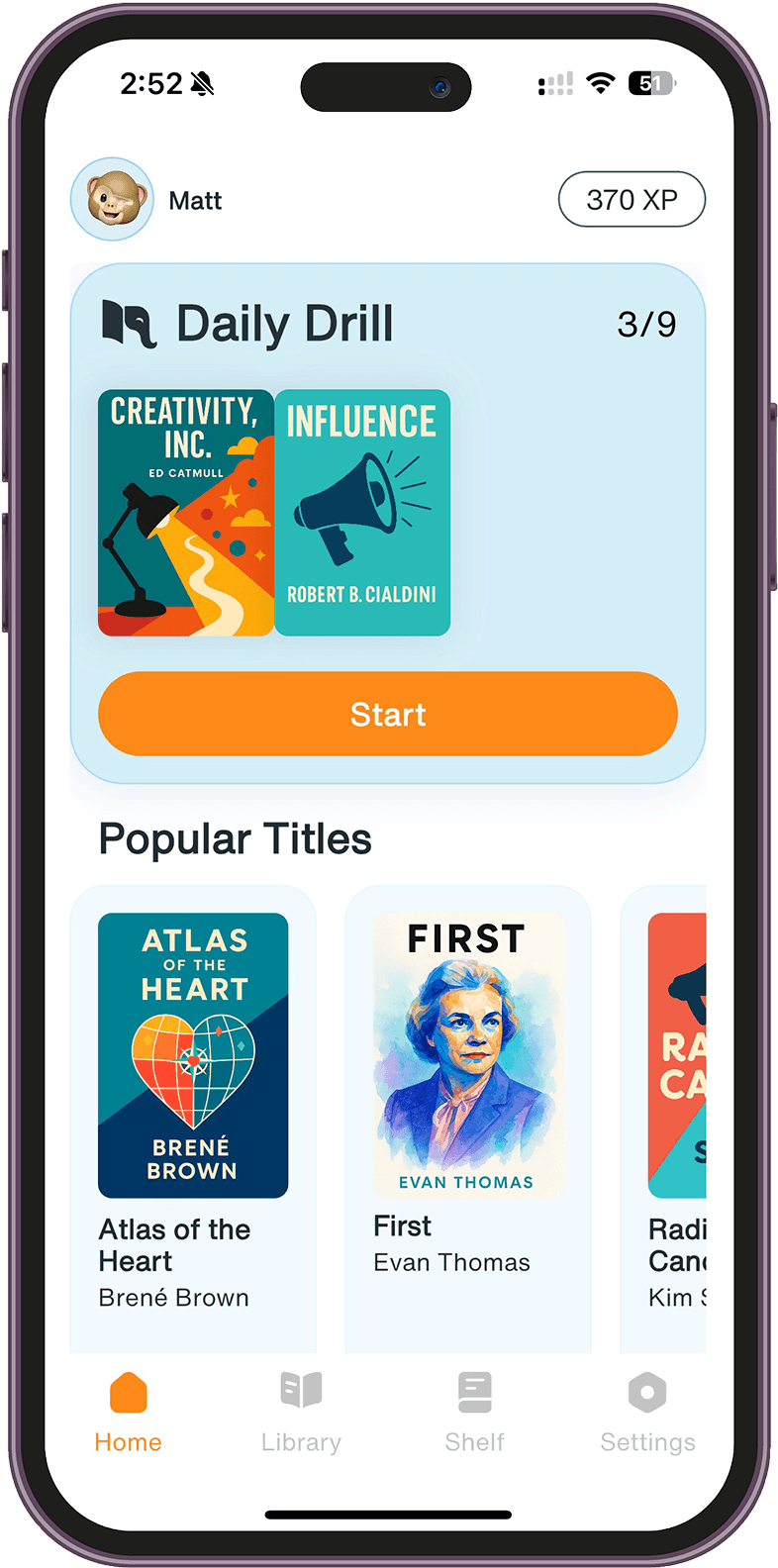
Loxie uses spaced repetition and active recall—the two most scientifically validated learning techniques—to help you internalize psychological safety concepts for good. Instead of reading once and hoping the ideas stick, you practice for just 2 minutes a day with questions that resurface the four stages, vulnerability phrases, failure response frameworks, and meeting techniques right before you'd naturally forget them.
Loxie includes Psychological Safety in its full topic library, so you can start reinforcing these concepts immediately. Whether it's remembering the exact language for constructive disagreement or recalling the diagnostic behaviors for each safety stage, Loxie ensures these frameworks are available when you need them—not buried in notes you'll never reread.
Frequently Asked Questions
What is psychological safety?
Psychological safety is the belief that you won't be punished or humiliated for speaking up with ideas, questions, concerns, or mistakes. It enables interpersonal risk-taking without fear of negative consequences—not comfort or avoiding hard conversations, but creating conditions where people can disagree, fail, and admit ignorance without career damage.
What are the four stages of psychological safety?
The four stages are inclusion safety (feeling you belong), learner safety (safe to ask questions), contributor safety (safe to participate and offer ideas), and challenger safety (safe to dissent and challenge the status quo). Each stage requires the previous stages as foundation—teams can't develop challenger safety without first establishing inclusion, learning, and contribution safety.
Why is leader vulnerability important for psychological safety?
Leader vulnerability models that imperfection is acceptable, giving team members permission to be imperfect too. Specific phrases like "I was wrong about that" or "I need help understanding this" signal that not having all answers is normal. Without leader vulnerability, team members hide struggles to match perceived leader perfection, preventing honest communication.
How should you respond to failures as a leader?
Use the three-step framework: acknowledge courage ("Thank you for bringing this forward"), explore system factors ("What in our process allowed this?"), and identify prevention ("What could we change?"). Your first 10 seconds set the tone—initial facial expressions and words either reinforce or destroy psychological safety, with damage from poor responses rarely fully repairable.
What's the difference between psychological safety and being comfortable?
Psychological safety isn't about avoiding discomfort—it's about feeling secure enough to have uncomfortable conversations. True psychological safety enables MORE difficult discussions because people aren't protecting themselves. The "comfort trap" occurs when teams avoid all conflict under the banner of safety, leading to artificial harmony where real issues go unaddressed.
How can Loxie help me learn psychological safety?
Loxie uses spaced repetition and active recall to help you retain psychological safety concepts long-term. Instead of reading once and forgetting the specific phrases, frameworks, and diagnostic tools, you practice for 2 minutes a day with questions that resurface ideas right before you'd naturally forget them. Loxie includes Psychological Safety in its full topic library.
Stop forgetting what you learn.
Start learning for good with your 7-day FREE trial.