The Psychology of Persuasive Communication: Key Concepts & What You Need to Know
Master the science of influence—from voice patterns and body language to the neuroscience of how decisions actually form.
by The Loxie Learning Team
Most people believe persuasion is about having the right argument. They're wrong. Research shows that how you communicate—your voice patterns, pacing, body language, and silence—influences decisions far more than logical arguments alone. The most compelling data in the world fails if delivered with upward inflection that signals uncertainty, or if your body language contradicts your words.
This guide breaks down the psychology of persuasive communication. You'll learn why lowering your voice at statement ends conveys authority, how strategic silence creates space for commitment, the neuroscience behind why emotions drive decisions before logic engages, and how to read buying signals in both in-person and virtual settings. These aren't manipulation tactics—they're the skillful alignment of your communication style with how humans naturally process information and make decisions.
 Start practicing persuasive communication ▸
How does voice inflection affect your credibility?
Lowering your voice pitch at the end of statements (downward inflection) conveys certainty and authority, while raising your pitch on questions maintains engagement. This pattern signals confidence in your message and prevents statements from sounding like questions that undermine credibility. When you end statements with upward inflection—a pattern called "uptalk"—listeners unconsciously doubt whether you believe your own message, even when your facts are correct.
Voice inflection patterns tap into primal authority recognition that humans evolved over millennia. We unconsciously associate falling pitch with confidence and rising pitch with uncertainty. When someone says "The investment is fifty thousand dollars" with downward inflection, it sounds like a fact. The same words with upward inflection sound like a question seeking approval. Mastering downward inflection on key points—pricing, value propositions, next steps—creates conviction that transfers to listeners.
Strategic pace variation keeps attention and aids processing
Strategic pace variation prevents monotony and maintains attention by slowing down for critical points while speeding up during transitions. The optimal pace matches slightly slower than your listener's natural speaking rhythm, creating psychological space for them to think without feeling rushed. Slowing down for ROI figures, implementation steps, or commitment requests gives people time to internalize information. Speeding up through familiar ground maintains energy. Too fast feels pushy; too slow feels condescending.
Understanding these vocal techniques intellectually is the first step—but applying them in real conversations requires the patterns to be automatic. Loxie helps you internalize these distinctions through spaced repetition, so you can recall the difference between authority-building downward inflection and engagement-maintaining questions when you actually need it.
What is mirroring and why does it build rapport?
Verbal mirroring involves subtly adopting your listener's vocabulary, sentence length, and speaking rhythm. When they use technical terms, you use technical terms. When they speak in stories, you share examples. This creates unconscious familiarity that reduces resistance because people trust those who communicate like them. The technique activates similarity bias—we unconsciously favor people who seem like us.
Mirroring their jargon ("ROI" versus "payback," "team" versus "organization") signals you're part of their tribe. Matching their communication style—whether data-driven or story-based, brief or detailed—makes your message feel natural to how they process information. This isn't about imitation; it's about meeting people where they are.
Physical mirroring requires a deliberate delay
Physical mirroring matches body language with a 2-3 second delay to build subconscious connection. When they lean forward, you lean forward—but only after counting "one-Mississippi, two-Mississippi." When they gesture broadly, you increase gesture size. The delay is critical: instant copying appears manipulative and triggers conscious awareness, while naturally delayed matching feels like authentic synchronization.
This technique works because humans naturally synchronize with people they like. Artificial synchronization creates reverse causation of affinity—by behaving as if you're in sync, you create the feeling of connection. The 2-3 second lag keeps this below conscious detection while activating the mirror neurons that generate feelings of rapport.
Practice these techniques in Loxie ▸
How does strategic silence increase your influence?
The post-question pause creates processing space and prevents contaminating answers. After asking a discovery question, count to three silently before speaking again. This gives people time to formulate real answers. Filling silence too quickly trains them to wait for you to answer your own questions, destroying the effectiveness of your discovery process. Most people fear silence and rush to fill it—mastering the pause separates amateurs from professionals.
Strategic silence after presenting price or asking for commitment leverages psychological pressure differently. The first person to speak after a closing question often loses negotiating position. Silence creates internal pressure that motivates people to fill the gap with their true thoughts, concerns, or agreement rather than tactical responses. Speaking first weakens your position by suggesting negotiability or uncertainty. Research shows that people who initially seem shocked by a price will often start rationalizing value themselves if given 7-10 seconds of silence.
Pausing before objection responses shows genuine consideration
Pausing for two seconds before responding to objections demonstrates thoughtfulness and prevents defensive reactions. This pause signals you're considering their concern seriously rather than delivering a rehearsed rebuttal. Instant objection responses trigger skepticism—people assume you have canned answers rather than genuine consideration. The pause reduces the adversarial dynamic and makes listeners more receptive to your perspective.
Knowing when to pause is one thing. Actually pausing in high-stakes moments is another.
Loxie uses spaced repetition to help you internalize these techniques so they're available when pressure is high and instinct takes over.
Try Loxie free for 7 days ▸What are buying signals and how do you read them?
Physical buying signals manifest as forward lean, head tilts, note-taking, and sustained eye contact. Distancing signals include crossed arms, checking phones or watches, and turning bodies toward exits. Recognizing these patterns enables real-time calibration of your approach. Distancing signals require immediate pattern interruption through questions or energy shifts—and catching them within 30 seconds is critical. After that, re-engagement becomes exponentially harder.
Verbal buying signals emerge through ownership language shifts from hypothetical to assumed. "When we implement" replaces "if you implement." "Our team" replaces "my team." Specific implementation questions replace general inquiries. These shifts indicate mental commitment forming before explicit agreement. People don't waste mental energy planning implementations they won't pursue, so these verbal changes are more reliable than expressed enthusiasm.
Reading signals in virtual settings
Virtual selling requires interpreting limited cues where camera positioning, audio delays, and background sounds compensate for missing body language. Camera on/off patterns indicate engagement levels. Typing sounds suggest note-taking versus distraction. Response latency reveals whether someone is processing information or multitasking. These subtle cues can predict outcomes as accurately as in-person meetings when you know what to look for.
Question specificity progression also indicates buying temperature in virtual settings. General questions ("How does this work?") suggest early interest. Integration questions ("Does this connect with Salesforce?") indicate serious evaluation. Scenario questions ("What if we needed to scale to 10,000 users?") signal mental commitment to implementation. Specificity increases as psychological investment deepens.
Learn to read buying signals ▸
Why do emotions drive decisions before logic?
The amygdala processes emotional responses 200 milliseconds before the prefrontal cortex engages logic. Decisions form emotionally first, then seek rational justification. This means persuasion must create emotional connection before presenting logical arguments—or risk rejection regardless of how strong your facts are. The emotional brain essentially vetoes what it doesn't feel, explaining why perfectly logical proposals often get rejected.
If the emotional brain says no, the logical brain won't even properly evaluate the evidence. Successful communicators create emotional receptivity first through stories, vision, or acknowledging pain, then provide logical support. Reversing this order—leading with data before emotional buy-in exists—triggers resistance that logic cannot overcome.
Emotional priming through stories and visualization
Emotional priming through stories and visualization activates decision-making regions in the limbic system where buying decisions originate. Painting vivid pictures of success scenarios or failure consequences engages emotional processing. Pure data presentations activate analytical regions that generate objections rather than desire. This is why case studies outperform specification sheets—stories bypass analytical filters by engaging the same brain regions that process actual experiences.
Loss aversion makes potential losses feel twice as powerful as gains
Loss aversion bias makes potential losses feel twice as powerful as equivalent gains. Framing solutions around what people risk losing—competitive advantage, market share, efficiency—motivates action more than highlighting potential gains. This stems from evolutionary threat-detection wiring that prioritizes avoiding losses over acquiring benefits. "Without this, you risk losing X" resonates more than "With this, you could gain X."
How do micro-commitments build momentum toward yes?
Micro-commitments leverage consistency bias by securing small agreements that psychologically prime larger ones. Getting people to agree to review materials, attend brief calls, or answer preliminary questions creates momentum because humans strive to appear consistent with prior commitments. Each subsequent yes becomes easier than the last. Once someone commits to a small action, refusing larger related requests creates cognitive dissonance.
The commitment ladder sequences requests from smallest to largest—starting with name confirmation, moving to problem acknowledgment, then solution interest, and finally purchase decision. Each agreement subtly changes self-perception: "I'm someone who has this problem" becomes "I'm someone looking for solutions" becomes "I'm someone who likes this solution." The brain resists contradicting these accumulating micro-identities. Properly structured commitment ladders convert at significantly higher rates than single-step approaches.
Practice micro-commitment techniques ▸
How do you adapt communication to different personality styles?
Analytical buyers require data-rich presentations with processing time because they distrust enthusiasm without evidence. They need written documentation, methodology explanations, and systematic evaluation processes. Pushing for quick decisions backfires—they need time to process. Success requires matching their methodical pace and providing comprehensive documentation they can study independently. Suppress natural sales energy that triggers their skepticism.
Driver personalities demand efficiency and bottom-line results. They interrupt detailed explanations, make quick decisions, and value competence over relationship. Use bullet-point communication that leads with ROI and outcome metrics while eliminating small talk. They respect communicators who match their pace and directness. Relationship-building happens through demonstrated competence, not social connection.
Recognizing and matching communication preferences
Expressive personalities connect through enthusiasm and vision. They respond to energy, appreciate recognition, and buy into big pictures before details. High energy, vision-painting, and personal recognition create connection. They buy from people they like who share their enthusiasm. Details bore them; dreams inspire them.
Amiable personalities prioritize relationships and consensus while avoiding conflict. They seek group input, fear making wrong decisions, and need extensive social proof. Patient relationship building, explicit risk mitigation, and testimonials from similar people reduce their fear of standing out or disappointing others. Pushing triggers retreat; patience builds confidence.
How does body language and positioning affect influence?
Proxemics—spatial positioning—influences power dynamics and psychological comfort. Sitting at 90-degree angles reduces confrontation while face-to-face increases pressure. Standing while others sit conveys authority, and matching height levels creates equality. Masters adjust positioning mid-conversation: standing to emphasize key points, sitting to explore concerns.
Eye contact patterns convey confidence without aggression through specific ratios. Maintain 60-70% eye contact while speaking and 80-90% while listening. Breaking contact down and right suggests thoughtfulness, but excessive staring triggers threat responses. Too much eye contact feels aggressive; too little seems shifty. Cultural calibration is critical since some cultures view direct eye contact as disrespectful.
Open gestures and gesture-word synchronization
Open gesture patterns enhance message reception by signaling honesty and confidence. Keep hands visible with palms occasionally exposed to suggest transparency. Gestures within the shoulder-to-waist box convey control. Pointing directly or crossing arms creates psychological barriers that reduce receptivity.
Gesture-word synchronization amplifies message impact significantly. When physical movements align precisely with verbal emphasis—a hand chop on "cut costs," an expansion gesture on "growth"—retention and believability increase. Mismatched gestures create subconscious distrust even when words are truthful. The brain processes verbal and non-verbal simultaneously, looking for alignment.
The real challenge with learning persuasive communication
You've just absorbed dozens of techniques—voice inflection patterns, mirroring timing, strategic silence rules, buying signal recognition, personality adaptations, body language principles. But here's the uncomfortable truth: within a week, you'll forget most of what you just read. Not because it wasn't valuable, but because that's how human memory works. The forgetting curve is merciless.
And persuasive communication isn't like other knowledge. You can't look up the optimal pause length during a high-stakes conversation. You can't check your notes on mirroring delays while building rapport. These techniques need to be automatic—available when instinct takes over and pressure is high. Reading about them once won't get you there.
How Loxie helps you actually remember what you learn
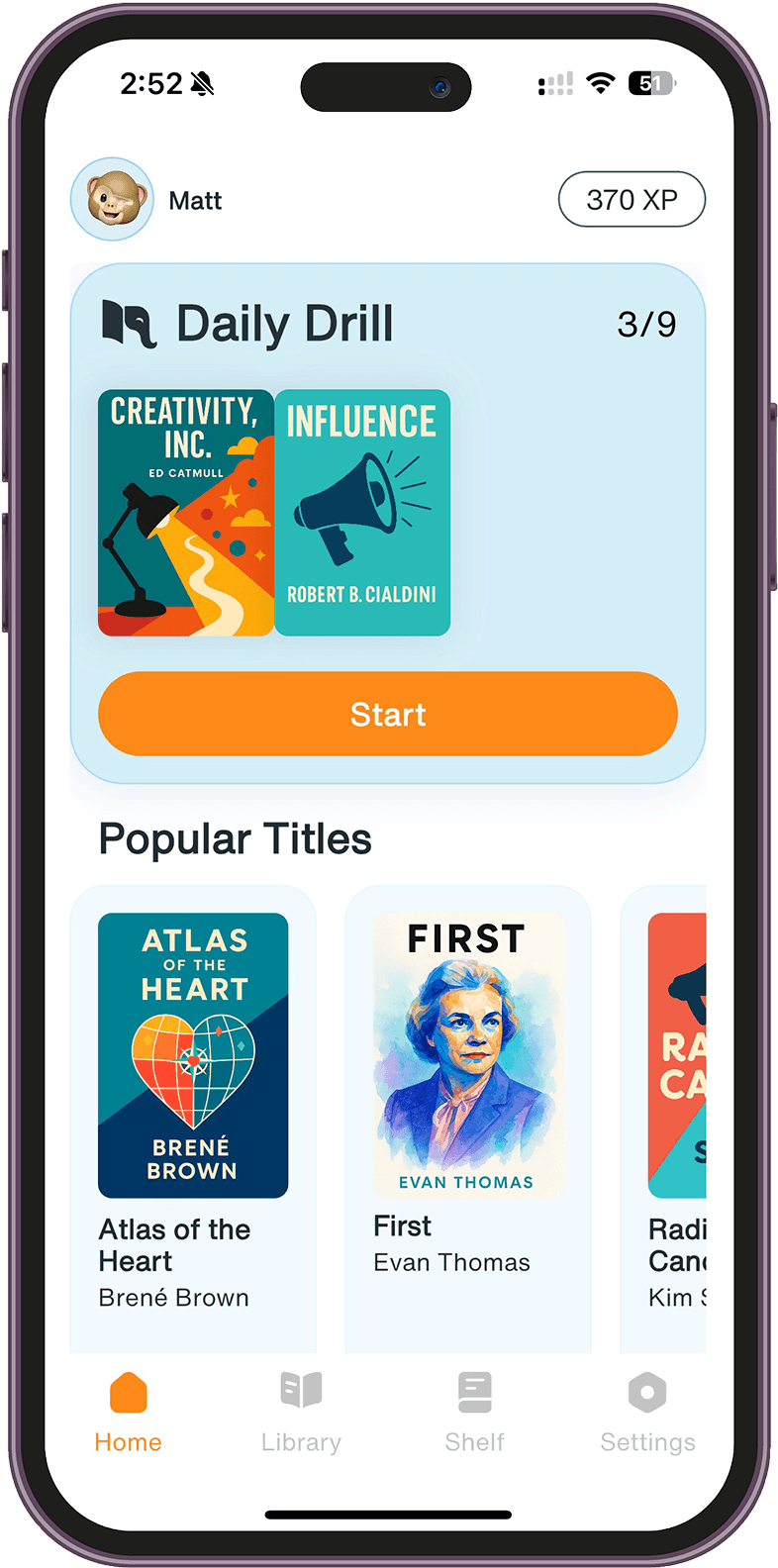
Loxie uses spaced repetition and active recall—the two most research-backed learning techniques—to help you retain persuasive communication concepts permanently. Instead of reading once and forgetting, you practice for just 2 minutes a day with questions that resurface ideas right before you'd naturally forget them.
The difference between knowing about downward inflection and automatically using it in conversation is the difference between reading and retention. Loxie bridges that gap by transforming passive knowledge into automatic recall. The Psychology of Persuasive Communication is available in Loxie's free topic library, so you can start reinforcing these techniques immediately.
Frequently Asked Questions
What is persuasive communication psychology?
Persuasive communication psychology is the study of how voice patterns, body language, pacing, and non-verbal cues influence decisions more than logical arguments alone. It encompasses techniques like mirroring, strategic silence, and emotional priming, all grounded in how the human brain actually processes information and makes decisions.
Why does voice inflection matter for credibility?
Lowering your voice pitch at the end of statements (downward inflection) conveys certainty and authority, while upward inflection makes statements sound like uncertain questions. We unconsciously associate falling pitch with confidence. Ending statements with upward inflection triggers doubt in listeners' minds about whether you believe your own message.
What is mirroring in communication?
Mirroring is subtly adopting another person's vocabulary, speaking rhythm, and body language to build unconscious rapport. Physical mirroring should have a 2-3 second delay to feel authentic rather than manipulative. This technique activates similarity bias—people trust those who communicate like them.
Why do emotions drive decisions before logic?
The amygdala processes emotional responses 200 milliseconds before the prefrontal cortex engages logic. Decisions form emotionally first, then seek rational justification. If the emotional brain vetoes something, the logical brain won't fairly evaluate the evidence—which is why logical arguments fail without emotional buy-in.
What are micro-commitments and why do they work?
Micro-commitments are small agreements that psychologically prime larger ones by leveraging consistency bias. Getting someone to agree to review materials or answer preliminary questions creates momentum because humans strive to appear consistent with prior commitments. Each yes makes the next yes easier.
How can Loxie help me learn persuasive communication?
Loxie uses spaced repetition and active recall to help you retain persuasive communication techniques permanently. Instead of reading once and forgetting, you practice for 2 minutes a day with questions that resurface concepts right before you'd naturally forget them. Loxie includes persuasive communication in its full topic library.
Stop forgetting what you learn.
Start learning for good with your 7-day FREE trial.