Radical Candor: Key Insights & Takeaways from Kim Scott
Master Kim Scott's framework for being a great boss by caring personally while challenging directly—without being a jerk or a pushover.
by The Loxie Learning Team
Why do so many managers fail at the one thing that matters most—giving honest feedback that actually helps people grow? Kim Scott's Radical Candor answers this question with a deceptively simple framework: the best bosses care personally about their people while challenging them directly on their work. It sounds obvious, but most leaders default to being either too aggressive or too nice, creating dysfunctional teams that underperform.
Drawing from her experiences leading teams at Google and Apple, Scott provides a complete playbook for building stronger relationships, delivering feedback that lands, and creating cultures where both kindness and clarity drive results. This guide breaks down Scott's entire framework—from the core Radical Candor quadrant to the practical mechanics of one-on-ones, career conversations, and the Get Stuff Done wheel that turns ideas into execution.
 Start practicing Radical Candor free for 7 days ▸
What is Radical Candor and how does it work?
Radical Candor is the combination of caring personally about someone while challenging them directly on their work. It operates in a two-by-two framework where the vertical axis represents how much you care about someone as a human being, and the horizontal axis represents how willing you are to challenge them with direct feedback. The sweet spot—Radical Candor—sits in the upper right quadrant where both dimensions are high.
Most managers instinctively avoid this quadrant. They either dial back the caring (becoming cold and transactional) or dial back the challenging (becoming nice but ineffective). Scott argues that you need both simultaneously: genuine concern for the whole person combined with the willingness to tell them uncomfortable truths about their work. When you achieve this balance, people trust that your feedback comes from a place of investment in their success rather than a desire to criticize or control.
The key insight is that caring personally and challenging directly aren't opposites—they reinforce each other. When people know you genuinely care about them, they're far more receptive to direct feedback. And when you're willing to be honest with someone, it demonstrates that you respect them enough to give them the truth rather than comfortable lies.
What are the four quadrants in the Radical Candor framework?
The Radical Candor framework maps leadership behaviors into four quadrants based on how much you care personally and how directly you challenge. Understanding all four quadrants helps you recognize when you've drifted away from Radical Candor and what correction you need to make.
Radical Candor: Care personally + Challenge directly
This is the goal. You show genuine concern for people's lives, growth, and wellbeing while being willing to have uncomfortable conversations about their performance. Feedback in this quadrant lands because the recipient knows you want them to succeed. You're not being critical to feel superior—you're being honest because you care enough to tell the truth.
Ruinous Empathy: Care personally + Don't challenge directly
This is the most common failure mode for well-intentioned managers. Ruinous Empathy happens when you care about someone so much that you avoid giving them honest feedback to protect their feelings. The result is that problems fester, performance issues go unaddressed, and people don't get the guidance they need to improve. You think you're being kind, but you're actually harming their career by withholding the truth.
Obnoxious Aggression: Challenge directly + Don't care personally
Obnoxious Aggression occurs when you're willing to be direct but you haven't built the relationship foundation that makes directness feel supportive rather than attacking. This creates a brutal environment where people might perform in the short term out of fear, but trust erodes and psychological safety disappears. Feedback in this quadrant feels like criticism for its own sake rather than guidance meant to help.
Manipulative Insincerity: Don't care personally + Don't challenge directly
This is the worst quadrant—when you neither care about someone nor tell them the truth. Communication becomes political and indirect. You might give vague praise to seem nice or whisper criticisms to others rather than addressing issues directly. This quadrant breeds toxic cultures where backstabbing replaces honest conversation and no one knows where they actually stand.
Practice the four quadrants in Loxie ▸
Why is Ruinous Empathy the most dangerous leadership trap?
Ruinous Empathy is the most dangerous failure mode because it feels like you're doing the right thing. When you care about someone, your instinct is to protect their feelings. Telling someone their presentation was weak or their project is off track feels cruel. So you soften the message, find silver linings, or stay silent altogether. The problem is that this protection comes at the cost of their growth.
Scott argues that Ruinous Empathy is actually a form of selfishness disguised as kindness. You're prioritizing your own comfort (avoiding an awkward conversation) over the other person's development. Meanwhile, the person continues making the same mistakes because no one has been honest with them. By the time issues become undeniable, it's often too late for course correction—leading to demotions, firings, or failed projects that could have been prevented with earlier candor.
The antidote to Ruinous Empathy is recognizing that honesty is a gift, even when it's uncomfortable. People deserve to know where they stand and what they need to work on. Withholding that information isn't kindness—it's cowardice that ultimately harms the person you're trying to protect. Loxie helps managers internalize this distinction so that when the moment for feedback arrives, they choose candor over comfortable silence.
How should leaders solicit feedback before giving it?
Great leaders actively solicit feedback from their teams before they give feedback to others. This practice creates psychological safety, models vulnerability, and provides genuine insight into your own blind spots. Scott recommends asking a specific question: "What could I do or stop doing that would make it easier to work with me?"
The specificity of this question matters. Vague requests like "Do you have any feedback for me?" rarely produce honest answers because they're too easy to deflect. By asking about concrete behaviors you could start or stop, you signal that you actually want actionable input. You're also implicitly acknowledging that you have room to improve, which makes it safer for others to share their observations.
When you receive feedback, the crucial step is to listen without defending yourself. Thank the person for their honesty, ask follow-up questions to understand better, and then actually make changes based on what you hear. When your team sees that giving you feedback leads to visible improvement, they learn that candor is valued and rewarded. This creates a virtuous cycle where honest communication becomes normalized across the entire team.
Feedback frameworks only work if you remember them
Most managers read about soliciting feedback, try it once, then forget. Loxie uses spaced repetition to help you internalize these practices so they become automatic leadership habits rather than forgotten good intentions.
Build lasting leadership habits ▸What makes impromptu feedback effective?
Impromptu feedback works best when delivered immediately after the observed behavior, using a clear structure while demonstrating genuine care through tone and follow-up. Scott advocates for the situation-behavior-impact model: describe the specific situation, the exact behavior you observed, and the impact that behavior had. This structure keeps feedback objective and actionable rather than personal and vague.
Timing is critical. The closer your feedback is to the actual event, the more powerful it becomes. When you wait for quarterly reviews to mention something, the person often can't remember the specific context, and the feedback loses its connection to real behavior. Impromptu feedback catches people while the situation is still fresh, making it easier to understand and act on.
But structure and timing aren't enough without genuine care. Your tone should convey that you're invested in the person's success, not just pointing out what they did wrong. Follow up to see if your feedback was helpful. Ask if they need support implementing changes. This ongoing attention demonstrates that your candor comes from a place of wanting to help, not a desire to criticize.
How do weekly one-on-ones build stronger relationships?
Weekly one-on-ones create dedicated time for individual relationship building by focusing on the team member's agenda rather than status updates or project reviews. Scott emphasizes that this time belongs to your direct report, not to you. Your job is to listen, understand their context, and help remove obstacles—not to extract information or manage tasks.
Effective one-on-ones cover three domains: the person's current work challenges, their career aspirations, and their personal context. Understanding what's happening in someone's life outside work—whether they're dealing with family stress, health issues, or exciting personal projects—helps you calibrate your expectations and support appropriately. This personal knowledge is what transforms a transactional work relationship into one where Radical Candor becomes possible.
The consistency of weekly meetings matters as much as their content. When one-on-ones happen reliably, people learn they have protected time to raise concerns, share ideas, and ask for help. When these meetings get canceled or skipped, it signals that the individual relationship isn't a priority. Managers who struggle with Radical Candor often haven't invested the time in one-on-ones needed to build the relational foundation that makes direct feedback feel supportive.
Remember what makes one-on-ones work ▸
What are career conversations and why do they matter?
Career conversations go beyond discussing the next promotion or project assignment. Scott advocates for understanding each person's life story, dreams, and values to unlock intrinsic motivation and align roles with what truly energizes them. These conversations reveal what people care about at a fundamental level—not just what job they want next, but what kind of life they're trying to build.
Start by asking about someone's past: What choices have they made and why? What patterns emerge in what energizes them versus what drains them? Then explore their dreams: If they could do anything in ten years, what would it be? These dreams don't have to be career-related—understanding that someone dreams of traveling the world or writing a novel tells you something important about what motivates them.
Once you understand someone's life story and dreams, you can have more meaningful conversations about their current role. Instead of generic development plans, you can help people see how their current work connects to (or could connect to) what they actually care about. This alignment between personal values and work responsibilities drives engagement far more than salary increases or title changes.
What's the difference between rockstars and superstars?
Rockstars and superstars represent two different growth trajectories that require different management approaches. Rockstars seek stability and gradual improvement in their current role—they're excellent performers who aren't necessarily looking to climb the ladder. Superstars pursue rapid growth and new challenges, eager to take on bigger responsibilities and expand their scope quickly.
The mistake many managers make is assuming everyone wants to be a superstar. They push high performers toward promotions and new challenges when some of those people would be happier and more effective staying in roles they've mastered. This one-size-fits-all approach leads to the Peter Principle: promoting excellent individual contributors into management roles where they struggle, losing both a great contributor and gaining a mediocre manager.
Understanding which trajectory someone is on allows you to customize development paths. For rockstars, focus on deepening expertise, expanding influence within their current role, and recognizing their contributions without requiring them to change. For superstars, provide stretch assignments, exposure to senior leaders, and clear pathways to increased responsibility. Both types are valuable—and both deserve growth opportunities that match their actual motivations.
How does the Get Stuff Done wheel turn ideas into results?
The Get Stuff Done (GSD) Wheel structures the idea-to-execution process through seven sequential stages: Listen, Clarify, Debate, Decide, Persuade, Execute, and Learn. This cycle creates a repeatable framework for transforming raw ideas into measurable results while involving the right people at each stage.
Listen and Clarify
The first two stages prevent teams from arguing past each other. Listening means creating space for ideas to emerge without immediately evaluating them. Clarifying ensures everyone understands the actual proposal before debating its merits. Many meetings go off the rails because people start debating different interpretations of the same idea—time spent clarifying upfront saves enormous time and conflict downstream.
Debate and Decide
Healthy debate requires people to challenge ideas directly without making it personal. The goal is to stress-test proposals and surface the best thinking from the group. Once debate has run its course, someone needs to make a decision. Scott warns against two failure modes: deciding too quickly (shutting down debate before it's valuable) and debating forever (avoiding the discomfort of commitment).
Persuade and Execute
Even after a decision is made, you need buy-in from people who will execute it. Persuasion involves explaining not just what was decided but why, addressing concerns from those who disagreed. Execution requires clear ownership, deadlines, and checkpoints—moving from decision to action through systematic follow-through rather than hoping things happen.
Learn
The final stage captures insights for future cycles. What worked? What didn't? What would you do differently? Without intentional learning loops, teams repeat mistakes and fail to compound their organizational knowledge. This stage feeds back into listening, creating a continuous improvement cycle.
Practice the GSD Wheel in Loxie ▸
How do you handle difficult conversations with Radical Candor?
Difficult conversations maintain relationships through transparency by acknowledging emotions, focusing on observable behaviors rather than character judgments, and committing to support even when delivering hard messages. The key is separating what someone did from who they are—you're addressing a specific behavior or outcome, not attacking their identity or worth as a person.
Start by acknowledging that the conversation might be uncomfortable. This shared recognition reduces defensiveness and signals that you understand the stakes. Then focus on what you observed: specific situations, concrete behaviors, and their tangible impact. Avoid words like "always" or "never" that feel like character indictments. Instead of "You're always late," try "In our last three meetings, you arrived 10-15 minutes after the start time, which meant the team had to repeat context."
End difficult conversations with a commitment to support. What help does the person need? What obstacles can you remove? What check-in would be useful? This forward-looking orientation transforms the conversation from a judgment into a partnership for improvement. The person leaves knowing both what needs to change and that you're invested in helping them succeed.
How do you turn performance reviews into growth conversations?
Performance reviews become growth conversations rather than judgment sessions when structured around specific examples, forward-looking development plans, and two-way dialogue about mutual expectations. Scott argues that the traditional annual review—delivered top-down with ratings and rankings—creates anxiety without driving improvement. The goal should be helping people understand where they stand and what they can do to grow.
Specific examples are essential. Vague feedback like "needs to improve communication" is useless without concrete situations that illustrate the problem. When you say "In the quarterly business review, when you presented the budget data without context, several executives were confused and the meeting ran over by 30 minutes," the person can actually understand what happened and what to do differently.
Two-way dialogue means the review isn't just you delivering verdicts. Ask the person how they think they've performed. Where do they see their own growth areas? What support do they need from you? This conversation surfaces information you might not have and creates shared ownership of development goals. When people participate in defining their growth path, they're far more committed to walking it.
How do you fire someone with compassion?
Firing with compassion means being direct about performance issues early, giving clear opportunities to improve, and when termination becomes necessary, handling it with dignity and support for the person's next steps. The compassion doesn't start at the firing conversation—it starts months earlier when you first notice problems and choose to address them honestly rather than avoiding the discomfort.
Early directness is the foundation of compassionate firing. When you let someone flounder for months or years without honest feedback, you've failed them long before the termination meeting. Radical Candor requires telling people clearly when their performance isn't meeting expectations, what specifically needs to change, and what timeline they're working with. Most people, given honest feedback and genuine support, can improve. Those who can't deserve to know that outcome is coming rather than being blindsided.
When termination becomes necessary, handle the actual conversation with directness and dignity. Be clear about what's happening and why, but don't belabor the points. Offer concrete support for their transition: severance, references, networking help, or extended benefits. The way you treat people on their way out signals to everyone remaining how much you actually care about people as human beings beyond their utility to the organization.
How do you hire for culture fit with Radical Candor?
Hiring for culture fit means assessing candidates' ability to care personally and challenge directly, using behavioral interviews that reveal how they handle difficult conversations and build relationships. You're not looking for people who will simply agree with existing norms—you're looking for people who can practice the core behaviors that make Radical Candor work.
Behavioral interview questions should probe for specific examples. Ask candidates to describe a time they had to give difficult feedback to someone. What was the situation? How did they approach it? What happened afterward? Look for evidence that they can be direct without being cruel, that they follow up and support rather than just criticize, and that they've developed skill in navigating uncomfortable professional conversations.
Also assess how candidates receive feedback. If you give them constructive input during the interview process—about their presentation, their answers, or their approach—how do they respond? Do they get defensive, or do they engage curiously? Someone who can model receiving feedback gracefully is more likely to create an environment where others feel safe giving feedback too.
How do you build trust intentionally with your team?
Trust building requires intentional personal connections through regular one-on-ones, team meetings that encourage vulnerability, and informal interactions that show you care about people as individuals beyond their work output. Trust doesn't happen accidentally—it requires consistent investment of time and attention in the humans on your team.
One-on-ones are the foundation, but they're not sufficient alone. Team meetings should create opportunities for people to share struggles and ask for help, not just report status. When the leader models vulnerability—admitting mistakes, asking for feedback, sharing challenges—it creates permission for others to do the same. Teams where people hide problems are teams where small issues become big crises.
Informal interactions matter too. Learning about someone's weekend, their hobbies, their family—these conversations might feel like distractions from "real work," but they're how you demonstrate that you care about the whole person. When you've invested in understanding someone's life context, your feedback carries more weight because they know it comes from someone who genuinely wants them to succeed, not just someone managing a resource.
The real challenge with Radical Candor
Reading Radical Candor feels like a revelation. The framework makes intuitive sense, the examples are compelling, and you leave energized to become a better leader. But here's the uncomfortable truth: within a few weeks, most of these insights fade. You find yourself back in Ruinous Empathy, avoiding difficult conversations because you can't quite remember the situation-behavior-impact model or the specific questions that make one-on-ones effective.
This isn't a character failure—it's how human memory works. The forgetting curve shows that we lose up to 70% of new information within 24 hours unless we actively work to retain it. Leadership frameworks are particularly vulnerable because we don't practice them every day. You might have a difficult conversation once a month, but by then, the nuances of how to structure it have slipped away.
The difference between managers who transform their leadership and those who simply enjoyed a good book is whether they have a system for retaining what they learned. Reading creates familiarity; retention creates capability. And capability is what determines whether you practice Radical Candor or drift back into Ruinous Empathy when the moment arrives.
How Loxie helps you actually remember what you learn
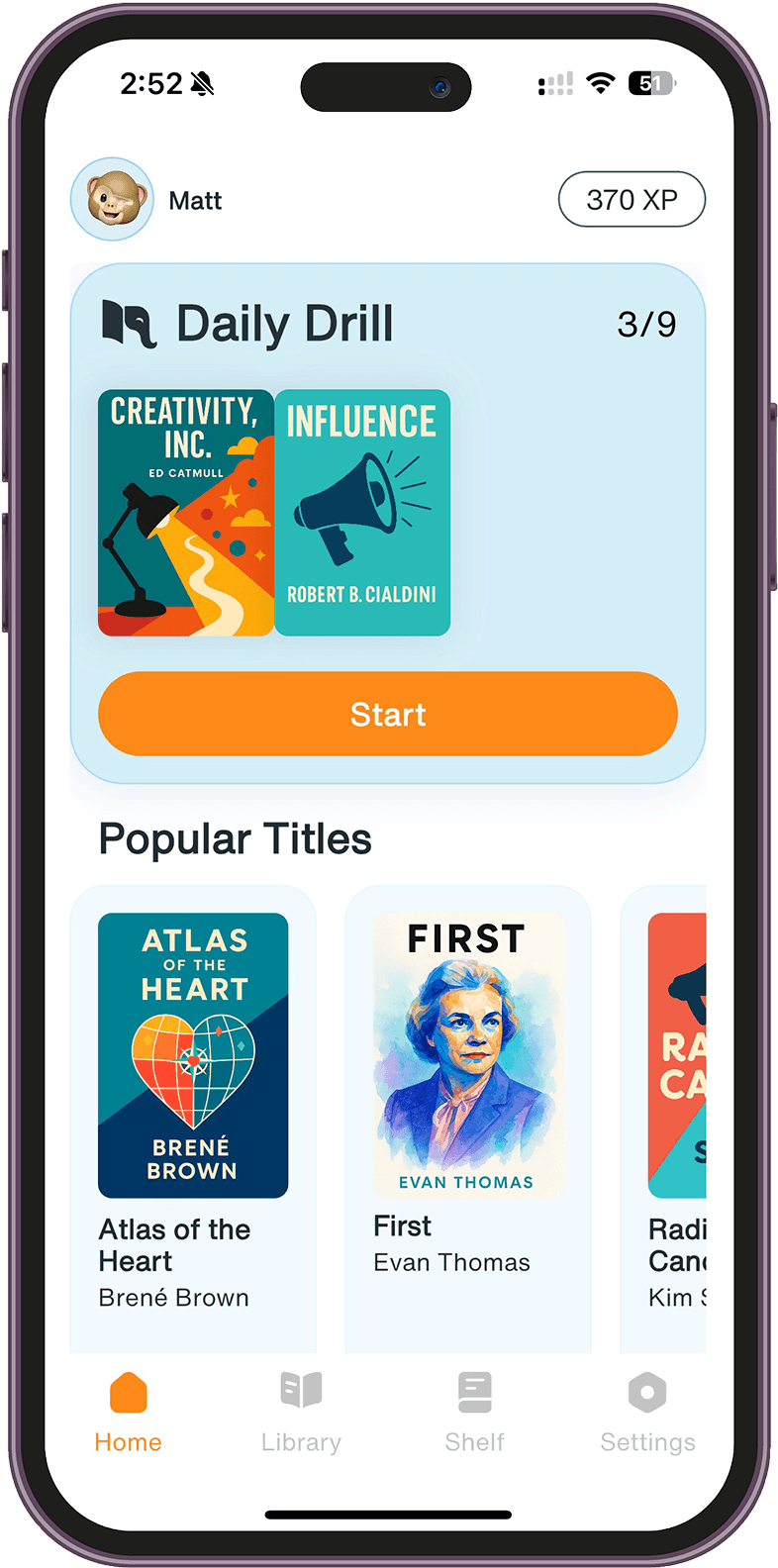
Loxie uses spaced repetition and active recall—the two most scientifically validated learning techniques—to help you internalize Radical Candor's frameworks so they're available when you need them. Instead of reading the book once and hoping the concepts stick, you practice for just 2 minutes a day with questions that resurface ideas right before you'd naturally forget them.
Active recall forces you to retrieve information from memory rather than passively recognizing it. When Loxie asks "What question does Scott recommend for soliciting feedback from your team?" you have to generate the answer—which strengthens your ability to remember it when you're actually sitting across from a direct report. Spaced repetition optimizes the timing of these reviews so you practice efficiently, focusing on concepts that are about to slip away while letting mastered material rest.
Loxie includes Radical Candor in its complete topic library. You can start reinforcing these leadership concepts today—the four quadrants, the GSD wheel, the rockstar vs. superstar distinction, and all the practical techniques for giving feedback that actually helps people grow.
Frequently Asked Questions
What is the main idea of Radical Candor?
The central idea is that great bosses achieve extraordinary results by caring personally about their people while challenging them directly on their work. This combination—being both kind and honest simultaneously—creates trust that makes feedback land and drives performance without damaging relationships.
What are the four quadrants of Radical Candor?
The four quadrants are Radical Candor (care personally + challenge directly), Ruinous Empathy (care personally + don't challenge directly), Obnoxious Aggression (challenge directly + don't care personally), and Manipulative Insincerity (neither care nor challenge). Most well-meaning managers fall into Ruinous Empathy.
What is Ruinous Empathy and why is it dangerous?
Ruinous Empathy occurs when you care about someone so much that you avoid giving them honest feedback to protect their feelings. It's dangerous because it feels like kindness but actually harms people's growth by withholding the truth they need to improve.
What is the Get Stuff Done wheel?
The GSD Wheel is a seven-stage framework for turning ideas into results: Listen, Clarify, Debate, Decide, Persuade, Execute, and Learn. It creates a repeatable cycle that prevents common execution failures like debating past each other or making decisions without buy-in.
What's the difference between rockstars and superstars?
Rockstars seek stability and gradual improvement in their current role while superstars pursue rapid growth and new challenges. Neither is better—they're different trajectories that require different management approaches and growth opportunities.
How can Loxie help me remember what I learned from Radical Candor?
Loxie uses spaced repetition and active recall to help you retain the key concepts from Radical Candor. Instead of reading the book once and forgetting most of it, you practice for 2 minutes a day with questions that resurface ideas right before you'd naturally forget them. Loxie includes Radical Candor in its full topic library.
We're an Amazon Associate. If you buy a book through our links, we earn a small commission at no extra cost to you.
Stop forgetting what you learn.
Start learning for good with your 7-day FREE trial.