Raving Fans: Key Insights & Takeaways from Ken Blanchard
Master the three secrets that transform satisfied customers into enthusiastic advocates who become your most powerful marketing force.
by The Loxie Learning Team
What if your customers became so passionate about your business that they couldn't stop telling everyone they know? Ken Blanchard and Sheldon Bowles' Raving Fans argues that customer satisfaction is a dangerously low bar—satisfied customers still defect 60-80% of the time. The real goal is creating emotional experiences so remarkable that customers transform into unpaid evangelists who generate word-of-mouth worth more than any advertising campaign.
This guide breaks down the complete Raving Fans framework: three deceptively simple secrets that work in sequence to move customers from passive acceptance to active advocacy. Whether you're running a business, leading a team, or simply want to understand what separates forgettable service from unforgettable experiences, you'll learn not just what to do—but why the psychology behind each secret makes it work.
 Start practicing Raving Fans free for 7 days ▸
What are the three secrets to creating raving fans?
The three secrets work in a specific sequence: first, decide what you want (create your vision); second, discover what the customer wants (listen deeply); third, deliver plus one percent (execute consistently). Each secret builds on the previous one—skipping ahead or working out of order undermines the entire system.
This systematic approach moves beyond traditional customer satisfaction metrics to create emotional connections that generate organic marketing. Passionate customers tell an average of 10-12 people about exceptional experiences, effectively becoming an unpaid sales force. But here's the critical insight: you can't create raving fans by simply asking customers what they want and doing it. The sequence matters because customers can only imagine improvements to what already exists—they can't envision breakthrough experiences they've never seen.
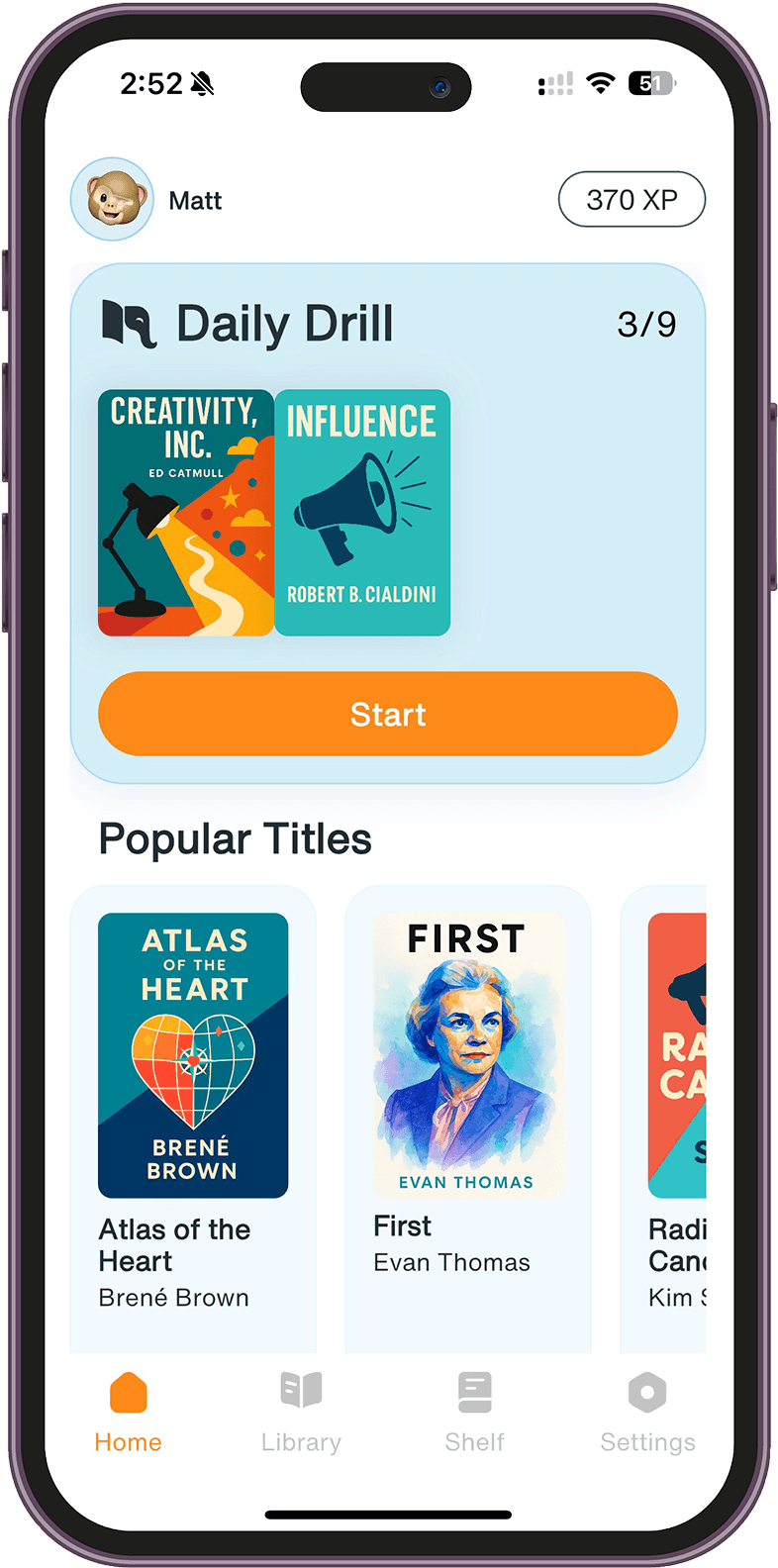
Understanding these three secrets intellectually is one thing; applying them consistently requires keeping them top of mind. Loxie helps you internalize frameworks like these through spaced repetition, so when you're designing customer experiences or training your team, the principles are available without having to look them up.
Why is customer satisfaction a dangerous goal?
Satisfied customers still defect to competitors 60-80% of the time. Satisfaction merely means you met expectations—there's no emotional pull keeping customers loyal when a competitor offers a slightly better price or more convenient location. The gap between satisfied customers and raving fans isn't about fixing problems; it's about creating unexpected delight.
Research on customer psychology reveals that satisfaction operates at a rational level, while enthusiasm requires emotional highs. Customers who experience exceptional service develop what psychologists call psychological ownership—they feel connected to the brand in ways that transcend logical decision-making. This emotional bond makes them resistant to competitive offers because switching would feel like betraying a relationship, not just changing vendors.
The practical implication is that measuring customer satisfaction can actually mislead you. High satisfaction scores create complacency while customers quietly consider alternatives. Raving fans, by contrast, actively recruit new customers for you—and that advocacy is a far more reliable indicator of business health than any survey metric.
Practice these concepts in Loxie ▸
What does it mean to create a vivid service vision?
Your service vision must be so detailed you can see it like a movie playing in your mind—the customer's facial expression, the exact words your team uses, the way the environment feels. Vague goals like "provide great service" produce vague results because every employee interprets them differently. A vivid vision enables consistent execution because everyone can literally visualize what success looks like.
This mental movie technique forces specificity that generic mission statements lack. Instead of saying "we greet customers warmly," you visualize the exact greeting, the tone of voice, whether employees make eye contact, how long before acknowledgment happens, and what the customer's reaction looks like. This level of detail transforms abstract concepts into executable behaviors.
Why must your vision focus on emotional outcomes?
Perfect service visions target how customers feel, not just what gets done. The goal isn't efficient service—it's customers feeling valued, surprised, and special. Emotional memories last longer and drive behavior more powerfully than rational satisfaction. This explains why people return to restaurants with average food but exceptional ambiance, or remain loyal to brands that make them feel understood even when competitors offer better prices.
When building your vision, ask: "How do I want customers to feel when they leave?" not "What tasks should we complete?" The feeling you're designing for shapes every operational decision that follows.
Why should you create your vision before asking customers what they want?
Customers can only request improvements to what currently exists—they cannot imagine breakthrough experiences they've never seen. Henry Ford famously observed that if he'd asked customers what they wanted, they would have said "faster horses" rather than automobiles. Breakthrough service requires leaders to envision possibilities beyond current customer expectations, then validate and refine based on feedback.
This doesn't mean ignoring customers—it means establishing your own clarity first. When you know what exceptional looks like in your mind, customer feedback becomes a refinement tool rather than your entire strategy. You're looking for where your vision misses genuine needs, not asking customers to design your service for you.
The sequence is critical: vision first, customer input second. Reversing this order produces incremental improvements to mediocre service rather than transformational experiences that create raving fans.
Frameworks are only valuable if you remember them
The three secrets of Raving Fans are simple to understand but easy to forget when you're in the daily grind of serving customers. Loxie uses spaced repetition to keep these principles fresh, so they're available when you need them—not buried in a book you read months ago.
Start retaining what you learn ▸How do you discover what customers really want?
Customers communicate their real needs through behavior more than words. Watch what makes them struggle, notice when they work around your systems, and observe what they do immediately after your service. These behavioral cues reveal unspoken desires and pain points customers have accepted as normal—opportunities they don't know to request.
For example, watching customers clean rental car windshields revealed the need for pre-cleaning services. Observing hospital visitors showed the importance of family waiting areas. Customers didn't ask for these improvements because they'd accepted inconvenience as the status quo. Observation reveals what surveys miss.
Why is silence golden when asking for feedback?
When you ask "How can we serve you better?" the silence before the customer responds contains the real gold. Most customers need 30-60 seconds of uncomfortable silence before sharing what truly matters. Without that patience, you get polite surface responses—"everything's fine"—rather than genuine frustrations and desires.
This patience technique breaks through social conditioning where customers automatically give acceptable answers. Sitting with the discomfort of silence signals that you genuinely want to hear their truth, allowing them to move past politeness to share feedback that reveals transformation opportunities.
What's the difference between expectations and delights?
Listen for the distinction between what customers expect (baseline requirements) and what would delight them (differentiators). Then meet all expectations but invest your resources in systematic delivery of unexpected delights. This strategic allocation prevents the common mistake of over-investing in perfecting basics while ignoring memorable touches.
Hotels spend millions perfecting faster check-in while missing opportunities for personalized welcome experiences that create emotional connections. Meeting expectations earns you the right to compete; delivering delights earns you raving fans.
What does "deliver plus one percent" mean?
The "plus one percent" rule means adding only one small improvement at a time until it becomes automatic—then adding the next. Systems that try to change everything simultaneously achieve nothing, while incremental improvements compound into transformation. This approach leverages habit formation psychology: small changes require less willpower to sustain, allowing each improvement to become embedded in organizational muscle memory before adding the next layer.
The math of compounding applies here. One percent improvements, consistently applied, achieve revolutionary results through evolutionary steps. This is far more sustainable than dramatic overhauls that create initial enthusiasm but collapse under the weight of too much change at once.
Why does consistency beat creativity in service delivery?
Customers value knowing exactly what exceptional experience they'll receive over being surprised by different approaches. Standardized excellence creates more loyalty than variable brilliance because predictability reduces anxiety. This explains why franchise models succeed despite lacking uniqueness: customers choose known quantities over unknown quality.
The comfort of reliable excellence outweighs the thrill of occasional brilliance mixed with disappointment. Your customers would rather receive an 8-out-of-10 experience every time than alternate between 10s and 5s.
Why must reliability come before remarkable service?
Deliver consistently first, remarkably second—because one broken promise destroys ten exceptional experiences. Trust operates on a ratchet mechanism: it takes numerous positive interactions to move up one notch but only one failure to fall multiple notches. Reliability is the foundation that must be rock-solid before attempting to dazzle.
This explains why consistently good service builds more loyalty than occasionally brilliant but unreliable service. Customers need to trust you before they'll let themselves become fans.
How should you manage customer expectations?
Set customer expectations slightly below what you know you can consistently deliver, then systematically exceed them. This creates delight through overdelivery rather than disappointment through overpromising. The positive surprise gap means customers consistently experience better than anticipated service, building psychological momentum where each interaction reinforces positive feelings.
This isn't about underpromising dramatically—that creates its own problems. The goal is a slight underpromise that allows for consistent overdelivery. Customers develop confidence that you'll come through, then experience repeated pleasant surprises when you exceed even their adjusted expectations.
Why measure service in customer perception time?
Measure service delivery from the customer's perspective, not operational metrics—because customers experience waiting five minutes as eternity while servers see it as lightning fast. This perception gap creates disconnects between internal pride and external frustration.
The key is measuring from the customer's starting point (when they first need service) not yours (when you begin serving). Emotional states alter time perception: anxious waits feel twice as long as engaged waits. Understanding this helps you design experiences that feel fast even when they take the same amount of clock time.
Why do service recovery systems matter more than perfect delivery?
How you handle failures determines whether customers become critics or advocates. Systems for service recovery matter more than systems for perfect delivery because recovered service failures often create stronger loyalty than flawless experiences. This counterintuitive finding is called the service recovery paradox.
Customers who experience problems that are brilliantly resolved rate companies higher than those who never experienced problems at all. The vulnerability of failure combined with responsive recovery creates emotional bonds that routine transactions cannot. When you acknowledge mistakes and make them right, customers feel seen and valued in ways that smooth service never achieves.
This doesn't mean you should create problems intentionally—but it does mean investing heavily in recovery systems. Train your team to handle failures with empathy and speed. The way you respond when things go wrong defines your brand more than how you perform when everything works perfectly.
When should you alter your service vision based on customer feedback?
Alter your vision only when customer feedback reveals needs you couldn't have anticipated—not when they resist changes that will ultimately benefit them. Customers initially resisted ATMs despite eventually preferring 24/7 access. Discerning between valuable feedback and resistance to positive change is critical.
The distinction is between "this doesn't meet my needs" (adapt your vision) and "this is different from what I'm used to" (persist with your vision). The first signals a genuine gap; the second signals change resistance that will fade once customers experience the benefits. Trying to please everyone with every piece of feedback creates innovation paralysis and mediocre service.
How does the Raving Fans approach transform organizational culture?
Raving fans aren't created through satisfaction surveys or quality programs but through a three-part system that transforms service from a department into a philosophy embedded in every interaction and decision. This shift from programmatic to philosophical service means every employee becomes a service designer rather than a script follower.
When service is a philosophy rather than a program, authentic experiences emerge that feel personal rather than processed. Customers can tell the difference between employees who genuinely care and those following mandated procedures. That authenticity generates the emotional connection that transforms customers into evangelists who can't stop talking about you.
The real challenge with Raving Fans
The three secrets of Raving Fans are elegantly simple: decide what you want, discover what customers want, deliver plus one percent. You can explain them in minutes. But simplicity creates its own problem—these concepts feel obvious once you understand them, making them easy to dismiss as things you "already know."
The forgetting curve is brutal with business frameworks. Research shows we forget approximately 70% of new information within 24 hours if we don't actively work to retain it. How many business books have you read that felt transformative in the moment but you can't recall three key points from today? The ideas in Raving Fans only create value when you remember them at the moment you're designing customer experiences, training your team, or handling a service failure.
How Loxie helps you actually remember what you learn
Loxie uses spaced repetition and active recall—the two most scientifically validated techniques for long-term memory—to help you internalize the concepts from Raving Fans. Instead of reading the book once and watching the insights fade, you practice for just 2 minutes a day with questions that resurface ideas right before you'd naturally forget them.
The three secrets, the importance of vivid vision, the service recovery paradox, the plus one percent rule—these become part of your working knowledge rather than vague memories of a book you read. When you're in the moment with a customer or coaching your team, the frameworks are available without having to look them up.
Raving Fans is included in Loxie's free topic library, so you can start reinforcing these concepts immediately. The same three secrets that transform customers into advocates can transform how you retain and apply what you learn.
Frequently Asked Questions
What is the main idea of Raving Fans?
Raving Fans argues that customer satisfaction is a dangerously low bar—satisfied customers still defect 60-80% of the time. The book presents three secrets for transforming customers into enthusiastic advocates: decide what you want (vision), discover what customers want (listening), and deliver plus one percent (consistency).
What are the three secrets in Raving Fans?
The three secrets are: (1) Decide what you want by creating a vivid service vision so detailed you can see it like a movie, (2) Discover what the customer wants through observation and patient listening, and (3) Deliver plus one percent by adding small improvements consistently until they become automatic.
Why is customer satisfaction not enough according to Raving Fans?
Satisfied customers are vulnerable to competitors because satisfaction merely means expectations were met—there's no emotional pull keeping them loyal. Research shows satisfied customers still defect 60-80% of the time. Raving fans develop psychological ownership and emotional bonds that make them resistant to competitive offers.
What is the service recovery paradox?
The service recovery paradox is the finding that customers who experience problems that are brilliantly resolved rate companies higher than those who never experienced problems at all. The vulnerability of failure combined with responsive recovery creates emotional bonds that routine transactions cannot achieve.
What does "deliver plus one percent" mean?
The plus one percent rule means adding only one small improvement at a time until it becomes automatic, then adding the next. This incremental approach leverages habit formation psychology—small changes require less willpower to sustain and compound into transformation over time.
How can Loxie help me remember what I learned from Raving Fans?
Loxie uses spaced repetition and active recall to help you retain the key concepts from Raving Fans. Instead of reading the book once and forgetting most of it, you practice for 2 minutes a day with questions that resurface ideas right before you'd naturally forget them. Raving Fans is included in Loxie's free topic library.
We're an Amazon Associate. If you buy a book through our links, we earn a small commission at no extra cost to you.
Stop forgetting what you learn.
Start learning for good with your 7-day FREE trial.