Selling to Win: Key Insights & Takeaways from Richard Denny
Master Richard Denny's proven framework for building sales confidence, overcoming objections, and creating customer relationships that drive lasting success.
by The Loxie Learning Team
What separates top-performing salespeople from everyone else? Richard Denny's Selling to Win argues it's not natural talent or charisma—it's the systematic mastery of both technical skills and psychological insights. The best salespeople understand that selling isn't about pushing products; it's about solving problems, building trust, and creating genuine value for customers.
This guide breaks down Denny's complete framework for professional sales success. Whether you're new to sales or looking to sharpen skills you've developed over years, you'll learn how to understand customer psychology, handle objections with confidence, build relationships that generate repeat business and referrals, and maintain the enthusiasm that distinguishes top performers from those who burn out.
 Start practicing Selling to Win free for 7 days ▸
What is the core philosophy behind professional sales success?
Professional sales success requires viewing selling as providing valuable service rather than pushing products for personal gain. The most successful salespeople approach every interaction with the mindset of solving problems, fulfilling genuine needs, and genuinely improving their customers' situations. This shift in perspective transforms sales from a transactional battle into a collaborative process where both parties benefit.
This service-oriented approach requires mastering two complementary skill sets. The first is technical: prospecting systematically, presenting compellingly, and closing confidently. The second is psychological: understanding customer motivations, recognizing personality types, and navigating the emotional dynamics of decision-making. Neither skill set alone produces consistent results—top performers integrate both seamlessly.
Understanding this dual nature of sales success helps explain why some naturally charismatic people struggle in sales while others with quieter personalities excel. Charisma without systematic skill leads to inconsistency. Technical proficiency without psychological insight creates robotic interactions that fail to connect. The goal is integration—and that requires deliberate practice and retention of these principles over time. Loxie helps salespeople internalize these foundational concepts so they become automatic responses rather than forgotten theory.
How does understanding customer psychology improve sales outcomes?
Understanding customer psychology enables tailored sales approaches by revealing buying patterns, emotional triggers, and decision-making styles that vary dramatically between individuals. People don't make purchasing decisions based purely on logic—they buy emotional outcomes and justify those decisions with rational reasons afterward. Recognizing this fundamental truth changes how effective salespeople communicate.
Customer motivations like security, status, comfort, or achievement drive purchasing decisions far more powerfully than product features alone. A customer buying a security system isn't really buying cameras and sensors—they're buying peace of mind, protection for their family, or freedom from anxiety. When salespeople understand these deeper motivations, they can frame their offerings in terms that resonate emotionally while still providing the logical justification buyers need.
Adapting to different personality types
Different personality types require fundamentally different sales strategies. Analytical buyers need data, logic, and thorough documentation before they'll commit. Expressive buyers respond to enthusiasm, vision, and the emotional experience of the interaction. Driver personalities want efficiency, directness, and clear results without excessive small talk. Amiable types prioritize relationship and trust, often needing more time to feel comfortable with decisions.
Recognizing these types quickly—often within the first few minutes of conversation—allows salespeople to adjust their pace, their emphasis, and their closing approach. Trying to rush an analytical buyer or bombard a driver with relationship-building small talk creates friction that kills deals. This adaptive flexibility becomes natural with practice, which is why regularly reinforcing these distinctions through active recall in Loxie helps salespeople recognize and respond to personality cues automatically rather than realizing too late they've misjudged their approach.
Practice these psychology insights ▸
Why do customer relationships matter more than individual transactions?
Long-term customer relationships generate 80% more lifetime value than one-time transactions through repeat business, referrals, and dramatically reduced acquisition costs. Every time you close a new customer, you've invested significant time and energy in prospecting, qualifying, presenting, and negotiating. Existing customers who trust you can be served more efficiently, buy more frequently, and introduce you to others who arrive pre-qualified by that recommendation.
Building lasting relationships requires consistent follow-through that extends well beyond the initial sale. This means sending recap emails within 24 hours of meetings, calling customers with implementation tips after purchase, and proactively alerting them to new features or potential issues. These touchpoints demonstrate care beyond the commission check—showing customers they matter as people, not just as revenue sources.
The relationship-building mindset also changes how salespeople handle difficult situations. When problems arise—and they inevitably do—relationship-focused salespeople see opportunities to demonstrate reliability and build deeper trust. Customers who've experienced excellent problem resolution often become more loyal than those who never encountered any issues at all. This counterintuitive dynamic makes service recovery a relationship-strengthening opportunity rather than just damage control.
How should salespeople handle objections effectively?
Anticipating common objections like price, timing, and need allows salespeople to prepare confident responses that address concerns before they become deal-breakers. Most salespeople encounter the same handful of objections repeatedly, yet many treat each occurrence as a surprise. Preparation transforms objections from obstacles into opportunities for deeper engagement.
Customer objections often reveal unspoken fears about making the wrong decision, hidden budget constraints, or past negative experiences that require empathetic acknowledgment before logical responses can be effective. When a prospect says "we need to think about it," they're rarely asking for more time to analyze data—they're usually expressing unresolved concerns they haven't articulated. Effective objection handling starts with uncovering what's really driving the hesitation.
Reframing objections as opportunities
Sales objections are opportunities for deeper customer engagement because they reveal underlying concerns, allowing salespeople to address real needs and build stronger trust through honest dialogue. Reframing customer resistance as requests for more information creates space to provide additional value and demonstrate deeper product knowledge. Instead of becoming defensive when challenged, skilled salespeople welcome objections as signals that the prospect is genuinely considering the purchase.
Protecting margins while meeting customer needs requires specific techniques: bundling value-added services, demonstrating ROI calculations that justify the investment, and offering tiered options that align price with delivered benefits rather than competing on cost alone. When prospects push on price, the instinct to discount should be replaced with expansion—asking "What else would make this perfect for you?" then bundling add-ons like training, extended warranties, or priority support that cost little but mean much to customers.
Objection handling requires instant recall under pressure
When a prospect raises an objection, you have seconds to respond confidently. Reading about techniques once isn't enough—Loxie uses spaced repetition to embed these responses so they're available when you need them most.
Build automatic objection responses ▸What makes systematic prospecting more effective than random outreach?
Systematic prospecting approaches generate consistent leads through organized methods like referral systems, networking schedules, cold calling scripts, and database management rather than random or sporadic efforts. The difference between salespeople who struggle with pipeline and those who always have opportunities isn't luck—it's structure.
Qualifying prospects early prevents wasted time on poor opportunities by identifying budget, authority, need, and timeline before investing significant effort in presentations or proposals. Many salespeople spend hours preparing and delivering pitches to prospects who were never going to buy—lacking either the budget to afford the solution or the authority to approve it. Systematic qualification asks these questions early, directing energy toward genuine opportunities.
Securing meetings through persistence and timing
Securing meetings requires calling at optimal times (Tuesday through Thursday, 8-10am or 4-5pm), following up within 48 hours of initial contact, and persisting through an average of 5-7 attempts before accepting a "no." Most salespeople give up after 2-3 attempts, precisely when persistence would start paying off. Understanding that rejection is usually timing rather than permanent disinterest changes how top performers approach prospecting.
The three-step telephone approach—a confident opening statement, a value-focused benefit hook, and an assumptive close for a meeting—overcomes initial resistance by establishing credibility within the first 30 seconds. Focusing on prospect gains rather than product features captures attention immediately. Scripts aren't about sounding robotic; they're about having a proven structure that allows natural conversation within an effective framework.
Master prospecting techniques ▸
How does active listening reveal what customers really need?
Active listening involves reflecting back key points, asking clarifying questions, and noting emotional undertones to reveal unspoken concerns, budget constraints, and internal politics that directly impact buying decisions. Most salespeople listen only long enough to find an opening for their pitch—missing the deeper signals that would help them position their solution more effectively.
Open-ended questions starting with "What," "How," and "Why" uncover deeper customer needs by encouraging prospects to reveal their challenges, priorities, and decision-making criteria in their own words rather than responding to assumptions. Closed questions that can be answered with yes or no provide far less information and can feel interrogative rather than conversational.
Strategic questioning as a funnel
Strategic questioning follows a funnel approach—starting broad to understand context, narrowing to specific pain points, then exploring implications—which naturally guides prospects to recognize their need for your solution without pushy tactics. This progression feels like a genuine conversation rather than a sales pitch, yet it systematically builds the case for your offering.
Non-verbal cues like crossed arms (defensiveness), leaning forward (interest), or checking the time (impatience) provide real-time feedback that allows salespeople to adjust their approach, pace, or messaging mid-conversation. Words represent only a fraction of communication; body language often reveals what prospects are thinking before they're willing to say it. Reading these signals accurately requires practice and presence—being fully engaged rather than mentally preparing your next statement while the prospect speaks.
When and how should salespeople close the deal?
Recognizing buying signals such as detailed questions about implementation, discussions of budget, or requests for references indicates readiness to close and prevents overselling. Many salespeople continue pitching past the point where the prospect was ready to buy, actually creating doubt by raising new considerations. Knowing when to stop selling and start closing is a critical skill.
Peak interest moments reveal themselves through forward-leaning body language, specific implementation questions like "How soon could this ship?", and verbal cues such as "This would solve our problem." These signals indicate emotional readiness that can fade if not acted upon. Waiting too long or continuing to pile on features risks losing momentum that may never return.
Matching closing techniques to buyer readiness
Different closing techniques match different buyer states. Use assumptive closes ("When should we schedule delivery?") with confident buyers who've asked detailed questions and shown clear buying signals. Offer alternative closes ("Would Tuesday or Thursday work better?") with indecisive customers who need structure to make a choice. Reserve urgency closes ("This promotion ends Friday") for situations where genuine scarcity exists and trust has already been established—using false urgency destroys credibility.
The AIDA presentation structure—capturing Attention with a compelling opening, building Interest through relevant benefits, creating Desire by linking to specific needs, and prompting Action with clear next steps—engages customers by following their natural decision-making process. Each phase builds on the previous one, creating momentum toward the close rather than relying on a single persuasive moment.
How should salespeople manage their time and territory?
Effective planning using the 80/20 rule focuses selling time on high-value prospects and activities that directly generate revenue rather than administrative tasks. In most sales roles, 20% of activities produce 80% of results—yet many salespeople spend their days on the 80% of activities that contribute little to their actual performance.
Time management systems using time-blocking for prospecting, selling, and follow-up prevent low-value activities like excessive email checking from consuming productive selling hours. Protecting peak energy hours for high-value activities—usually morning for most people—and batching administrative tasks into designated periods creates discipline that compounds over time.
Optimizing territory coverage
Organized territory management maximizes coverage and customer contact frequency by systematically mapping client locations, grouping nearby prospects, and scheduling regular touchpoints based on account value and buying cycles. Rather than driving across town multiple times in a week, effective territory planning clusters appointments geographically, schedules high-value clients during peak energy hours, and uses travel time productively for follow-up calls and planning.
Strategic territory optimization balances travel efficiency with customer potential. Not all customers deserve equal attention—A-list accounts that represent significant revenue potential warrant more frequent contact than smaller accounts with limited growth opportunity. Understanding where to invest time and where to maintain adequate service without over-investing separates efficient salespeople from those who work hard but achieve less.
Why is maintaining enthusiasm essential for sales success?
Maintaining enthusiasm despite rejection is essential for long-term sales success because consistent positive energy attracts customers, creates resilience against setbacks, and distinguishes top performers from those who burn out. Sales involves more rejection than most professions—even the best salespeople hear "no" far more often than "yes." How you handle that reality determines whether you thrive or flame out.
Salespeople overcome discouragement and maintain drive by celebrating small wins daily, reframing rejections as market research rather than personal failure, maintaining physical fitness for sustained energy, and surrounding themselves with positive peer groups. These practices aren't soft feel-good additions—they're competitive necessities. A salesperson who approaches each call with genuine energy consistently outperforms one who sounds defeated after a tough morning.
Making continuous learning a habit
Top salespeople dedicate Friday afternoons to learning by analyzing lost deals for patterns, practicing new objection responses with peers, and studying one competitor's latest moves—turning weekly reflection into competitive advantage. This deliberate learning separates those who improve over time from those who simply repeat the same year of experience again and again.
Professional mindset and characteristics like integrity, persistence, empathy, and continuous learning separate top performers from average salespeople who rely solely on natural talent or basic techniques. Talent provides a starting point, but disciplined practice and genuine commitment to improvement determine where you end up.
How does mentoring others strengthen your own sales skills?
Mentoring others strengthens personal sales skills while building team performance because teaching forces clarity of thinking, reveals blind spots through questions, and creates accountability for best practices. When you have to explain why a technique works to someone else, you understand it more deeply yourself. Questions from mentees often expose assumptions you've never examined.
Building high-performing sales teams involves conducting weekly deal reviews where reps present their approach and peers suggest improvements, combined with monthly ride-alongs where managers observe but let reps lead. These structures create environments where learning happens through practice rather than lectures—where feedback is specific, timely, and actionable rather than abstract and delayed.
Adapting to changing market conditions maintains competitive advantage through regular competitor analysis, customer feedback loops, testing new sales channels, and quickly adopting emerging communication technologies. The sales techniques that worked five years ago may not work today—and today's approaches may be obsolete in five more years. Building the habit of continuous adaptation ensures longevity in a constantly evolving profession.
The real challenge with Selling to Win
Richard Denny's framework for sales success is comprehensive and practical. But here's the uncomfortable truth: reading this guide—or the book itself—won't make you a better salesperson. Understanding these concepts intellectually is completely different from applying them automatically in the pressure of a sales conversation.
How many sales books have you read? How many seminars have you attended? And how much of that knowledge is actually accessible when you're facing a skeptical prospect, handling a tough objection, or trying to read the room to know when to close? For most salespeople, the answer is humbling. The concepts felt clear when you learned them. But retrieval under pressure is a different skill entirely.
The problem isn't your intelligence or your commitment—it's how human memory works. We forget most of what we learn within days unless we actively practice recalling it. Sales training courses deliver insights that fade before they can become automatic responses. Books sit on shelves, their wisdom inaccessible when you need it most.
How Loxie helps you actually remember what you learn
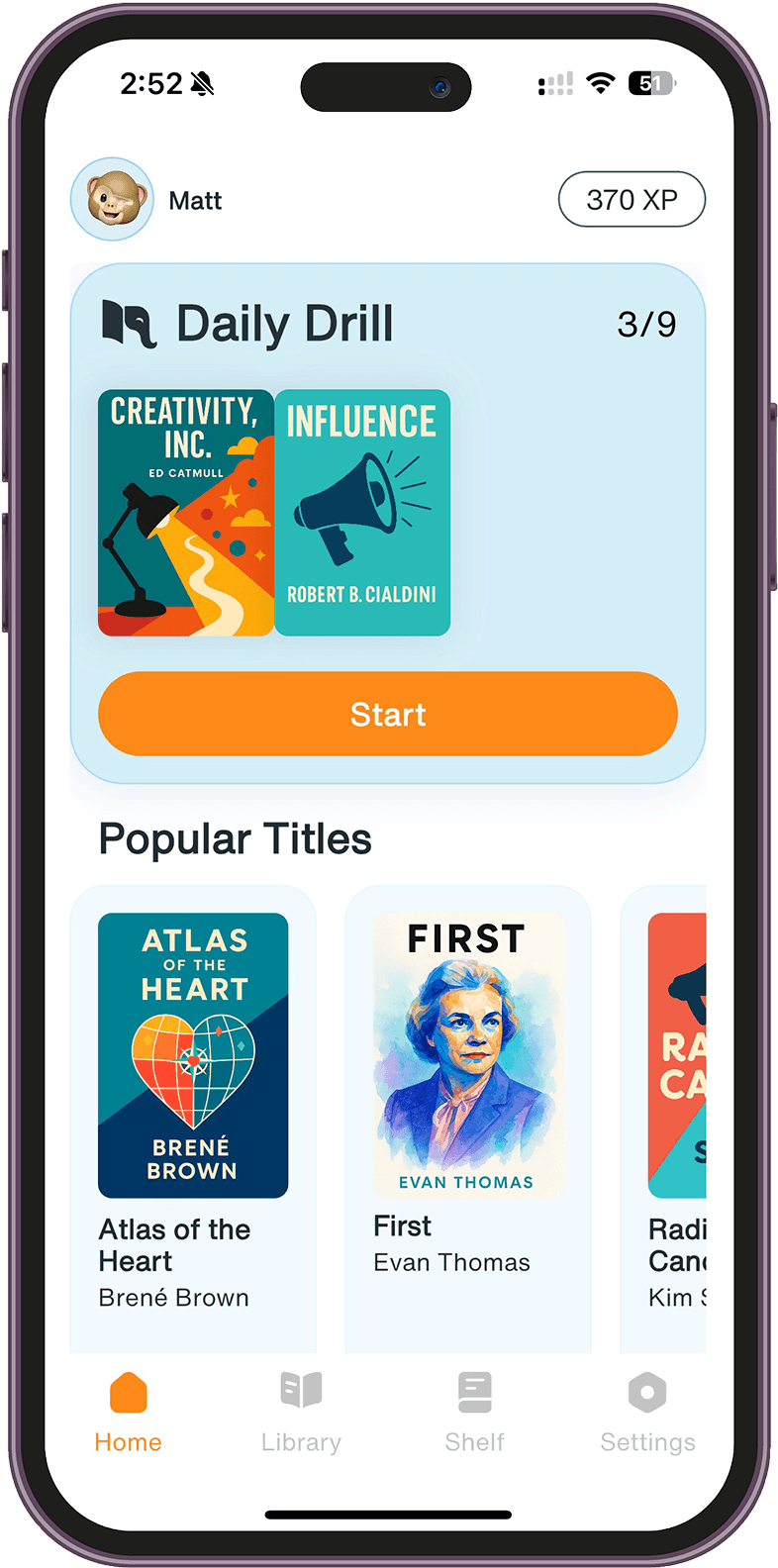
Loxie uses spaced repetition and active recall—the same techniques that top performers use instinctively—to help you genuinely retain the concepts from Selling to Win. Instead of reading the book once and forgetting most of it within a week, you practice for just 2 minutes a day with questions that resurface ideas right before you'd naturally forget them.
The key insight is that learning isn't about exposure—it's about retrieval practice. Every time you successfully recall a concept, you strengthen the neural pathway that makes it accessible in the future. Loxie structures this practice automatically, bringing back the concepts about customer psychology, objection handling, and closing techniques at precisely the intervals that optimize long-term retention.
Loxie includes Selling to Win in its complete topic library, so you can start reinforcing these sales principles immediately. The goal isn't to replace reading or training—it's to ensure that the investment you've already made in learning actually pays off when you're in front of customers.
Frequently Asked Questions
What is the main idea of Selling to Win?
The core idea is that professional sales success requires mastering both technical skills—like prospecting, presenting, and closing—alongside psychological insights into customer motivations and decision-making. Top salespeople view selling as providing valuable service that solves customer problems rather than pushing products for personal gain.
What are the key takeaways from Selling to Win?
The key takeaways include focusing on long-term customer relationships over one-time transactions, anticipating and preparing for common objections, using systematic prospecting rather than random outreach, practicing active listening to uncover real customer needs, and maintaining enthusiasm despite inevitable rejection.
How does Richard Denny recommend handling sales objections?
Denny suggests viewing objections as opportunities for deeper engagement rather than obstacles. Salespeople should anticipate common objections and prepare confident responses, recognize that objections often mask unspoken fears or concerns, and reframe customer resistance as requests for more information that allow you to provide additional value.
What does Selling to Win say about building customer relationships?
The book emphasizes that long-term relationships generate 80% more lifetime value than one-time transactions through repeat business, referrals, and reduced acquisition costs. Building trust requires consistent follow-through after sales, proactive communication, and demonstrating genuine care for customer outcomes beyond the initial transaction.
How can I apply the 80/20 rule to sales as described in the book?
The 80/20 rule suggests focusing your selling time on high-value prospects and activities that directly generate revenue. This means qualifying prospects early, prioritizing A-list accounts, time-blocking for productive activities, and protecting peak energy hours for selling rather than administrative tasks.
How can Loxie help me remember what I learned from Selling to Win?
Loxie uses spaced repetition and active recall to help you retain the key concepts from Selling to Win. Instead of reading the book once and forgetting most of it, you practice for 2 minutes a day with questions that resurface ideas—like objection handling techniques or closing signals—right before you'd naturally forget them. Loxie includes Selling to Win in its complete topic library.
We're an Amazon Associate. If you buy a book through our links, we earn a small commission at no extra cost to you.
Stop forgetting what you learn.
Start learning for good with your 7-day FREE trial.