Smart Decision Making: Key Concepts & What You Need to Know
Master the cognitive biases, emotional traps, and practical frameworks that separate consistently good decisions from lucky guesses.
by The Loxie Learning Team
Most people believe they're good decision-makers who occasionally get unlucky. The reality is more humbling: we're all running cognitive software riddled with predictable bugs—biases that distort our judgment in the same ways, over and over, without our awareness. The difference between consistently good decision-makers and everyone else isn't intelligence or luck; it's understanding these mental traps well enough to work around them.
This guide breaks down the cognitive biases and emotional traps that derail good judgment, along with practical frameworks for making better choices under uncertainty. You'll learn to recognize when confirmation bias is filtering your research, why sunk costs keep you trapped in bad investments, and how the 10-10-10 rule can cut through emotional distortion. Most importantly, you'll understand that good decision-making isn't about being right every time—it's about tilting probabilities in your favor through better process.
 Start practicing decision-making frameworks ▸
What is confirmation bias and how does it sabotage your decisions?
Confirmation bias is your brain's tendency to seek evidence supporting existing beliefs while automatically filtering out contradictions—noticing information that confirms what you already think while becoming blind to data that challenges it. This bias operates below conscious awareness, making you feel you've done thorough research when you've actually only processed one side of the evidence.
Consider researching a major purchase you've emotionally committed to. You unconsciously focus on positive reviews while dismissing negative ones as "probably fake" or "those people used it wrong." Your brain treats confirming evidence as more credible and memorable while finding reasons to discount contradictory information. This creates false confidence that can lead to terrible decisions.
To catch confirmation bias in action, actively search for evidence that proves you wrong. Ask yourself "what would convince me I'm mistaken?" and genuinely look for that data rather than collecting supporting examples. Before major decisions, force yourself to write three strong arguments against your position and evaluate them honestly rather than immediately explaining them away.
Why does the sunk cost fallacy keep you trapped in bad situations?
The sunk cost fallacy makes you continue bad investments because walking away feels like admitting failure—treating past time, money, or effort as reasons to invest more future resources even though past costs can't be recovered regardless of your choice. When you've spent two years in the wrong career, the thought "I can't waste those two years" keeps you there another five, actually wasting seven years instead of just two.
This fallacy exploits loss aversion and our deep need to justify past decisions. Admitting a loss feels psychologically painful, so we throw good resources after bad trying to "make it worth it." But past costs are gone forever—the only question that matters is whether future investment will generate future returns.
Combat sunk cost fallacy by asking "if I were starting fresh today, would I choose this?" Ignore all past investment and evaluate only future costs against future benefits. When deciding whether to finish a degree you hate, don't consider the three years already spent; ask whether the remaining year is worth the opportunity cost compared to starting something better now.
Practice recognizing cognitive biases ▸
How does the availability heuristic distort your perception of risk?
The availability heuristic makes recent or vivid events feel more probable than they actually are—your brain judges likelihood by how easily examples come to mind rather than actual statistics. After seeing news coverage of a shark attack, beach swimming feels dangerous even though you're 3,000 times more likely to drown in your bathtub than be killed by a shark.
This mental shortcut evolved when memorable events (predator attacks, poisonous foods) were genuinely more dangerous. But in modern media environments, dramatic rare events get disproportionate coverage while common dangers go unreported. Your brain can't distinguish between "easily recalled because common" and "easily recalled because dramatic."
Counter the availability heuristic by seeking base rates—the actual statistical frequency of events—rather than relying on mental examples. When evaluating startup risk after hearing about spectacular failures, research that 20% of new businesses survive 10 years rather than letting vivid bankruptcy stories dominate your probability estimates. Base rates ground your estimates in reality rather than memory.
What is the 10-10-10 rule and how can it improve your decisions?
The 10-10-10 rule evaluates decisions across three time horizons—asking "how will I feel in 10 minutes, 10 months, and 10 years?"—which reveals when you're overweighting immediate emotions or underweighting long-term consequences. That difficult conversation you're avoiding feels terrible contemplating (10 minutes) but becomes relief once done (10 months) and prevents regret about unresolved issues (10 years).
This framework exploits temporal distance to reduce emotional distortion. Immediate emotions feel overwhelming because they're present and vivid, while future consequences feel abstract. By explicitly considering multiple timeframes, you can identify when short-term discomfort is blocking long-term benefit or when immediate gratification creates lasting regret.
Apply 10-10-10 by writing actual responses for each timeframe before deciding—not just thinking about them but documenting predicted feelings and consequences at each horizon. For career changes, write: "10 minutes: anxious about uncertainty; 10 months: energized by new challenges or regretful if wrong fit; 10 years: proud of taking risk or grateful for stability." Writing forces specificity that mental consideration allows you to skip.
Knowing these frameworks isn't the same as using them
Understanding the 10-10-10 rule intellectually won't help when emotions are running high. Loxie uses spaced repetition to build these decision frameworks into your automatic thinking—so they're available when you need them most, not buried in notes you'll never revisit.
Build better decision habits ▸How do immediate emotions distort your judgment?
Immediate emotions distort decisions by making temporary feelings seem permanent—anger convinces you relationships are irreparable, excitement makes risks invisible, and anxiety makes safe choices feel catastrophic. During heated arguments, the feeling "I never want to speak to them again" seems like permanent truth rather than temporary emotional state that will fade within hours.
Your brain struggles to predict how feelings will change over time, a phenomenon called affective forecasting error. Current emotions color everything, making it nearly impossible to imagine feeling differently later. This is why you buy too much food when shopping hungry or make harsh ultimatums when angry.
Emotions do provide valuable decision information about values and needs—fear signals potential threats, anger reveals boundary violations, excitement indicates goal alignment. The key is distinguishing emotional information from emotional decisions. Ask "what is this feeling telling me?" before acting on it. Jealousy might reveal you value a relationship, but immediately accusing your partner based on jealous feelings confuses emotional information with factual reality.
The affect heuristic and all-or-nothing thinking
The affect heuristic makes you judge things as all-good or all-bad based on emotional response—if you like someone, you minimize their flaws; if something feels scary, you exaggerate its risks while ignoring benefits. Your brain struggles to hold mixed feelings, defaulting to coherent emotional narratives where emotional response determines perceived facts rather than facts determining response.
Emotional regulation techniques create space between feeling and action without eliminating emotional information. Temporal distancing ("sleep on it") lets intense emotions fade to manageable levels. Perspective-taking ("what would I advise a friend?") bypasses personal emotional involvement. Emotion labeling ("I notice I'm anxious") activates your prefrontal cortex, shifting from emotional to analytical processing. The "friend test" works particularly well: you'd never tell a friend to stay in an abusive relationship because of sunk costs, though your own emotions might convince you to stay.
Master emotional regulation for decisions ▸
What's the difference between reversible and irreversible decisions?
Reversible decisions can be undone with minimal cost—like software trials, small experiments, or jobs you can leave—and should be made quickly with "good enough" information since real experience provides better data than endless analysis. Spending weeks researching the perfect productivity app wastes more time than trying three options for a day each and keeping what works.
Irreversible decisions have permanent consequences or prohibitive reversal costs—having children, reputation-destroying actions, or selling founding equity—requiring thorough analysis, multiple perspectives, and worst-case planning before committing. These "one-way doors" deserve the analysis time people waste on reversible choices, including seeking advisors who've made similar decisions.
Most people get this exactly backwards: they overthink reversible decisions (which restaurant? what laptop?) while rushing irreversible ones (marriage, career pivots). Spending hours comparing phone models while making gut-based decisions about relationships reveals misallocated decision effort. This reversal happens because reversible decisions feel safer to analyze while irreversible ones trigger anxiety that we escape through quick action.
Testing reversibility and using premortems
Test reversibility by asking "what would it cost to undo this?"—considering time, money, relationships, and opportunity costs of reversal. Many seemingly big decisions are actually highly reversible when you calculate actual reversal costs. This question cuts through emotional weight ("this feels huge") to practical reality ("I could change this next month").
For irreversible decisions, use the "premortem" technique—imagine the decision led to disaster and work backward to identify what went wrong. Before accepting a job requiring relocation, envision yourself miserable in two years and list reasons: culture mismatch, isolation from support network, or spouse's career suffering. Premortems overcome optimism bias by forcing you to imagine failure before it happens, revealing risks your hopeful brain naturally minimizes.
How does probabilistic thinking improve decision quality?
Probabilistic thinking replaces binary predictions with probability ranges—thinking "60-80% chance this works" instead of "it will definitely succeed"—which acknowledges uncertainty while still enabling action based on favorable odds. This prevents both paralysis from demanding certainty and recklessness from ignoring risks.
Binary thinking ("success or failure") forces false precision onto uncertain situations. Probability ranges capture what you actually know: some outcomes are more likely than others, but nothing is guaranteed. This mental model allows confident action when odds favor you without requiring impossible certainty.
Expected value calculations
Expected value multiplies probability by outcome size to compare options mathematically—a 10% chance of $1,000 (expected value: $100) beats a 90% chance of $10 (expected value: $9). While our brains focus on either probability ("unlikely to work") or payoff ("huge if it works"), expected value combines both factors into a single comparable number, revealing that low-probability/high-reward options can sometimes be better than high-probability/low-reward ones.
Express confidence through betting—asking "would I bet $100 on this at even odds?"—which forces you to convert vague feelings into specific probabilities. If you wouldn't take that bet, you're less than 50% confident despite perhaps talking as if you're certain. Money makes probability estimates real, stripping away social posturing to reveal your true confidence level.
Beware false precision that creates dangerous overconfidence by adding detail to uncertain predictions. Saying "revenue will be $543,291 in year 3" feels more professional than "probably between $200k-800k" but represents knowledge you don't actually have. Precise wrong predictions are worse than vague correct ones because they lead to overconfident decisions based on fictional accuracy.
Practice probabilistic thinking ▸
How can decision journals improve your judgment over time?
Decision journals capture your reasoning at decision time—what you knew, assumed, predicted, and why you chose—creating feedback loops that reveal systematic biases in your judgment. Recording "choosing job A because of growth potential, assuming startup will IPO within 3 years" lets you later identify if you consistently overvalue certain factors.
Memory reconstructs the past to match present knowledge, making you forget what you actually knew when deciding. Decision journals preserve your real-time thinking, revealing patterns like overconfidence about timelines, underweighting risks, or being swayed by irrelevant factors you thought were important.
Structure decision journal entries with three components: decision context (what you're choosing and why it matters), key assumptions (what you believe is true), and success metrics (how you'll measure if it worked). This format reveals whether your assumptions are consistently wrong in specific areas, turning individual decisions into learning opportunities.
Avoiding outcome bias
Outcome bias judges decision quality by results rather than process—calling lucky gambles "brilliant" and unlucky good decisions "stupid"—even though good decisions can have bad outcomes through chance while poor decisions sometimes succeed through luck. A drunk driver arriving home safely didn't make a good decision; they got lucky despite a terrible choice.
This bias prevents learning because it reinforces wrong lessons. When bad processes produce good outcomes, you repeat dangerous strategies. When good processes produce bad outcomes, you abandon sound approaches. Only by separating decision quality from outcome luck can you improve your judgment. Decision journals help by documenting your process before you know the outcome, making it harder to retroactively judge your reasoning based on results.
When should you trust intuition versus analysis?
Expert intuition develops through repeated exposure to similar situations with clear feedback—creating pattern recognition that processes information faster than conscious analysis. Chess masters instantly "see" good moves because they've encountered similar board positions thousands of times, not because they calculate faster. This isn't mystical but pattern matching—their brains automatically compare current situations to stored examples.
However, intuition fails in "wicked" environments with irregular patterns, delayed feedback, or changing rules—like stock picking, political prediction, or judging startup potential—where gut feelings reflect cognitive biases rather than accumulated wisdom. Your feeling that "this startup will succeed" comes from superficial pattern matching, not genuine insight. Wicked environments prevent real expertise because patterns don't repeat reliably or feedback comes too late to correct errors.
Valid intuition requires "kind" learning environments with consistent patterns and rapid feedback—like firefighting, chess, or weather prediction—where experience reliably improves pattern recognition. In these domains, trust gut feelings from experts who've had thousands of similar experiences with clear outcome feedback. In wicked environments, systematic analysis beats intuition. Use scoring matrices for complex purchases, algorithms for hiring, or checklists for safety procedures—tools that prevent charismatic options from overshadowing superior alternatives your gut doesn't immediately recognize.
Learn when to trust your gut ▸
How do pre-commitment strategies protect good decisions?
Pre-commitment strategies lock in good choices while you're rational, creating barriers to changing course when emotions or temptation strike—like automatic savings transfers before you can spend, or public goal announcements that create social pressure. You constrain future-you's options using present-you's clarity.
These strategies work because they change the choice architecture when judgment is impaired. Instead of relying on willpower in moments of temptation, you've already removed the bad option or made it costly to access. The decision is made once when clear-headed rather than repeatedly when vulnerable.
Ulysses contracts and implementation intentions
Ulysses contracts bind future-you to present-you's decisions—like having yourself tied to a mast to resist Sirens—recognizing that future-you will face different incentives and temptations. Setting up automatic bill payments prevents future-you from "forgetting," while commitment devices like stickK.com make you lose money for breaking promises. These contracts acknowledge that you're multiple selves across time with conflicting interests.
Implementation intentions specify exactly when and how you'll act—"when X happens, I will do Y"—removing decision-making from the moment of action. "When I get my paycheck, I will immediately transfer 20% to savings" works better than "I'll save more" because it pre-decides the response to a specific trigger, turning complex decisions into simple if-then rules that execute without deliberation.
Design pre-commitments with "implementation friction"—making good choices easier and bad choices harder through environmental design. Keep healthy snacks at eye level while hiding junk food in hard-to-reach places, or delete shopping apps while keeping investment apps prominent. Even minor inconvenience can prevent impulsive actions, guiding you toward better decisions without requiring constant vigilance.
The real challenge with smart decision making
You now understand confirmation bias, sunk cost fallacy, the availability heuristic, the 10-10-10 rule, probabilistic thinking, and pre-commitment strategies. But here's an uncomfortable question: how much of this will you actually remember when you need it?
Research on the forgetting curve shows that we lose 70% of new information within 24 hours without reinforcement. Decision-making frameworks are only valuable if they're accessible in the moment—when emotions are running high, when time pressure is intense, when the stakes matter. Reading about these concepts once doesn't build them into your automatic thinking. They become notes you'll never revisit, good intentions that fade before they become habits.
How Loxie helps you actually make better decisions
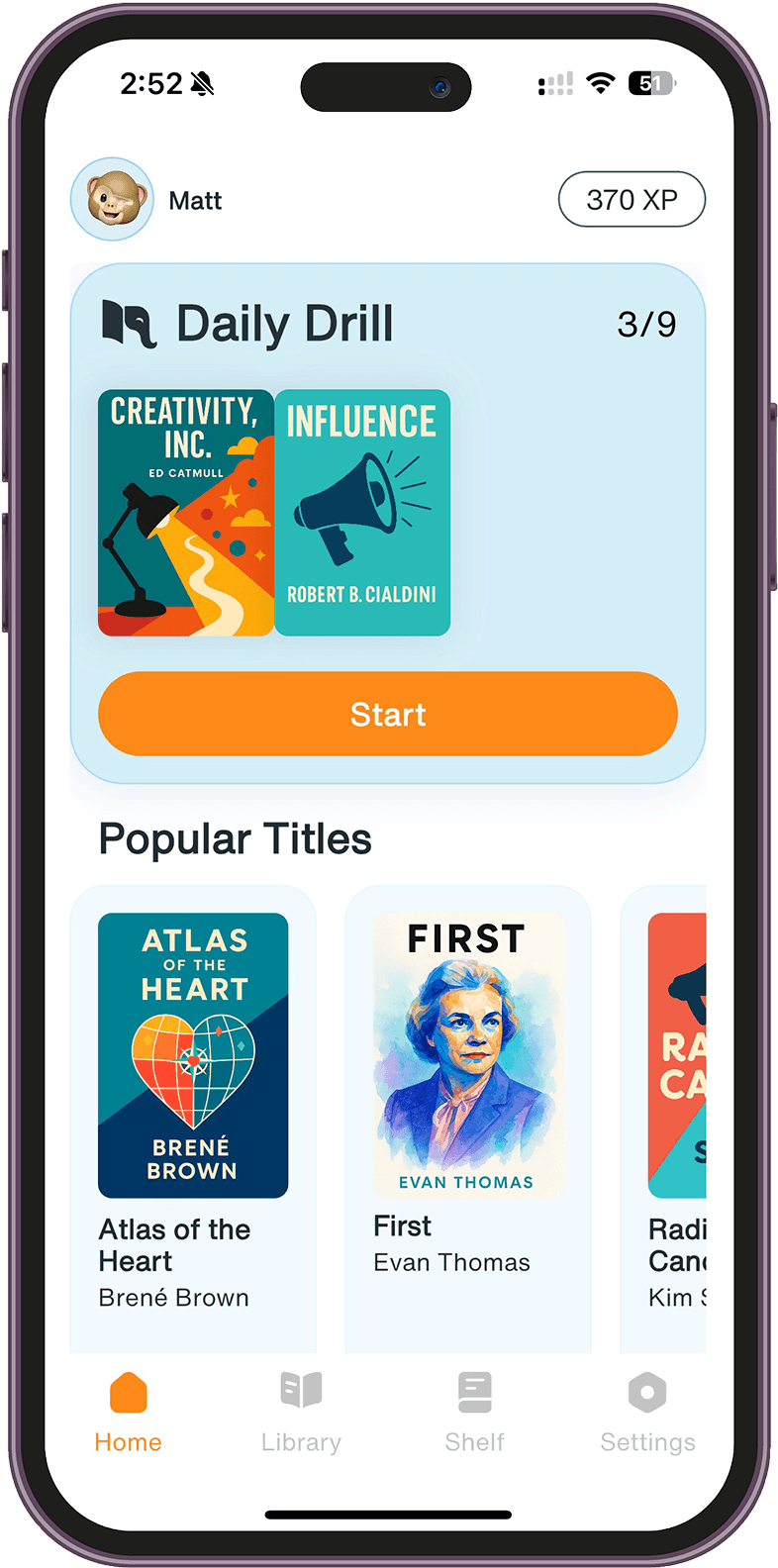
Loxie uses spaced repetition and active recall to move these decision-making frameworks from temporary understanding to permanent mental tools. Instead of reading once and hoping you remember, you practice for just 2 minutes a day with questions that resurface concepts right before you'd naturally forget them—confirmation bias triggers, sunk cost warning signs, probability calibration exercises, pre-commitment design principles.
The difference between knowing about cognitive biases and catching them in yourself is practice. Loxie provides that practice systematically, building pattern recognition for your own thinking errors. When you've actively recalled "ask what would convince me I'm wrong" dozens of times across months, it becomes an automatic response rather than a forgotten tip. Loxie includes Smart Decision Making in its full topic library, so you can start reinforcing these frameworks immediately.
Frequently Asked Questions
What is smart decision making?
Smart decision making is a disciplined approach to choices that accounts for cognitive biases, emotional distortions, and uncertainty. It involves recognizing mental traps like confirmation bias and sunk cost fallacy, using frameworks like the 10-10-10 rule and probabilistic thinking, and distinguishing between reversible decisions (decide fast) and irreversible ones (analyze thoroughly).
What is confirmation bias and how do I overcome it?
Confirmation bias is your brain's tendency to seek evidence supporting existing beliefs while filtering out contradictions. Overcome it by actively searching for evidence that proves you wrong, asking "what would convince me I'm mistaken?" and forcing yourself to write three strong arguments against your position before deciding.
What is the 10-10-10 rule for decisions?
The 10-10-10 rule asks "how will I feel about this decision in 10 minutes, 10 months, and 10 years?" This framework reveals when immediate emotions are distorting judgment. That difficult conversation feels terrible now (10 minutes) but becomes relief once done (10 months) and prevents lasting regret (10 years).
When should I trust my intuition versus use analysis?
Trust intuition in "kind" environments with consistent patterns and rapid feedback—like chess, firefighting, or weather prediction—where experience builds reliable pattern recognition. Use systematic analysis in "wicked" environments with irregular patterns and delayed feedback—like stock picking or startup investing—where gut feelings reflect biases rather than expertise.
What are pre-commitment strategies for better decisions?
Pre-commitment strategies lock in good choices while you're thinking clearly, creating barriers against future temptation. Examples include automatic savings transfers, public goal announcements, implementation intentions ("when X happens, I will do Y"), and adding friction to bad choices while removing friction from good ones.
How can Loxie help me make better decisions?
Loxie uses spaced repetition and active recall to build decision-making frameworks into your automatic thinking. Instead of reading about cognitive biases once and forgetting, you practice for 2 minutes a day with questions that resurface concepts right before you'd naturally forget them—so these tools are available when you need them most.
Stop forgetting what you learn.
Start learning for good with your 7-day FREE trial.