The 5 Love Languages: Key Insights & Takeaways
Master Gary Chapman's framework for expressing love in ways your partner actually receives—and transform your relationships.
by The Loxie Learning Team
Why do some couples seem to effortlessly connect while others struggle despite genuine effort? Gary Chapman's The 5 Love Languages reveals a simple but profound truth: people give and receive love in fundamentally different ways. When you express love in your way rather than your partner's way, your message gets lost in translation—leaving both of you feeling unloved despite real effort.
This guide breaks down Chapman's complete framework for understanding how love languages work, identifying your own and your partner's primary languages, and speaking love in ways that actually land. Whether you're trying to revive a struggling relationship or deepen an already good one, mastering these concepts can transform how you connect.
 Start practicing The 5 Love Languages free for 7 days ▸
What are the five love languages and why do they matter?
The five love languages are distinct ways people express and receive love: words of affirmation, quality time, receiving gifts, acts of service, and physical touch. Each person has a primary love language—the way they most naturally feel loved and emotionally connected. When your partner speaks your language, you feel genuinely cared for. When they don't, you may feel neglected even when they're trying hard to show love in their own way.
The concept explains why so many couples feel disconnected despite real effort. One partner might express love through acts of service—doing chores, running errands, fixing things—while the other desperately wants quality time together. Both are genuinely trying to love each other, but the message isn't landing because they're speaking different languages. Understanding this framework gives you a roadmap for communicating love effectively.
Words of Affirmation
Words of affirmation communicate love through verbal compliments, expressions of appreciation, and encouraging words. For people with this primary language, hearing "I love you," "I'm proud of you," or specific praise for their qualities and actions fills their emotional tank in ways that other expressions of love cannot match. The words don't need to be elaborate—simple, sincere statements of value and appreciation carry tremendous weight.
Quality Time
Quality time means giving someone your undivided attention—not just being in the same room while scrolling your phone or watching TV. It requires eye contact, active listening, and full presence. For people whose primary language is quality time, nothing says "I love you" like turning off distractions and focusing completely on them, whether through shared activities or meaningful conversation.
Receiving Gifts
For people whose primary love language is receiving gifts, thoughtful presents serve as visual symbols of love. The gift represents the giver's investment of time, effort, and consideration—proof that someone was thinking about them. The monetary value matters far less than the thoughtfulness behind the choice. A small gift that shows genuine understanding can speak louder than an expensive but generic one.
Acts of Service
Acts of service demonstrate love through helpful actions that ease your partner's daily burdens—cooking meals, doing laundry, running errands, fixing broken things. For service-oriented individuals, these actions speak volumes because they require time, effort, and thoughtfulness. Critically, acts of service only communicate love when performed with a positive attitude and genuine desire to help, not out of obligation or with resentment attached.
Physical Touch
Physical touch serves as a powerful emotional communicator for those whose primary language is touch. This includes everything from intimate contact to simple gestures like hand-holding, hugs, a hand on the shoulder, or sitting close together. For touch-oriented individuals, physical presence and contact convey deep emotional connection and security in ways words or actions cannot replace.
Practice the love languages in Loxie ▸
What is the emotional love tank and how do you fill it?
Chapman describes an emotional "love tank" that everyone carries—an internal reservoir that needs regular filling through expressions of love in their primary language. When your love tank is full, you feel secure, connected, and able to face life's challenges with your partner. When it runs empty, you feel emotionally disconnected, even if the relationship looks fine on the surface.
The key insight is that love tanks must be filled in the right way. Pouring love into someone through a language they don't speak is like depositing money into the wrong account—the effort is real, but the recipient doesn't feel richer. Consistently speaking your partner's primary love language keeps their tank full and maintains the emotional connection that makes relationships thrive. Loxie can help you internalize which specific behaviors fill each love language so you can practice them consistently, not just when you remember.
Why does the 'in-love' feeling fade and what replaces it?
The euphoria of being "in love" is a temporary emotional high driven by chemistry and idealization—and research suggests it naturally fades after an average of two years. This isn't a sign that something is wrong with your relationship; it's a normal biological and psychological process. The problem is that many couples mistake this fading feeling for falling out of love, when really they're transitioning from passive infatuation to a stage requiring active love.
Real love, according to Chapman, is an intentional choice rather than a feeling. It requires daily commitment to meet your partner's emotional needs, especially after the initial romantic feelings subside. Couples who thrive long-term are those who learn to actively choose love through deliberate actions—speaking their partner's love language consistently, even when the effortless euphoria has passed. This transition from feeling to choosing is where love languages become essential tools.
Understanding love languages is one thing. Practicing them consistently is another.
Most people read this book, feel inspired, and then gradually slip back into their old patterns. Loxie helps you internalize these concepts through spaced repetition so you actually remember to speak your partner's language when it matters.
Try Loxie free for 7 days ▸How do you discover your primary love language?
Discovering your primary love language requires honest self-reflection focused on three key questions: What makes you feel most loved and emotionally connected? What do you most frequently request from your partner? And what hurts you most when it's absent or withheld? The answers to these questions often point directly to your primary language.
Consider what you naturally do to express love to others, as people tend to give love in the way they want to receive it. If you're constantly doing things for your partner and feeling frustrated that they don't reciprocate, acts of service might be your primary language. If you feel most hurt when your partner doesn't give you focused attention, quality time is likely your language. The pattern of your complaints and requests reveals what you most deeply need.
Why does speaking the wrong love language leave partners feeling unloved?
Speaking the wrong love language leaves partners feeling unloved because the message doesn't reach them in a form they can receive. Imagine someone speaking French to you when you only understand English—their words might be beautiful and heartfelt, but they mean nothing to you. The same dynamic happens with love languages: a partner who craves quality time may feel completely unmoved by expensive gifts, no matter how generously given.
This mismatch explains a common relationship frustration: "I do so much for them and they still say they don't feel loved." Both partners may be giving love genuinely but in incompatible languages. The solution isn't to try harder in your natural language—it's to learn your partner's language and speak it deliberately. This requires moving beyond expressing love in ways that feel comfortable to you and toward expressing it in ways your partner actually receives.
Can love languages transform struggling relationships?
Chapman presents compelling evidence that understanding and consistently speaking each other's primary love language can transform even severely struggling relationships into thriving partnerships. The key word is "consistently"—sporadic efforts don't work. The emotional love tank needs regular filling, and a single grand gesture cannot substitute for daily deposits of love in the right language.
Even difficult or emotionally distant people respond positively when others consistently communicate love through their primary language. The need to feel loved is universal, and when that need is finally met after years of emotional starvation, walls begin to come down. This doesn't mean love languages are a magic fix for all relationship problems, but they provide a powerful framework for rebuilding emotional connection when both partners commit to learning and speaking each other's language.
What does intentional love look like in daily practice?
Intentional love means making conscious daily choices to speak your partner's love language, especially when you don't feel like it. It requires moving from passive infatuation—where love feels effortless—to active love, where you deliberately invest in your partner's emotional needs. This shift is essential because the euphoric feelings that make love easy at the beginning are temporary by design.
In practice, intentional love looks different for each love language. For words of affirmation, it means noticing things you appreciate and saying them out loud. For quality time, it means scheduling focused attention without distractions. For gifts, it means paying attention to what your partner mentions wanting and surprising them thoughtfully. For acts of service, it means doing tasks without being asked and without resentment. For physical touch, it means initiating contact throughout the day, not just during intimacy.
The real challenge with The 5 Love Languages
Here's what most readers of The 5 Love Languages discover: understanding the concepts is the easy part. The book makes intuitive sense while you're reading it. You might even identify your love language and your partner's within the first few chapters. But then life resumes, old patterns reassert themselves, and within weeks you're back to expressing love in your default way rather than your partner's language.
This isn't a failure of willpower—it's how memory works. Research shows we forget up to 70% of new information within 24 hours. The insights that felt so clear while reading become fuzzy, then fade entirely. You might remember the general concept of love languages but forget the specific behaviors that fill each tank, or the questions to ask to discover your partner's primary language.
How Loxie helps you actually remember what you learn
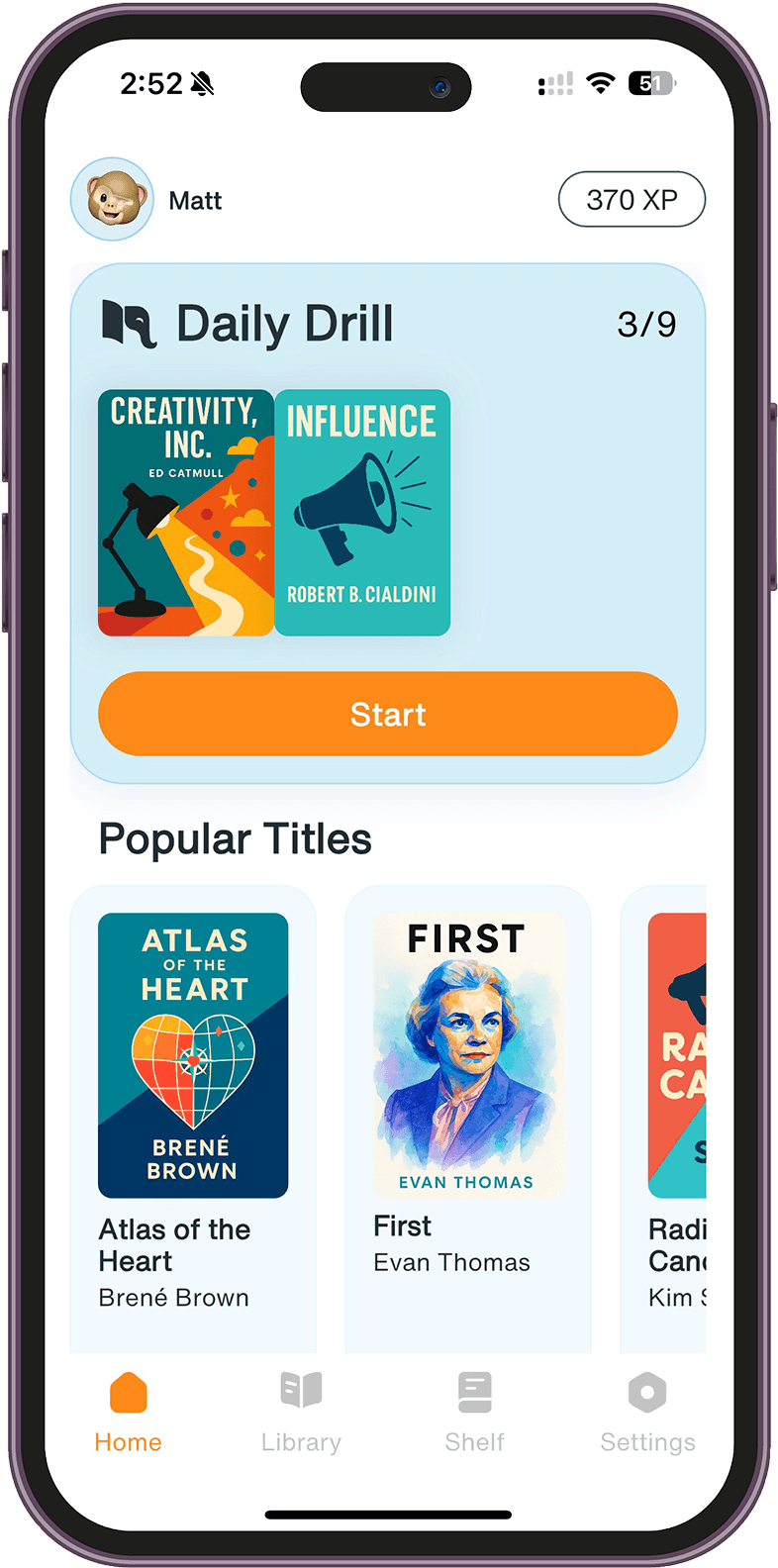
Loxie uses spaced repetition and active recall—the same techniques proven to help medical students retain vast amounts of information—to help you internalize the key concepts from The 5 Love Languages. Instead of reading the book once and hoping the insights stick, you practice for just 2 minutes a day with questions that resurface ideas right before you'd naturally forget them.
This means the specific behaviors that express each love language, the questions to discover your partner's language, and the strategies for maintaining emotional connection stay fresh and accessible. When you're in a moment where you could choose to speak your partner's language, the knowledge is there—not buried in a book you read months ago. Loxie includes The 5 Love Languages in its full topic library, so you can start reinforcing these relationship-transforming concepts immediately.
Frequently Asked Questions
What is the main idea of The 5 Love Languages?
The central idea is that people express and receive love in five distinct ways: words of affirmation, quality time, receiving gifts, acts of service, and physical touch. Each person has a primary love language, and relationships thrive when partners learn to communicate love in the way their partner naturally receives it rather than in their own preferred way.
What are the five love languages?
The five love languages are: words of affirmation (verbal expressions of love and appreciation), quality time (undivided attention and presence), receiving gifts (thoughtful presents as symbols of love), acts of service (helpful actions that ease burdens), and physical touch (physical affection and contact). Everyone has a primary language they respond to most strongly.
How do I find out my love language?
Discover your primary love language by asking yourself three questions: What makes you feel most loved? What do you most often request from your partner? And what hurts you most when it's absent? Your complaints and requests reveal what you most deeply need. You can also notice how you naturally express love to others, as people tend to give love the way they want to receive it.
Why do couples feel disconnected even when they're trying?
Couples often feel disconnected because they're expressing love in their own language rather than their partner's. One partner might show love through acts of service while the other needs quality time. Both are genuinely trying, but the message doesn't land because they're speaking different emotional languages. Learning to speak your partner's language solves this mismatch.
Does the 'in-love' feeling always fade?
Yes, the euphoric "in love" feeling typically fades after an average of two years. This is normal biology, not a sign of relationship failure. Chapman argues that real love is an intentional choice that begins when the easy feelings end—couples who thrive long-term are those who learn to actively choose love through daily deliberate actions in their partner's love language.
How can Loxie help me remember what I learned from The 5 Love Languages?
Loxie uses spaced repetition and active recall to help you retain the key concepts from The 5 Love Languages. Instead of reading the book once and forgetting most of it, you practice for 2 minutes a day with questions that resurface ideas right before you'd naturally forget them. Loxie includes The 5 Love Languages in its full topic library, so you can start reinforcing these concepts immediately.
We're an Amazon Associate. If you buy a book through our links, we earn a small commission at no extra cost to you.
Stop forgetting what you learn.
Start learning for good with your 7-day FREE trial.