The Go-Giver: Key Insights & Takeaways from Bob Burg
Master the five laws of stratospheric success and discover why giving—not getting—creates lasting business and personal results.
by The Loxie Learning Team
What if the secret to getting more in business and life is to focus entirely on giving? The Go-Giver by Bob Burg and John David Mann presents a counterintuitive philosophy that has transformed how countless professionals approach success. Through the story of Joe, an ambitious salesman struggling to hit his quarterly numbers, the book reveals five laws that create what the authors call "stratospheric success."
This guide breaks down the complete framework from The Go-Giver, examining each of the five laws and how they work together to create exponential results. Whether you're in sales, leadership, or simply want to build more meaningful professional relationships, you'll discover why shifting your fundamental question from "What can I get?" to "What can I give?" changes everything.
 Start practicing The Go-Giver free for 7 days ▸
What are the five laws of stratospheric success?
The five laws of stratospheric success are Value, Compensation, Influence, Authenticity, and Receptivity. Each law builds upon the previous one, creating a complete system for achieving extraordinary results by systematically putting others' interests first. Together, they form a philosophy that transforms transactional relationships into genuine connections that generate unexpected returns.
What makes these laws powerful is their synergistic nature. Applying just one or two produces modest results, but when all five work together, they multiply each other's effects exponentially. The book emphasizes that personal transformation becomes complete only when all five laws are unified into a coherent life philosophy rather than applied as separate techniques.
The Law of Value
The Law of Value states that your true worth is determined by how much more you give in value than you take in payment. This doesn't mean undercharging for your services—it means creating experiences and benefits that far exceed the price. When customers feel they received dramatically more than they paid for, they become loyal advocates who return repeatedly and refer others.
True worth is measured by the total value you create for others, including emotional satisfaction, time saved, problems solved, and peace of mind delivered. A restaurant that makes you feel welcomed and cared for provides more value than one that simply serves good food at the same price. This surplus of value is what separates thriving businesses from struggling ones.
The Law of Compensation
The Law of Compensation states that your income is determined by how many people you serve and how well you serve them. This is essentially the Law of Value scaled up. While value determines the quality of what you give, compensation is about the quantity—the reach of your impact.
Excellence in service acts as a multiplier for earnings. Serving 100 people exceptionally well generates far more income than serving 1,000 people adequately. However, the greatest financial rewards come from combining both: serving large numbers of people at the highest possible level of quality. Financial rewards naturally follow the scale of your positive impact—the more lives you touch meaningfully, the greater your earning potential becomes.
The Law of Influence
The Law of Influence states that your influence is determined by how abundantly you place other people's interests first. This isn't about manipulation or strategy—it's about genuine concern for others' success. When you consistently prioritize what's best for others, you create magnetic leadership that attracts opportunities, resources, and allies.
Authentic influence emerges from consistently prioritizing others' needs. This creates trust, loyalty, and a network of people genuinely invested in your success. Putting others' interests first generates unexpected returns because it creates trust, loyalty, and word-of-mouth referrals that compound over time.
Practice these laws in Loxie ▸
The Law of Authenticity
The Law of Authenticity states that the most valuable gift you have to offer is yourself. Your authentic personality, unique perspective, and genuine care cannot be replicated or commoditized. In a world of polished presentations and perfect facades, authenticity stands out because people connect with and trust real human beings.
Authenticity creates deeper value than any product or service. When you show up as yourself—with your quirks, your passions, and your genuine interest in others—you create connections that survive market changes and competitive pressures. People do business with those they know, like, and trust, and those relationships can only be built through authentic interaction.
The Law of Receptivity
The Law of Receptivity states that the key to effective giving is to stay open to receiving. This final law is often the most difficult to embrace because many people feel uncomfortable accepting help, compliments, or gifts. Yet refusing to receive breaks the natural flow of abundance and denies others the joy of giving.
Lasting success requires mastering both giving and receiving. You must be open to receiving the abundance that flows back from genuine giving. Blocking incoming value disrupts the cycle of abundance and prevents you from having more to give. Giving and receiving are not opposites but two sides of the same coin, creating a complete cycle where both flow naturally together.
How do you shift from go-getter to go-giver?
True transformation from go-getter to go-giver requires shifting your core question from "What can I get?" to "What can I give?" in every interaction. This isn't about abandoning ambition or ignoring your own needs—it's about recognizing that focusing on what you can give paradoxically brings you more of what you want.
The traditional go-getter mentality creates struggle and limitation because it focuses on taking rather than creating value. This leads to transactional relationships and diminishing returns. When you approach every meeting, every phone call, and every email thinking about how you can add value to the other person, you naturally attract more opportunities than you could ever chase down.
Transformation begins with simple acts of service. The book suggests starting with gestures like bringing coffee to colleagues—small actions that shift your mindset from taking to giving. These simple gestures create ripple effects throughout your environment. The go-giver philosophy becomes sustainable when practiced consistently over time, transforming from conscious effort into natural habit through daily application.
Why do genuine connections form the foundation of business success?
Genuine connections form the foundation of business success because people do business with those they know, like, and trust. These relationships can only be built through authentic interaction over time. Genuine interactions build lasting business relationships by creating trust, emotional connection, and mutual respect that survive market changes and competitive pressures.
Authentic relationships create sustainable competitive advantages because they generate referrals, repeat business, and goodwill that competitors cannot easily replicate or undercut. While a competitor might match your price or copy your product, they cannot duplicate the trust you've built with your network over years of genuine giving.
Understanding the reciprocal nature of giving and receiving requires developing genuine connections with others who embody these principles. The book illustrates how networks of givers help each other succeed, creating communities where success multiplies rather than divides.
How does an abundance mindset multiply your influence?
An abundance mindset multiplies your influence by focusing on creating value for everyone rather than competing for limited resources. When you operate from abundance, you see opportunities where others see scarcity. This allows you to help competitors, share knowledge freely, and collaborate in ways that expand the entire market rather than fighting over existing pieces.
Helping competitors demonstrates true mastery of giving principles because it requires transcending win-lose thinking. When you help others succeed—even those who might seem like rivals—you create goodwill, expand your network, and often receive unexpected benefits in return. High-pressure client situations become the proving ground for giving philosophy, where choosing others' interests over immediate gains demonstrates true commitment to these principles.
Reading about giving isn't the same as practicing it
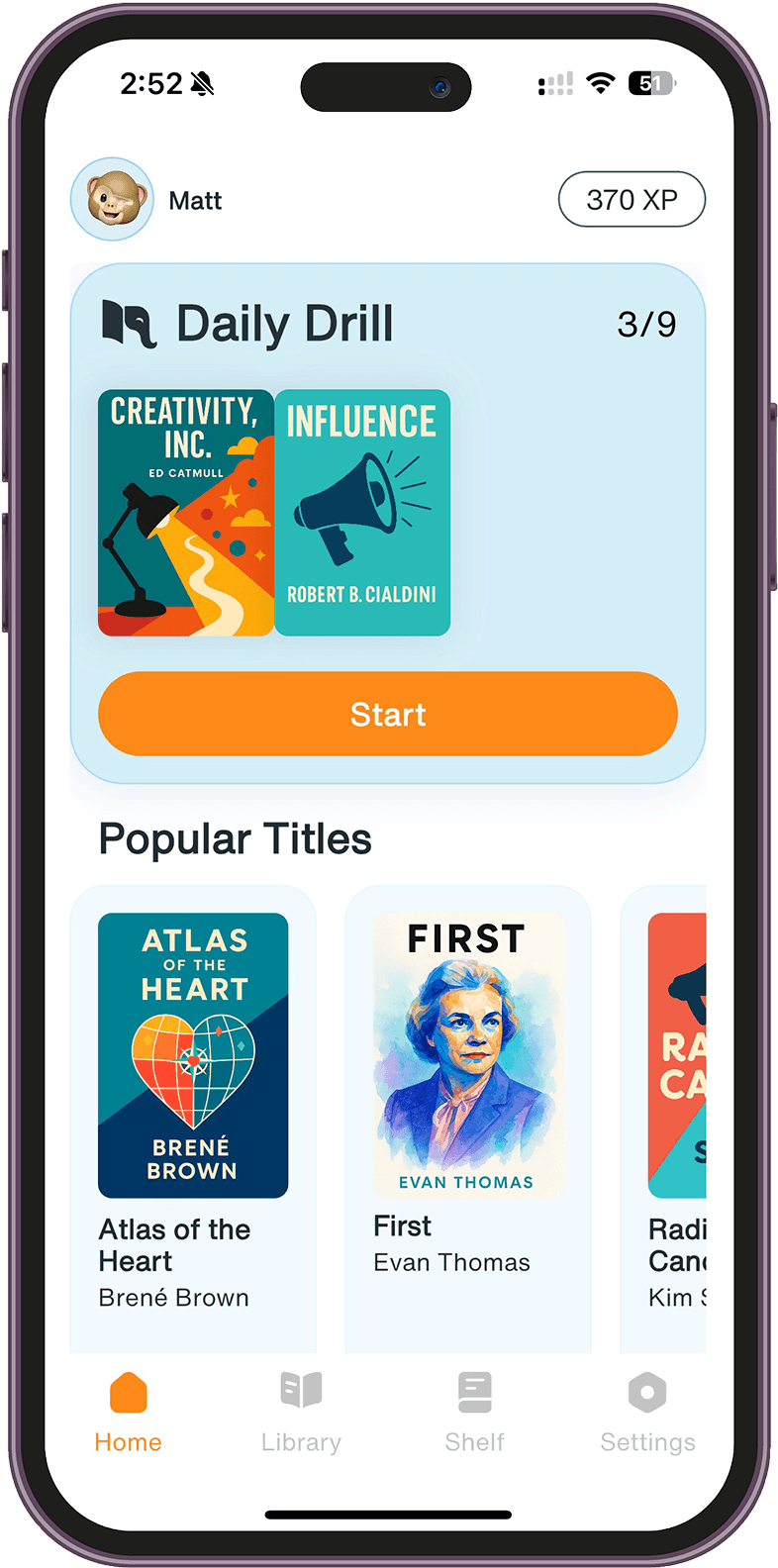
The Go-Giver's five laws are simple to understand but require consistent practice to internalize. Loxie uses spaced repetition to help you remember these principles when you need them—in the meeting, on the call, during the negotiation.
Try Loxie free for 7 days ▸Why must each law be applied immediately before learning the next?
True mastery requires applying each principle immediately before advancing to the next. This creates a foundation of experiential learning rather than theoretical knowledge. The book emphasizes that learning requires immediate application because knowledge without action remains theoretical and fails to create real transformation.
In the story, Joe's mentor Pindar insists that Joe practice each law before their next meeting. This isn't arbitrary—it reflects a deeper truth about how change happens. Living by new principles often requires risking established positions and relationships, testing whether transformation is complete or conditional. Ultimate tests of principle come when stakes are highest, revealing whether giving philosophy has become genuine conviction or remains mere strategy.
The real challenge with The Go-Giver
Here's the uncomfortable truth about business parables like The Go-Giver: they're inspiring to read but difficult to remember when you actually need them. When you're in a tense negotiation, facing a demanding client, or tempted to prioritize short-term gains, the five laws of stratospheric success can feel very far away.
Research on learning shows that we forget approximately 70% of new information within 24 hours. By the end of a week, that figure approaches 90%. How many books have you read that felt transformative in the moment, only to find yourself unable to recall more than a vague sense of the message a month later?
The go-giver philosophy only works when it's available in your mind at the moment of decision. Understanding these laws intellectually is completely different from having them so deeply internalized that they guide your automatic behavior.
How Loxie helps you actually remember what you learn
Loxie uses spaced repetition and active recall—the two most powerful learning techniques known to cognitive science—to help you retain the concepts from The Go-Giver. Instead of reading the book once and hoping the ideas stick, you practice for just 2 minutes a day with questions that resurface the five laws right before you'd naturally forget them.
Loxie includes The Go-Giver in its full topic library. You can start reinforcing these concepts immediately, building the mental availability you need to actually apply them when opportunities arise. Because true mastery of The Go-Giver's principles isn't about understanding them once—it's about having them present in your mind at the exact moment you need to choose giving over getting.
Frequently Asked Questions
What is the main idea of The Go-Giver?
The main idea is that true success comes from shifting your focus from getting to giving. By prioritizing how much value you create for others rather than what you can extract from them, you paradoxically receive more than you would by chasing results directly. The book presents five laws—Value, Compensation, Influence, Authenticity, and Receptivity—that work together to create extraordinary results.
What are the five laws of stratospheric success?
The five laws are: (1) The Law of Value—give more in value than you take in payment; (2) The Law of Compensation—your income is determined by how many you serve and how well; (3) The Law of Influence—place others' interests first; (4) The Law of Authenticity—your most valuable gift is yourself; (5) The Law of Receptivity—stay open to receiving.
What is the difference between a go-getter and a go-giver?
A go-getter focuses on what they can get from every interaction, leading to transactional relationships and diminishing returns. A go-giver focuses on what they can give, creating value that generates trust, loyalty, and referrals that compound over time. The shift is from asking "What's in it for me?" to "How can I add value here?"
Why is receptivity important in The Go-Giver?
Receptivity is the fifth law because giving only works when you're also willing to receive. Blocking incoming value—whether compliments, help, or opportunities—breaks the natural flow of abundance and prevents you from having more to give. Giving and receiving are two sides of the same coin, not opposites.
Is The Go-Giver realistic for business?
The book argues that giving-focused philosophy creates better business results than aggressive getting. When you consistently create more value than you charge for, prioritize others' interests, and show up authentically, you build trust and relationships that generate referrals, repeat business, and opportunities that aggressive tactics cannot produce.
How can Loxie help me remember what I learned from The Go-Giver?
Loxie uses spaced repetition and active recall to help you retain the five laws and key concepts from The Go-Giver. Instead of reading once and forgetting, you practice for 2 minutes a day with questions that resurface ideas right before you'd naturally forget them. Loxie includes The Go-Giver in its full topic library.
We're an Amazon Associate. If you buy a book through our links, we earn a small commission at no extra cost to you.
Stop forgetting what you learn.
Start learning for good with your 7-day FREE trial.