This Is Me Letting You Go: Key Insights & Takeaways
Heidi Priebe's compassionate guide to releasing attachments, healing heartbreak, and rediscovering yourself.
by The Loxie Learning Team
Letting go of someone you love might be the hardest thing you ever do. Heidi Priebe's This Is Me Letting You Go doesn't pretend otherwise. Through deeply personal essays and reflections, Priebe offers something rare in self-help: genuine compassion without platitudes, honest acknowledgment of pain alongside practical wisdom for moving forward.
This guide distills Priebe's most powerful insights on healing from heartbreak, releasing emotional attachments, and finding your way back to yourself. Whether you're in the raw early days of a breakup or processing wounds that have lingered for years, these concepts offer both comfort and a roadmap for genuine recovery.
 Start practicing these insights free for 7 days ▸
Why does authentic connection require dropping the performance?
Genuine relationships can only form when you stop shapeshifting to be loved. The version of yourself you create to please others, avoid conflict, or earn acceptance isn't actually connecting with anyone—it's a performance that exhausts you while leaving your real self isolated and unseen.
Priebe argues that people-pleasing creates a cruel paradox: the more you contort yourself to be lovable, the more you guarantee that whoever loves you loves a fiction. When someone falls for the performed version, you're left wondering if they'd stay if they saw the real you. This uncertainty poisons even successful relationships from within.
Showing up as your genuine self feels terrifying because it risks real rejection. But it's the only path to real acceptance. When you're truly seen and still chosen, that connection has a foundation that performance can never provide. Loxie helps reinforce this principle through regular practice, so the courage to be authentic becomes second nature rather than something you have to consciously remember.
What can painful romantic endings actually teach us?
Heartbreak is one of life's most effective teachers, though we rarely appreciate the lesson while we're living through it. Failed relationships reveal what we actually need versus what we thought we wanted, exposing deal-breakers we didn't know existed and clarifying the kind of love that genuinely sustains us.
Before a painful ending, you might have insisted you could handle certain behaviors, tolerate specific dynamics, or live without particular needs being met. The relationship's collapse proves otherwise. Now you know—not abstractly, but viscerally—what you cannot compromise on.
This education is irreplaceable. Reading about healthy relationships or listening to friends' advice provides information, but surviving heartbreak provides wisdom. You learn your non-negotiables not because someone told you they mattered, but because you felt what happens when they're absent. The challenge is retaining these lessons rather than letting them fade when loneliness makes compromise tempting again.
Remember these lessons with Loxie ▸
Why is staying in draining situations worse than making mistakes?
We fear making wrong choices—leaving a relationship that might have worked, quitting a job that could have improved, walking away from people who might have changed. But Priebe argues that staying in situations that drain your spirit represents a greater failure than any active mistake, because passive endurance slowly erodes your sense of self and possibility.
Active mistakes teach you something. You try, you fail, you learn. But staying somewhere that diminishes you teaches nothing except how to tolerate your own diminishment. Each day you remain, your capacity to imagine something better shrinks slightly. Your standards lower to match your circumstances. The longer you stay, the harder leaving becomes—not because the situation improves, but because you forget what you were before it started breaking you down.
The fear of making the wrong move keeps us trapped in guaranteed wrongness. Better to be the person who tried and failed than the one who never tried at all, still sitting in familiar pain, wondering what might have been.
How is releasing someone you love actually an act of self-preservation?
Letting go of someone you still love feels like self-destruction. Every instinct screams to hold on, to fight, to try one more time. But Priebe reframes release as an act of self-preservation and growth that honors both your worth and their freedom to choose a different path.
When you release someone, you're acknowledging a difficult truth: love alone isn't enough. Compatibility, timing, mutual effort, shared vision—all of these must align for a relationship to work. Refusing to let go when these elements are missing doesn't prove the depth of your love; it proves your willingness to sacrifice yourself for something that cannot give you what you need.
Releasing them also honors their autonomy. You cannot force someone to choose you, and the effort to do so demeans both of you. By letting go, you give them the freedom to live their life while reclaiming your own. This isn't giving up on love—it's giving up on a particular form of love that wasn't serving either of you.
The hardest part of letting go? Remembering why you did.
When loneliness hits or nostalgia rewrites history, you need access to the real reasons you walked away. Loxie helps you internalize these truths so they're available when you need them most.
Build lasting wisdom with Loxie ▸How does your survival history prove your resilience?
When you're in the depths of heartbreak, it feels unsurvivable. But Priebe points to powerful evidence that you will survive: you already have. Your past survival through heartbreak, loss, and disappointment proves your capacity to endure current pain.
Think of moments you were certain you'd never recover from—the first devastating breakup, the friendship that ended, the loss that broke something in you. At the time, you couldn't imagine feeling okay again. Yet here you are, reading these words, having rebuilt yourself after each breaking.
This isn't meant to minimize current pain by comparing it to past pain. Rather, it's proof of concept. You have survived every worst day of your life so far. The methods you used—time, support, small daily choices, unexpected moments of joy—will work again. Your track record of resilience is 100%, even when each new loss feels like the one that will finally destroy you.
Why are life timelines an artificial trap?
"Married by 30, kids by 35, successful by 40"—these arbitrary milestones masquerade as natural law but are actually cultural constructs that force us into boxes that don't fit our authentic selves. Priebe challenges the assumption that life must follow any particular timeline, arguing that rushing toward milestones often means arriving at destinations we never actually chose.
Timeline pressure causes specific damage: it makes you settle for "good enough" partners because your window is closing, stay in wrong careers because switching would "set you back," or feel like a failure for circumstances entirely outside your control. You measure your insides against others' outsides, comparing your chapter 3 to someone else's chapter 20.
Your life unfolds at its own pace for reasons you may not understand until later. What looks like falling behind is often deep internal work preparing you for your next chapter. The person who finds their partner at 45 after years of self-discovery may have a more fulfilling relationship than someone who married at 25 just to meet a deadline.
Practice self-acceptance daily ▸
Why can't new relationships heal old wounds?
After heartbreak, the temptation to seek comfort in a new connection is almost irresistible. But Priebe warns that new relationships cannot heal old wounds or substitute for the personal work required to process past pain. Attempting to bypass self-healing through another person only delays recovery and risks repeating destructive patterns.
When you use a new partner as emotional anesthesia, you're not healing—you're numbing. The unprocessed grief, the lessons unlearned, the patterns unexamined—they don't disappear. They hibernate, waiting to emerge in the new relationship. Often, you'll unconsciously choose someone who triggers the same wounds, recreating familiar dynamics because familiar pain feels safer than unknown healing.
True recovery requires facing yourself without the distraction of someone else's presence. It means sitting with uncomfortable emotions rather than using connection to escape them. Only after this internal work can you enter a new relationship as a whole person rather than someone looking for another person to complete them.
What makes healing an active rather than passive process?
Healing requires active choices, not passive waiting. Priebe emphasizes that recovery happens through deliberate actions—choosing to feel the pain fully, choosing to stop checking their social media, choosing to redirect thoughts when they spiral—rather than simply waiting for time to pass.
This distinction matters because passive waiting can last indefinitely. You can spend years "waiting to feel better" while unconsciously feeding the very attachments that cause your pain. Every time you check their profile, reread old messages, or replay conversations, you're making an active choice that delays healing, even if it feels automatic.
Active healing means recognizing these moments of choice and making different decisions. It means getting up even when you don't want to, saying yes to invitations even when socializing feels impossible, trying new things even when nothing sounds appealing. Small daily decisions—returning a text, taking a walk, trying a new coffee shop—accumulate into genuine progress by rebuilding your sense of agency.
Practical steps for active healing
Stop waiting for closure that may never come. Stop waiting for permission from others to move on. Stop waiting for the perfect moment to start living again. Create the life you want by making decisions today that align with who you're becoming rather than who you've been.
Make healing active with Loxie ▸
How does your worth remain intact regardless of who stays or leaves?
Your inherent self-worth remains intact regardless of who chooses to stay in your life or walk away. Priebe argues that the resilience you've built through surviving heartbreak becomes the foundation for creating a life aligned with your authentic self—but only if you stop measuring your value by others' choices.
Someone leaving you is not evidence of your unlovability. It's evidence of incompatibility, of mismatched timing, of their own limitations and wounds. Their departure says more about the fit between two people than about either person's inherent worth. Yet heartbreak has a way of making us believe that if we were just more—more attractive, more interesting, more accommodating—they would have stayed.
This is a lie your pain tells you. The truth is that some of the most lovable, worthy people in the world have been left. Being left is not a referendum on your value; it's information about a specific relationship that didn't work. Your worth is not determined by committee vote of everyone who has ever known you.
How can fear of never finding love become an opportunity?
The terror of being alone forever haunts many people moving through heartbreak. But Priebe reframes this fear: the fear of never finding love can become an opportunity for self-discovery when we stop searching externally and start exploring who we are without romantic validation.
This doesn't mean giving up on love. It means recognizing that you cannot genuinely find another person until you've found yourself. The frantic search for a partner often reflects a desire to escape yourself rather than complement yourself. When you stop running from solitude, you discover what you actually want rather than what you think you should want.
Finding yourself must precede finding meaningful connections with others because authentic relationships require knowing who you are beyond your attachments and wounds. The person you become during this period of self-discovery will attract different—and likely better-suited—partners than the person you were when desperately seeking anyone to fill the void.
What grows in the empty space left by released relationships?
Releasing relationships creates empty space that feels unbearable at first. The absence of someone who once occupied so much of your mental and emotional landscape creates a void that seems impossible to fill. But Priebe argues this emptiness becomes the fertile ground where your truest self can finally grow without constraint.
When your life is full of another person—their needs, their preferences, their presence—there's little room for your own development. You shape yourself around them, often without realizing how much of yourself you've compressed or abandoned. The painful emptiness after they leave is actually the space you need to expand back into your full self.
This is where the most profound personal transformations often occur. Devastation strips away everything except what truly matters to you. In the emptiness, you can finally hear your own voice, discover your own preferences, and build a life that reflects who you actually are rather than who a relationship required you to be.
Why is emotional recovery a non-linear journey?
Healing from heartbreak doesn't follow a straight line from pain to peace. Priebe emphasizes that emotional recovery involves setbacks, breakthroughs, and periods of stagnation that all serve the process—and that this non-linear path requires patience and self-compassion.
You might feel fine for weeks, then collapse at a song. You might think you've moved on, then see their name and feel the wound as fresh as the first day. This isn't regression or failure—it's how grief actually works. Healing operates in waves rather than stages, and expecting linear progress only adds self-judgment to an already painful experience.
Setting realistic expectations about recovery—that it takes months not weeks, includes setbacks, and requires feeling worse before better—prevents the shame that compounds heartbreak. Recovery demands patience with yourself when healing takes longer than expected and self-compassion when you make mistakes like reading old texts. These setbacks are part of the process, not proof of weakness.
How does letting go become an act of self-love?
Releasing attachments is an act of self-love that creates space for authentic healing by releasing the energy we waste clinging to what no longer serves us. Holding on isn't love—it's fear disguised as devotion.
Every moment spent obsessing over someone who's gone is energy stolen from your present life. Every mental replay of past conversations is attention taken from current possibilities. The grip you maintain on what's already slipped away keeps your hands too full to receive what might come next.
Letting go means loving someone enough to release them and yourself from an unfulfilling dynamic. It means accepting that love doesn't always mean holding on. Sometimes the most loving thing you can do—for both of you—is to stop trying to force something that isn't working.
What does heartbreak reveal about your deepest needs?
Heartbreak serves as a powerful teacher by revealing your deepest needs, highlighting where you abandoned your boundaries, and showing what you truly require to feel loved. The pain itself contains information if you're willing to examine it.
Ask yourself: What did you tolerate that you shouldn't have? What needs went unmet that you pretended didn't matter? What parts of yourself did you hide or diminish to make the relationship work? The answers to these questions don't emerge from success—they emerge from failure.
When nostalgia strikes, remember the specific moments you cried yourself to sleep, felt invisible in their presence, or compromised your values. These concrete memories protect you against romanticized versions of the past. The relationship ended for reasons, and those reasons contain the wisdom you need for future connections.
The real challenge with This Is Me Letting You Go
Reading Priebe's words during heartbreak feels like being seen. Her insights land with the force of truth, and in the moment, you believe you'll carry this wisdom forward. But emotional understanding is fragile. When loneliness hits at 2 AM, when you see their car in a parking lot, when mutual friends mention their name—the carefully constructed understanding collapses, and you're left wondering why you can't remember what felt so clear.
This is the forgetting curve at work. Within 24 hours of reading something, you forget 70% of it. Within a week, it's nearly gone. The insights that could protect you from texting your ex, from romanticizing what hurt you, from repeating patterns—they fade precisely when you need them most.
How Loxie helps you actually remember what you learn
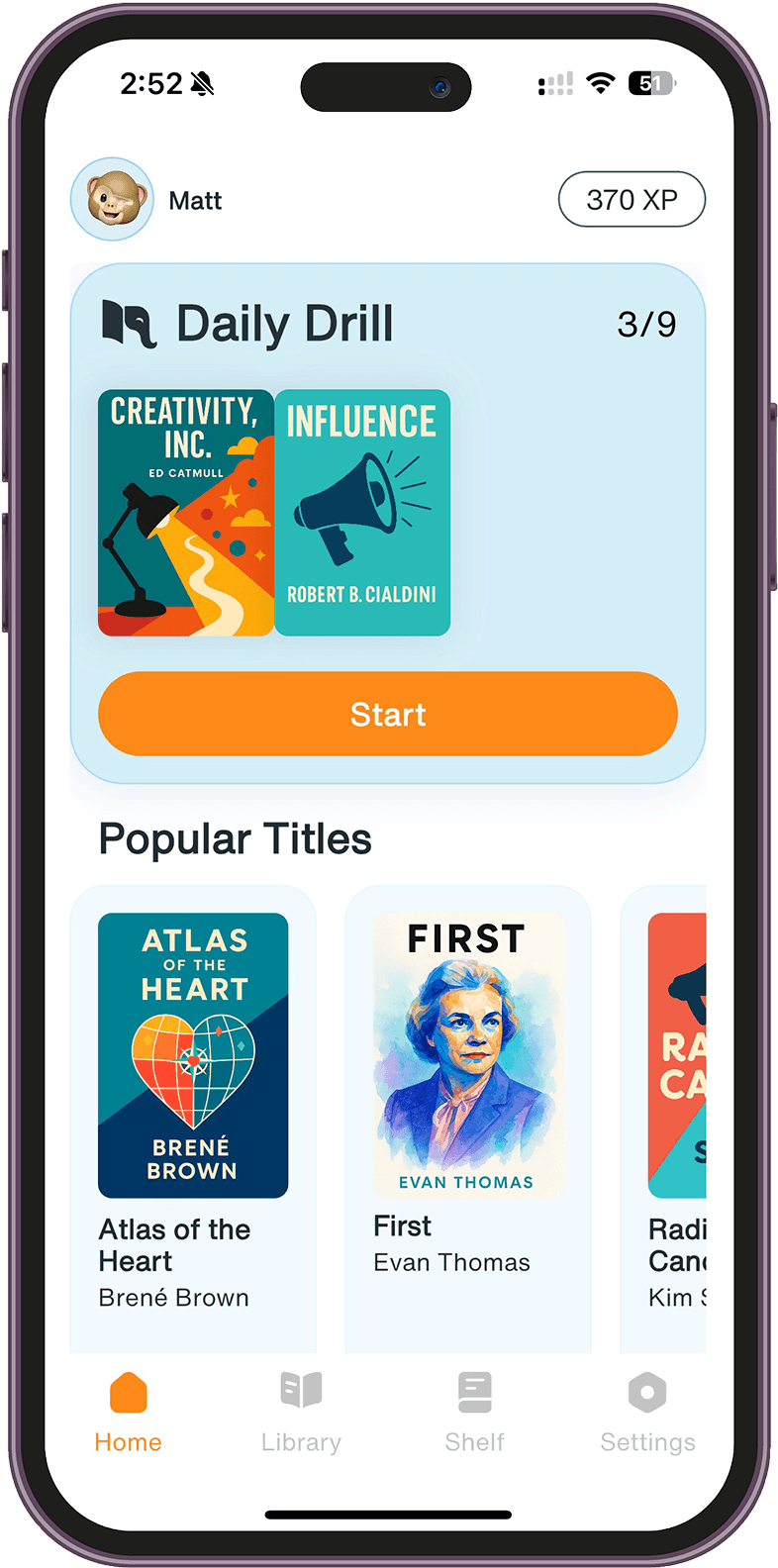
Loxie uses spaced repetition and active recall to help you internalize these concepts so they're available when emotional storms hit. Instead of reading once and hoping the wisdom sticks, you practice for 2 minutes a day with questions that resurface ideas right before you'd naturally forget them.
The insights about why letting go is self-love, about how your worth remains intact regardless of who leaves, about why healing is active rather than passive—these become part of your thinking, not just words you once read. When you're tempted to check their profile or send that text, the reasons not to are available in your mind, not buried in a book you finished months ago.
Loxie includes This Is Me Letting You Go in its topic library, so you can start reinforcing these concepts immediately. The goal isn't just to understand Priebe's wisdom—it's to carry it with you through the messiest moments of recovery, when understanding alone isn't enough.
Frequently Asked Questions
What is the main idea of This Is Me Letting You Go?
The central message is that releasing emotional attachments—whether to people, timelines, or expectations—is an act of self-love and growth rather than defeat. Heidi Priebe argues that healing from heartbreak requires active choices, self-compassion, and the courage to rebuild your identity beyond any single relationship.
What are the key takeaways from This Is Me Letting You Go?
The book emphasizes that your worth isn't determined by who stays or leaves, that new relationships can't heal old wounds, that recovery is non-linear and requires patience, and that the empty space left by endings becomes fertile ground for becoming your authentic self.
How does Heidi Priebe define letting go?
Priebe frames letting go not as giving up on love but as honoring both your own worth and the other person's freedom to choose a different path. It's an act of self-preservation that releases the energy wasted on what no longer serves you, creating space for genuine healing.
Why does Priebe say life timelines are harmful?
Arbitrary milestones like "married by 30" are cultural constructs that force us into boxes that don't fit our authentic selves. Rushing toward these deadlines causes people to settle for wrong partners, stay in unfulfilling situations, and measure themselves against others' incomparable journeys.
How long does it take to heal from heartbreak according to this book?
Priebe emphasizes that healing follows a non-linear path with no fixed timeline. Recovery includes setbacks, unexpected breakthroughs, and periods of stagnation—all normal. Setting realistic expectations that it takes months rather than weeks prevents the self-judgment that compounds heartbreak with shame.
How can Loxie help me remember what I learned from This Is Me Letting You Go?
Loxie uses spaced repetition and active recall to help you retain the key concepts from this book. Instead of reading once and forgetting most of it when emotional storms hit, you practice for 2 minutes a day with questions that resurface ideas right before you'd naturally forget them.
We're an Amazon Associate. If you buy a book through our links, we earn a small commission at no extra cost to you.
Stop forgetting what you learn.
Start learning for good with your 7-day FREE trial.