Unreasonable Hospitality: Key Insights & Takeaways
Master Will Guidara's framework for creating magical experiences that transform customers into lifelong advocates.
by The Loxie Learning Team
What if the secret to business success isn't a better product or lower prices, but making every single person who walks through your door feel like the most important person in the world? Will Guidara's Unreasonable Hospitality chronicles how he transformed Eleven Madison Park from a struggling brasserie into the world's best restaurant—not through culinary innovation alone, but by treating every guest interaction as an opportunity to create magic.
This guide breaks down Guidara's complete framework for radical generosity in business. Whether you run a restaurant, lead a team, or simply want to create more meaningful connections in your work, you'll discover why making people feel genuinely seen and valued isn't just good ethics—it's the most powerful competitive advantage any business can build.
 Start practicing Unreasonable Hospitality free for 7 days ▸
What is unreasonable hospitality and why does it matter?
Unreasonable hospitality is the practice of going far beyond what's expected to create moments that make people feel genuinely cared for and valued as individuals. It transforms ordinary transactions into transformative human connections by breaking the pattern of what people expect from a business interaction.
The key insight is that customers remember how you made them feel long after they forget what you sold them. In an era where products and services are increasingly commoditized, emotional experience has become the primary differentiator. A business that consistently makes people feel special builds an emotional moat that competitors simply cannot replicate—because it's constructed from thousands of personalized human connections rather than operational procedures that can be copied.
This isn't about grand gestures or expensive surprises. Guidara emphasizes that deliberate, thoughtful actions create more impact than scale or expense. What matters is authenticity and personal relevance—showing someone you actually paid attention to them as an individual, not just a customer number.
How do you create moments of delight that customers remember?
Unexpected moments of delight transform ordinary interactions into memorable experiences by breaking patterns and demonstrating that customers matter beyond the transaction. The power lies in surprise—when something happens that a guest didn't anticipate, it creates an emotional imprint far stronger than even excellent expected service.
Creating these moments requires careful observation. Staff must learn to notice guest preferences, body language, and conversational cues that reveal opportunities for personalization. A guest mentioning they're celebrating a birthday, visiting from out of town, or trying a cuisine for the first time—each of these offhand comments is an opportunity to craft something meaningful.
The Dreamweaver role
One of Guidara's most innovative contributions was creating a dedicated "Dreamweaver" position—someone whose sole job was to observe guests, gather information, and orchestrate personalized magical moments. This systematized surprise and delight, turning one-off gestures into a scalable approach. The Dreamweaver would listen for details during service, research guests before they arrived, and coordinate with the team to execute experiences that felt spontaneous but were carefully crafted.
This role demonstrates an important principle: if you want hospitality to be a genuine competitive advantage, you need to build systems and dedicate resources specifically to creating delight. It can't just be something that happens when someone has extra time.
Practice these hospitality principles in Loxie ▸
Why does putting employees first lead to better customer experiences?
Putting employees first creates exceptional guest experiences because team members who feel valued and empowered naturally extend that same care to customers. This principle, which Guidara learned from mentor Danny Meyer, recognizes that hospitality is contagious—you cannot manufacture genuine warmth from people who don't feel genuinely valued themselves.
The logic is straightforward: guests interact primarily with front-line staff, not leadership. If those staff members are burned out, underappreciated, or disengaged, no amount of training scripts or service standards will produce authentic human connection. But when employees feel deeply invested in—when their growth is prioritized, their contributions celebrated, and their ideas valued—they become passionate ambassadors who want to create extraordinary experiences.
Recognition as a performance driver
Recognition and praise build high-performing teams by creating psychological safety, reinforcing desired behaviors, and making team members feel valued. Guidara found that positive reinforcement activates intrinsic motivation and creates a culture where going above and beyond becomes the norm rather than the exception. When excellent hospitality is noticed and celebrated, it multiplies.
Investing unreasonably in team members' growth—their skills, their careers, even their personal dreams—creates a virtuous cycle. Fulfilled employees deliver extraordinary experiences, which attract both loyal guests and top talent who want to work in that environment. Understanding this employee-first philosophy is fundamental to implementing unreasonable hospitality, and Loxie helps you internalize these principles through daily practice so they become instinctive when you're leading your own team.
How do you empower teams to deliver unreasonable hospitality?
Taking complete responsibility for every aspect of the guest experience empowers teams to go beyond their job descriptions and create magical moments by giving them permission to act as owners rather than employees. This ownership mindset shifts people from following rules to actively seeking opportunities to exceed expectations and create delight.
Scaling hospitality excellence requires building systems that empower every team member to make generous decisions, rather than relying on a single leader's presence or charisma. This means creating permission structures that let employees break rules when it serves the guest, dedicating budget for surprise moments, and training everyone to notice the small details that enable personalization.
Breaking down hierarchies
Breaking down hierarchies between front and back of house fosters teamwork and innovative solutions by ensuring every team member feels equally valued in creating the guest experience. In many restaurants, there's a traditional divide between kitchen and dining room. Guidara worked to dismantle this, recognizing that extraordinary hospitality requires seamless collaboration across all functions.
Flat organizational structures enable collaborative hospitality by removing barriers between departments and encouraging cross-functional innovation. When the dishwasher feels as invested in guest happiness as the general manager, and when their input is genuinely valued, you unlock creative problem-solving that rigid hierarchies suppress.
What are the five core practices of unreasonable hospitality?
Unreasonable hospitality succeeds through five core practices: being present with people, personalizing experiences based on careful observation, creating moments of surprise, empowering teams to act generously, and measuring success by emotional impact rather than efficiency metrics.
Being present means giving someone your complete attention during an interaction—not thinking about the next task or scanning the room, but genuinely focusing on the person in front of you. This alone differentiates most businesses, where staff are often distracted or going through motions.
Personalizing experiences requires building systems to capture and act on guest information. What did they mention last time? What are they celebrating? What small detail could show you were paying attention?
Creating surprise means deliberately engineering moments guests don't expect. This is where the Dreamweaver role becomes valuable—having dedicated attention to crafting unexpected delights.
Empowering teams involves giving staff the autonomy, resources, and permission to make generous decisions without seeking approval. If every gesture requires manager sign-off, spontaneity dies.
Measuring emotional impact shifts focus from efficiency metrics (table turns, average check) to how guests felt about their experience. This doesn't mean ignoring business fundamentals, but recognizing that emotional experience ultimately drives the metrics that matter—repeat visits, referrals, and loyalty.
Can you recall all five practices right now?
Understanding hospitality principles intellectually is different from having them available when you're in the moment with a customer. Loxie uses spaced repetition to help these frameworks become second nature—so you don't have to think about what to do, you just do it.
Start retaining what you learn ▸Why must you master fundamentals before breaking rules creatively?
Mastering fundamentals allows teams to break rules creatively because deep expertise in core skills provides the confidence and judgment to know when and how to deviate for guest delight. You can only improvise effectively when the basics are so ingrained that they require no conscious thought.
Strong foundations in service basics enable authentic guest connections by freeing team members from thinking about mechanics. When you're not worried about how to carry plates or remember wine pairings, you can focus fully on reading and responding to individual guest needs. The technical skills become invisible scaffolding that supports genuine human interaction.
This principle applies beyond restaurants. In any field, the people who can break conventions successfully are invariably those who first mastered them. Understanding the rules deeply gives you the wisdom to know which ones matter and which can be bent for the right reasons.
How does purpose drive hospitality decisions?
Identifying and articulating your core purpose drives all hospitality decisions by providing a clear filter for what to do, what not to do, and how to allocate resources for maximum impact. Without a defined purpose, teams default to doing whatever seems nice in the moment, which dilutes focus and wastes resources on gestures that don't reinforce what makes you special.
Purpose-driven leadership aligns team efforts with meaningful outcomes by connecting daily tasks to a larger mission. When everyone understands why the work matters—not just what to do—they make better autonomous decisions and find more intrinsic motivation in their roles. A server who understands the restaurant exists to create magical memories approaches each table differently than one who thinks the job is simply to take orders and deliver food.
Strategic sacrifice for purpose
Strategic closures for reinvention demonstrate how purpose-driven leadership sometimes requires sacrificing success to pursue meaning. Guidara made the seemingly irrational decision to temporarily close the world's best restaurant—at the height of its success—to completely reimagine its purpose and approach. The hardest leadership decisions reveal what truly matters: putting people and purpose before profit or prestige.
This willingness to sacrifice short-term success for long-term purpose is rare, and it's what separates businesses that achieve lasting significance from those that achieve temporary prominence.
How do you rebuild team morale and transform culture?
Rebuilding team morale requires establishing new standards of excellence that inspire pride and purpose, transforming discouraged staff into passionate ambassadors of the organization's vision. When Guidara arrived at Eleven Madison Park, the team was demoralized—the restaurant had potential but lacked direction and energy. The turnaround began with redefining expectations.
Cultural transformation starts with redefining team expectations from merely executing tasks to becoming craftspeople who take pride in creating extraordinary experiences. This shift requires consistent reinforcement through recognition, training, and leadership modeling. It's not enough to announce new standards—you have to demonstrate them daily and celebrate people who embody them.
The transformation isn't quick, and it requires patience with team members who need time to embrace a new way of working. But when people begin to feel the pride that comes from creating genuinely special experiences, momentum builds. Success breeds commitment, which breeds more success.
Why do small surprises create disproportionate impact?
Small surprises create disproportionate emotional impact because they signal genuine care and attention in ways that expensive gestures often cannot. A personalized note, remembering a detail from a previous visit, or a small gift that shows you were listening—these moments often matter more than elaborate productions.
Intentionality amplifies the power of hospitality gestures by ensuring every action serves the goal of making someone feel genuinely seen and valued. It's not about what you spend; it's about demonstrating that you noticed something specific about this person and acted on it. That specificity is what creates emotional resonance.
This is encouraging news for any business because it means unreasonable hospitality doesn't require unreasonable budgets. It requires attention, creativity, and systems that capture the details needed for personalization. The constraint is usually imagination and follow-through, not money.
How does hospitality create sustainable competitive advantage?
Exceptional service creates an emotional moat that competitors cannot replicate because it's built on thousands of personalized human connections rather than operational procedures that can be copied. A competitor can replicate your menu, your décor, even your service standards—but they cannot replicate the relationships your team has built with guests over time.
A relationship-first approach builds sustainable competitive advantage because emotional connections create barriers to competition that price, location, or product features cannot match. Guests who feel genuinely cared for develop loyalty that transcends rational comparison shopping. They become advocates who actively recommend you to others.
Hospitality excellence builds competitive moats through the compound effect of memorable experiences. Each positive interaction increases the likelihood of return visits, referrals, and forgiveness when something occasionally goes wrong. Over time, this compounds into a reputation that becomes self-reinforcing.
How do hospitality principles apply during crisis?
During crises, hospitality principles of genuine care and creative generosity become survival strategies by maintaining human connections when normal operations fail. The strong relationships built through years of unreasonable hospitality become lifelines during disruptions, with guests and team members rallying to support the business.
When Eleven Madison Park faced the COVID-19 pandemic and had to close its dining room, the team pivoted to preparing meals for frontline healthcare workers. This wasn't a marketing strategy—it was the natural extension of a culture built around caring for people. The hospitality mindset simply found a new outlet.
Crises reveal whether hospitality values are genuine or performative. Organizations that have truly internalized these principles find creative ways to serve even when circumstances make normal service impossible. And the goodwill generated during difficult times strengthens relationships for when normal operations resume.
Can hospitality principles work outside restaurants?
Hospitality principles apply universally across industries and organizations because every business is fundamentally about serving people and creating meaningful experiences. Whether you're running a dental practice, leading a software team, or managing a retail store, the core insight holds: people remember how you made them feel long after they forget what you sold them.
The specific applications differ, but the underlying framework transfers. Careful observation of client preferences. Personalized touches that show you were paying attention. Empowering team members to make generous decisions. Measuring success by relationship quality, not just transaction volume. These principles work anywhere humans interact with humans.
We've entered an era where emotional experience drives business value because customers have unlimited choices and will choose brands that make them feel special. Technology has commoditized products and services, making the human element the remaining differentiator. Organizations that understand this—regardless of industry—have a significant advantage.
The real challenge with Unreasonable Hospitality
Here's the uncomfortable truth: you probably won't remember most of what you just read. Research on memory shows that within a week, we forget roughly 80% of new information—even insights that feel transformative in the moment. How many books have you read that felt life-changing but you can't recall three key points from now?
The concepts in Unreasonable Hospitality are powerful, but they only create value when you can access them in the moments that matter. When you're designing a customer experience, managing a difficult team situation, or looking for ways to surprise and delight—that's when you need these frameworks available, not locked away in a book you read once.
How Loxie helps you actually remember what you learn
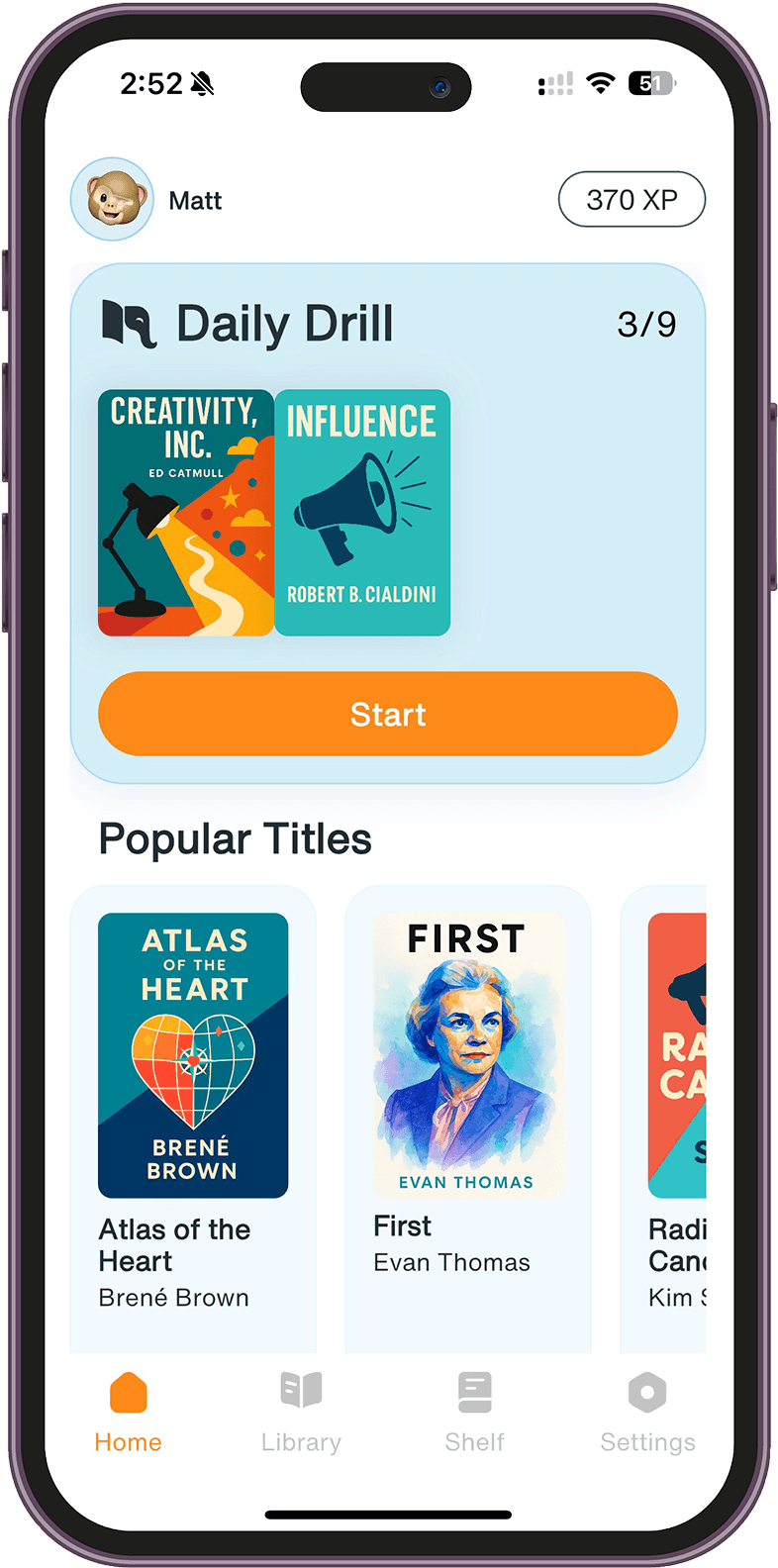
Loxie uses spaced repetition and active recall—the two most scientifically validated learning techniques—to help you retain the key concepts from Unreasonable Hospitality. Instead of reading the book once and watching the ideas fade, you practice for just 2 minutes a day with questions that resurface concepts right before you'd naturally forget them.
Loxie includes Unreasonable Hospitality in its full topic library. You can start reinforcing the five core practices, the Dreamweaver concept, and the employee-first philosophy immediately—building genuine retention that makes these ideas available when you're actually interacting with customers and leading teams.
Frequently Asked Questions
What is the main idea of Unreasonable Hospitality?
The central idea is that going far beyond expected service to make people feel genuinely seen and valued transforms ordinary business transactions into memorable experiences. This radical generosity creates emotional connections that build sustainable competitive advantage—customers remember how you made them feel long after they forget what you sold them.
What are the key takeaways from Unreasonable Hospitality?
The key takeaways include: put employees first because their care naturally extends to guests; create systems for surprise and delight like the "Dreamweaver" role; master fundamentals before breaking rules creatively; let purpose drive decisions; and recognize that small, personalized gestures often create more impact than expensive grand gestures.
What is the Dreamweaver role in Unreasonable Hospitality?
The Dreamweaver is a dedicated position focused solely on observing guests, gathering information, and orchestrating personalized magical moments. This role systematizes surprise and delight by having someone whose entire job is crafting unexpected experiences, turning spontaneous gestures into a scalable approach to hospitality excellence.
How can I apply unreasonable hospitality principles in my business?
Start by training your team to observe and remember customer details. Create permission structures that let employees make generous decisions without approval. Dedicate resources specifically to creating unexpected moments of delight. Measure success by relationship quality, not just transaction metrics. And always put team member experience first—their genuine care will flow to customers.
Does unreasonable hospitality work outside restaurants?
Yes—these principles apply universally because every business serves people. Whether you run a dental practice, lead a software team, or manage retail, the core insight holds: people remember how you made them feel. The specific applications differ, but careful observation, personalization, and empowering teams to be generous work in any industry.
How can Loxie help me remember what I learned from Unreasonable Hospitality?
Loxie uses spaced repetition and active recall to help you retain the key concepts from Unreasonable Hospitality. Instead of reading the book once and forgetting most of it, you practice for 2 minutes a day with questions that resurface ideas right before you'd naturally forget them. Loxie includes Unreasonable Hospitality in its full topic library.
We're an Amazon Associate. If you buy a book through our links, we earn a small commission at no extra cost to you.
Stop forgetting what you learn.
Start learning for good with your 7-day FREE trial.