Best Anki Alternatives for Book Lovers in 2025
You love the idea of Anki. You just don't want to build 500 flashcards yourself.
Matthew Metzger

Former Fortune 200 VP of Learning
The Problem
Why Anki Doesn't Work for Most Book Readers
The best Anki alternatives for book lovers include Loxie for pre-built content, Readwise for highlights, Quizlet for searchable decks, and Brainscape for curated flashcards.
Anki is powerful, but most people quit within weeks - building flashcards for every book you read is exhausting. If you want spaced repetition without the DIY burden, these alternatives offer an easier path to retention (which is why Loxie tops this list).
Top Pick
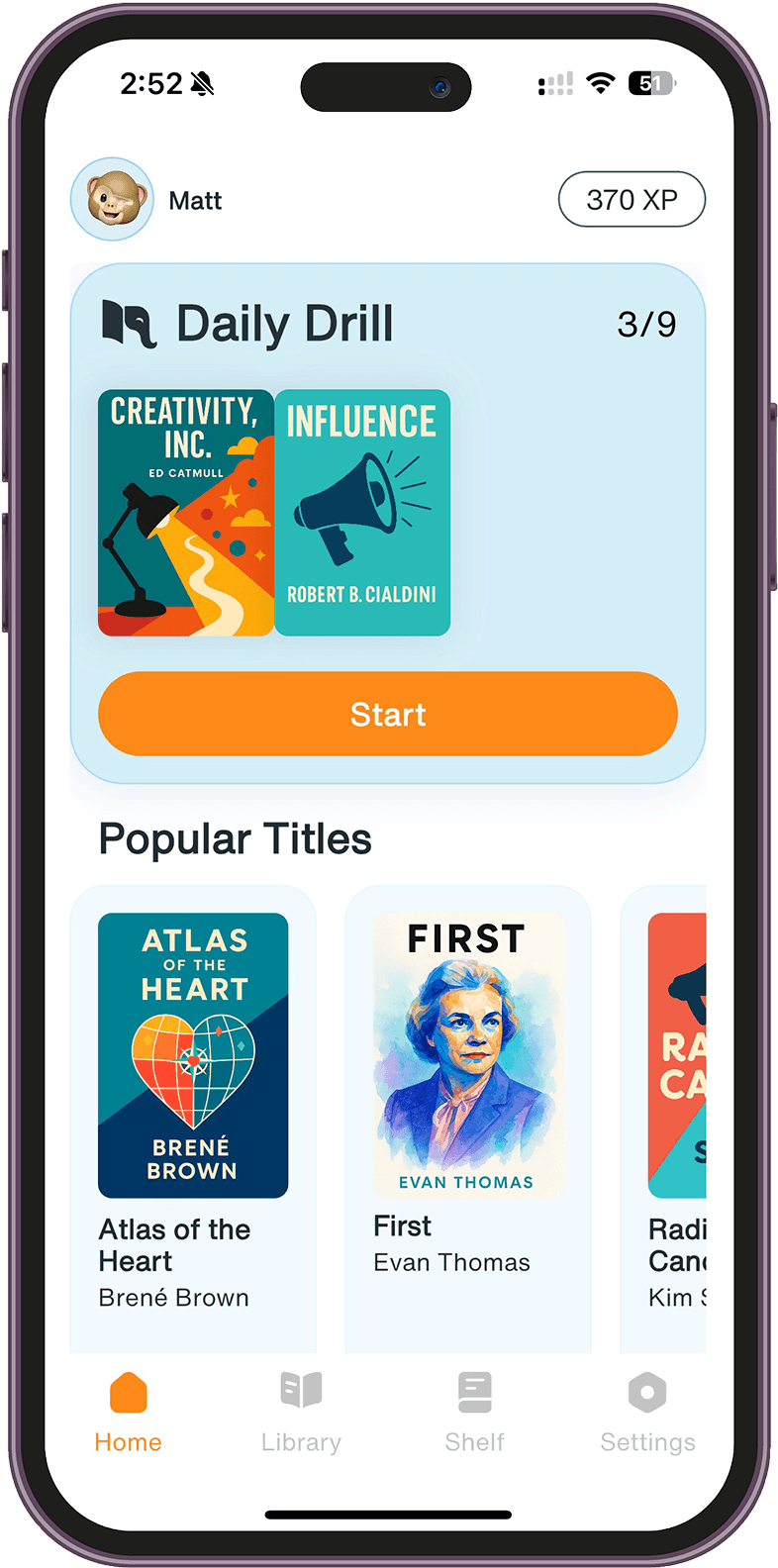
Loxie – Best Anki Alternative for Book Retention
What it is: Loxie is a retention app built specifically for book readers and lifelong learners. It uses the same core principles as Anki – spaced repetition and active recall – but provides the content for you.
How it works: You add books to your shelf, and Loxie generates questions based on key concepts. Each day, you complete a short Daily Drill that resurfaces material at optimal intervals. Questions progress across three levels, from basic recall to application and synthesis.
What makes it different: No card creation required. Loxie covers hundreds of popular nonfiction titles across business, self-help, health, religion, and more. You finish a book, add it to your shelf, and start retaining immediately.
Limitations: The catalogue is curated rather than comprehensive – hundreds of books rather than thousands. If you're looking for a specific title, check the current catalogue first. New books are added regularly.
Best for: Readers who want Anki's retention benefits without building their own system. People who read across multiple topics and want everything in one place.
Pricing: Free 7-day trial. Pro ($59.99/year or $7.99/month)* unlocks unlimited drills and advanced features.
Try it: loxie.app
For Highlight Collectors
Readwise – Best for Resurfacing What You Highlighted
What it is: Readwise pulls highlights from Kindle, Apple Books, and other reading apps into one place, then resurfaces them daily via email or their app.
How it works: Connect your reading sources and Readwise syncs your highlights automatically. You get a daily batch of past highlights to review, and you can tag, search, and export them.
What makes it different: If you already highlight heavily, Readwise ensures those highlights don't disappear. It's the best tool for consolidating notes across platforms.
Limitations: Readwise resurfaces highlights passively – you're recognizing, not retrieving. This is less effective for long-term retention than active recall. It also only works with content you've highlighted yourself, so you need good highlighting habits to begin with.
Best for: Heavy highlighters who want their notes organized. Readers who use multiple platforms and want a single repository.
Pricing: Lite ~$5.59/month, Full ~$9.99/month (billed annually).*
For Simplicity
Quizlet – Best for Simple Flashcard Creation
What it is: Quizlet is a popular flashcard platform with a simpler interface than Anki. It's widely used by students but works for general learning too.
How it works: Create flashcards manually or search for existing sets made by other users. Study using various modes including Learn, Test, and Match.
What makes it different: Quizlet is easier to get started with than Anki. The interface is modern, the mobile app is polished, and there's a large library of user-generated content.
Limitations: For book retention specifically, you still need to create your own cards – Quizlet's existing library skews heavily toward academic subjects, not nonfiction books. The spaced repetition algorithm is also less sophisticated than Anki's.
Best for: People who want a simpler flashcard tool than Anki and don't mind creating their own cards.
Pricing: Free with ads. Quizlet Plus is $7.99/month or $35.99/year.*
For Expert Content
Brainscape – Best for Professionally-Made Flashcards
What it is: Brainscape combines user-generated flashcards with certified, expert-created content in specific subjects.
How it works: Study using their confidence-based repetition system. Rate how well you know each card, and Brainscape adjusts the schedule accordingly.
What makes it different: The certified content is high quality – actual experts create the decks. The app is more polished than Anki and easier to navigate.
Limitations: The certified library focuses on academic subjects, professional certifications, and language learning – not popular nonfiction books. For book retention, you'd still need to build your own decks.
Best for: Learners studying specific professional topics where Brainscape has certified content. People who want a more user-friendly Anki experience.
Pricing: Free tier available. Pro from ~$7.99/month.*
For Power Users
RemNote / Obsidian – Best for Note-Takers Who Want Flashcards
What it is: RemNote and Obsidian (with plugins) combine note-taking with built-in spaced repetition. You take notes, then convert key points into flashcards without leaving the app.
How it works: As you take notes, you mark certain items as flashcards. The app then schedules reviews using spaced repetition, similar to Anki.
What makes it different: If you already take detailed book notes, these tools let you turn those notes into flashcards more seamlessly than exporting to Anki.
Limitations: You still have to do the work of creating the flashcards – the app just makes the workflow smoother. These tools also have their own learning curves and work best for people who enjoy building elaborate note-taking systems.
Best for: Serious note-takers who want flashcard functionality integrated into their workflow. People who enjoy building personal knowledge systems.
Pricing: RemNote has a free tier; Pro is ~$8/month. Obsidian is free; spaced repetition requires community plugins.
The Verdict
Which Anki Alternative Should You Use?
It depends on what frustrated you about Anki:
If the problem is creating cards: Loxie. Content is pre-built for hundreds of books. You add a title and start practicing.
If you just want to revisit your highlights: Readwise. It won't quiz you, but it keeps your notes accessible and surfaces them regularly.
If Anki's interface is the issue: Quizlet or Brainscape. Both are more user-friendly, though you'll still create your own book content.
If you want flashcards embedded in your notes: RemNote or Obsidian. Good for power users who already take detailed notes.
The core question is whether you want to build a system or use one that's already built. Anki is powerful, but it requires significant upfront and ongoing investment. If you've tried and bounced off that approach, an app with pre-built content might be a better fit.
FAQ
Frequently Asked Questions
Is there an Anki alternative with pre-made book content? Loxie is the main option. It provides spaced repetition questions for hundreds of nonfiction books – no card creation required. Other apps like Quizlet and Brainscape have user-generated content, but very little of it covers popular nonfiction titles.
Is Quizlet easier than Anki? Yes. Quizlet has a more modern interface and is simpler to get started with. However, its spaced repetition algorithm is less sophisticated, and for book retention you'd still need to create your own flashcards.
Can I import my Anki decks somewhere else? Some apps support Anki imports, but compatibility varies. If you've already invested time building Anki decks, you might be better off sticking with Anki and using a friendlier interface like AnkiDroid or AnkiMobile.
What's the best free Anki alternative? Anki itself is free on desktop and Android. If you want something easier to use, Quizlet and Brainscape both have free tiers. Loxie also offers a free 7-day trial with daily drills.
Why do people quit Anki? Usually one of three reasons: the interface feels dated and confusing, creating quality flashcards takes too much time, or the review backlog becomes overwhelming after missing a few days. Apps with pre-built content solve the second problem. Apps with more forgiving algorithms solve the third.
Can I use Anki just for some things and another app for books? Absolutely. Many people use Anki for language learning (where community decks are plentiful) and a different tool for book retention. Use whatever works for each use case.
*App prices change frequently and may vary by region or promotional offers. We've included approximate pricing to help you compare, but always check the official app or website for current rates before subscribing.