Best Apps for People Who Forget Books They Read
You've read hundreds of books. How many can you actually recall?
Matthew Metzger

Former Fortune 200 VP of Learning
The Problem
You're Not Bad at Reading. You're Normal.
The best apps for people who forget books include Loxie for effortless retention, Readwise for highlight review, Anki for DIY flashcards, and Notion for note organization.
If you finish books and forget them within weeks, you're not bad at reading - you're normal. Research shows humans forget up to 90% of new information within a month. The solution isn't reading more; it's retaining better (which is why Loxie, built for exactly this problem, is our top pick).
Top Pick
Loxie – Best App for Remembering Books
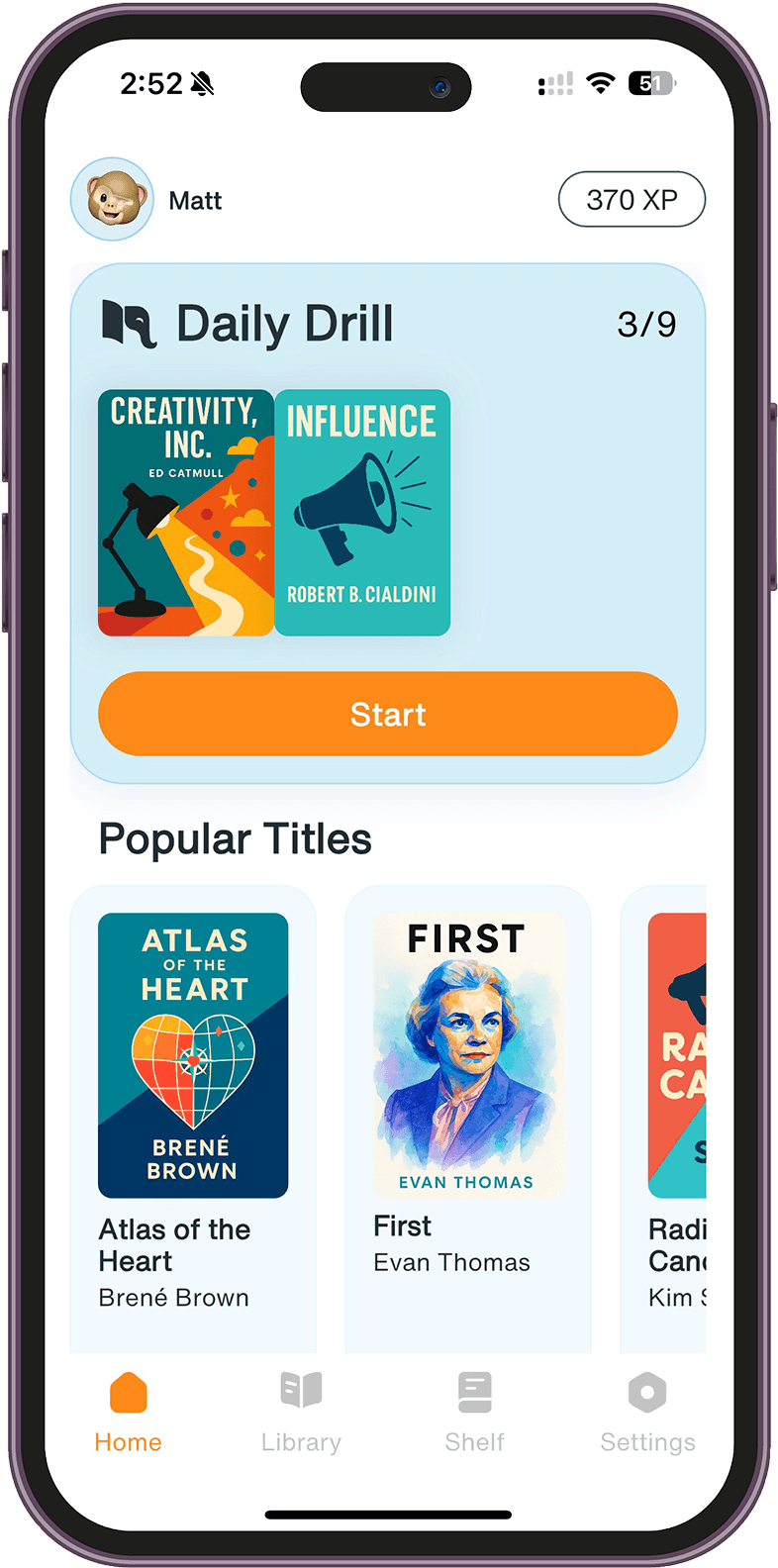
What it is: Loxie is a learning and retention app built for people who read to grow – and want that growth to last. It combines free learning resources (video overviews, podcast-style deep dives, written summaries) with spaced repetition drills that help you remember.
How it works: Browse the catalogue, explore a book through Loxie's free content, then add it to your shelf. Each day, Loxie serves you a short drill – questions designed to strengthen your memory at optimal intervals. The app handles all the scheduling using proven cognitive science.
What makes it different: Most reading apps help you consume more. Loxie helps you retain more. The free learning resources give you exposure; the daily drills turn that exposure into lasting memory. No flashcard creation required – the content is built for you.
Limitations: The catalogue covers hundreds of popular nonfiction titles rather than thousands. Check the current catalogue to see if your books are included. New books and learning resources are added regularly.
Best for: Readers frustrated by forgetting. People who've read great books but can't recall the key ideas. Anyone who wants their reading investment to pay long-term dividends.
Pricing: Learning resources (videos, podcasts, overviews) are free. Retention drills are free for 7 days, then Pro ($59.99/year or $7.99/month)* unlocks unlimited drills and advanced features.
Try it: loxie.app
For Highlight Review
Readwise – Best for Revisiting What You Highlighted
What it is: Readwise syncs highlights from Kindle, Apple Books, and other reading apps, then resurfaces them daily via email or their app.
How it works: Connect your reading sources and your highlights appear in one searchable library. Readwise sends you a daily batch of past highlights to review.
What makes it different: If you highlight while reading, Readwise ensures those highlights don't disappear. It's the best tool for consolidating and resurfacing your personal annotations.
Limitations: Passive review (seeing highlights again) is less effective than active recall (being quizzed) for long-term retention. You'll recognize the highlight but may not remember it when you need it. Also requires you to highlight consistently while reading.
Best for: Heavy highlighters who want organized, searchable notes. Readers who already have a highlighting habit they want to leverage.
Pricing: Lite ~$5.59/month, Full ~$9.99/month (billed annually).*
For DIY Systems
Anki – Best for Building Your Own Retention System
What it is: Anki is a free, open-source flashcard app with a powerful spaced repetition algorithm used by medical students, language learners, and dedicated self-educators.
How it works: After reading a book, you create flashcards for key concepts. Anki schedules reviews based on how well you remember each card, showing difficult cards more frequently.
What makes it different: Anki's algorithm is battle-tested and highly customizable. If you're willing to invest the time, it's incredibly effective.
Limitations: You have to build all the flashcards yourself – after every book. This requires time, skill (knowing what's worth remembering), and ongoing maintenance. Most people try Anki and abandon it within weeks because the overhead is too high.
Best for: People who enjoy building systems. Readers with the discipline to create and maintain flashcards for every book they read.
Pricing: Free on desktop, Android, and AnkiWeb. iOS app is ~$25 (one-time).*
For Book Notes
Notion / Obsidian – Best for Organizing What You've Read
What it is: Note-taking apps that let you build elaborate systems for capturing book notes, connecting ideas, and creating personal knowledge bases.
How it works: After finishing a book, you write notes summarizing key ideas, then organize them with tags, links, or databases. Some readers build "book note templates" they complete for every title.
What makes it different: Total control over your notes. You can link ideas across books, add your own insights, and build a searchable archive of everything you've read.
Limitations: Writing notes doesn't equal remembering them. Without active review, your notes become a reference library you rarely revisit. Studies show that even well-organized notes don't prevent forgetting – you need active retrieval practice for that.
Best for: People who want a searchable reference of what they've read. Readers who enjoy the process of synthesizing and organizing ideas.
Pricing: Both have free tiers. Paid plans typically $8-12/month.
For Reading More
Goodreads – Best for Tracking (Not Retaining)
What it is: Goodreads is a social cataloguing platform for tracking books you've read, want to read, and are currently reading.
How it works: Log books, write reviews, set reading goals, and see what friends are reading. The platform also offers recommendations based on your reading history.
What makes it different: Social accountability can motivate you to read more. The yearly reading challenge is popular for building reading habits.
Limitations: Goodreads helps you track what you've read, not remember it. Logging a book as "read" doesn't mean you retained anything from it. The reviews you write might help a bit, but there's no structured retention system.
Best for: People who want to read more and track their reading habit. Social readers who enjoy seeing what others are reading.
Pricing: Free.
The Verdict
Which App Should You Use?
It depends on what's driving your forgetting problem:
If you want to remember books without building a system: Loxie. Free learning resources for exposure, daily drills for retention. No flashcard creation required.
If you already highlight heavily: Readwise. It won't actively quiz you, but it ensures your highlights don't disappear.
If you enjoy building systems: Anki. Powerful but requires significant ongoing investment.
If you want organized book notes: Notion or Obsidian. Great for reference, but notes alone don't prevent forgetting.
If you just want to track your reading: Goodreads. Useful for accountability, but doesn't address retention.
The uncomfortable truth is that reading more doesn't mean retaining more. If you've read dozens of books and can only vaguely recall a handful, the issue isn't your reading – it's the absence of a retention practice. Adding even a few minutes of active recall per day can change that.
FAQ
Frequently Asked Questions
Why do I forget books so quickly? It's not you – it's the forgetting curve. Without active reinforcement, humans forget most new information within weeks. This is true regardless of intelligence, interest, or how much you enjoyed the book. The only solution is deliberate retention practice.
Will highlighting more help me remember? Slightly, but not much. Highlighting is passive. Research shows active recall (being tested on information) is far more effective for long-term memory than passive review (re-reading highlights). Highlighting helps you find information later; it doesn't help you remember it.
How much time does retention practice take? With an app like Loxie, about 2-5 minutes per day. The app handles scheduling so you're reviewing the right material at the right time. Consistency matters more than volume.
Should I take notes on every book? Only if you find it valuable for understanding or reference. Notes alone don't prevent forgetting – you need active retrieval practice for that. If you take notes, consider reviewing them actively (quizzing yourself) rather than just re-reading.
Can I recover books I've already forgotten? Yes. If you've read a book before, relearning the key concepts is faster than learning them the first time. Use Loxie's free resources (video overview, podcast, written summary) to refresh your memory, then add the book to your shelf for ongoing retention.
What's the minimum effective retention practice? Even brief daily practice makes a significant difference. The key is consistency and active recall – being asked questions rather than passively reviewing. A few minutes every day beats an hour once a month.
*App prices change frequently and may vary by region or promotional offers. We've included approximate pricing to help you compare, but always check the official app or website for current rates before subscribing.