Best Apps to Remember What You Learn in 2026
You're learning plenty. You're just not retaining it. These apps change that.
Matthew Metzger

Former Fortune 200 VP of Learning
The Problem
Why You Forget Most of What You Learn
The best apps to remember what you learn include Loxie for books and topics, Anki for custom flashcards, Quizlet for academic subjects, and Brainscape for certifications.
Most learning apps focus on consumption - courses, videos, summaries. Few focus on what happens after: remembering it. Research on the forgetting curve shows most information fades within days (which is why Loxie, with its built-in spaced repetition, is our top pick).
This guide covers the apps that actually help you retain.
Top Pick
Loxie – Best for Retaining What You Learn
What it is: Loxie is a retention app that helps you remember topics and skills using spaced repetition and active recall – two techniques backed by over a century of cognitive science research.
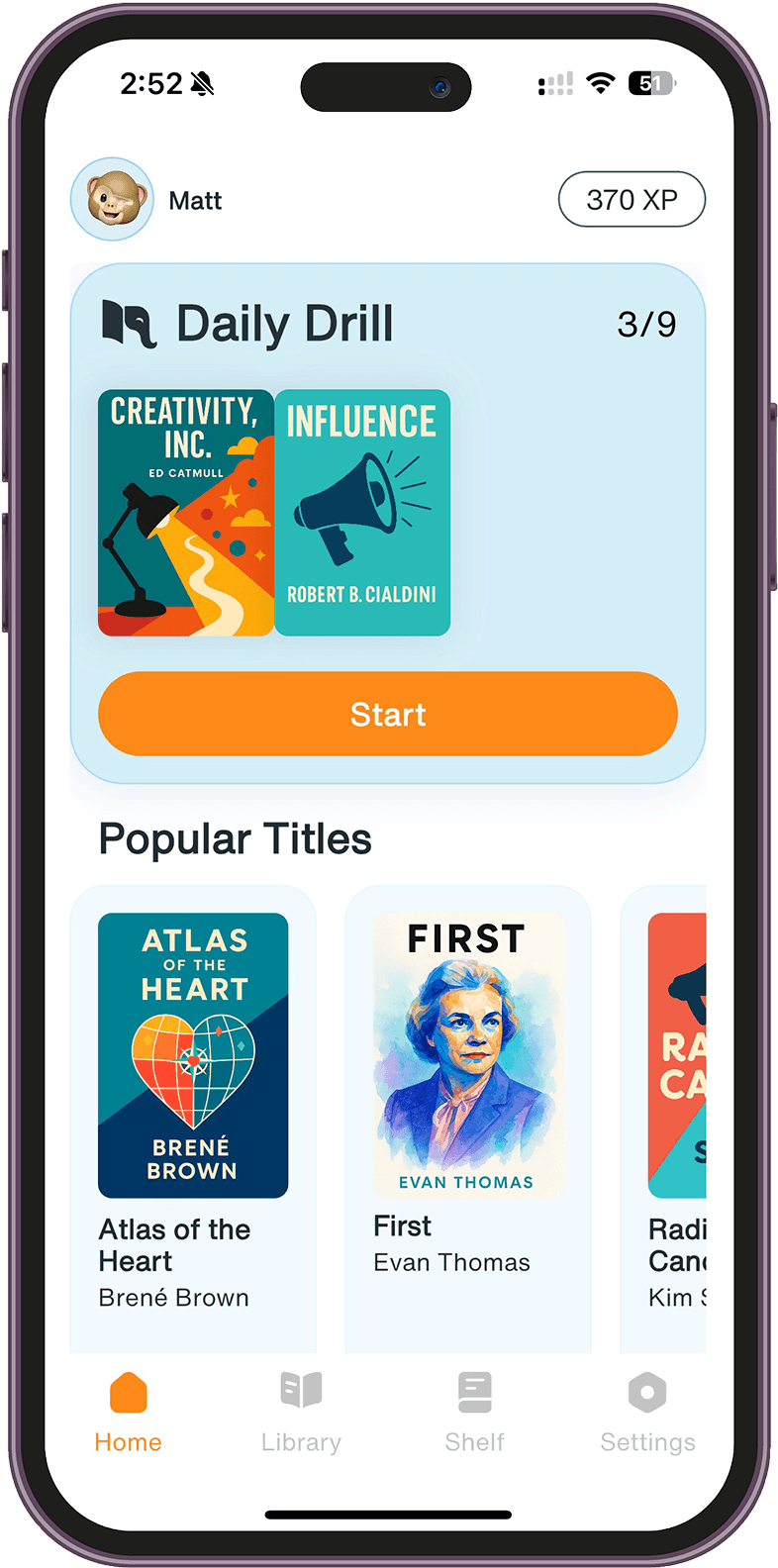
How it works: You add topics to your shelf (anything from Business Communication to Biblical Studies to Whiskey Tasting), and Loxie serves you a daily drill – a few questions designed to strengthen your memory at optimal intervals.
What makes it different: Unlike flashcard apps where you build your own cards, Loxie provides the content. It covers hundreds of topics across categories like business, health, hobbies, religion, and personal development. You just show up and practice.
Limitations: The content library is curated rather than exhaustive – hundreds of topics rather than thousands. Check the current catalogue to see if your area of interest is covered. New content is added regularly.
Best for: Lifelong learners who want to retain knowledge without building a system. Professionals developing new skills. Anyone tired of forgetting what they spent time learning.
Pricing: Free 7-day trial with daily drills. Pro ($59.99/year or $7.99/month)* unlocks unlimited drills, advanced question levels, and ad-free experience.
Try it: loxie.app
For DIY Flashcards
Anki – Best for Building Your Own System
What it is: Anki is a free, open-source flashcard app with a powerful spaced repetition algorithm. It's popular among medical students, language learners, and serious self-educators.
How it works: You create your own flashcards (or download community decks), then Anki schedules reviews based on how well you remember each card. Cards you struggle with appear more often.
What makes it different: Anki's algorithm is highly customizable and battle-tested. Power users swear by it. It's also free on desktop and Android.
Limitations: Anki has a steep learning curve. The interface feels dated. Most importantly, you have to create all your own cards – which is time-consuming and requires you to already understand what's worth remembering. Many people start strong and abandon it within weeks.
Best for: People who enjoy building systems. Users who want full control. Those willing to invest significant upfront time for long-term payoff.
Pricing: Free on desktop, Android, and AnkiWeb. iOS app is ~$25 (one-time).*
For Students
Quizlet – Best for Academic Flashcards
What it is: Quizlet is a flashcard platform with millions of user-generated study sets. It's widely used by students for test prep.
How it works: Search for existing flashcard sets or create your own. Study using various modes including Learn, Test, and Match.
What makes it different: Quizlet has a massive library of pre-made content, mostly created by students. If you're studying for a class, there's probably already a deck for it.
Limitations: Quizlet is built for academic cramming, not lifelong learning. Content quality varies wildly since it's user-generated. The platform skews heavily toward school subjects – not professional development, hobbies, or the diverse topics adult learners care about.
Best for: Students preparing for exams. People who want access to pre-made academic flashcard sets.
Pricing: Free with ads. Quizlet Plus is $7.99/month or $35.99/year.*
For Certified Content
Brainscape – Best for Professional Certifications
What it is: Brainscape is a flashcard app that combines user-generated decks with certified, professionally-made content in subjects like languages, law, medicine, and professional certifications.
How it works: Study using their confidence-based repetition system. Rate how well you know each card, and Brainscape adjusts review frequency accordingly.
What makes it different: The certified content is created by actual experts. The app is more polished than Anki and easier to get started with.
Limitations: For topics outside their certified library, you're back to building your own flashcards. The best content requires a Pro subscription.
Best for: Professionals studying for certifications (PMP, bar exam, medical boards). Learners who want expert-created flashcard decks in specific fields.
Pricing: Free tier available. Pro from ~$7.99/month.*
For Courses
Notion / Note-Taking Apps – Best for Capturing, Not Retaining
What it is: Apps like Notion, Obsidian, and Evernote let you take notes, organize information, and build personal knowledge bases.
How it works: You capture notes while learning, then organize them with tags, links, or databases. Some users build elaborate "second brain" systems.
What makes it different: These tools excel at capturing and organizing information. For reference material you need to look up (not memorize), they're excellent.
Limitations: Taking notes doesn't equal remembering them. Research consistently shows that passive review – even well-organized passive review – doesn't build long-term memory. You need active recall for that. A beautiful Notion database is still just a graveyard if you never revisit it actively.
Best for: Reference material you'll search, not memorize. People building project documentation or research archives.
Pricing: Most have free tiers. Paid plans typically $8-15/month.
The Verdict
Which App Should You Use?
It depends on how you want to learn:
If you want to retain knowledge without building a system: Loxie. Topics are ready to go, scheduling is automatic, and it takes just a few minutes a day.
If you want full control and don't mind the work: Anki. Powerful but requires significant investment to set up and maintain.
If you're studying for a specific certification: Brainscape. Check if they have certified content for your field first.
If you're a student cramming for exams: Quizlet. Built for that purpose.
If you need to organize reference material: Notion or similar. Just don't expect to remember it without active practice.
The uncomfortable truth is that most learning tools help you consume or capture information – not retain it. If retention is the goal, you need an app built specifically around active recall and spaced repetition.
That's why we built Loxie.
FAQ
Frequently Asked Questions
Which app is best if I don't want to make my own flashcards? Loxie. It's the only app on this list that provides pre-built retention content for topics and skills. You add a topic to your shelf and start practicing immediately – no card creation required.
What's the difference between active recall and passive review? Passive review means reading or looking at information again. Active recall means retrieving it from memory (like answering a question). Research consistently shows active recall builds stronger, longer-lasting memories. Loxie, Anki, Quizlet, and Brainscape all use active recall. Note-taking apps don't.
Do any of these apps work for professional development? Loxie covers professional topics like leadership, communication, financial literacy, and productivity. Brainscape has certified content for specific certifications. Anki can work if you're willing to build your own decks. Quizlet skews academic.
What's the cheapest way to retain what I learn? Anki is free on desktop and Android. Loxie offers a free 7-day trial. Both use spaced repetition. The difference is whether you want to build your own content (Anki) or use pre-built content (Loxie).
Can I use these apps together? Yes. Some people use Notion to capture and organize notes, then Loxie or Anki to actively retain the key points. Capture and retention are different problems – different tools can solve each.
How much time does retention practice actually take? With Loxie, about 2-5 minutes per day. The app handles scheduling so you're reviewing the right material at the right time. Consistency matters more than volume.
*App prices change frequently and may vary by region or promotional offers. We've included approximate pricing to help you compare, but always check the official app or website for current rates before subscribing.