Best Blinkist Alternatives (That Help You Actually Remember)
Book summaries are great for exposure. But what if you want to retain the ideas?
Matthew Metzger

Former Fortune 200 VP of Learning
The Problem
The Blinkist Paradox: More Books, Less Retention
The best Blinkist alternatives include Loxie for free summaries plus retention, Headway for gamified learning, Shortform for detailed breakdowns, and YouTube for free overviews.
Blinkist offers quick book summaries - but you'll forget them just as fast as full books. Loxie offers similar content (video overviews, podcast deep dives, written summaries) for free, plus spaced repetition to make it stick (which is why it's our top pick).
This guide compares your options.
Top Pick
Loxie – Best for Remembering Books (Not Just Summarizing Them)
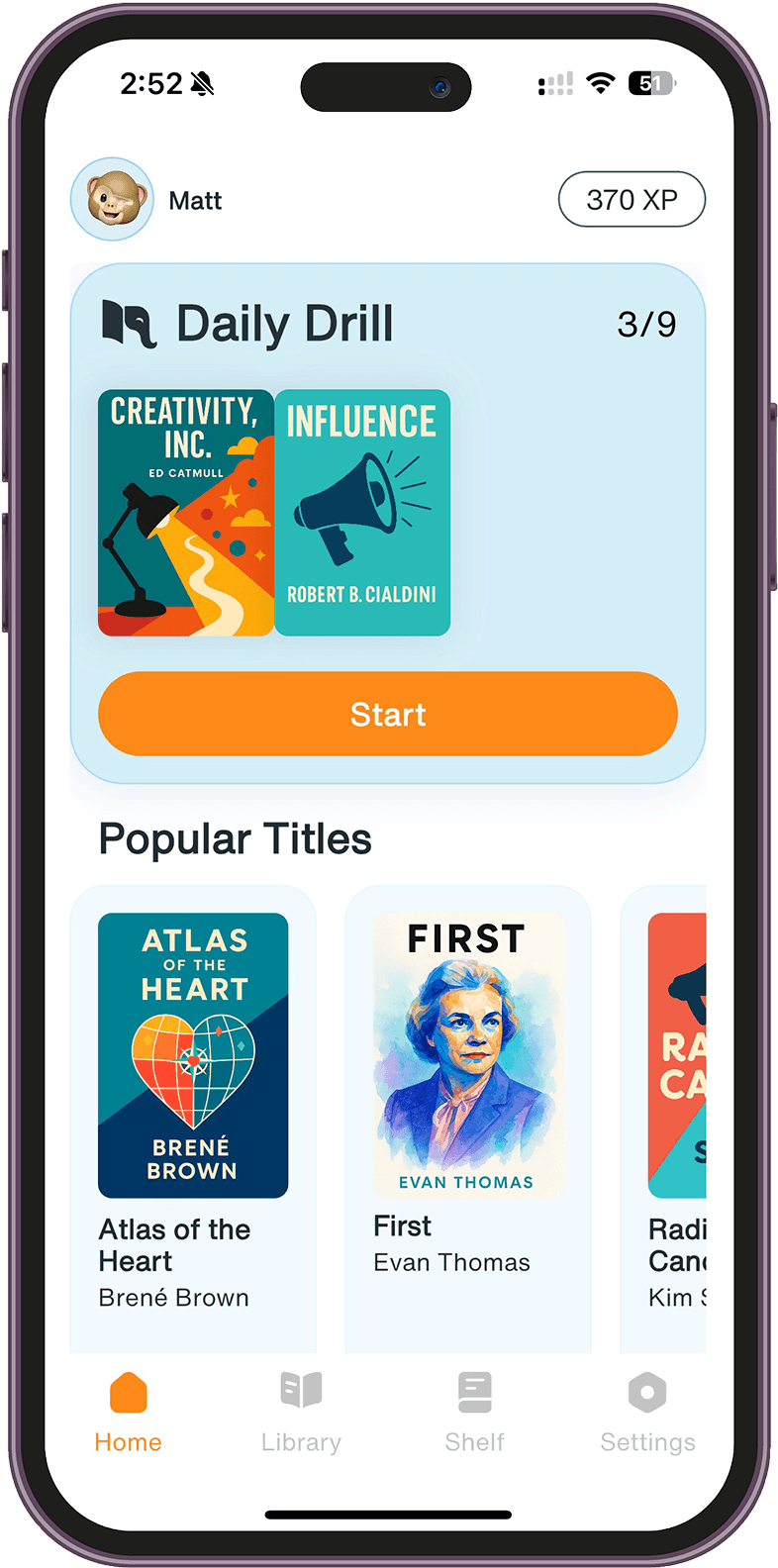
What it is: Loxie is a learning app that combines content and retention. You get video overviews, podcast-style deep dives, and readable summaries for many titles – plus spaced repetition drills to help you actually remember what you learned.
How it works: Explore a book or topic through Loxie's free learning resources (videos, podcasts, written overviews), then add it to your shelf. Loxie serves you daily questions based on key concepts, using active recall to build long-term memory.
What makes it different: Most apps do consumption OR retention. Loxie does both. You can learn about a book through the overview content, then lock in the ideas through daily practice. The learning resources are free; the retention drills are free for 7 days, then Pro.
Limitations: The content library is curated rather than massive – hundreds of books and topics rather than thousands. Check the current catalogue to see what's available. New content (including videos, podcasts, and overviews) is added regularly.
Best for: Readers who want both exposure and retention in one place. People tired of forgetting books. Anyone who's realized that consuming content isn't the same as remembering it.
Pricing: Learning resources (videos, podcasts, overviews) are free. Retention drills are free for 7 days, then Pro ($59.99/year or $7.99/month)* unlocks unlimited drills and advanced features.
Try it: loxie.app
For More Summaries
Headway – Best Budget Blinkist Alternative
What it is: Headway offers book summaries similar to Blinkist, with text and audio formats plus some gamification features like daily challenges and streaks.
How it works: Browse the library, pick a title, and read or listen to the summary. The app includes bite-sized insights, quizzes, and visual summaries for some titles.
What makes it different: Headway is typically cheaper than Blinkist and includes some interactive elements that Blinkist lacks. The quiz feature adds a light retention layer, though it's not true spaced repetition.
Limitations: Like Blinkist, it's primarily a consumption tool. The quizzes help a bit, but one-time exposure – even with a quiz – doesn't create long-term memory. You'll still forget most of what you "read."
Best for: People who want Blinkist-style summaries at a lower price. Those who like gamification features.
Pricing: ~$89.99/year.*
For Deeper Summaries
Shortform – Best for Comprehensive Book Guides
What it is: Shortform provides longer, more detailed book summaries than Blinkist – more like study guides than quick overviews.
How it works: Each summary includes chapter breakdowns, key concepts, practical exercises, and sometimes commentary comparing the book to other works on the topic.
What makes it different: Shortform goes deeper. If Blinkist is a tweet, Shortform is an essay. You get more context, more nuance, and actionable exercises for some titles.
Limitations: Still a consumption tool – you're reading about the book rather than actively retaining it. The depth is nice, but without spaced repetition or active recall, you'll forget most of it within weeks. Also more expensive than Blinkist.
Best for: People who find Blinkist too shallow. Readers who want study-guide-level depth without reading the full book.
Pricing: ~$24.99/month or ~$199/year.*
For Audio Learners
Audible – Best for Full Audiobooks
What it is: Audible is Amazon's audiobook platform with the largest library of full-length audiobooks.
How it works: Subscribe for credits, use credits to buy audiobooks, listen at your pace. Many titles include whispersync to switch between reading and listening.
What makes it different: You get the full book, not a summary. The depth and nuance that summaries strip out is preserved. For many readers, audiobooks make it possible to "read" books during commutes, workouts, and chores.
Limitations: Audiobooks still face the forgetting curve. Listening to a full book is better than skimming a summary, but without active review, you'll still forget most of it. Also, audiobooks require more time commitment than summaries.
Best for: People who want the full book experience. Audio learners who have time during commutes or exercise. Those who value depth over speed.
Pricing: ~$14.95/month for 1 credit. Additional credits available.*
For Free Content
YouTube / Podcasts / Loxie – Best for Free Book Overviews
What it is: YouTube and podcast platforms have thousands of free book summaries, author interviews, and concept explanations. Loxie also offers free video overviews, podcast-style deep dives, and written summaries for hundreds of titles.
How it works: On YouTube or podcast apps, search for a book title plus "summary" or "key ideas" and you'll find multiple options. On Loxie, browse the catalogue and access curated learning resources directly in the app – no subscription required.
What makes it different: YouTube and podcasts are abundant but unorganized. Quality varies wildly and you're hunting for content. Loxie's resources are curated and consistent, plus they connect directly to retention drills if you want to take the next step.
Limitations: Free YouTube/podcast content has no curation or retention features. Loxie's free content is limited to titles in their catalogue – check the current catalogue to see what's available.
Best for: People on a tight budget who still want quality. Those who want to preview a book before buying. Anyone who prefers video or audio learning but also wants the option to retain what they learn.
Pricing: YouTube and podcasts are free (ad-supported). Loxie's learning resources are free; retention features are free for 7 days, then Pro.
The Verdict
Which Blinkist Alternative Should You Use?
It depends on what you're actually trying to do:
If you want consumption and retention in one place: Loxie. Free video overviews, podcast deep dives, and written summaries – plus spaced repetition drills to make the ideas stick.
If you want cheaper summaries: Headway. Similar to Blinkist with a lower price tag.
If you want deeper summaries: Shortform. More like study guides than quick overviews.
If you want the full book in audio: Audible. No substitute for the real thing.
If you want free overviews: YouTube, podcasts, or Loxie. YouTube and podcasts are abundant but uneven. Loxie's free resources are curated and connect to retention tools.
Here's the honest take: most summary apps solve an exposure problem, not a retention problem. They help you learn about more books. They don't help you remember them. Loxie is the rare option that addresses both.
FAQ
Frequently Asked Questions
Is Blinkist worth it? If you want quick exposure to book ideas and don't care about long-term retention, Blinkist is fine. But if you're hoping to remember what you learn, research shows that one-time consumption – even of well-crafted summaries – doesn't build lasting memory.
Can I use Blinkist and Loxie together? Yes. Use Blinkist for titles Loxie doesn't cover yet. Use Loxie's free learning resources for titles it does cover, then use the retention drills to make the ideas stick. Or use both for consumption and just Loxie for retention – whatever works.
What's the cheapest Blinkist alternative? Loxie's video overviews, podcast deep dives, and written summaries are completely free. YouTube and podcasts are also free but less curated. Headway is typically the cheapest paid option.
Do book summaries actually work? They work for exposure – getting the gist of a book quickly. They don't work for retention. Studies on the forgetting curve apply equally to summaries and full books. Without active reinforcement, you'll forget most of what you consume within weeks.
Why do people cancel Blinkist? Common reasons: realizing they don't remember the summaries they've "read," the novelty wearing off, or the subscription feeling wasteful when they're not using it regularly. Some switch to free alternatives; others decide to read full books instead.
Is reading a summary as good as reading the book? No. Summaries strip out nuance, stories, and context that make ideas memorable and applicable. But a summary you engage with is better than a full book you never finish. The real question is whether you'll remember either one – and that's where retention tools come in.
*App prices change frequently and may vary by region or promotional offers. We've included approximate pricing to help you compare, but always check the official app or website for current rates before subscribing.