Best Learning Apps in 2026
The apps that help you learn - and the one that helps you remember.
Matthew Metzger

Former Fortune 200 VP of Learning
The Problem
Learning Apps Have a Retention Problem
The best learning apps in 2026 include Blinkist for book summaries, Coursera for online courses, Duolingo for languages, Anki for DIY flashcards, and Loxie for retention.
But most learning apps share a hidden flaw: they help you consume knowledge without helping you remember it. Research shows people forget up to 70% of new information within 24 hours (which is why Loxie is our top pick).
This guide covers both types - consumption apps and retention apps - and how to use them together.
Top Pick
Loxie – Best Learning App for Retention
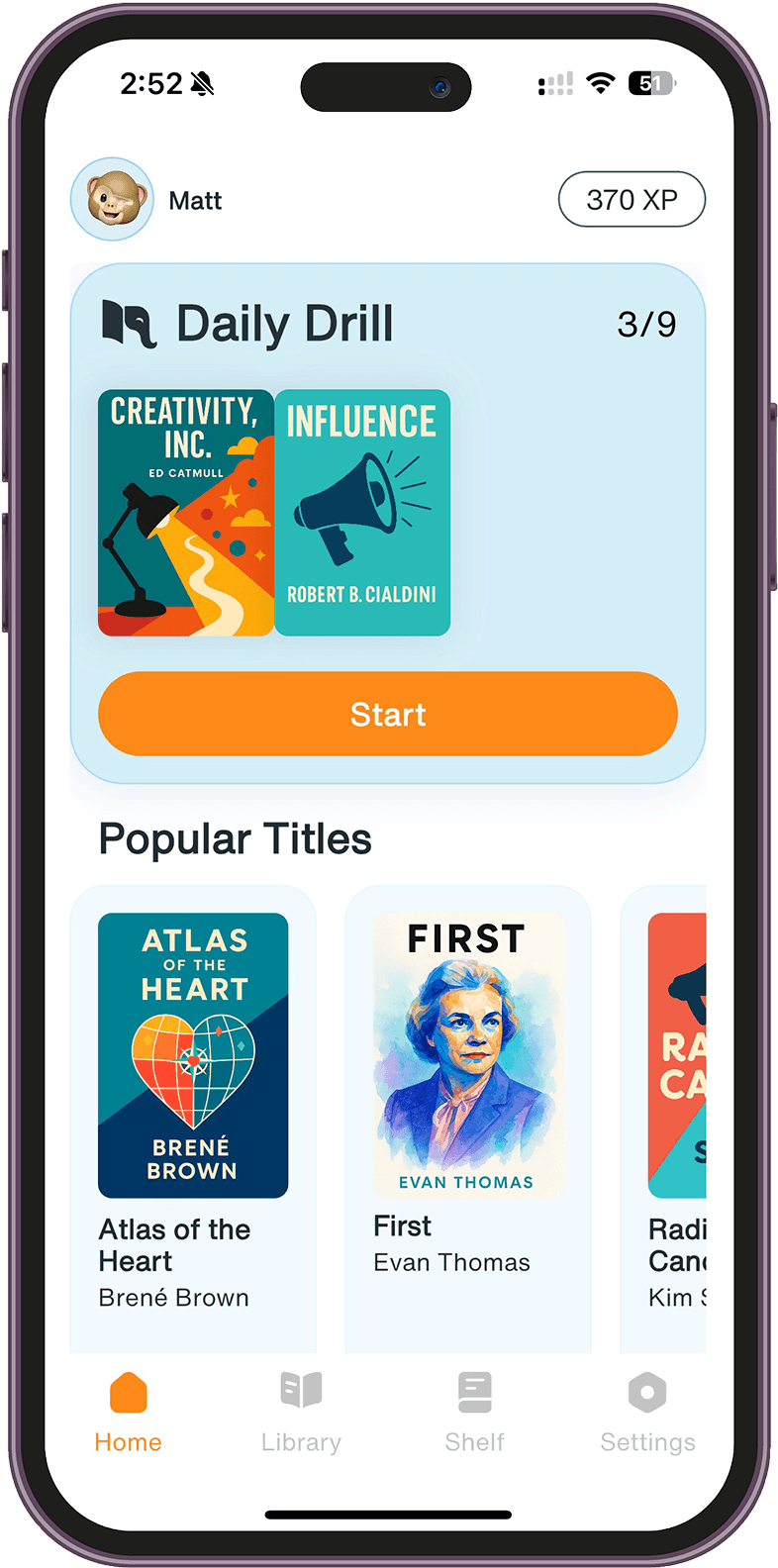
What it is: Loxie is a learning and retention app that helps you actually remember what you learn. It combines free learning content (8-10 minute video overviews, 30-45 minute podcast deep dives, written summaries) with spaced repetition drills based on cognitive science.
How it works: Browse topics across business, leadership, money, health, relationships, religion, hobbies, and more. Learn through free videos, podcasts, and summaries. Then add topics to your shelf and practice with daily drills - questions timed to catch information right before you forget it.
What makes it different: Most learning apps stop at consumption. Loxie adds the retention layer. You don't just hear ideas once - you practice retrieving them until they stick. And unlike flashcard apps, you don't build the content yourself. It's ready to go.
Limitations: The catalogue covers hundreds of books and topics rather than thousands. Check the current catalogue to see what's available.
Best for: Lifelong learners who read books and explore topics. Anyone tired of forgetting what they learn. People who want retention without building flashcard systems.
Pricing: All learning content is free. Retention drills are free for 7 days, then Pro ($59.99/year or $7.99/month)* unlocks unlimited drills and advanced features.
Try it: loxie.app
For Book Summaries
Blinkist – Best for Consuming Book Ideas Quickly
What it is: Blinkist offers 15-minute summaries of popular nonfiction books in text and audio format. It's designed to help you get the key ideas from books without reading the full version.
How it works: Browse their library of thousands of titles, pick a book, and read or listen to the summary. Each "Blink" distills a book into its core concepts.
What makes it different: Massive library. Professional production quality. Good for previewing books before buying or refreshing ideas from books you've already read.
Limitations: Consumption only - no retention features. You'll forget the summary just as fast as you'd forget the book. The problem isn't that books are too long; it's that you forget what you learn.
Best for: People who want quick exposure to book ideas. Readers deciding what to read next.
Pricing: $99.99/year ($8.33/month).* Free trial available.
For Online Courses
Coursera – Best for Structured Learning from Universities
What it is: Coursera offers online courses, certificates, and degrees from top universities and companies. Subjects range from data science to psychology to business.
How it works: Enroll in courses that include video lectures, readings, quizzes, and assignments. Some courses are free to audit; certificates and degrees require payment.
What makes it different: Credentialed learning from institutions like Stanford, Yale, and Google. Structured curriculum with deadlines and peer interaction. Certificates that carry weight on resumes.
Limitations: Courses require significant time commitment - weeks or months. Completion rates are notoriously low. And finishing a course doesn't mean you'll remember the material six months later.
Best for: People seeking credentials or structured education. Career changers who need verifiable skills. Learners who thrive with deadlines and accountability.
Pricing: Free to audit most courses. Certificates ~$49-99 per course. Subscriptions ~$59/month.*
For Languages
Duolingo – Best for Learning a New Language
What it is: Duolingo is a gamified language learning app covering 40+ languages. It's the most popular language app in the world.
How it works: Complete short daily lessons that teach vocabulary, grammar, and pronunciation through games, stories, and speaking exercises. Streaks and leaderboards keep you motivated.
What makes it different: Free and genuinely fun. The gamification works - people actually stick with it. Covers everything from Spanish to Klingon.
Limitations: Gets you to conversational basics, not fluency. Heavy on translation exercises, lighter on real conversation practice. The game mechanics can become the goal rather than actual language ability.
Best for: Beginners starting a new language. People who need gamification to stay consistent. Casual learners who want steady progress in small doses.
Pricing: Free with ads. Super Duolingo ~$12.99/month or ~$83.99/year.*
For DIY Flashcards
Anki – Best for Building Your Own Retention System
What it is: Anki is a free, open-source flashcard app with a sophisticated spaced repetition algorithm. It's the tool of choice for medical students, language learners, and serious self-educators.
How it works: Create your own flashcards or download community decks. Anki schedules reviews at optimal intervals based on how well you remember each card.
What makes it different: The most powerful spaced repetition algorithm available. Completely free on desktop and Android. Total control over your learning system.
Limitations: Steep learning curve. You build all your own content - which takes significant time and requires knowing what's worth remembering. Most people who try Anki quit within weeks.
Best for: Power users who enjoy building systems. Medical and law students with clear material to memorize. People willing to invest significant upfront time.
Pricing: Free on desktop, Android, and web. iOS app ~$25 (one-time).*
For Note-Taking
Notion – Best for Capturing Ideas (Not Retaining Them)
What it is: Notion is a flexible workspace for notes, databases, wikis, and project management. Many learners use it to organize notes from books, courses, and research.
How it works: Create pages and databases to store whatever you're learning. Link ideas together. Build a "second brain" of connected notes.
What makes it different: Incredibly flexible - it can be whatever you need it to be. Great for organizing large amounts of information. Strong for project management alongside learning.
Limitations: Capturing information isn't the same as retaining it. A beautiful Notion database of book notes doesn't mean you remember any of it. Without active recall, notes become a graveyard of forgotten ideas.
Best for: People who need to organize research or projects. Those who want a central hub for all their information. Learners who will pair note-taking with actual retention practice.
Pricing: Free tier available. Plus ~$10/month.*
The Verdict
Which Learning App Should You Use?
Different apps solve different problems:
For book summaries: Blinkist gives you the ideas quickly.
For structured courses: Coursera provides credentialed, curriculum-based learning.
For languages: Duolingo makes daily practice a game.
For DIY retention: Anki gives you full control if you're willing to build the system.
For organizing notes: Notion captures everything in one place.
For actually remembering what you learn: Loxie.
Here's the honest take: most learning apps are consumption tools. They help you access information, but they don't help you retain it. You finish the course, close the app, and forget most of it within weeks.
Retention requires a different approach - active recall and spaced repetition. You can build that system yourself with Anki, or you can use something like Loxie where the content is already built.
The best learning stack isn't one app. It's a consumption tool for input (Blinkist, Coursera, podcasts, books) paired with a retention tool for output (Loxie, Anki). Learn it once, remember it forever.
FAQ
Frequently Asked Questions
What's the best free learning app? Duolingo for languages, Coursera for auditing courses, and Loxie for book and topic learning. Duolingo and Coursera have robust free tiers; Loxie's learning content is free, with a 7-day free trial for retention drills. Anki is completely free on desktop and Android.
Why do I forget everything I learn? It's biology, not a personal failing. The "forgetting curve" shows humans lose most new information within days unless they actively review it. Retention requires practice, not just exposure.
What's the difference between learning and retention apps? Learning apps help you consume information - watch a video, take a course, read a summary. Retention apps help you remember it through techniques like spaced repetition and active recall.
Can I use multiple learning apps together? Yes - and you probably should. Use consumption tools (Blinkist, Coursera, podcasts) to learn new material, then use a retention tool (Loxie, Anki) to make it stick. They solve different problems.
What is spaced repetition? A study technique where you review information at increasing intervals - right before you'd naturally forget it. It's backed by over a century of cognitive science research and is the most efficient way to build long-term memory.
Is Duolingo actually effective? For building vocabulary and basic grammar, yes. For reaching fluency, you'll need to supplement with conversation practice, immersion, or other resources. It's a great starting point, not a complete solution.
What's the best learning app for busy people? Loxie requires just 2-5 minutes per day for retention practice. Duolingo lessons take about 5 minutes. Blinkist summaries are 15 minutes. All designed for people with limited time.
*App prices change frequently and may vary by region or promotional offers. We've included approximate pricing to help you compare, but always check the official app or website for current rates before subscribing.