Best Spaced Repetition Apps in 2026
The science of memory is settled. These apps apply it.
Matthew Metzger

Former Fortune 200 VP of Learning
The Science
Why Spaced Repetition Works
The best spaced repetition apps include Loxie for pre-built content, Anki for full customization, Quizlet for students, Brainscape for certifications, and Memrise for languages.
Spaced repetition is the most research-backed technique for long-term memory - Hermann Ebbinghaus proved it in 1885, and modern studies confirm it. The question isn't whether it works; it's which app makes it easiest (which is why Loxie, with no flashcard creation required, is our top pick).
Top Pick
Loxie – Best Spaced Repetition App for Books and Topics
What it is: Loxie is a learning and retention app that applies spaced repetition to books and topics – without requiring you to build flashcards. It also offers free learning content: 8-10 minute video overviews, 30-45 minute podcast deep dives, and written summaries.
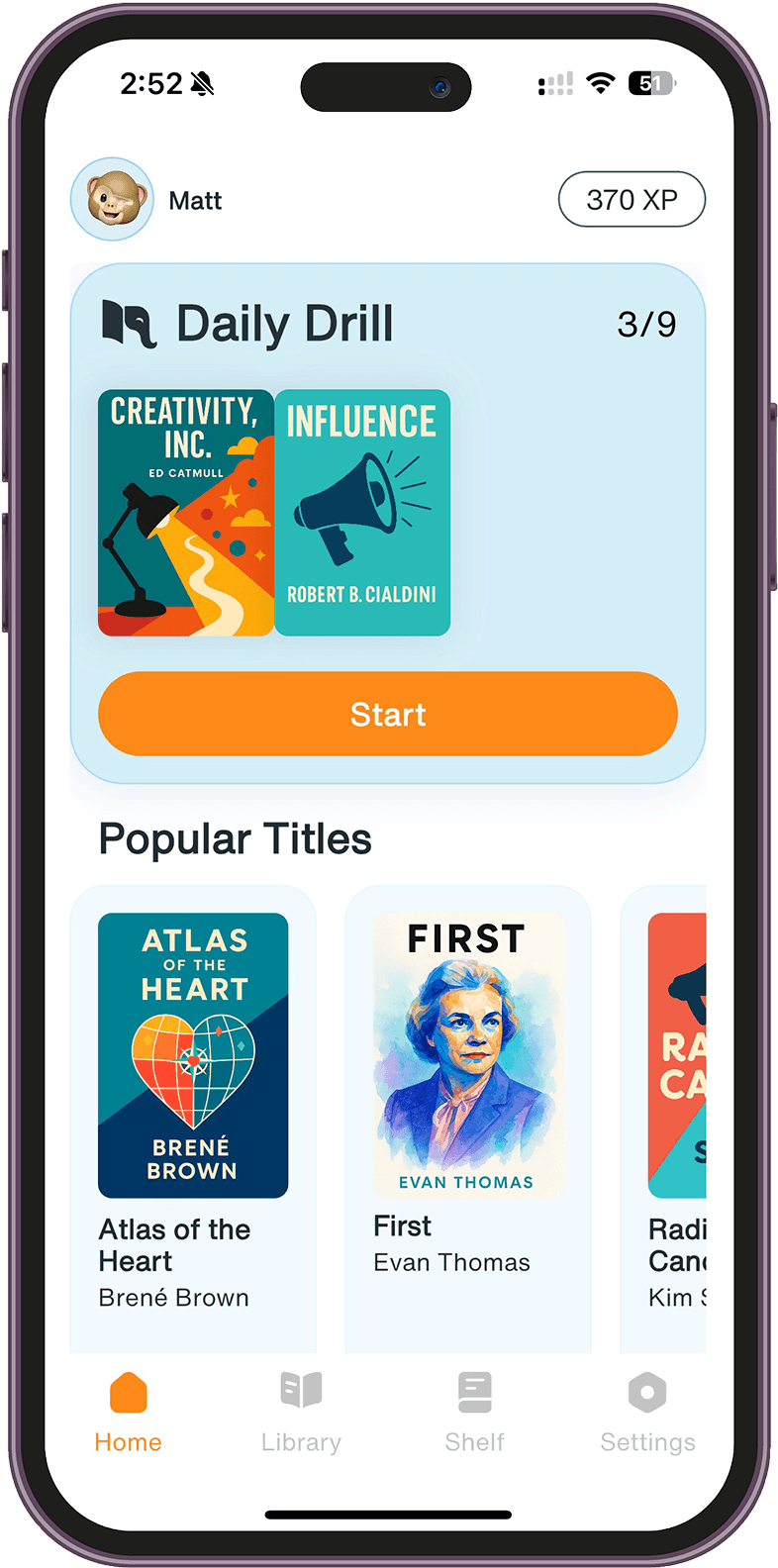
How it works: Add books or topics to your shelf, and Loxie handles the rest. Each day, you complete a short Daily Drill – questions timed to strengthen your memory at optimal intervals. Questions progress across difficulty levels as you master the material.
What makes it different: Most spaced repetition apps require you to create your own flashcards. Loxie provides the content. You get the benefits of spaced repetition without the overhead of building and maintaining a card library.
Limitations: The catalogue covers hundreds of books and topics rather than thousands. Check the current catalogue to see what's available. For subjects outside the catalogue, you'd need a DIY tool like Anki.
Best for: Readers and lifelong learners who want spaced repetition without the setup work. People learning from books, professional development, or personal interests.
Pricing: Learning content is free. Retention drills have a free trial. Pro ($59.99/year or $7.99/month)* for unlimited drills and advanced features.
Try it: loxie.app
For DIY Flashcards
Anki – Best Spaced Repetition App for Power Users
What it is: Anki is the gold standard for spaced repetition flashcards. It's free, open-source, and used by medical students, language learners, and serious self-educators worldwide.
How it works: You create flashcards (or download community decks), and Anki schedules reviews based on how well you remember each card. The algorithm is highly customizable – you can tune intervals, ease factors, and more.
What makes it different: Anki's algorithm is battle-tested across millions of users. The customization options are unmatched. And it's completely free on desktop and Android.
Limitations: Steep learning curve. The interface feels dated. Most importantly, you create all your own cards – which requires significant time and skill. Many people start Anki and abandon it within weeks because the overhead is too high.
Best for: Power users who want full control. Medical students, language learners, and anyone willing to invest heavily in building their own system.
Pricing: Free on desktop, Android, and AnkiWeb. iOS app is ~$25 (one-time).*
For Students
Quizlet – Best Spaced Repetition for Academic Studying
What it is: Quizlet is a flashcard platform with millions of user-generated study sets. It includes a "Learn" mode that applies spaced repetition principles.
How it works: Search for existing flashcard sets or create your own. The Learn mode adapts to your performance, showing cards you struggle with more frequently.
What makes it different: Massive library of pre-made academic content. If you're studying for a class, someone has probably already created a deck. The interface is modern and approachable.
Limitations: The spaced repetition algorithm is less sophisticated than Anki's. Content quality varies wildly since it's user-generated. The platform skews heavily toward academic subjects – less useful for professional development or personal learning.
Best for: Students preparing for exams. Anyone who wants access to pre-made academic flashcard sets.
Pricing: Free with ads and limits. Quizlet Plus is $7.99/month or $35.99/year.*
For Certifications
Brainscape – Best Spaced Repetition for Professional Content
What it is: Brainscape combines user-generated flashcards with certified, expert-created content for specific subjects like languages, law, medicine, and professional certifications.
How it works: Study using their confidence-based repetition system. Rate how well you know each card (1-5), and Brainscape adjusts the schedule accordingly. Cards you rate lower appear more frequently.
What makes it different: The certified content is high quality – actual experts create the decks. The interface is more polished and user-friendly than Anki.
Limitations: For topics outside their certified library, you're back to building your own flashcards. The best content requires a Pro subscription.
Best for: Professionals studying for certifications (PMP, bar exam, medical boards). Learners who want expert-created content in specific fields.
Pricing: Free tier available. Pro from ~$7.99/month.*
For Languages
Memrise – Best Spaced Repetition for Language Learning
What it is: Memrise is a language learning app that uses spaced repetition along with video clips of native speakers, mnemonics, and gamification.
How it works: Choose a language and work through courses that introduce vocabulary and phrases. The app schedules reviews using spaced repetition and reinforces learning with video clips showing real native speakers.
What makes it different: The native speaker videos help with pronunciation and real-world usage. The gamification makes daily practice feel less like a chore.
Limitations: Focused exclusively on languages – not useful for other subjects. The free tier is limited; full features require a subscription.
Best for: Language learners who want spaced repetition with multimedia reinforcement.
Pricing: Free tier available. Pro ~$8.49/month or ~$59.99/year.*
The Verdict
Which Spaced Repetition App Should You Use?
It depends on what you're learning and how much setup you're willing to do:
If you want spaced repetition without building flashcards: Loxie. Pre-built content for books and topics, plus free learning resources. Add something to your shelf and start practicing.
If you want full control and customization: Anki. The most powerful algorithm, but you build everything yourself.
If you're a student with academic subjects: Quizlet. Massive library of pre-made content for classes and exams.
If you're studying for professional certifications: Brainscape. Expert-created decks for specific fields.
If you're learning a language: Memrise or a dedicated language app. Spaced repetition plus pronunciation and native speaker content.
The science behind spaced repetition is clear – it works. The question is which implementation fits your life. Apps that require you to build flashcards work great for people who enjoy that process. For everyone else, apps with pre-built content remove the barrier that causes most people to quit.
FAQ
Frequently Asked Questions
What is spaced repetition? A learning technique where you review material at increasing intervals over time. Instead of cramming, you space out your practice – reviewing right before you'd forget. This dramatically improves long-term retention compared to massed practice.
Is spaced repetition better than regular studying? Yes, for memorization. Hundreds of studies confirm that spaced practice produces better long-term retention than cramming or massed practice. The effect is large and consistent across different subjects and age groups.
Do I have to make my own flashcards? Not anymore. Apps like Loxie, Quizlet, and Brainscape offer pre-built content. Loxie covers books and topics; Quizlet has academic subjects; Brainscape has professional certifications. Anki requires DIY but has community-shared decks.
How much time does spaced repetition take? Typically 5-15 minutes per day, depending on how much material you're learning. The key is consistency – short daily sessions beat occasional long sessions.
Why do people quit Anki? Usually the overhead: creating quality flashcards is time-consuming, the interface is confusing, and falling behind creates an overwhelming review backlog. Apps with pre-built content solve the first problem; apps with more forgiving algorithms solve the third.
Can I use spaced repetition for books? Yes. Loxie applies spaced repetition specifically to book content – no card creation required. Alternatively, you can create your own flashcards in Anki after reading, though most people find this too time-intensive to sustain.
What's the best free spaced repetition app? Anki is free on desktop and Android. Loxie's learning content is free and the retention drills have a free trial. Quizlet and Brainscape have limited free tiers.
*App prices change frequently and may vary by region or promotional offers. We've included approximate pricing to help you compare, but always check the official app or website for current rates before subscribing.