Loxie vs Anki: Curated Content vs DIY
One gives you the system. The other makes you build it.
Matthew Metzger

Former Fortune 200 VP of Learning
Overview
Two Approaches to the Same Science
Loxie and Anki both use spaced repetition and active recall – the two most research-backed techniques for long-term memory. The science underneath is identical. The experience of using them is completely different.
Anki gives you a powerful, customizable engine and says: "Build whatever you want." You create the flashcards, organize the decks, and configure the settings. Total control, total responsibility.
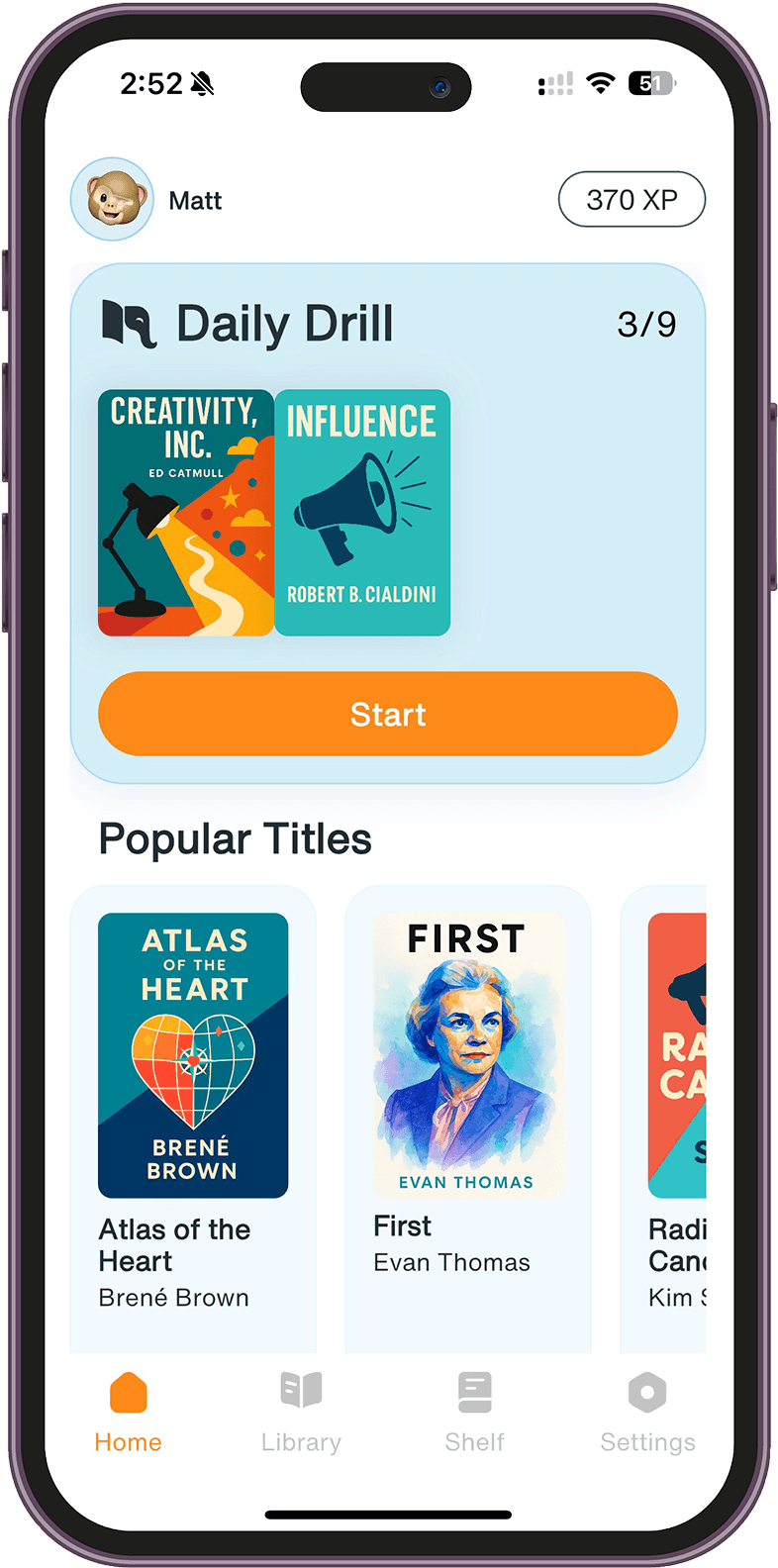
Loxie gives you a curated library and says: "We've built it for you." The content exists. The questions are written. You add topics to your shelf and start practicing.
Neither approach is objectively better. But one will work better for you, depending on how you learn and how much time you want to invest in setup versus practice.
Anki
What Anki Does
Core function: A free, open-source flashcard app with a sophisticated spaced repetition algorithm. You build flashcards, and Anki schedules reviews at optimal intervals.
How it works: Create cards with a question on one side and answer on the other (or more complex formats). Review cards daily. Rate how well you remembered. Anki adjusts future review timing based on your performance.
Strengths:
Most powerful and customizable spaced repetition algorithm available
Completely free on desktop, Android, and web
Massive community sharing decks across every subject
Works for any topic you can write questions about
Total control over card format, scheduling, and organization
Limitations:
Steep learning curve – the interface is not intuitive
You create all your own content (time-consuming)
Requires knowing what questions to ask (a skill itself)
Easy to fall behind; backlogs become overwhelming
Most people who try Anki quit within weeks
Pricing: Free on desktop, Android, and AnkiWeb. iOS app is ~$25 (one-time).*
Loxie
What Loxie Does
Core function: A learning and retention app with pre-built content for books and topics. Uses spaced repetition and active recall without requiring you to create flashcards. Also offers free learning resources: 8-10 minute video overviews, 30-45 minute podcast deep dives, and written summaries.
How it works: Browse the catalogue, explore topics through free learning content, add books or topics to your shelf. Loxie serves daily questions (a "Daily Drill") timed for optimal retention. Questions progress across difficulty levels as you master the material.
Strengths:
No flashcard creation required – content is built for you
Free learning resources for consumption (videos, podcasts, overviews)
Clean, modern interface
Questions written by learning professionals
Lower barrier to consistent practice
Limitations:
Limited to Loxie's catalogue (hundreds of books and topics)
Less customization than Anki
Can't add your own content
May not cover niche or specialized subjects
Pricing: All learning content is free. Retention drills are free for 7 days, then Pro ($59.99/year or $7.99/month)* for unlimited drills and advanced features.
Key Difference
The Real Question: Will You Actually Use It?
Here's the uncomfortable truth about Anki: most people who try it quit.
Not because the science doesn't work – it does. Not because the algorithm is bad – it's excellent. People quit because building and maintaining flashcards is a second job.
After reading a book, you have to decide what's worth remembering, write dozens of cards, format them correctly, and maintain the system indefinitely. Fall behind for a week and you face a backlog of hundreds of reviews. The overhead breaks most people.
Loxie takes the opposite approach. The content exists. Someone else decided what questions to ask. You just show up and practice.
The tradeoff is control versus consistency. Anki users who stick with it often build deeply personalized systems that work perfectly for their needs. But the dropout rate is high. Loxie users give up control in exchange for actually using the tool.
The best spaced repetition app isn't the most powerful one. It's the one you'll actually use.
Use Cases
When to Use Each App
Use Anki if:
You enjoy building systems and find the process rewarding
You're learning something highly specialized (medical school, law, technical fields)
You want complete control over every aspect of your flashcards
You're willing to invest significant upfront time for long-term payoff
You've tried Anki before and stuck with it
Use Loxie if:
You want to start practicing immediately without setup
You're learning from books and general topics (business, self-help, health, etc.)
You've tried building flashcard systems before and quit
You value consistency over customization
You want free learning resources (videos, podcasts, overviews) alongside retention
Use both if:
You use Anki for specialized subjects (languages, technical fields)
You want Loxie for book-based learning where content already exists
Different tools for different purposes
Comparison
Side-by-Side Comparison
Feature | Anki | Loxie |
|---|---|---|
Content source | You create it (or find community decks) | Pre-built library |
Setup time | High – hours to build quality decks | Low – add to shelf and start |
Learning resources | None | Free videos, podcasts, overviews |
Customization | Extensive | Limited |
Algorithm | Highly configurable | Optimized defaults |
Subject coverage | Anything you can write cards for | Hundreds of books and topics |
Learning curve | Steep | Gentle |
Price | Free (desktop/Android), $25 iOS | Free 7-day trial, then $59.99/year |
Best for | Power users, specialized subjects | Book learners, consistency seekers |
The Verdict
Which Should You Choose?
Choose Anki if you're a power user who enjoys building systems, you're studying specialized subjects where you need custom content, or you've successfully used Anki before. It's the most powerful spaced repetition tool available – for those who can stick with it.
Choose Loxie if you want retention without the overhead, you're learning from books and general topics, or you've tried flashcard systems before and abandoned them. The content is ready. You just practice.
Choose both if you have different learning goals that suit different tools. Use Anki for specialized subjects where you need custom cards. Use Loxie for books and topics where the content already exists.
The honest take: Anki is more powerful. Loxie is more usable. Power means nothing if you don't use it. The best spaced repetition system is the one that becomes a daily habit – not the one with the most features.
If you're reading this article, you probably care about retention. That's the hard part – most people don't even think about it. Now the question is whether you'll build a system (Anki) or use one that's already built (Loxie). Both work. Pick the one you'll actually stick with.
FAQ
Frequently Asked Questions
Is Anki really that hard to use? The basics are learnable, but there's a significant learning curve. Creating quality flashcards is a skill. Configuring the algorithm optimally takes research. Managing multiple decks gets complex. Many people underestimate the ongoing time commitment.
Why do so many people quit Anki? Usually one of three reasons: creating cards takes too much time, the interface is frustrating, or they fall behind and face an overwhelming backlog. Anki requires sustained effort beyond just reviewing – you're constantly building and maintaining.
Can I import Anki decks into Loxie? No. Loxie uses its own curated content library rather than user-created flashcards. The apps take fundamentally different approaches – Anki is a platform for your content; Loxie provides the content.
What if Loxie doesn't have a topic I want? Check the current catalogue – new content is added regularly. For topics not covered, Anki lets you build custom content. Some people use both: Loxie for available topics, Anki for specialized subjects.
Is Loxie's algorithm as good as Anki's? Anki's algorithm is more configurable, but that's only valuable if you know how to configure it. Loxie's algorithm uses the same underlying science with optimized defaults. For most users, the difference in algorithm sophistication matters less than actually using the tool consistently.
Which is cheaper? Anki is free on desktop and Android (~$25 for iOS). Loxie's learning content is free; Pro (including drills) is $59.99/year after a 7-day free trial. If you're on desktop/Android only, Anki costs less. If you value your time, the setup hours Anki requires have a cost too.
Can I switch from Anki to Loxie? Yes, but your Anki decks won't transfer. If you've built extensive Anki decks for specialized subjects, keep using them. Add Loxie for book-based learning where the content already exists. They can complement each other.
What if I want to create my own questions for a Loxie topic? Currently Loxie doesn't support user-created content. You'd use Anki for that. Loxie's value is in not having to create content – if DIY is important to you, Anki is the better fit.
*App prices change frequently and may vary by region or promotional offers. We've included approximate pricing to help you compare, but always check the official app or website for current rates before subscribing.